Dayton MN Ice Dam Removal
Professional low-pressure steam ice dam removal for Dayton homes, townhomes and buildings affected by frozen roof edges and winter leaks.
Dayton has a unique mix of historic riverfront homes, established rural properties and growing residential neighborhoods such as Sundance Greens and Riverwalk.
When snow melts on a warmer part of a roof and refreezes at a colder edge, ice can block drainage and allow water to collect behind it.
Ice Dam USA uses professional Arctic Steamers to melt these obstructions without relying on aggressive chiseling or high-pressure washing.
Family-Owned • Fully Insured • Professional Steam Equipment
When does ice on a Dayton roof become an ice dam?
The important issue is not how many icicles are hanging from a roof. It is whether a frozen ridge is preventing snowmelt from draining.
Ice dams form when melting snow reaches a colder roof surface and refreezes. Repeated freezing may create a barrier that holds water above the ice.
Heavy ice along the eave
A thick accumulation near the roof edge may obstruct water flow and deserves attention, especially if it is growing.
Ice inside a roof valley
Water from adjoining roof slopes may become trapped where ice blocks a concentrated drainage path.
Water entering the house
New ceiling stains or moisture during a thaw can indicate water intrusion, although other roof problems can cause similar symptoms.
What to do: Stay off icy roofs and ladders. Do not chip ice with shovels or sharp tools. If water is entering the building, tell Ice Dam USA when you call.
Historic Village roofs and newer subdivision rooflines require different evaluations.
Dayton's Historic Village developed near the meeting of the Crow and Mississippi Rivers. The area retains its historical character, with a traditional street layout and smaller-scale buildings.
In other parts of Dayton, new residential construction has brought different roof designs, garage configurations and larger housing developments.
Historic Village and original residential streets
Established homes may include traditional pitched roofs, porches, dormers or additions completed at different times.
An older roof may also have flashing and roofing materials that require careful attention during ice removal.
Newer homes and planned neighborhoods
Many modern houses include multiple gables, attached garages and roof sections at different heights.
Those features can change where snowmelt flows. Water from a higher slope may reach a colder lower roof section and freeze.
Neither age nor construction style guarantees an ice dam. An older house may have good roof temperature control, while a newer home can still experience freezing and blocked runoff.
Roof ice considerations in Sundance Greens, Riverwalk and Dayton's growing communities.
The City of Dayton identifies several expanding residential developments. Each property still needs to be evaluated individually rather than assuming a neighborhood-wide roof problem exists.
Sundance Greens
This expanding residential area includes single-family housing near the Sundance Golf Course.
For a home with connected roof slopes or an attached garage, it is useful to identify whether ice is forming at a lower roof or along the main eave.
Riverwalk
Riverwalk is another developing Dayton residential community, with additional single-family housing along Dayton River Road.
A newly constructed home can still develop an ice dam where meltwater refreezes and blocks drainage.
Brayburn Trails East
This growing residential area adds another mix of modern home configurations to Dayton.
Property owners should describe the affected roof edge, building height and any nearby outdoor living areas when requesting service.
DCM Farms
The DCM Farms development includes planned single-family and townhome housing.
For connected or shared roofs, property management or association authorization may be relevant before professional ice removal is scheduled.
The relevant questions are what the roof looks like, where the frozen obstruction has formed and whether water is entering the home.
Why access around a Dayton home matters during winter.
Dayton lies along the Crow and Mississippi Rivers, which meet near its Historic Village.
Some properties in the broader river corridor have mature trees, sloping yards or landscaped areas that can affect access to a roof edge.
A rear eave may be much higher above the ground than the front of the same house. Nearby decks, fences and snowbanks can also restrict the work area.
These conditions are important when planning professional service, but being close to either river does not directly cause ice dams.
Useful details when calling
- Exact Dayton property address
- Roof height and approximate pitch
- Front, rear or side roof location
- Any steep or sloping yard
- Decks, fences or nearby structures
- Snowbanks affecting access
- Whether water is already leaking
Photographs taken safely from the ground may help describe the problem.
What actually happens beneath a snow-covered roof?
Snow collects
Snow remains on the roof during cold weather. The depth and distribution can vary across the building.
Meltwater develops
Heat escaping from the building, sunshine or weather changes may melt snow from underneath.
Water refreezes
Runoff reaches a colder roof edge or lower roof surface and forms ice that can obstruct drainage.
As the ice grows, water may collect behind it. In some situations, that water can reach vulnerable shingles or flashing and enter the roof assembly.
Learn more about how roof ice dams form.
How Ice Dam USA removes frozen roof obstructions.
Ice Dam USA uses professional Arctic Steamers to melt roof ice with low-pressure steam equipment.
The method relies primarily on heat to work through frozen buildup rather than striking ice with hammers or chisels.
Our team considers roof materials, ice thickness, height and safe access when determining how to approach the removal.
The goal is to help restore drainage, while recognizing that no removal method is entirely risk-free.
Why we do not use high-pressure washing
A conventional hot-water pressure washer applies pressurized water spray. Used improperly, that force can damage roofing and flashing.
Professional low-pressure steam uses heat as the primary means of melting the frozen obstruction.
Existing roof condition, ice thickness and technician technique still affect risk.
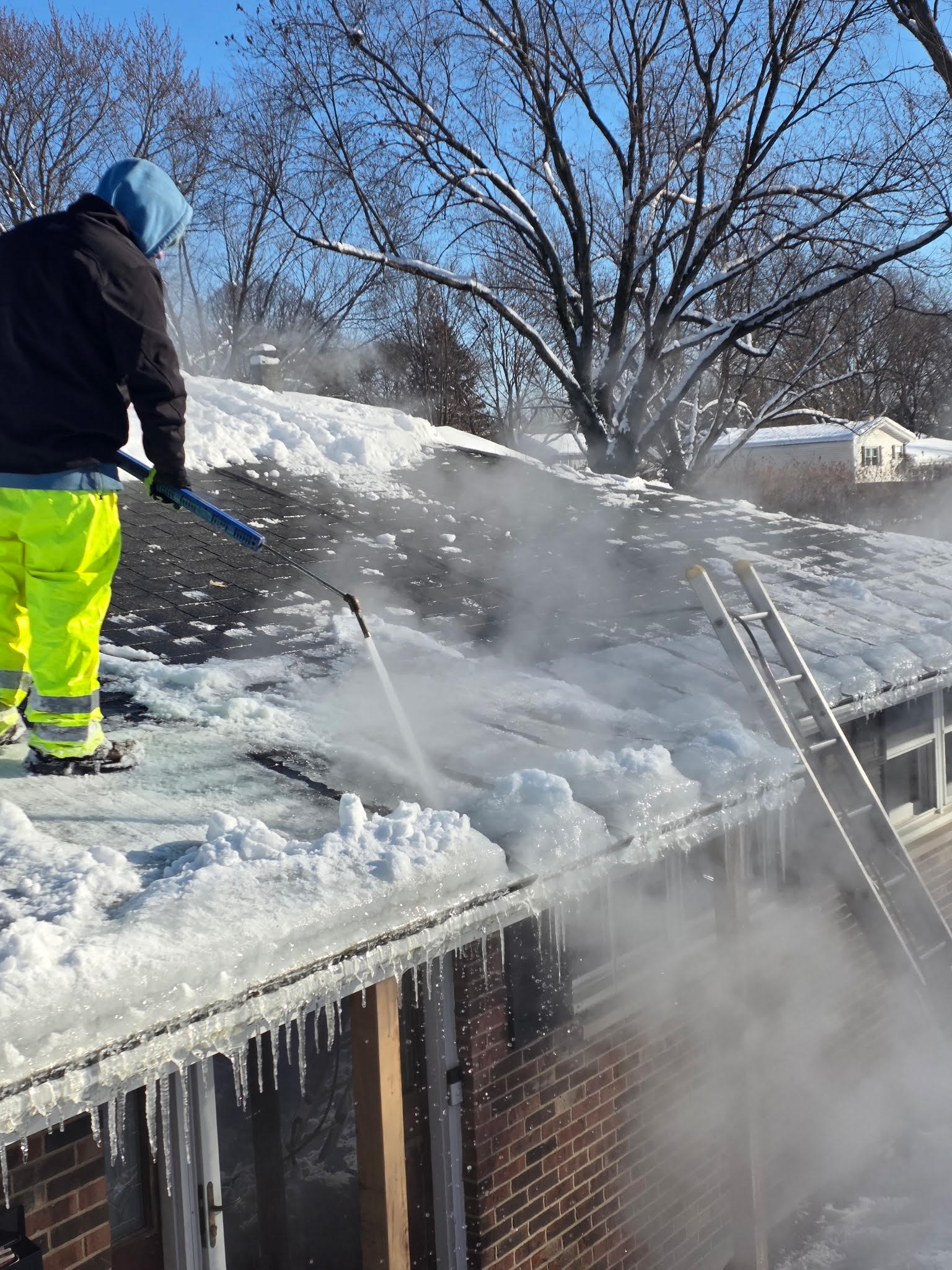
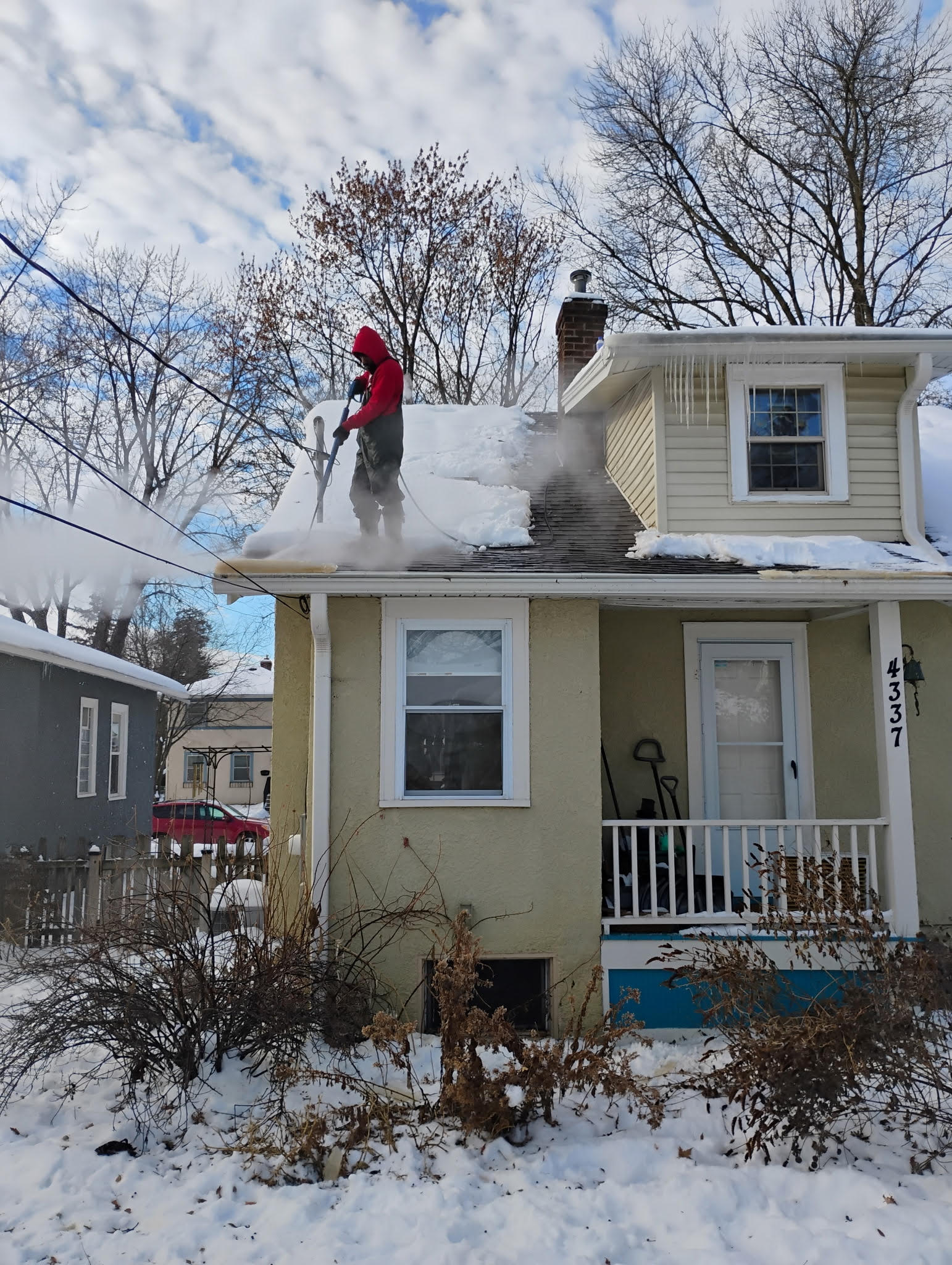
See professional steam ice removal on real residential roofs.
These photographs come from Ice Dam USA's own project gallery. They demonstrate the type of roof ice removal work performed using specialized equipment.
Neither image is identified as work performed specifically in Dayton, Minnesota.
What Dayton homeowners should know about active ice dam leaks.
When ice traps meltwater behind a roof obstruction, moisture may enter vulnerable roof materials.
The visible damage may appear far from the original entry point. Water can travel through insulation, framing and ceiling materials.
Avoid wet electrical fixtures and sagging ceilings. Keep people away from unstable overhead ice.
If safe, move belongings away from moisture and document visible damage. Do not climb onto the roof to investigate.
Will steam removal stop the leak?
Removing the ice obstruction may improve drainage and reduce additional water being trapped on the roof.
However, water already inside roofing or framing may continue moving afterward.
Damaged roof materials and interior moisture may need separate repairs or professional drying.
An immediate end to every leak cannot be guaranteed.
Emergency Ice Dam Removal InformationHow a Dayton ice dam removal appointment is evaluated.
Describe the roof
Provide the address, approximate height, affected roof sections and whether there is active leaking.
Review access and conditions
Our team considers ice thickness, roof pitch, landscaping, weather and safe equipment positioning.
Discuss availability
Scheduling depends on crew availability and the type of service the property requires.
For townhomes and shared buildings: Contact the owner, property manager or association if authorization is required for exterior roof work.
What determines the cost of professional roof ice removal?
The price depends on the roof and the work needed. Ice Dam USA publishes standard and emergency, expedited or complex hourly service categories with minimum appointment charges.
Factors that affect service
- Roof height and steepness
- Thickness of the ice buildup
- Length of affected roof sections
- Difficulty reaching roof valleys
- Roof condition and accessibility
- Weather and scheduling urgency
View the latest pricing
Instead of repeating rates that can become outdated, we direct customers to our official cost guide.
The guide provides the current hourly rates, three-hour minimums and service category details.
See Current Ice Dam Removal PricingWhy roof ice can return after it has been professionally removed.
Steam removal addresses the existing obstruction. If melting and refreezing continue, another ice dam may form.
Attic air leakage
Warm indoor air entering an attic may heat the roof deck and melt snow above it.
Insulation differences
Gaps or uneven insulation can create roof temperature differences that contribute to localized melting.
Roof design and drainage
Valleys, dormers and lower garage roofs may direct runoff toward cold areas where it can refreeze.
A qualified roofing or building-envelope professional can investigate recurring problems when conditions allow safe inspection.
Read about long-term ice dam prevention.
Frequently asked questions about ice dam removal in Dayton, MN.
1. Does Ice Dam USA provide roof ice dam removal in Dayton?
Yes. Ice Dam USA accepts Dayton-area service inquiries. Availability depends on crew scheduling, weather and safe roof access.
2. Can homes in Dayton's Historic Village develop ice dams?
Yes. Older and remodeled homes can experience roof ice when meltwater refreezes and blocks drainage.
3. Can a newer Sundance Greens home get an ice dam?
Yes. Modern homes are not immune to ice dams. Roof temperature differences and the path of snowmelt determine whether ice forms.
4. Can Riverwalk homes experience ice in roof valleys?
They can. Where multiple slopes direct runoff into one valley, a frozen obstruction may interfere with drainage.
5. Does living near the Crow or Mississippi River cause ice dams?
No. River proximity does not directly cause roof ice dams. Melting, refreezing and blocked drainage are the underlying factors.
6. Why does ice form above an attached garage?
A colder garage roof may receive runoff from a warmer upper roof section, allowing water to refreeze.
7. Can sloping yards make removal more complicated?
Yes. A changing ground elevation can increase working height and restrict safe equipment access around a house.
8. Does Ice Dam USA use hot-water pressure washers?
No. Our roof ice removal method uses professional Arctic Steamers and low-pressure steam.
9. Is professional steam removal completely risk-free?
No method is completely risk-free. Existing roof condition, ice thickness, weather and technique all influence removal risk.
10. Will the ice dam return after service?
It can. If melting and refreezing conditions return, another ice obstruction may develop.
11. How much does Dayton ice dam removal cost?
Rates depend on the service category and actual conditions. See our current pricing guide for the published rates and minimums.
12. How do I request an ice dam removal appointment in Dayton?
Call 855-468-4233 or use the Ice Dam USA contact page. Provide the property address and ice location details.
Roof ice dam removal inquiries throughout Dayton, Minnesota.
Ice Dam USA welcomes roof ice removal inquiries throughout Dayton, including the Historic Village and residential neighborhoods near Dayton River Road, South Diamond Lake Road and Territorial Road.
Dayton communities and areas
- Historic Village
- Sundance Greens
- Riverwalk
- Brayburn Trails East
- DCM Farms
- Dayton River Road area
- All areas in between
Nearby service areas
- Champlin
- Maple Grove
- Elk River
- Corcoran
- Rogers area
- Surrounding Twin Cities communities
- All areas in between
These are service destinations, not claims of local Ice Dam USA offices. Appointments depend on current crew availability and worksite conditions.
Geographic reference only. This is not a physical Ice Dam USA office location.
Explore related roof ice dam removal information.
Need professional roof ice dam removal in Dayton?
Whether ice is collecting along an older home's roof edge, blocking a valley in a newer subdivision or contributing to water entering your house during a winter thaw, contact Ice Dam USA about professional low-pressure steam removal.
Service depends on travel, weather, roof conditions and technician availability.
