
Circle Pines MN Ice Dam Removal
Roof ice dam removal for Circle Pines homeowners dealing with frozen roof edges, winter water intrusion and recurring ice buildup.
From the established residential streets around Lake Drive to homes near Golden Lake, Circle Pines has a distinctive housing history and compact neighborhood layout. A roof covered in winter snow can develop a frozen obstruction even when neighboring homes show little visible ice.
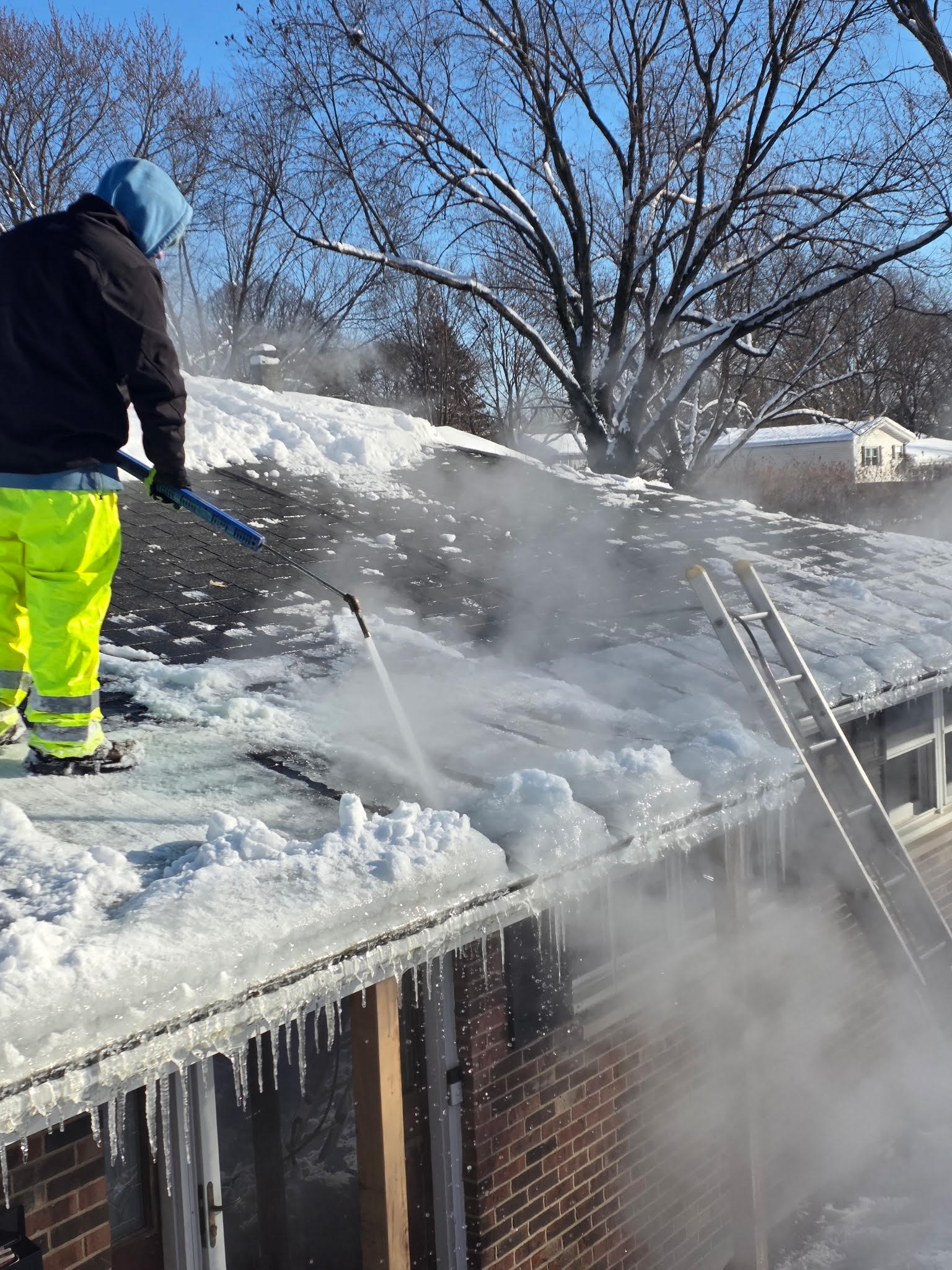
Ice Dam USA removes roof ice dams with professional Arctic Steamers. Our low-pressure steam equipment uses heat to melt ice and help restore a path for trapped snowmelt to drain.
Professional Steam / Fully Insured / Minnesota-Based
Circle Pines homes have a different history than many newer suburbs.
Circle Pines grew from a cooperative community established in the 1940s. Its residential streets reflect decades of home construction, maintenance and improvement.
The city is relatively small in area, and many homes stand close together. That makes access around houses, roof edges over walkways and the placement of winter equipment especially important.
A home built in the middle of the last century might have undergone several attic or roofing updates. The age of the house does not establish whether it has an ice dam, but its insulation, air sealing and roof layout may help explain repeated freezing at a particular edge.
Original-era residential roofs
Traditional houses can have broad eaves, simple pitches and attic construction that has changed over the years.
Renovated and expanded homes
An added entry, porch or attached garage can introduce a new intersection where water from an upper roof reaches colder roofing below.
Close residential lots
Fences, nearby buildings and narrow side yards can limit equipment access to ice above the side or rear of a home.
Is it an ice dam—or simply ice hanging from the roof?
A large icicle is not, by itself, a diagnosis. An ice dam is a buildup that interferes with water draining from a roof. When snowmelt collects behind that obstruction, it may enter vulnerable roofing details.
What you may see outside
- A raised band of ice near the eave
- Snowmelt pooling above a frozen edge
- Ice concentrated at a valley or roof junction
- Repeated freezing in the same location
- Overhanging ice above a used entrance
What you may notice inside
- New discoloration near the ceiling
- Moisture appearing after a temperature swing
- Wet trim near an exterior wall
- Water staining below a roof intersection
- Dampness that returns during winter thaws
Important: A roof leak may have a cause unrelated to an ice dam, and water can travel inside the roof before becoming visible. The appearance of a ceiling stain does not identify the exact entry point.
Golden Lake, Lake Drive and the Rice Creek corridor.
The City of Circle Pines identifies Golden Lake and the Rice Creek corridor as important natural features. Its trails, mature trees and residential areas create different shade and wind conditions from one block to the next.
Waterways do not directly cause roof ice dams. The relevance to winter roof work is that nearby properties can have different tree cover, roof exposure, ground access and snow accumulation.
Golden Lake area
Established homes around the lake may have mature landscaping, rear-yard structures or limited side access. Actual roof conditions determine ice formation.
Lake Drive neighborhoods
The central residential corridor includes homes of varying ages. Changes to insulation or roofing can affect snowmelt patterns on an individual house.
Near Rice Creek and city trails
Homes near wooded and open areas can experience differences in shade and windblown snow. These factors may influence where snow remains on the roof.
The location of a home near a park or lake does not mean it has a higher ice dam risk. Roof temperatures and the path taken by melting snow are the more relevant factors.
From your first phone call to reopening roof drainage.
First: understand the roof
Tell us your Circle Pines address, the part of the roof affected and whether water is entering the building. Photos from a safe ground-level location can be helpful.
Next: evaluate the worksite
Roof height, slope, ice thickness, available access and weather conditions all influence the service plan. Nearby fences, entrances and walkways are also considered.
Then: apply low-pressure steam
Our Arctic Steamers direct heat into the ice to melt the obstruction. The goal is to create drainage paths without aggressively striking the roof or using forceful pressure-washer spray.
Finally: explain the next steps
Removing roof ice can help reduce water backup. If a leak is already occurring, roof repairs, further investigation or interior drying may still be necessary.
Three Circle Pines roof configurations worth evaluating.
Long eaves on traditional residential roofs
Some established houses have relatively simple roof shapes with long overhangs. Roofing above heated rooms can become warmer than the unheated eave. Meltwater moving toward that colder edge may refreeze before it can drain.
Lower roofing added during a renovation
A porch enclosure, garage connection or rear addition may create a lower roof that receives water from above. Different temperatures between the roof sections can produce ice at the transition.
Valleys on newer or modified houses
Two roof slopes may direct snowmelt into the same valley. Ice forming within this drainage path can hold water around flashing and adjacent roofing.
Circle Pines homeowner tip: When reporting an ice dam, describe which side of the house is affected. A roof edge above a driveway may have very different access from an edge above a fenced backyard.
Low-pressure Arctic Steamers versus high-pressure heated water.
Professional steaming and hot-water pressure washing are not interchangeable. Both involve heat, but the force applied to roofing differs.
Arctic Steamer method
- Uses professional low-pressure steam
- Transfers heat into frozen roof ice
- Allows targeted melting of obstructions
- Reduces reliance on impact tools
- Requires care around existing roof materials
Conventional pressure washing
- Uses heated water under spray pressure
- Can apply force to roof surfaces
- May disturb shingles if used improperly
- Can damage vulnerable roof joints
- Is not Ice Dam USA's removal method
Our priority is to reopen drainage while taking the roof's existing condition into account. No method can promise zero risk of damage, especially where roofing is already deteriorated.
See the equipment and winter roofing conditions.
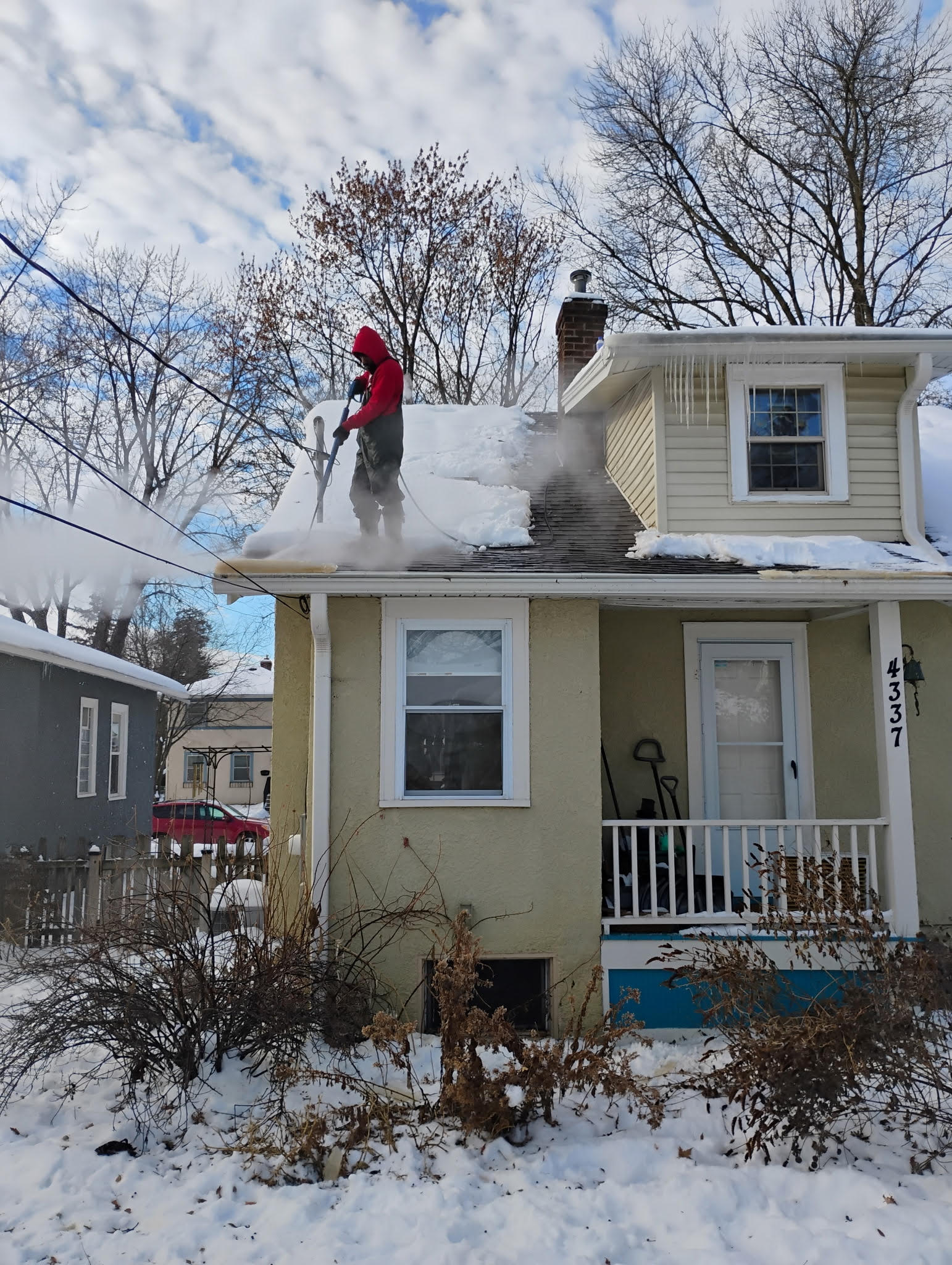
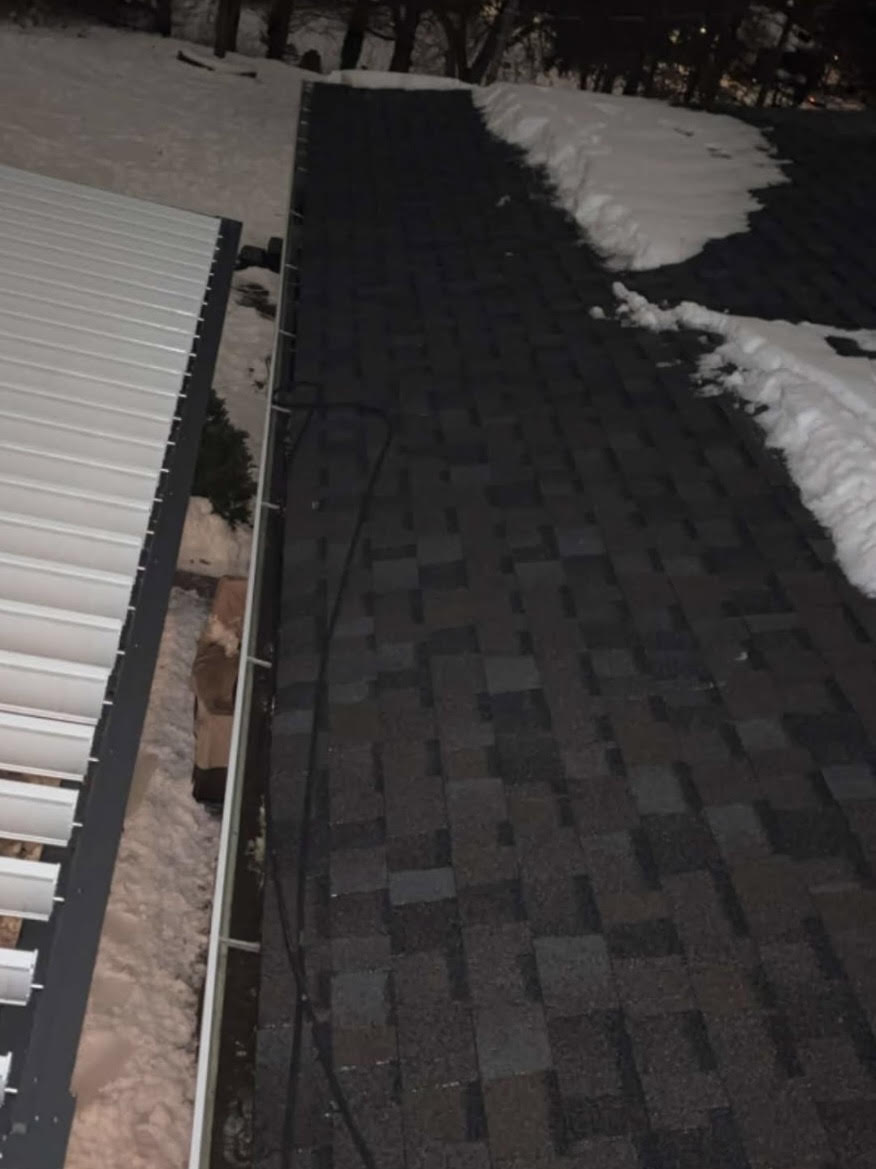
These are Ice Dam USA project photographs, not photographs represented as specific Circle Pines jobs.
Act quickly when an ice dam is associated with a roof leak.
A blocked roof edge may allow meltwater to reach vulnerable shingles or flashing. But an indoor leak is not always caused by an ice dam.
If water is entering a room, protect people first. Keep clear of sagging ceilings and wet electrical fixtures, and move belongings only when it is safe to do so.
Do not climb the roof, use a ladder on icy ground or attempt to strike the obstruction with tools.
What steam removal can—and cannot—do
Removing an obstruction may help restore the route that melting snow would normally take off the roof.
It does not guarantee that water already in the roof, insulation or interior walls will stop appearing immediately.
Additional roof repairs and drying may be needed after the ice is removed.
Read About Emergency Ice Dam ServiceGetting an accurate ice dam removal quote for Circle Pines.
The amount of ice is only one part of the cost. Roof accessibility, building height, steep sections and scheduling priority can all affect the service category.
Information to provide
- Complete Circle Pines address
- One, two or more stories
- Roof pitch and affected sections
- Approximate extent of the ice
- Presence of an active interior leak
- Ground access and nearby obstacles
Review the current pricing guide
Ice Dam USA publishes standard and emergency, expedited or complex hourly rates, including appointment minimums.
Our pricing guide is the appropriate place to review current service terms before scheduling.
View Ice Dam Removal CostsWhy a Circle Pines roof may freeze in the same place again.
Steam removal treats an existing frozen obstruction. If the same location develops an ice dam repeatedly, the next question is why that part of the roof is warming or collecting runoff differently.
Air leakage
Warm indoor air entering an attic may heat the roof deck beneath snow.
Insulation differences
Older insulation, later renovations and gaps in coverage can create uneven roof temperatures.
Roof drainage patterns
Valleys or lower additions may collect runoff at locations that stay cold enough to refreeze.
A qualified building-envelope or roofing professional can investigate recurring conditions when a safe inspection is possible.
Learn About Ice Dam Prevention .Circle Pines roof ice dam removal FAQ.
1. Does Ice Dam USA handle roof ice dams in Circle Pines?
We accept Circle Pines service inquiries and coordinate appointments based on technician availability, weather, roof conditions and safe access.
2. Can the original cooperative-era homes develop ice dams?
Yes. Houses from Circle Pines' earlier development periods may develop ice dams when roof snow melts and refreezes at colder edges.
3. Do older ramblers require a different approach?
Roof height, pitch, condition and access matter more than the label "rambler." Each roof is evaluated based on its actual conditions.
4. Why is one roof edge icy while the opposite side looks clear?
Sun exposure, roof heat loss, snow coverage and roof geometry may differ between the two sides.
5. Do narrow side yards matter during removal?
Yes. Fences, nearby structures and limited working space may affect equipment positioning.
6. Can a roof near Golden Lake develop an ice dam?
Yes. Roof ice can form on homes near Golden Lake, although lake proximity alone does not cause it.
7. Does tree shade near Rice Creek create ice dams?
Shade can affect how snow remains on a roof, but an ice dam still requires melting and refreezing that blocks drainage.
8. Can a later home addition create a new ice problem?
Yes. An addition may change roof temperatures or direct runoff toward a colder lower section.
9. Are icicles enough to confirm an ice dam?
No. Icicles can appear without a substantial obstruction. The drainage path and ice location are important.
10. What happens if the ice is above my front entrance?
Keep people away from unstable overhead ice and describe the entrance location when requesting service.
11. Can ice dam water appear in a room away from the roof edge?
Yes. Water can travel along framing or through insulation before becoming visible indoors.
12. Does Ice Dam USA use hot-water pressure washers?
No. Our roof ice dam removal method uses professional low-pressure Arctic Steamers.
13. Is low-pressure steam completely risk-free?
No. Existing roof damage, weather and ice conditions can affect removal risks.
14. Should I break the ice loose with a shovel?
No. Impact and scraping can damage roofing, and working on icy roofs is hazardous.
15. What if my roof is already leaking?
Call 855-468-4233 and explain the active leak. Stay away from wet electrical equipment and unstable ceilings.
16. Will professional removal repair damaged shingles?
No. Ice removal addresses the obstruction. Damaged roofing may require separate repairs by a qualified contractor.
17. Does an ice dam always come back next winter?
No. Recurrence depends on future snowfall, roof temperatures, drainage conditions and the underlying building issues.
18. Is Circle Pines ice dam removal billed hourly?
Ice Dam USA publishes hourly rates and service minimums. Refer to our current pricing information.
19. Does homeowners insurance pay for damage?
Coverage depends on the policy and cause of loss. Your insurer can explain the applicable terms.
20. How do I request an appointment in Circle Pines?
Use our contact form or call 855-468-4233. Share the address, ice location and any leak symptoms.
Serving inquiries from Circle Pines and nearby residential communities.
Circle Pines is located in southern Anoka County near Lexington, Centerville, Blaine and Lino Lakes. For roof ice concerns outside Circle Pines, Ice Dam USA also accepts inquiries from surrounding Minnesota communities.
For nearby city information, see Blaine ice dam removal and Centerville ice dam removal. These are service-area pages, not additional physical offices.
Map shown for geographic reference only. It does not identify an Ice Dam USA office.
Understand your options for professional roof ice dam removal.
Get professional help with roof ice in Circle Pines.
A frozen roof edge can turn melting snow into an indoor water problem. Whether the ice is above a front entry, along a traditional home eave or at an added roof section, contact Ice Dam USA to discuss low-pressure steam ice dam removal.
Service depends on technician availability, weather, building conditions and safe access.
