Pennsylvania Ice Dam Removal Professional Low-Pressure Steam
From Lake Erie snowstorms to winter freeze-thaw cycles in the Poconos and southeast Pennsylvania, roof ice can form when snowmelt reaches colder eaves and refreezes.
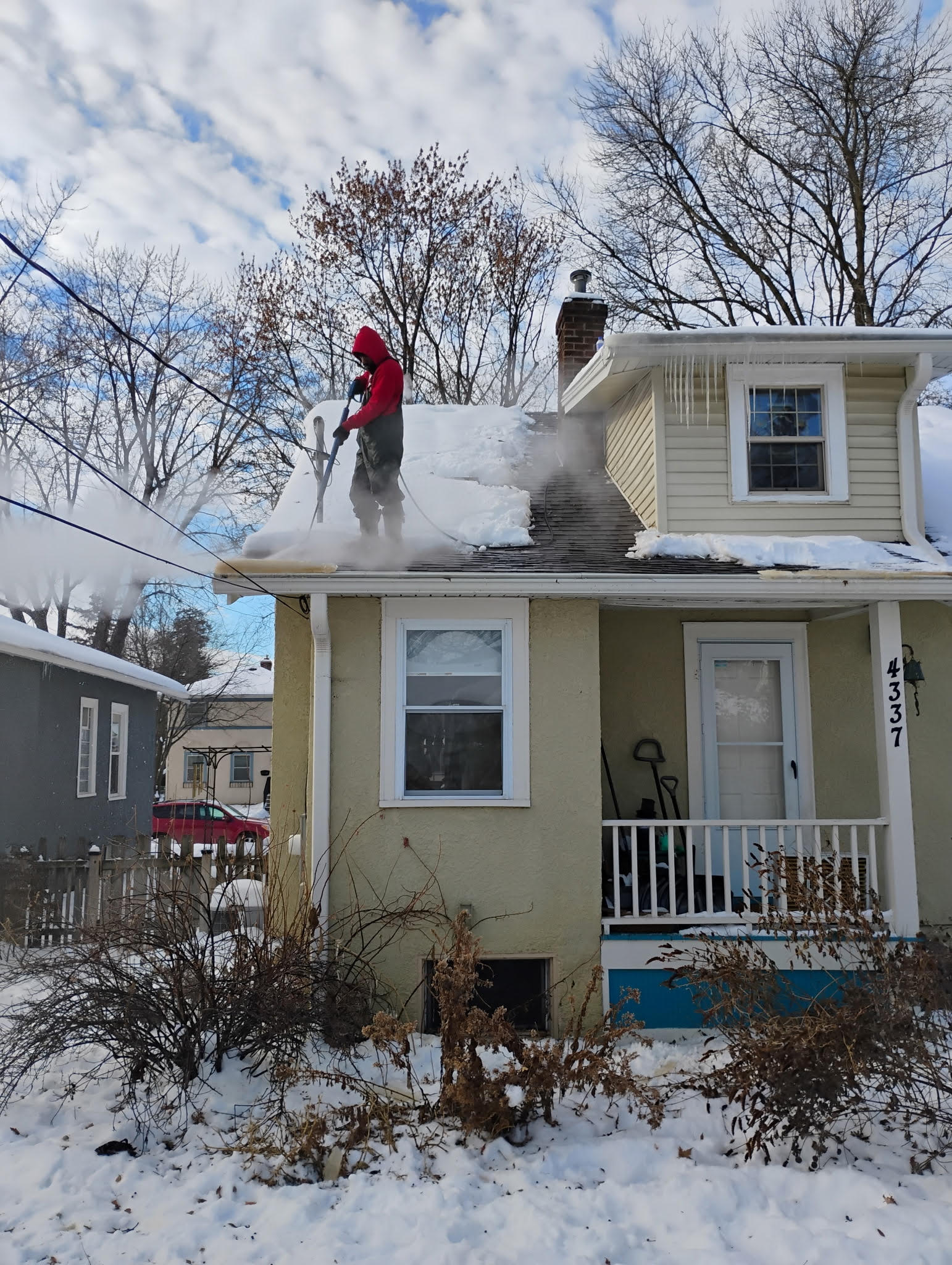
Ice Dam USA removes accumulated roof ice using professional Arctic Steamers and low-pressure steam. Our equipment uses heat to melt ice rather than aggressive chopping or high-pressure water blasting.
We welcome service inquiries from Erie, Pittsburgh, Scranton, Wilkes-Barre, Allentown, Bethlehem, Harrisburg, Lancaster, Philadelphia and surrounding communities.
Regional technician availability, winter weather and safe access determine scheduling.
Pennsylvania Roof Ice Depends on Local Conditions
Pennsylvania has several distinct winter weather regions. Conditions near Lake Erie are not identical to those around Pittsburgh, the central ridges or greater Philadelphia.
Erie and parts of northwestern Pennsylvania can receive substantial lake-effect snowfall. Greater snow accumulation may provide meltwater over several warming periods.
The Pocono Mountains and northeastern Pennsylvania can experience extended cold, snow cover and shaded roof surfaces.
Across the Philadelphia suburbs, Lehigh Valley and Harrisburg region, snow followed by daytime warming and freezing nights can produce roof-edge ice.
Whether a particular house develops an ice dam depends on its roof temperatures, snow distribution, construction and drainage.
What Affects Ice Formation?
Attic heat loss: Indoor heat can warm the roof beneath accumulated snow.
Cold roof overhangs: Unheated eaves may refreeze melting runoff.
Snow accumulation: Deep or uneven snow may persist on shaded slopes.
Roof valleys: Multiple slopes can concentrate water.
Changing temperatures: Repeated melting and freezing can build a larger ice ridge.
How Snow Becomes a Roof Ice Dam
The problem isn't simply having snow on a roof. Ice dams develop when melting and refreezing obstruct normal drainage.
Snow Accumulates
Winter precipitation leaves snow on roof slopes, valleys and sheltered areas.
Roof Snow Melts
Warmth from the building, sun exposure or changing weather creates meltwater.
Runoff Refreezes
Water reaches colder roof edges and forms an ice ridge that can hold additional water back.
Ice Dam Challenges Throughout Pennsylvania
Erie & Northwestern Pennsylvania
Lake Erie can influence heavy local snowfall. Snow may remain on roofs after storms, especially in sheltered valleys and shaded areas.
Roof heat loss and cold eaves can create ice dams even while outdoor temperatures remain below freezing.
Pittsburgh & Western PA
Pittsburgh's hills and varied home designs create different roof exposures and drainage arrangements.
Older neighborhood houses with dormers, porches and additions may have uneven roof temperatures.
Scranton, Wilkes-Barre & Poconos
Northeastern Pennsylvania includes higher-elevation areas where cold conditions and snow cover can last longer.
Mountain cabins, vacation homes and steep rooflines may require additional access planning.
Allentown & Lehigh Valley
Homes around Allentown, Bethlehem and Easton can experience snow followed by daytime warming and freezing nights.
These changes may contribute to ice buildup at colder roof edges.
Harrisburg & Central PA
Harrisburg, Carlisle, York, Lancaster and surrounding communities have a variety of roof styles and winter temperature patterns.
Roof valleys and attached additions can direct snowmelt into concentrated locations.
Philadelphia & Southeastern PA
Philadelphia suburbs including Abington, Lower Merion and other communities may experience intermittent snow followed by thaw-freeze weather.
Older buildings, pitched roofs and complex transitions may develop isolated roof ice problems.
How to Recognize a Possible Ice Dam
Thick Ice at the Eaves
A frozen ridge near a roof edge may restrict meltwater.
New Ceiling Stains
Moisture appearing during winter thawing may indicate intrusion.
Ice in Roof Valleys
Intersecting slopes may collect melting water and refrozen ice.
Heavy Icicles
Hanging ice can present a hazard, but does not always indicate an ice dam.
Uneven Roof Snowmelt
Some roof areas may warm faster than shaded eaves.
Recurring Winter Leaks
Repeated moisture problems during snowmelt deserve professional evaluation.
Why We Use Arctic Steamers
Ice Dam USA uses professional low-pressure steam equipment to melt roof ice.
The steam transfers heat into the ice, reducing the need for aggressive impacts against shingles, flashing or roof valleys.
Heavy roof ice can conceal vulnerable roofing materials. Chopping or using excessive pressure may cause additional damage.
Our technicians must evaluate roof condition, ice thickness, slope, weather and access before working.
No removal method is completely risk-free, and existing roof defects may still require repair.
Professional Ice Dam Removal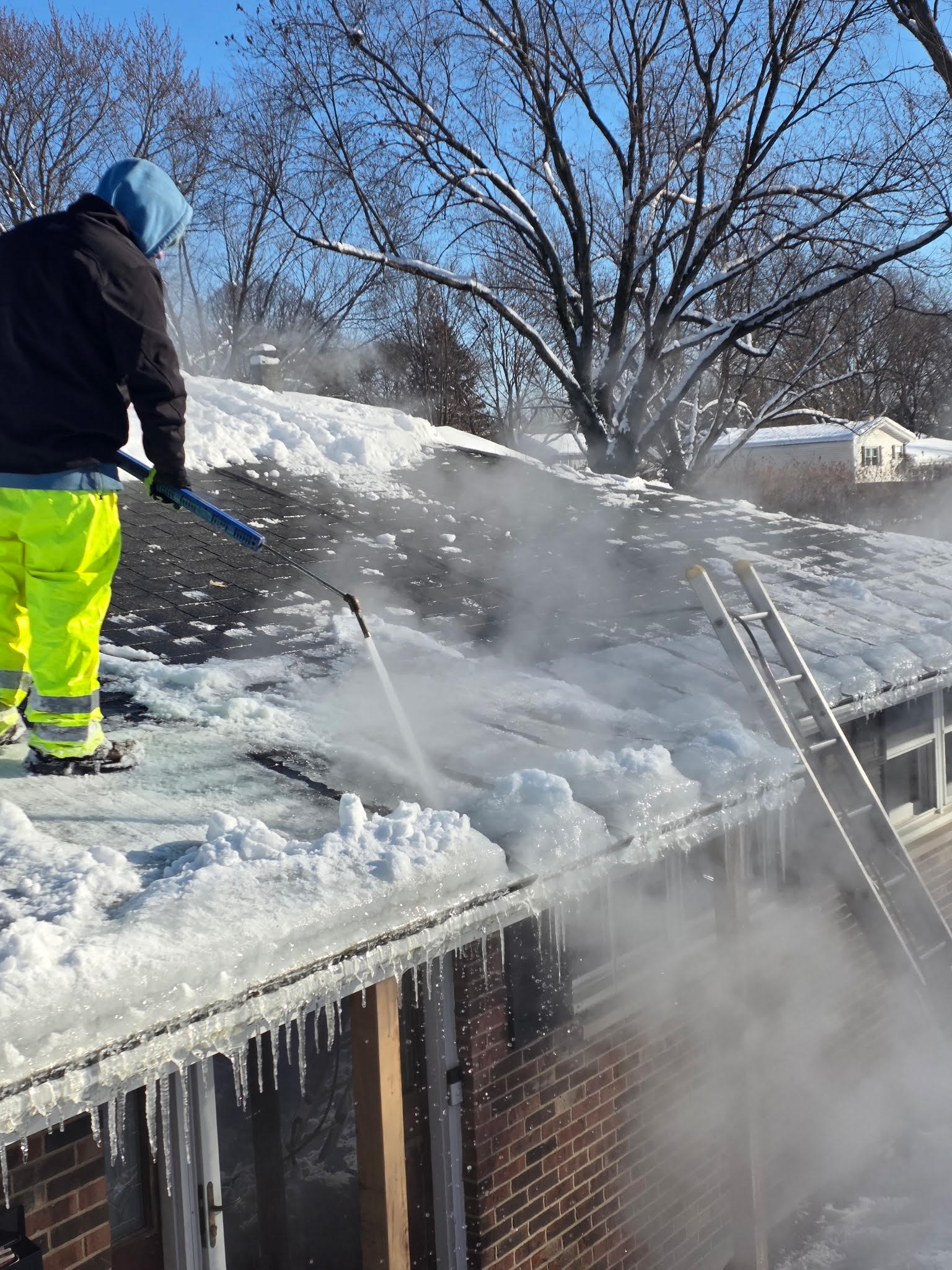
Why Equipment Choice Matters for Roof Ice
A hot-water pressure washer is not the same as a professional low-pressure steamer.
Arctic Steamers
Steam relies primarily on heat to melt accumulated ice.
- Low-pressure steam application
- Reduced reliance on chopping
- Heat-based ice melting
- Professional worksite assessment
- Careful equipment handling
Hot-Water Pressure Washers
Pressure washers use pressurized liquid water and may damage vulnerable roofing when misused.
- Water delivered under pressure
- Risk around flashing and seams
- Potential damage to shingles
- Water may enter vulnerable openings
- Not our chosen removal method
What to Do if Your Roof Is Leaking
Water trapped behind an ice dam can enter beneath vulnerable roofing materials.
The interior drip may appear some distance from the original roof opening because moisture can travel through framing and insulation.
Steam removal may help restore drainage. It cannot guarantee an immediate stop to an interior leak, especially when water is already inside the building.
Roofing or restoration professionals may be necessary to repair other damage.
Call About Winter Roof IceWhile Arranging Help
01 — Avoid hazards. Stay clear of wet electrical fixtures and falling ice.
02 — Protect belongings. Move valuables when safe to do so.
03 — Document conditions. Photograph moisture and roof ice from safe positions.
04 — Stay off the roof. Do not use axes, hammers or unsafe ladders.
05 — Arrange evaluation. Consider a qualified roofer for necessary repairs.
Pennsylvania Ice Dam Removal Service Regions
Ice Dam USA welcomes service inquiries from across Pennsylvania. Confirm current availability for your specific address.
Ice Dam Removal for Homes and Commercial Buildings
Single-Family Homes
Roof-edge ice can develop on many different home styles.
Historic Houses
Older roof assemblies may have uneven insulation or air leakage.
Townhomes & Duplexes
Shared rooflines may require additional worksite coordination.
Mountain Cabins
Snow cover, shaded roof sections and winter access may complicate removal.
Rental Properties
Property managers may need to document leaks and arrange access.
Commercial Buildings
Larger roofs and occupied walkways may require special access planning.
Is the Ice on Your Roof or Inside Your Gutters?
Roof Ice Dams
An ice ridge forms on roofing and prevents meltwater from draining. This statewide page focuses on roof ice dams.
Frozen Gutters & Downspouts
Ice may obstruct gutter channels and outlets, cause overflow or add weight to attachments.
Read more about our professional gutter ice removal service .
How Much Does Ice Dam Removal Cost in Pennsylvania?
Ice Dam USA publishes current service rates and a three-hour minimum on its pricing page.
The applicable rate depends on the roof, accessibility, service classification and scheduling priority.
A two-story roof with straightforward access may be treated differently from a steep, complex or difficult-to-reach worksite.
Review current rates before booking. Avoid relying on outdated estimates from older Pennsylvania pages.
View Current Removal PricingHelpful Details Before Calling
Location: Pennsylvania address and ZIP code.
Property: Residential or commercial.
Roof: Stories, pitch and access.
Ice: Eaves, valleys or multiple sections.
Leaks: Active moisture or staining.
Photos: Images taken safely from ground level.
Reducing Repeat Ice Dams on Pennsylvania Homes
Air Sealing
Reduce unwanted movement of indoor heat into attic spaces.
Insulation Evaluation
Gaps or thin coverage can contribute to uneven roof warming.
Ventilation Review
Evaluate ventilation as part of the complete roof assembly.
Roof Valley Inspection
Review areas that concentrate runoff and snow.
Professional Snow Management
Qualified crews can evaluate whether roof snow removal is appropriate.
Repair Roof Defects
Damaged flashing and roofing may require separate repairs.
How to Request Pennsylvania Ice Dam Removal
Contact Our Team
Share your address, roof ice conditions and whether interior moisture is present.
Review the Worksite
Discuss roof height, ice buildup, safe access, pricing and availability.
Coordinate Removal
When service is available, technicians assess conditions and perform agreed work where safe.
Pennsylvania Ice Dam Removal Resources & Services
Pennsylvania Ice Dam Removal FAQs
What causes ice dams in Pennsylvania?
Snow can melt on warmer roof areas and refreeze near colder eaves. The resulting ice ridge may obstruct runoff.
Can lake-effect snow around Erie cause ice dams?
Heavy snowfall can contribute to the conditions that allow ice dams to form, particularly where roof temperatures vary.
Can ice dams develop around Pittsburgh?
Yes. Pittsburgh properties can experience snow followed by melting and refreezing. Roof design and heat loss affect ice dam risk.
Are Pocono Mountain homes vulnerable to ice dams?
Snow accumulation, shaded rooflines and colder weather can contribute to ice buildup on suitable roof configurations.
Can ice dams form near Philadelphia?
Yes. Even shorter periods of snow cover can produce ice dams when meltwater refreezes along colder eaves.
Do ice dams require gutters?
No. Ice dams form directly on roofing and can develop without gutters.
Are icicles proof of an ice dam?
No. Icicles may accompany roof ice dams but can also form without significant roof blockage.
Does Ice Dam USA use Arctic Steamers?
Yes. Ice Dam USA uses professional Arctic Steamers and low-pressure steam for roof ice removal.
Is steam different from pressure washing?
Yes. Steam primarily melts ice using heat. Pressure washers deliver pressurized liquid water that can damage vulnerable roofing if misused.
Is professional steam removal guaranteed damage-free?
No ice removal method is completely risk-free. Roofing condition, access and technician technique all matter.
Will removal immediately stop a winter roof leak?
Not necessarily. Existing water inside the roof assembly or unrelated roofing defects can continue causing leaks.
Do you remove ice from commercial buildings?
Ice Dam USA welcomes commercial inquiries. Scheduling depends on property conditions, safe access and technician availability.
How much does Pennsylvania ice dam removal cost?
Costs depend on roof height, access, complexity and scheduling classification. See our current pricing guide for published rates and minimum charges.
Will homeowners insurance cover ice dam damage?
Coverage varies by policy and cause of loss. Contact your insurer about ice removal and resulting water damage.
How can recurring ice dams be reduced?
Attic air sealing, appropriate insulation, ventilation evaluation and roofing repairs may reduce recurring roof ice buildup.
Heavy Roof Ice or Winter Leaks in Pennsylvania?
From heavy snow near Erie to frozen roof edges around Pittsburgh, the Poconos, Harrisburg and Philadelphia, contact Ice Dam USA to discuss professional low-pressure steam removal and regional availability.
Call 855-468-4233 Request Pennsylvania Ice Dam Removal