New York Ice Dam Removal.
Professional roof ice dam removal across New York using Arctic Steamers and controlled low-pressure steam.
From Buffalo's lake-effect snow to the Adirondacks, Capital Region, Hudson Valley and New York City, winter roof ice can create serious problems for homes and buildings.
Ice Dam USA provides professional roof ice dam removal using specialized Arctic Steamers. Our approach uses heat to melt ice rather than aggressive chopping or high-pressure water blasting.
We welcome residential, commercial and urgent service inquiries throughout New York, subject to regional technician availability and safe access.
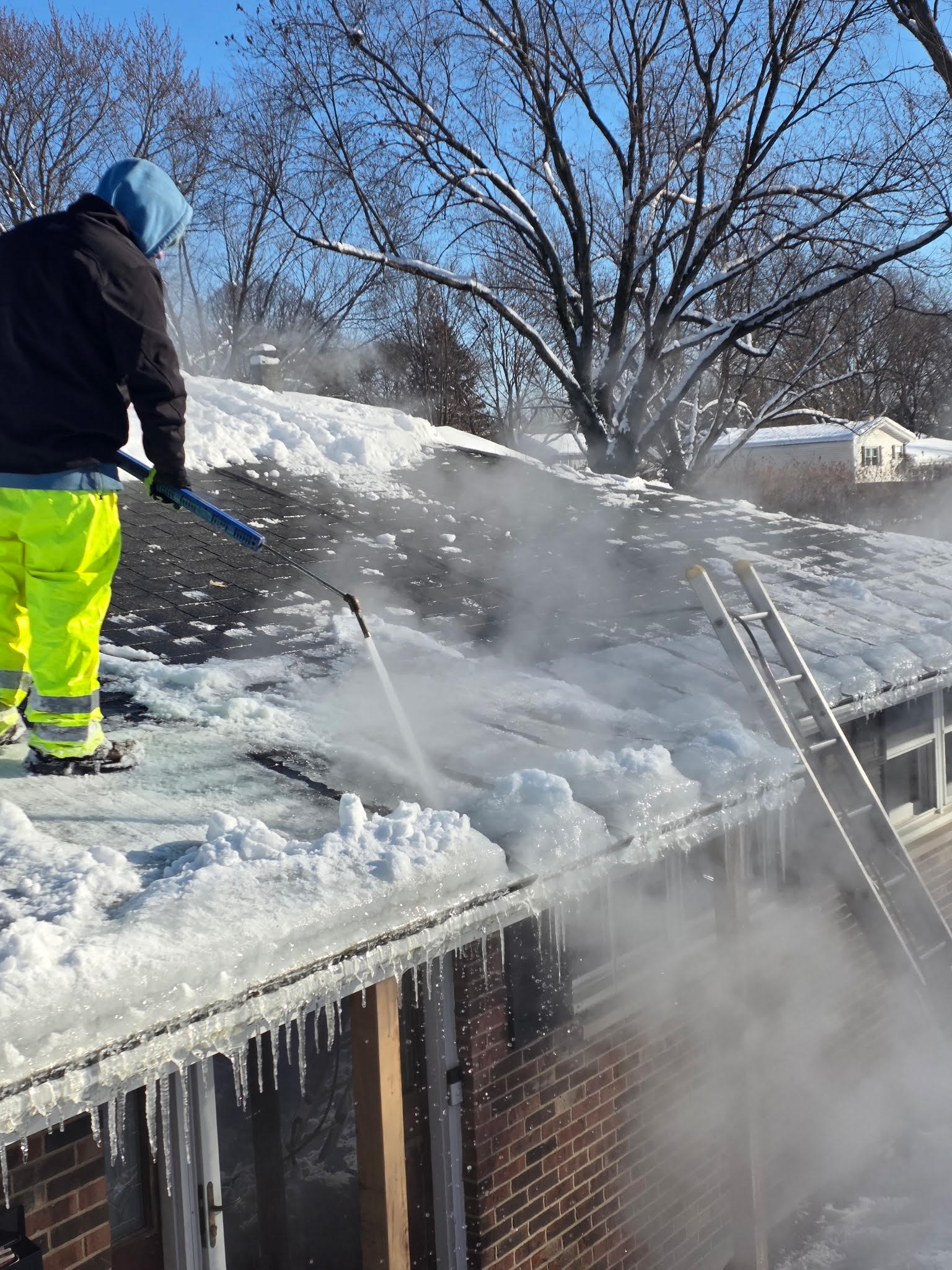
One state. Very different winter roof conditions.
New York includes several distinct winter climates. Heavy lake-effect snow can accumulate rapidly around Buffalo, Rochester, Watertown and parts of Central New York.
The Adirondacks and Tug Hill region can experience extended periods of snow cover and cold temperatures, while the Capital Region and Hudson Valley can encounter winter storms followed by thawing and refreezing.
Downstate communities may experience less persistent snow in some winters, but the combination of a snowy roof, melting water and cold eaves can still create a damaging ice obstruction.
An ice dam is a ridge of ice that prevents meltwater from draining normally off the roof.
When additional meltwater collects behind that ridge, it may enter vulnerable roofing joints and eventually reach insulation, walls or ceilings.
Learn more in our guide to how ice dams form.
How geography and building design influence ice dams.
Buffalo & Western New York
Lake-effect snowfall can create deep roof snow accumulation. When heat escapes through the roof, melting beneath that snow may contribute to substantial ice ridges.
Rochester & the Finger Lakes
Rooflines around Rochester may experience persistent snow cover, winter wind and changing roof temperatures. Dormers and valleys can concentrate meltwater.
Syracuse & Central New York
Heavy winter snowfall and long cold periods can leave roofs snow-covered for extended periods, creating repeated cycles of melting and refreezing.
Albany & the Capital Region
Historic homes and multifamily buildings can have additions, porches and complex roof transitions where ice develops unevenly.
Adirondacks & North Country
Mountain and rural properties can experience sustained cold, substantial snowfall and difficult winter roof access. Remote locations require additional planning.
Hudson Valley & Downstate
Temperature fluctuations, older architecture and shaded roof sections can contribute to ice formation. Roof type and drainage design vary considerably.
How an ice dam forms on a New York roof.
Snow collects.
Winter precipitation leaves snow covering the roof, including eaves and valleys.
Heat produces melting.
Warm roofing surfaces or changing weather produce meltwater beneath the snow.
Water refreezes.
Meltwater moves toward colder roof areas and forms an ice ridge.
Water backs up.
Additional meltwater may become trapped and reach vulnerable roofing materials.
Arctic Steamers versus hot-water pressure washers.
Not every machine that heats water is designed to remove ice from a roof in the same way.
Ice Dam USA uses professional Arctic Steamers to apply low-pressure steam. The purpose is to melt the ice with heat while reducing the need for aggressive mechanical force.
Our technicians evaluate roofing material, slope, ice thickness, roof condition and safe access before performing work.
Arctic Steamer
- Uses heat to melt roof ice.
- Applies steam at low pressure.
- Allows targeted work on ice ridges.
- Reduces the need for forceful chopping.
- Requires trained operators and careful technique.
Hot-Water Pressure Washer
- Directs heated water under pressure.
- Often designed for cleaning applications.
- Aggressive spray may damage shingles.
- Can affect vulnerable flashing and roof joints.
- Is not Ice Dam USA's roof removal method.
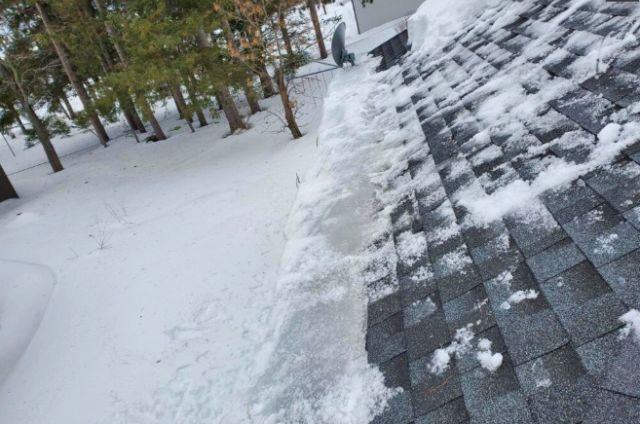
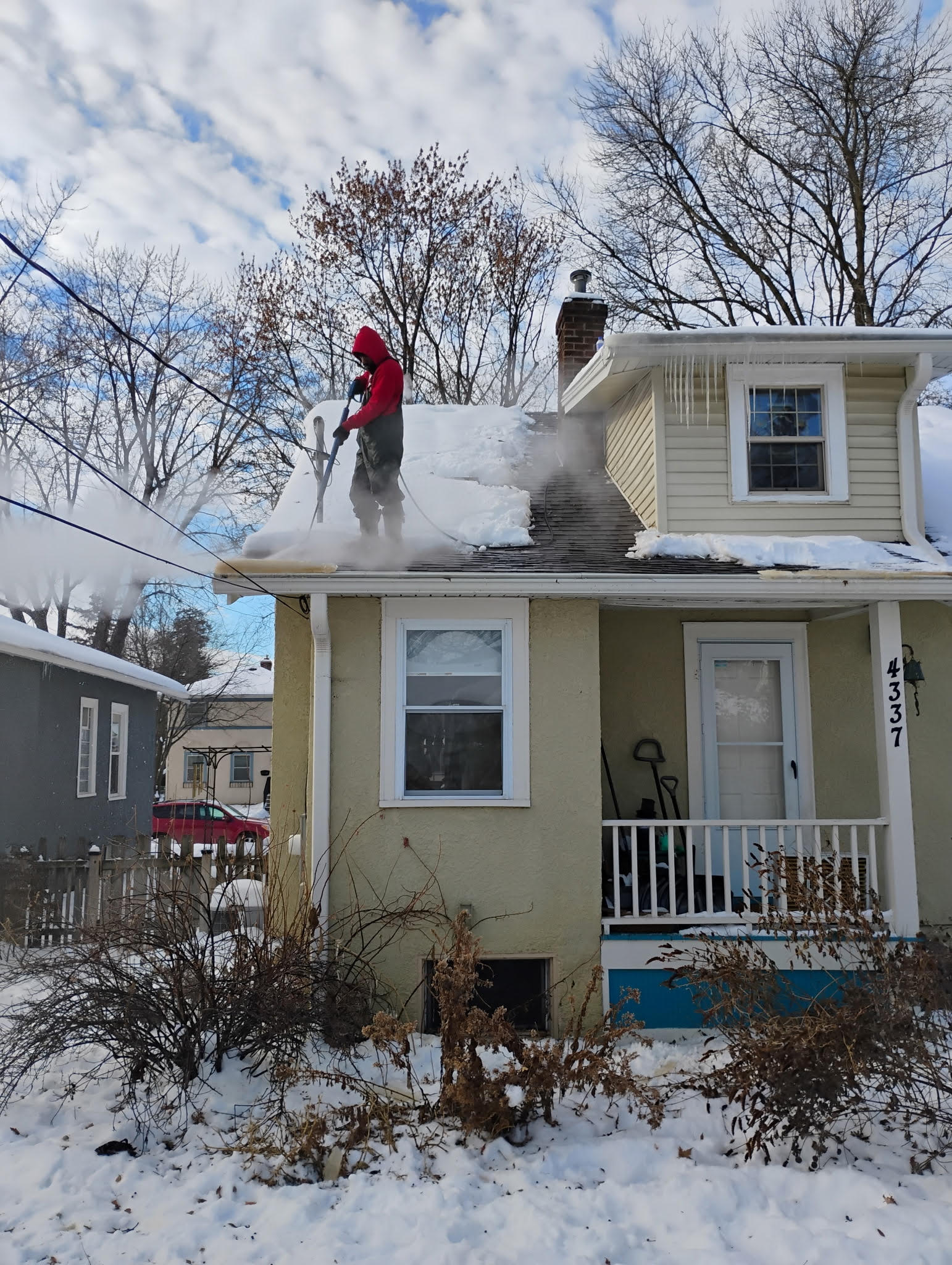
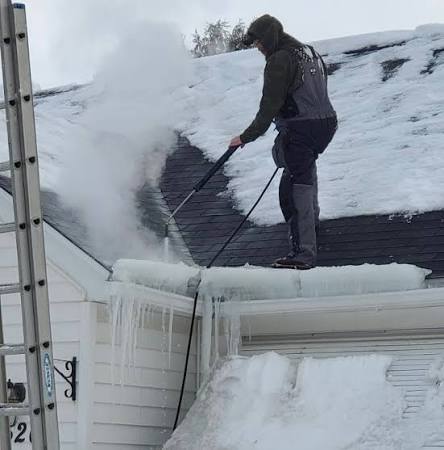
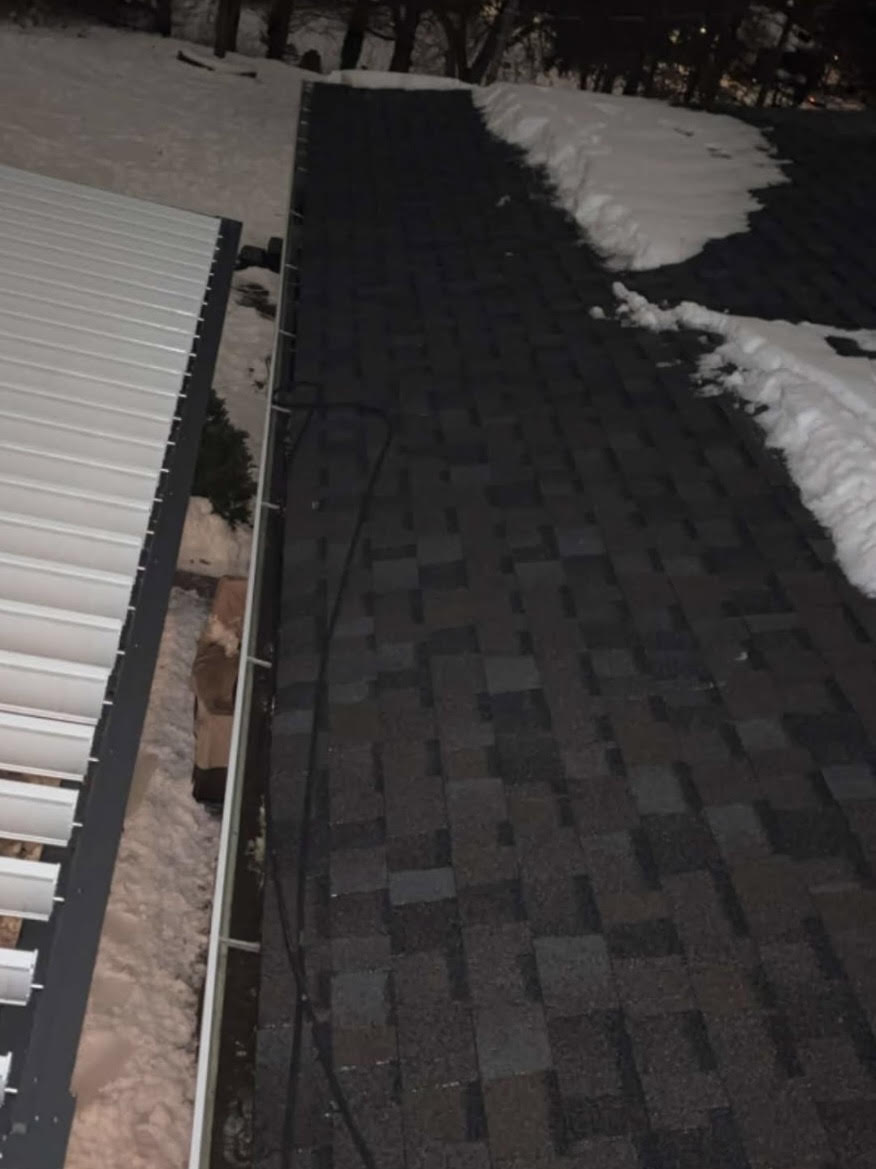
Professional roof ice removal in action.
These photographs show actual Ice Dam USA winter projects. They illustrate roof ice conditions and steam removal work.
Water coming through your ceiling?
Roof ice dams can obstruct drainage and allow meltwater to collect behind the ice.
Water may enter through vulnerable roofing details and travel through an attic, wall or ceiling before becoming visible indoors.
What homeowners should do
- Keep away from wet electrical fixtures.
- Stay clear of sagging ceilings.
- Move belongings where it is safe.
- Photograph visible water damage.
- Never climb onto a frozen roof.
- Contact qualified ice dam removal help.
Clearing the ice may help restore drainage, but existing moisture may continue moving within the structure. Roofing repairs may also be necessary.
Information to have ready
- Your New York property address
- Building height and roof layout
- Where ice is accumulating
- Whether water is entering indoors
- Any difficult roof access
- Ground-level photographs if available
Do not climb ladders or roofs to take pictures. Regional availability, winter road conditions and safe access determine scheduling.
Warning signs that roof ice may be restricting drainage.
Thick ice along the eaves
A ridge near the roof edge can prevent meltwater from draining normally.
New ceiling stains
Moisture appearing during a winter thaw may indicate a roof leak.
Ice in roof valleys
Roof intersections concentrate drainage from several surfaces and can accumulate ice.
Repeated leaks during thawing
Water may begin entering when melting accelerates while roof-edge ice remains in place.
Heavy icicles
Icicles can accompany roof ice dams, but they do not by themselves prove an obstruction exists.
Recurring buildup
Ice returning to the same roof sections may suggest persistent heat-loss or roof design concerns.
Professional ice dam removal throughout New York.
Ice Dam USA accepts service inquiries from across New York and coordinates technicians within available service regions.
Our existing city pages provide more detailed information about local winter conditions and service requests. Availability for individual properties depends on scheduling, travel, weather and safe access.
Buffalo & Western New York
Lake-effect snow and prolonged winter roof accumulation can create substantial ice buildup along eaves and roof transitions.
Rochester & Finger Lakes
Snow accumulation, roof shading and mixed residential roof designs can contribute to winter ice dams.
Syracuse & Central New York
Snowy inland winters, attic heat loss and cold roof edges can create recurring ice dams.
Albany & Capital Region
Historic housing, porches, dormers and changing winter temperatures can influence how ice develops on roofs.
Schenectady & Mohawk Valley
Buildings throughout the Mohawk Valley can develop ice around older roofing details, eaves and dormers.
Glens Falls & Southern Adirondacks
Cold winter weather and mountainous conditions may create extended periods of roof snow and ice.
New York City & Downstate
Roof types range from pitched homes in outer neighborhoods to low-slope buildings requiring different winter leak assessments.
Long Island
Residential rooflines, dormers and coastal winter precipitation can create localized snowmelt and refreezing.
Explore Ice Dam USA's New York city pages.
Choose the nearest published city page to learn more about its regional winter roof conditions.
Roof ice dam removal for New York homes and buildings.
Single-family homes
Removal of ice buildup from affected eaves, valleys and roof transitions.
Historic properties
Older roofing materials and complicated rooflines require careful evaluation and removal planning.
Duplexes and apartments
Multi-story buildings may involve shared rooflines and additional access requirements.
Cabins and vacation homes
Seasonal buildings may accumulate ice before an owner notices a problem.
Commercial facilities
Larger properties and complicated roofs may require specialized worksite planning.
Property management
We welcome inquiries from managers addressing roof ice on occupied residential buildings.
Learn more about our residential ice dam removal service.
How much does ice dam removal cost in New York?
Ice dam removal pricing depends on the affected roof area, access requirements, scheduling and time required.
Factors affecting cost
- Building height and roof pitch
- Ice thickness and affected length
- Number of roof sections requiring work
- Valleys and complex roof transitions
- Safe equipment and technician access
- Standard or expedited scheduling
- Travel and regional availability
Our published pricing page contains current hourly rates, minimum service charges and booking policies.
What should you provide for a service request?
- Property address
- Number of stories
- Approximate roof slope
- Location of visible ice buildup
- Whether water is entering indoors
- Ground-level photographs if available
Do not climb onto a roof or ladder to obtain photographs.
Contact Ice Dam USAWhy removing today's ice doesn't prevent every future ice dam.
Steam removal addresses the existing roof ice obstruction.
Preventing repeated ice formation involves looking at the reasons snow melts unevenly on a particular roof.
A qualified building professional may assess attic air leakage, insulation, ventilation, roofing and flashing conditions.
Potential issues to investigate
- Attic air sealing
- Insulation continuity
- Ventilation performance
- Roof valleys and transitions
- Recurring interior water stains
- Unusual snowmelt patterns
Removal and prevention are different.
Removing accumulated roof ice can help reopen drainage.
Preventing future ice dams may require building-envelope improvements and roof maintenance.
Every roof is different. The right long-term approach depends on the building's actual conditions.
Visit the Ice Dam Learning CenterWhat happens when you contact Ice Dam USA?
Describe your roof.
Provide your New York address, building height, ice conditions and details of any active leaks.
Review the work.
Our team discusses service requirements, pricing, access and regional availability.
Coordinate removal.
When scheduled, technicians evaluate the worksite and perform the agreed work where safe.
New York ice dam removal FAQs.
Does Ice Dam USA provide ice dam removal throughout New York?
Yes. Ice Dam USA welcomes service inquiries throughout New York. Scheduling depends on regional crew availability and safe working conditions.
Why are ice dams common around Buffalo and Syracuse?
Lake-effect snowfall can leave deep snow on roofs for long periods. Heat moving through the building may melt part of that snow, which can refreeze at colder eaves.
Can a roof develop an ice dam without gutters?
Yes. An ice dam forms on the roof when ice obstructs meltwater drainage. Gutters are not required.
What equipment does Ice Dam USA use?
We use professional Arctic Steamers for low-pressure steam roof ice removal.
Why use steam instead of chopping ice?
Steam uses heat to melt ice. Aggressive chopping can damage shingles, flashing and other roof components.
Does steam guarantee no roof damage?
No. Low-pressure steam reduces reliance on forceful removal, but roof condition, operator technique and access still matter.
Can ice dams cause ceiling leaks?
Yes. Meltwater trapped behind an ice ridge can enter vulnerable roofing areas and eventually reach ceilings or walls.
Do you accept emergency ice dam removal requests?
We accept urgent service inquiries in situations involving heavy ice and active water intrusion. Scheduling depends on crew availability.
Will removing the ice immediately stop my leak?
Not necessarily. Removing the obstruction can help restore drainage, but water already inside the roof assembly may continue moving. Separate repairs may be necessary.
Can ice dams affect historic New York homes?
Yes. Older roofing details, dormers and complex roof geometry may create areas where ice develops or water enters.
How much does ice dam removal cost?
The cost depends on the roof and ice conditions, access, time required and applicable service rates. View our pricing guide.
Does homeowners insurance cover ice dam damage?
Coverage varies by policy and circumstances. Contact your insurance provider to determine whether resulting damage or removal expenses are covered.
Can ice dams form on commercial buildings?
Yes. Roof geometry and thermal conditions can allow ice to develop on commercial and multifamily buildings as well.
Does removing roof snow prevent every ice dam?
No. Reducing snow may reduce available meltwater, but an existing ice ridge can remain and continue obstructing drainage.
How do I request service?
Call 855-468-4233 or visit our contact page. Provide your address and describe the ice conditions.
Learn more about professional roof ice removal.
These resources explain our service methods, costs and common ice dam concerns.
