
Albany NY Ice Dam Removal
Winter water leaking through your ceiling? Heavy ice along your roof edges? Ice Dam USA provides professional ice dam removal in Albany, NY using Arctic Steamers and controlled low-pressure steam.
Albany winters bring snow, sleet, freezing rain and repeated temperature changes. When melting roof snow reaches colder eaves, ice can build into a ridge that blocks normal drainage and allows water to collect behind it.
Ice Dam USA specializes in removing existing roof ice from residential and commercial properties. Our professional Arctic Steamers use heat to work through suitable ice obstructions instead of aggressive chopping or high-pressure water blasting.
We welcome inquiries throughout Albany, Colonie, Bethlehem, Guilderland, Troy, Schenectady and the surrounding Capital District. Current service depends on property conditions, winter travel, safe access and available crews.
What winter roof problem are you dealing with?
Ice dams, frozen gutters, leaking flashing and blocked commercial drains can produce similar symptoms. Select the situation you're seeing to learn what may be happening.
Water is coming through my ceiling
An ice dam may be trapping roof meltwater, but a winter ceiling leak can also involve damaged flashing, roof penetrations or another defect.
Avoid wet electrical fixtures and sagging ceilings. Do not climb onto a snowy roof.
Thick ice has formed along my eaves
An ice ridge can develop when roof snow melts and the runoff refreezes at a colder edge. The obstruction may prevent later meltwater from draining.
Professional low-pressure steam may help remove suitable ice.
Ice is building on my lower porch roof
Upper roof slopes can direct meltwater onto a colder lower porch or addition. Ice may form where the two roof sections meet.
This condition can occur on older Albany homes with multiple roof levels.
Gutters and downspouts are frozen
Ice-packed gutters can restrict drainage and place weight on their attachments. Gutter ice does not always mean a roof ice dam is present.
Ice is hanging above a walkway
Falling ice can create a hazard near front steps, storefronts, parking areas and building entrances.
Keep people away from the area and arrange appropriate professional assistance.
A flat-roof drain or scupper is frozen
Low-slope roofs may experience ice near internal drains or scuppers. This differs from a traditional pitched roof ice dam.
Roof membrane suitability and water accumulation require careful assessment.
The same roof ice appears every winter
Recurring ice may involve heat escaping through the roof, uneven insulation, attic air leakage or concentrated drainage at a cold roof section.
Removal addresses current ice. Long-term prevention requires investigating the cause.
I need pricing or an appointment
Our team considers roof height, pitch, ice thickness, affected areas, site access, travel and current scheduling.
Current service rates and booking policies are available on our official pricing page.
Why Albany's winter roof problems differ from western New York.
Albany sits near the confluence of the Hudson and Mohawk rivers. The region's valleys, hills, elevation changes and storm tracks can produce different winter conditions over relatively short distances.
Unlike Buffalo and parts of the Lake Ontario snowbelt, Albany's winter weather is not primarily defined by frequent heavy lake-effect snowbands. Capital District storms can bring a combination of snow, sleet, freezing rain, strong winds and temperature changes.
Those conditions matter for a snow-covered roof because melting and refreezing may happen repeatedly during the same winter.
Snow followed by mixed precipitation
An Albany-area winter storm may begin as snow and later include sleet, freezing rain or rain as temperatures change.
Additional water moving over a roof can encounter an existing ice ridge or frozen drainage point.
Cold weather between storms
A roof does not need above-freezing outdoor air to begin melting snow. Heat escaping from the building can warm sections of the roof deck.
Runoff may refreeze when it reaches colder overhangs.
Hudson and Mohawk valley terrain
Albany, Troy, Schenectady and nearby higher-elevation communities may experience different precipitation and temperature conditions.
A property's snow exposure and roof temperatures still determine whether an ice dam forms.
For official winter-weather information, see the National Weather Service Albany office.
Albany's older homes and buildings can have complex roof drainage.
The Capital Region has a wide range of architecture, from historic Albany rowhouses and traditional suburban homes to duplexes, apartment buildings, commercial properties and modern residential construction.
A steep roof with dormers, intersecting gables and multiple additions may direct runoff into a small number of cold drainage areas.
Center Square and Washington Park
Historic attached homes and older residential buildings may have varied roofing materials, parapets, complex flashing and limited work areas.
Determining whether the problem involves an eave ice dam or a low-slope roof drain is important.
Pine Hills and New Scotland
Residential properties with dormers, porches and additions can have several roof transitions.
Water from a warmer upper roof may refreeze when it reaches a colder lower section.
Helderberg and Whitehall
Traditional residential rooflines may include gables, valleys and attached garages.
Snowmelt may concentrate at one roof edge while other sections continue to drain normally.
Delmar and Bethlehem
Established neighborhoods with detached homes, dormers and mature trees may have uneven roof exposure.
Shade and roof geometry can influence where ice remains during a winter thaw.
Colonie and Guilderland
Suburban homes, split-level properties and attached garages can create different roof temperatures between upper and lower sections.
Downtown and commercial Albany
Commercial and multifamily buildings may have roof membranes, internal drains, scuppers and occupied areas below.
These systems require different assessment from a residential ice dam on shingles.
How winter roof ice turns into a drainage obstruction.
Snow covers the roof
Snow accumulates on roof slopes, valleys, dormers and overhangs.
Melting begins
Building heat, sunlight or changing outdoor temperatures melt part of the snow.
Water refreezes
Runoff reaches a colder roof edge or transition and freezes into an ice ridge.
Drainage is blocked
Later meltwater may collect behind the obstruction and reach vulnerable roofing details.
Water entering your Albany home during a winter thaw?
The location of an interior leak may not be directly below the visible ice dam.
When meltwater collects behind an ice ridge, it may reach vulnerable roofing joints, flashing or penetrations.
Water can then travel through attic materials, insulation or framing before becoming visible on a ceiling or wall.
What to do when water appears
- Avoid wet electrical fixtures and wiring.
- Stay away from sagging ceilings.
- Move valuables where safe.
- Keep people clear of falling roof ice.
- Document damage from a safe location.
- Never climb onto a snowy or icy roof.
- Do not use axes, torches or pressure washers.
Professional ice removal may restore drainage where ice is responsible, but existing moisture and unrelated roofing damage may still need attention.
When contacting Ice Dam USA
Please provide as many of the following details as possible:
- Your complete Capital Region address
- Approximate number of stories
- Roof type and pitch
- Location of visible ice
- Whether water is actively entering
- Any difficult access areas
- Safe ground-level photographs
If you manage an apartment, commercial property or shared roof, please identify the authorized building contact.
Request Professional Service →Why Ice Dam USA uses Arctic Steamers instead of pressure washers.
Removing thick ice from shingles, roof valleys, dormers and gutters requires a controlled approach that considers the roofing beneath it.
Ice Dam USA uses professional Arctic Steamers to apply low-pressure steam directly to suitable ice obstructions. Steam relies on heat to melt ice rather than aggressive water pressure or mechanical impact.
This allows targeted removal around roof edges and valleys. However, roof material, existing condition, ice thickness and safe access still determine whether the work is suitable.
Arctic Steamer — our method
- Uses heat to melt existing ice.
- Delivers controlled low-pressure steam.
- Allows targeted work on suitable ice ridges.
- Reduces the need for forceful chopping.
- May help reopen blocked drainage.
- Requires professional technique and access.
Risks of aggressive removal
- Sharp tools can strike roofing materials.
- Axes and chisels may damage shingles or flashing.
- High-pressure spray may affect roof joints.
- Prying can strain gutters and attachments.
- Large falling pieces of ice are hazardous.
- Existing roof damage can become worse.
Assess the roof
Consider roof pitch, height, ice thickness, material condition and safe access.
Identify the obstruction
Determine whether ice is on a roof edge, in a valley, in gutters or around drainage outlets.
Perform suitable removal
When scheduled and conditions allow, technicians work through the agreed ice areas using professional steam.
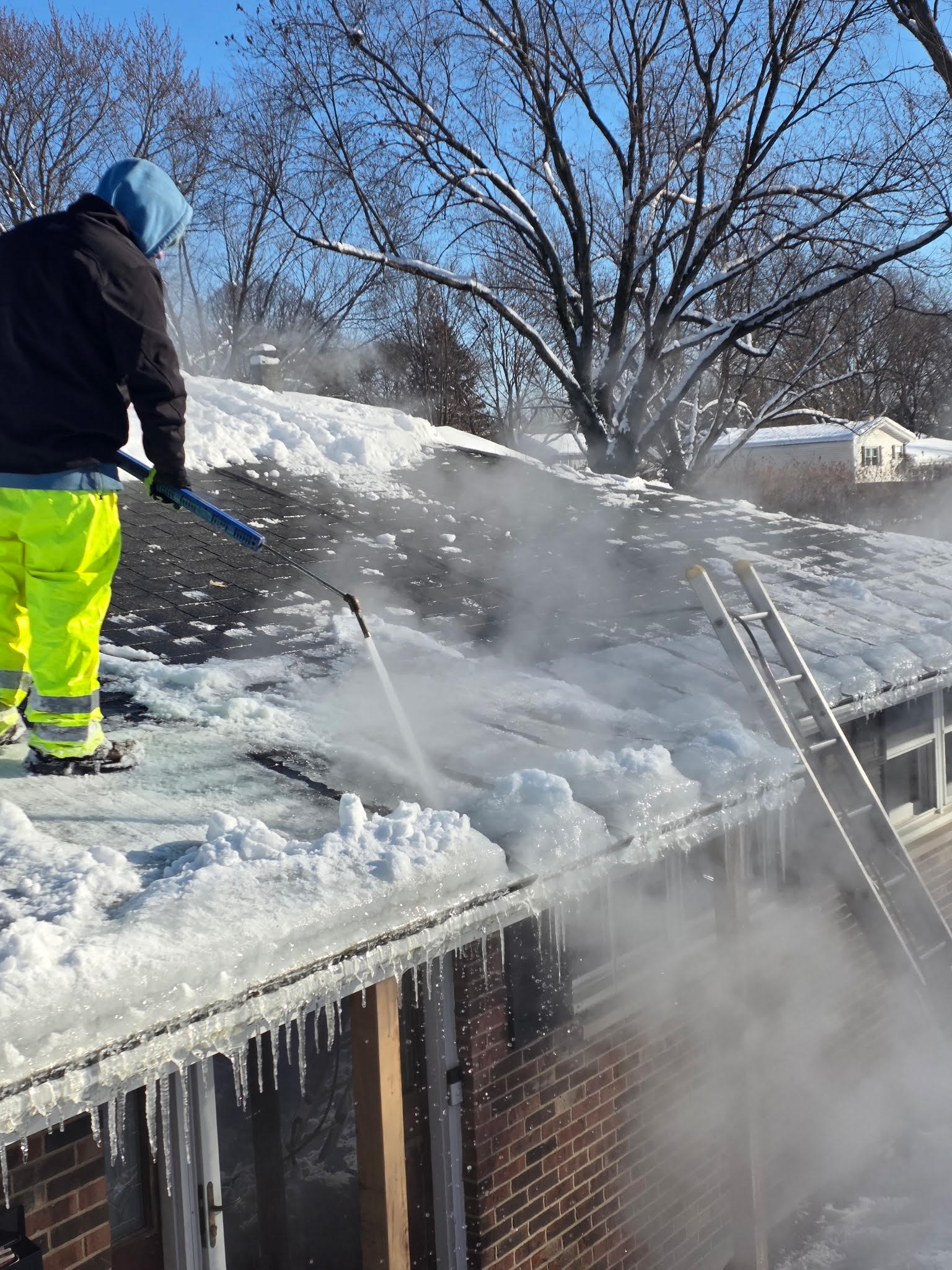
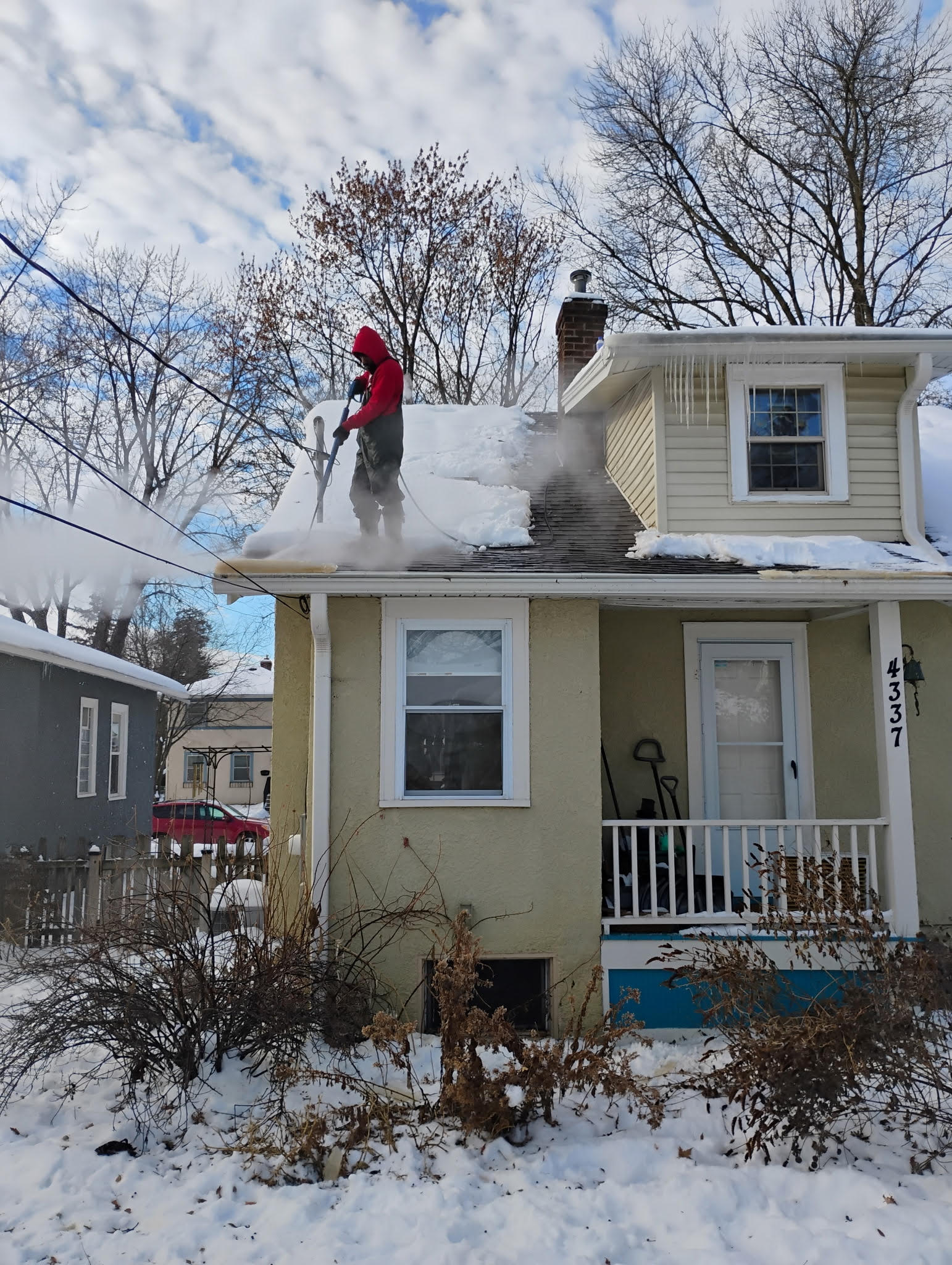
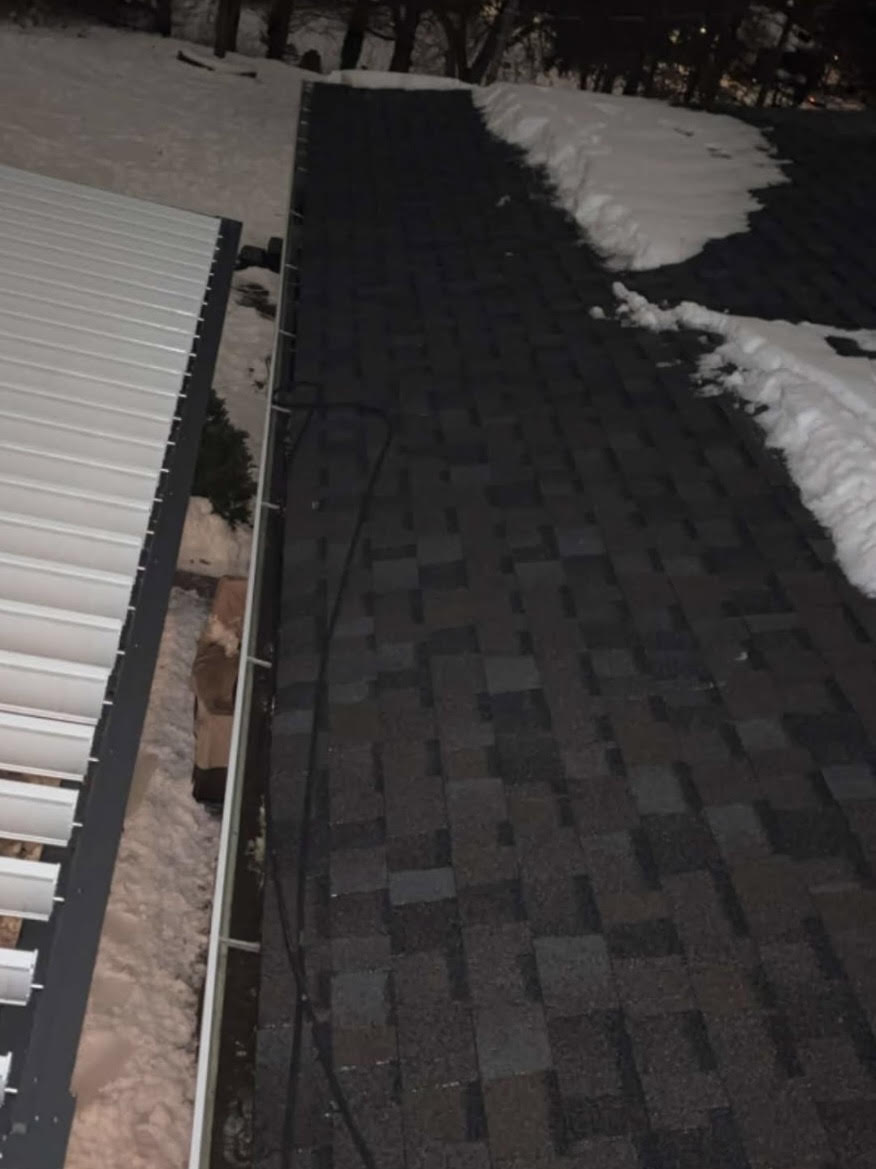
See professional steam ice removal in action.
Ice Dam USA maintains photographs from actual winter roof ice removal projects. These illustrate the steam equipment, working conditions and ice removal process. They are not represented as verified Albany jobs.
Frozen gutters, roof ice dams and blocked drains are different problems.
Pitched-roof ice dams
A ridge of refrozen meltwater may form at a roof edge, valley or cold transition.
The obstruction can hold later runoff against vulnerable roofing details.
Ice Dam Removal →Frozen gutters and downspouts
Ice may accumulate inside the gutter system, restricting flow and adding weight to supports.
Gutter ice can occur with or without a traditional roof ice dam.
Gutter Ice Removal →Flat and low-slope roof drains
Commercial and multifamily buildings may rely on drains and scuppers.
Frozen outlets, roof membranes and standing water require a different assessment from a pitched-roof ice ridge.
Commercial Roof Ice Removal →Roof ice removal concerns across Albany neighborhoods.
Within the City of Albany, building styles and roof conditions vary significantly. A historic attached home may present different winter drainage challenges from a detached residential property with a large attic.
Center Square, Washington Park and Hudson/Park
Historic homes, attached buildings and older roof details may require careful evaluation of roof membranes, flashing and access.
Pine Hills and the College Area
Older residential homes, rental properties and converted multifamily buildings may have dormers, porches and complicated roof transitions.
New Scotland, Helderberg and Whitehall
Traditional pitched roofs, attached garages and established residential streets may experience localized refreezing along cold eaves.
Downtown Albany and nearby commercial properties
Mixed-use buildings, commercial rooftops, parapets and limited ground access can create different worksite safety needs.
Ice dam removal in Albany and surrounding Capital Region communities.
Explore dedicated community pages throughout the Albany metro area for more detailed information about local roof conditions, ice dam formation and professional steam removal.
These communities are organized by geography so homeowners and property managers can find the most relevant local service information. Service availability is confirmed for each address.
Albany County: Colonie, Bethlehem and Guilderland areas
Albany County contains the City of Albany, suburban towns, villages and hamlets with different building styles. Latham and Loudonville are communities within the Town of Colonie, while Delmar, Glenmont and Slingerlands are associated with the Town of Bethlehem.
Rensselaer County: Troy and communities east of the Hudson River
Across the Hudson River from Albany, Rensselaer County contains historic urban buildings, suburban properties and communities with changing roof access and winter drainage requirements.
Saratoga County: Northern Capital District
Saratoga County includes growing suburban communities, historic properties and residential areas with varied roof configurations. Winter conditions may differ from properties inside Albany's urban core.
Schenectady County and the western Capital District
The Schenectady area contains historic urban properties, suburban homes and residential neighborhoods with roofs ranging from simple gables to multiple valleys and additions.
Additional existing New York service pages
Ice Dam USA also has individual pages for other nearby Upstate New York communities. These are useful for customers located beyond the immediate Albany metro area.
For broader coverage, visit our New York State Ice Dam Removal directory.
Albany, Troy, Schenectady and the surrounding Capital District.
The Albany metro area extends across the Hudson and Mohawk valleys into nearby communities in Albany, Rensselaer, Schenectady and Saratoga counties.
This map is centered on Albany for geographic reference. It does not show a staffed Ice Dam USA office or guarantee service at every address.
For professional ice dam removal availability at your property, call 855-468-4233.
What information helps our team plan professional removal?
Whether ice is concentrated along one eave or covers several valleys, the property details affect how service is discussed and scheduled.
Helpful information
- Complete property address
- Number of stories
- Approximate roof slope
- Roofing material, if known
- Visible ice location and thickness
- Any active interior water intrusion
- Ground-level access restrictions
- Photographs taken safely from the ground
Never climb an icy roof or ladder to obtain photographs.
What happens after you contact us?
1. Describe the roof. Tell us where the ice is and whether water is entering the property.
2. Discuss requirements. We review access, travel, current availability and service policies.
3. Coordinate work. When service is scheduled and safe, technicians assess the worksite and perform suitable agreed steam removal.
The scope and timing depend on the actual roof conditions.
What affects the cost of professional ice dam removal in Albany?
The cost of a removal project depends on the roof, the amount of ice, the worksite and the service requirements.
Roof height and access
A low residential roof and a taller historic city building may require different equipment access and worksite planning.
Ice thickness and coverage
One frozen roof edge may require different work from multiple valleys, dormers and long sections of accumulated ice.
Scheduling and conditions
Weather, urgency, travel, site safety and regional crew availability influence the service discussion.
Why the same Albany roof may develop ice dams every winter.
Professional steaming addresses existing ice buildup. It does not automatically correct the conditions that caused the ice to form.
If thick ice repeatedly returns to one valley, porch or eave, the building may have a recurring heat-loss or drainage issue.
Conditions worth investigating
- Attic air leakage
- Uneven or missing insulation
- Appropriate attic ventilation
- Roof valleys and dormers
- Heat escaping through roof penetrations
- Cold lower roof sections
- Gutters and drainage outlets
- Flashing and roofing condition
A qualified roofing or building-envelope professional can evaluate the building and recommend suitable long-term improvements.
Explore Ice Dam Prevention →Removal versus prevention
Immediate ice dam removal addresses existing ice that obstructs roof drainage.
Roof repairs address damaged shingles, flashing, membranes and other defects.
Long-term prevention focuses on heat transfer, insulation and recurring drainage conditions.
Interior restoration may be needed when water has entered walls, ceilings or insulation.
Visit the Ice Dam Learning Center →Frequently asked questions about ice dam removal in Albany, NY.
Does Ice Dam USA provide ice dam removal in Albany?
Ice Dam USA welcomes professional ice dam removal inquiries from Albany and the surrounding Capital Region. Actual service depends on crew availability, travel and safe roof conditions.
Why do ice dams develop on Albany roofs?
Snow may melt on warmer roof sections and then refreeze at colder eaves. Repeated freezing can create an obstruction that prevents normal runoff from draining.
How does Capital Region winter weather affect roof ice?
Snow, sleet, freezing rain and changing temperatures can influence conditions on the roof. The Hudson and Mohawk valley terrain also creates regional weather variation.
Can an ice dam form when temperatures stay below freezing?
Yes. Heat from a building can warm the roof deck and melt snow even while outside temperatures remain below freezing.
Can older Albany homes develop ice around porch roofs?
Yes. A colder porch or lower roof section can receive meltwater from a warmer upper roof, allowing water to refreeze at a roof transition.
Does a large icicle mean there is an ice dam?
Not necessarily. Icicles may form without a significant obstruction on the roof surface.
Do ice dams require gutters?
No. Ice dams can form directly on the roof surface without gutters.
What equipment does Ice Dam USA use?
Ice Dam USA uses professional Arctic Steamers and controlled low-pressure steam for suitable roof ice removal.
Why use steam instead of a pressure washer?
Steam uses heat to melt ice and reduces reliance on aggressive water pressure. High-pressure spray can affect vulnerable roofing materials and joints.
Is professional steam removal completely risk-free?
No. Roofing condition, materials, ice thickness, safe access and operator technique must be considered.
Can ice dams cause ceiling stains away from the roof edge?
Yes. Trapped water may travel through the roof assembly or framing before appearing inside the building.
Will an active leak stop immediately after removal?
Not necessarily. Removing an obstruction may improve drainage, but water already inside the structure can continue moving. Separate roofing repairs may be needed.
Are frozen gutters the same as roof ice dams?
Not always. Ice can accumulate within gutters without a substantial ice ridge on the roof.
Can commercial buildings and apartments develop roof ice problems?
Yes. Some buildings experience traditional ice dams, while others have frozen low-slope drains, scuppers or different drainage obstructions.
How much does Albany ice dam removal cost?
Cost depends on the property, ice buildup, access and service requirements. View the current Ice Dam USA pricing page for published rates and policies.
Does homeowners insurance cover ice dam damage?
Coverage varies by policy and circumstances. Contact your insurer about water damage, documentation and possible removal expenses.
Can an ice dam return after professional removal?
Yes. If the conditions that cause melting and refreezing remain, new ice can form during later winter weather.
Do you serve Schenectady and Saratoga County?
We welcome inquiries from Schenectady and nearby Saratoga County communities, subject to current regional availability.
Does Ice Dam USA have a local Albany office?
Ice Dam USA is based in Minnesota and serves multiple northern U.S. markets. This Albany page describes a service region, not a staffed local office.
Are emergency inquiries accepted after hours?
Yes. Emergency service inquiries are accepted 24/7. Dispatch depends on regional crews, travel, weather and safe roof access.
How do I request professional ice dam removal in Albany?
Call 855-468-4233 or visit the contact page. Provide your address, roof type, ice location and any active water intrusion.
Explore Ice Dam USA's five New York metro service regions.
New York's winter roof conditions vary from Lake Erie and Lake Ontario snowbelt communities to the Hudson–Mohawk valleys and New York City's urban roof systems.
Each metro hub contains region-specific guidance and links to surrounding community pages.
Albany and the Capital District
The Hudson and Mohawk valleys, historic city buildings, suburban homes and the surrounding Capital Region.
You are viewing the Albany metro hub.
Buffalo and Western New York
Lake Erie snowbands, heavy snow accumulation, Northtowns, Southtowns and Western New York roof ice conditions.
Buffalo NY Ice Dam Removal →Rochester and the Finger Lakes
Lake Ontario weather, Monroe County suburbs, historic Rochester homes and nearby Finger Lakes communities.
Rochester NY Ice Dam Removal →Syracuse and Central New York
Lake Ontario snowbelt conditions, prolonged winter snow cover and greater Syracuse roof ice problems.
Syracuse NY Ice Dam Removal →New York City Metro
The five boroughs, southern Westchester, Nassau County and urban residential and commercial roof drainage systems.
New York City Ice Dam Removal →New York State Service Directory
Explore additional communities and statewide professional ice dam removal information.
New York State Ice Dam Removal →More information about roof ice and professional removal.
Need professional ice dam removal in Albany?
Whether heavy roof ice is blocking drainage on an older Albany home, frozen gutters are affecting a suburban property, or winter water is entering a Capital Region building, contact Ice Dam USA to discuss professional Arctic Steamer removal.
We welcome residential, commercial and emergency inquiries throughout Albany and the surrounding Capital District.
Emergency inquiries accepted 24/7. Service scheduling depends on regional crew availability, winter travel, weather and safe roof access.
