
What Is an Ice Dam?
An ice dam is a buildup of ice that forms along the edge of a roof or in another cold roof area, creating a barrier that prevents melting snow from draining properly.
Ice dams commonly develop during winter when snow melts on warmer portions of a roof and flows toward colder areas, such as the roof overhang. When that water refreezes, it begins forming a ridge of ice. As the ridge grows, additional melting snow can become trapped behind it.
This trapped water may work its way beneath shingles and other roofing materials, potentially causing roof leaks, wet insulation, damaged ceilings, and interior water damage. Ice dams can affect homes in cold-weather regions across the United States, even when the roof itself is in otherwise good condition.
In this guide, Ice Dam USA explains how ice dams form, what causes them, how to recognize warning signs, why they can damage a home, and what homeowners can do about them.
Educational guidance from Ice Dam USA, a family-founded company with more than 30 years of ice dam removal experience.
7 Warning Signs You Have an Ice Dam on Your Roof
Ice dams are not always easy to recognize, especially when snow covers much of the roof. Some warning signs are visible from outside, while others appear inside your home after water has already started entering the building. Knowing what to look for can help you identify a potential problem before it becomes more serious.

Large Icicles Hanging From the Roof
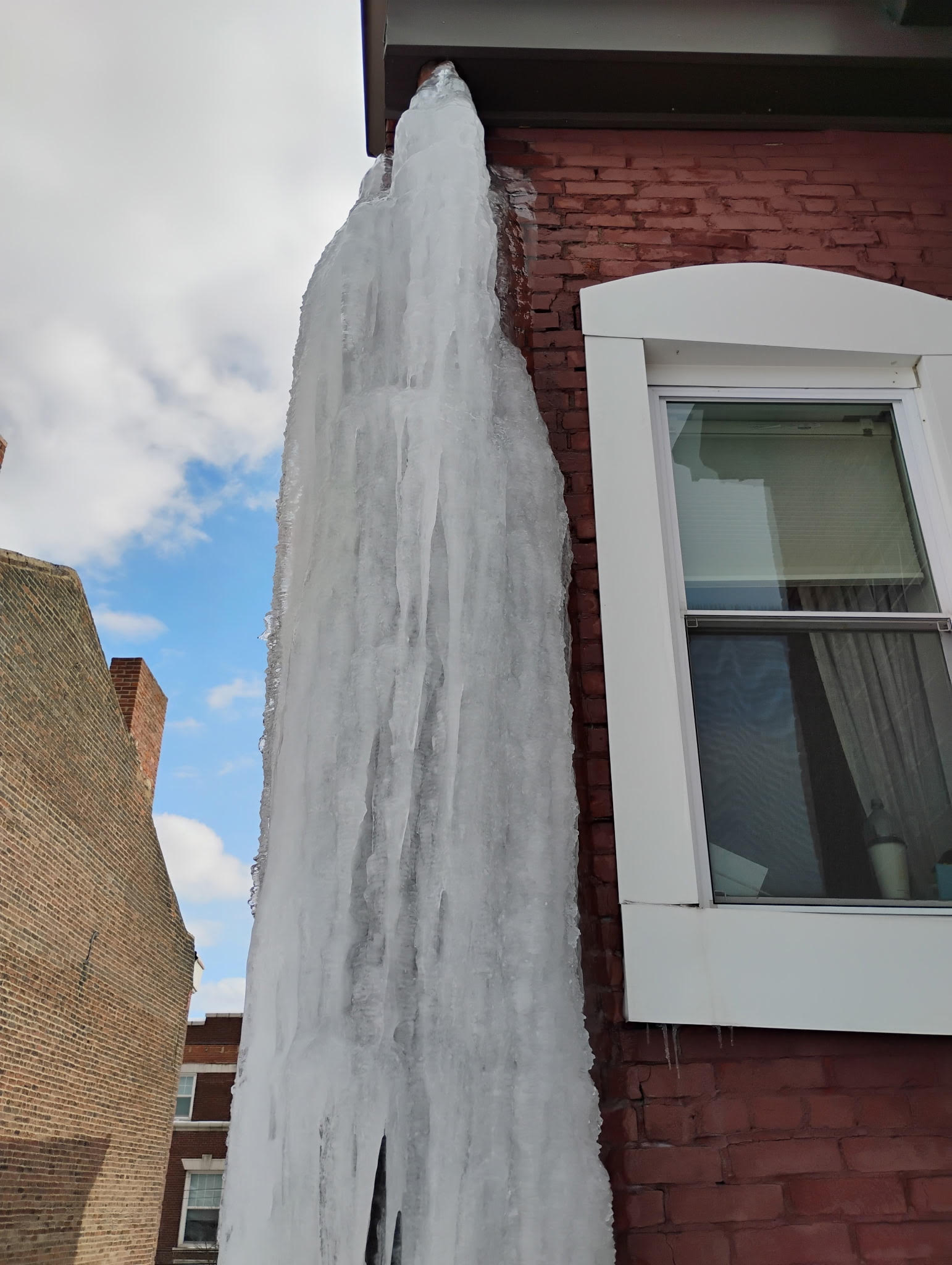
Large or unusually thick icicles hanging from gutters and roof edges may indicate repeated melting and refreezing. Icicles alone do not prove an ice dam is present, but extensive icicles combined with ice buildup along the roof edge deserve closer attention.
A Thick Ridge of Ice Along the Eaves
One of the clearest signs of an ice dam is a solid ridge of ice extending along the lower edge of the roof. This ice can grow over time, sometimes covering gutters and extending upward beneath accumulated snow.
Water Stains on Ceilings or Walls
Yellow or brown stains near exterior walls, ceilings, or upper-floor windows may indicate water intrusion. During winter, these stains can be associated with melting snow trapped behind an ice dam, although other roof or plumbing problems can produce similar symptoms.
Water Dripping Inside Your Home
Active dripping near ceiling edges, window frames, or exterior walls during snowy or freezing weather can be a serious warning sign. Water trapped behind an ice dam may travel beneath roofing materials and enter the home. Active leaks should be addressed promptly.
Ice-Filled or Overflowing Gutters
Gutters packed with solid ice, especially when combined with a ridge of ice above them, can indicate drainage problems. Frozen gutters alone are not necessarily ice dams, but they can accompany significant ice accumulation at the roof edge.
Peeling Paint or Damp Interior Surfaces
Bubbling paint, damp drywall, peeling finishes, or moisture around exterior walls can be signs of water entering the building. These symptoms may appear after repeated winter leaks and should be investigated rather than ignored.
Recurring Ice Buildup in the Same Areas
If heavy ice repeatedly forms in the same roof valleys, around dormers, or along certain eaves every winter, the home may have an ongoing ice dam problem. Recurring buildup can indicate conditions that deserve further evaluation, such as heat loss or roof drainage patterns.
What Should You Do If You Notice These Signs?
If you suspect an ice dam, avoid climbing onto an icy roof or attempting to break apart the ice with axes, hammers, or other sharp tools. These methods can be dangerous and may damage roofing materials.
If water is actively entering your home, protect belongings where it is safe to do so and arrange for an assessment promptly. Ice Dam USA provides professional ice dam removal services using specialized low-pressure steam equipment. Call 855-468-4233 to discuss your situation.
How Do Ice Dams Form?
An ice dam forms when snow melts on one part of a roof and the resulting water refreezes at a colder location. This commonly happens near the eaves, which extend beyond the heated walls of a home.
As the ice grows, it creates a barrier that prevents additional melting snow from draining off the roof. Water may collect behind the ice and work its way under shingles, flashing, or other roofing materials.
The 5 Stages of Ice Dam Formation
- Snow accumulates on the roof. A winter storm leaves a layer of snow covering the shingles or other roofing materials. Snow can act as insulation, affecting temperatures at the roof surface.
- Heat melts the bottom layer of snow. Heat escaping from the house, solar warming, or a period of warmer weather causes some of the snow to melt.
- Meltwater travels down the roof. Water flows toward the gutters and eaves, following the roof's slope.
- The water reaches a colder area. Because the roof overhang is often colder than the roof above the heated living space, the water can refreeze near the roof edge.
- An ice barrier grows. Repeated melting and freezing create a ridge of ice. Additional water may become trapped behind this barrier, increasing the risk of roof leaks.
Can Ice Dams Form Without Gutters?
Yes. Gutters are not required for an ice dam to form. Ice dams develop on roofs with and without gutters because the underlying problem is meltwater freezing at a colder roof surface.
Frozen gutters can make drainage problems worse, but simply removing gutters will not necessarily eliminate ice dam formation.
What Causes Ice Dams on a Roof?
Ice dams are caused by a combination of melting snow, cold roof surfaces, and refreezing water. Several conditions can increase the likelihood of this happening.
1. Heat Loss From the Home
Warm air escaping into an attic can heat the roof deck and melt snow above it. Common air leakage points include attic hatches, plumbing penetrations, recessed lights, and gaps around electrical wiring.
2. Inadequate Attic Insulation
Insulation helps keep indoor heat inside the living space. Missing, uneven, or insufficient insulation can allow excess heat to reach the roof and melt snow.
3. Attic Ventilation Problems
Proper attic ventilation can help maintain a colder roof deck. Blocked soffit vents or poorly designed ventilation may contribute to uneven roof temperatures. Ventilation works best alongside air sealing and insulation.
4. Heavy Snow Accumulation
Deep snow can insulate the roof surface, allowing heat from the building to affect the bottom layer of snow even when outdoor temperatures remain below freezing.
5. Temperature Changes
Sunny winter days, warmer afternoon temperatures, and freezing nights can repeatedly melt and refreeze snow. Ice dams can develop even on homes with well-insulated attics.
6. Roof Design
Roof valleys, dormers, skylights, and intersecting rooflines can create areas where snow accumulates or meltwater concentrates. These locations may be especially vulnerable to ice buildup.
Why Do Some Houses Get Ice Dams While Others Don't?
Two neighboring homes can experience the same snowfall but develop very different amounts of ice. Differences in attic air leakage, insulation, roof design, sun exposure, ventilation, and snow accumulation all play a role.
A home that repeatedly develops ice dams in the same location may have a persistent heat-loss or drainage problem worth investigating.
What Damage Can Ice Dams Cause?
Ice dams can cause both visible and hidden damage to a home. The main concern is water backing up behind the ice and entering areas of the roof that are not designed to hold standing water.
Roof Leaks
Trapped water may work beneath roofing materials or enter through vulnerable flashing and roof penetrations, leading to leaks.
Ceiling and Drywall Damage
Water can stain ceilings, soften drywall, damage plaster, and cause paint to bubble or peel.
Damaged Insulation
Wet attic insulation may lose some of its insulating ability. Affected materials may require drying or replacement.
Mold and Moisture Problems
Moisture that remains trapped inside walls or attics can create conditions favorable for mold growth.
Gutter and Fascia Damage
Heavy ice can stress gutters, fasteners, fascia boards, and other roof-edge components.
Interior Property Damage
Roof leaks can affect flooring, furniture, stored belongings, electrical fixtures, and other household property.
Can an Ice Dam Cause a Roof Leak?
Yes. As water accumulates behind an ice dam, it may enter beneath roofing materials and travel into the attic or living space. The location of the interior leak may not be directly below the ice dam because water can travel along framing and other building materials.
Can Ice Dams Damage Shingles?
Ice buildup and repeated freeze-thaw cycles may contribute to roof-edge deterioration. Attempts to chop or scrape ice can also damage shingles, flashing, and protective roofing materials.
Does Every Ice Dam Cause Damage?
No. Some ice dams form and melt without causing an interior leak. The risk depends on the amount of trapped water, roof construction, protective underlayment, and existing vulnerabilities.
Because damage can develop behind finished surfaces, a small visible stain does not always reflect the full extent of moisture intrusion.
What Should You Do If You Have an Ice Dam?
If you discover a large ice dam, the first priority is protecting people and property. Avoid climbing onto the roof or standing beneath heavy overhanging ice.
If Water Is Leaking Into Your Home
- Protect your belongings. Move furniture, electronics, and valuables away from the leak when it is safe to do so.
- Watch for electrical hazards. Avoid wet electrical fixtures, outlets, and wiring. Contact a qualified professional if water is near electrical systems.
- Document the damage. Photograph visible water stains, roof ice, and damaged materials for your records.
- Contact an ice dam removal professional. Clearing the ice barrier can help restore drainage and reduce additional water buildup.
- Address remaining moisture. After the immediate problem is controlled, have wet materials evaluated and dried as appropriate.
How Are Ice Dams Removed Safely?
Professional ice dam removal focuses on clearing the ice barrier while minimizing the risk of roof damage and injury.
Low-Pressure Steam Removal
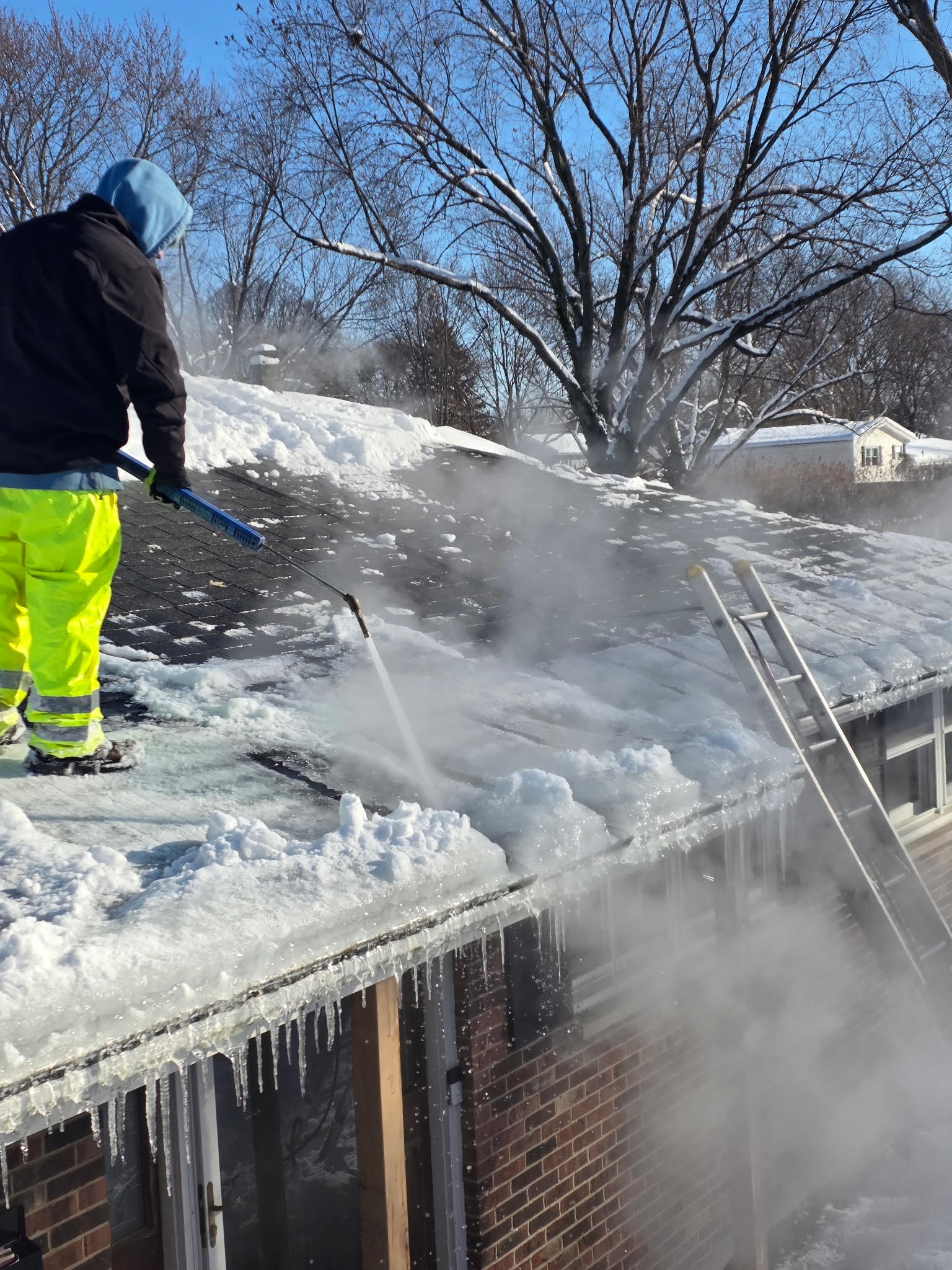
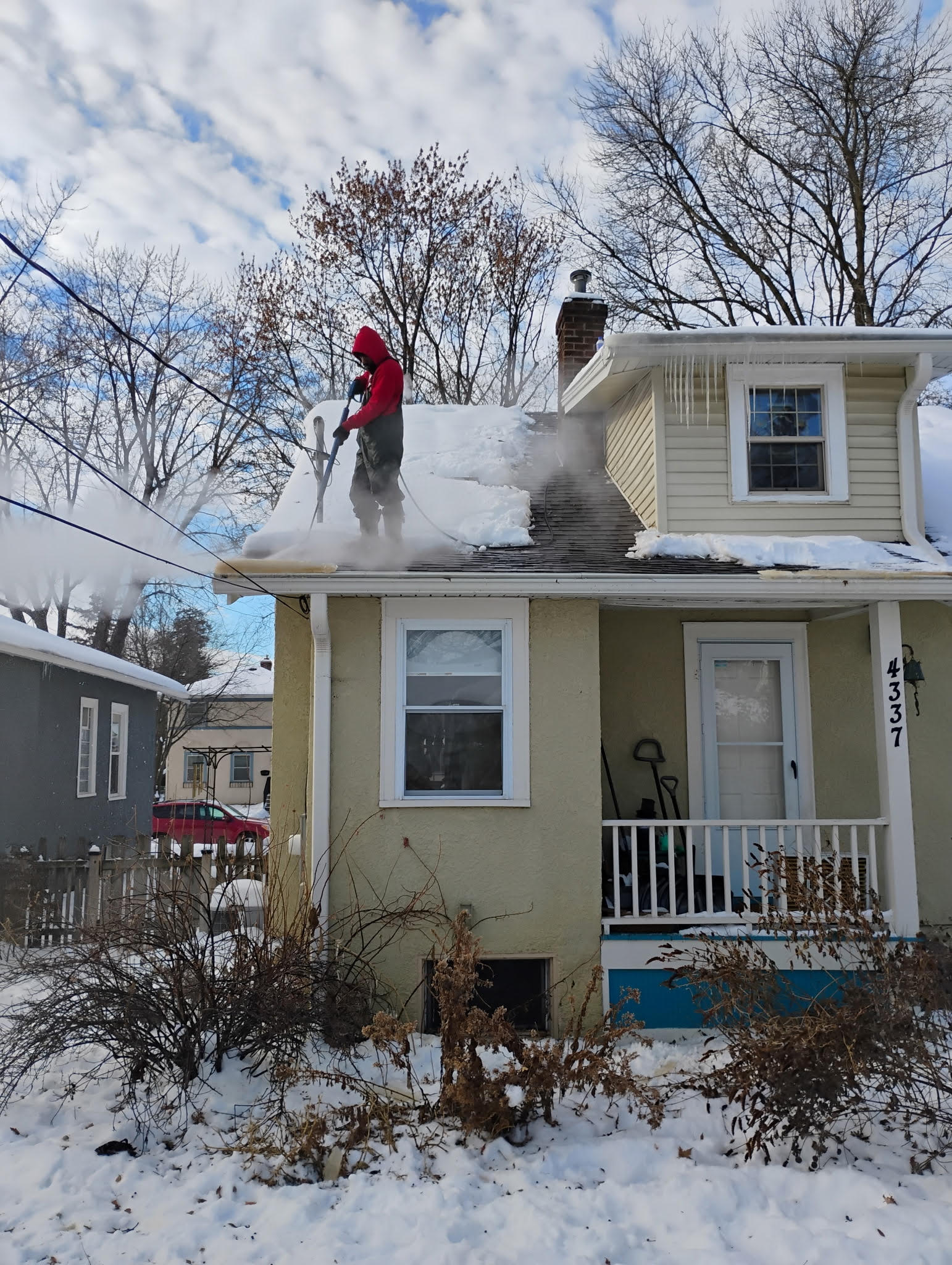
One professional method involves using specialized steam equipment to melt ice and open drainage paths. Ice Dam USA uses low-pressure steamers rather than high-pressure washing equipment for ice dam removal.
The heat helps break down the ice without relying on aggressive mechanical force. Proper equipment, training, and technique remain important for protecting the roof.
Why Not Use a Pressure Washer?
High-pressure water can strip protective granules, loosen roofing materials, or force water into vulnerable areas. A hot-water pressure washer is not the same as a purpose-built low-pressure steam system.
Why You Should Avoid Chipping Ice
Hammers, axes, chisels, and other sharp tools can puncture roofing materials, damage flashing, and break gutters.
Attempting to remove large chunks of ice also creates falling-object hazards.
Can You Use Salt to Melt an Ice Dam?
Rock salt and some deicing chemicals may damage roofing materials, metal components, or nearby landscaping. Improper application can also create new drainage or refreezing problems.
Avoid placing chemicals on your roof without guidance appropriate to your roofing materials.
How Long Does Ice Dam Removal Take?
The time required depends on the thickness and extent of the ice, roof accessibility, weather conditions, and the areas requiring treatment. A small isolated ice dam may require less work than ice covering multiple roof edges and valleys.
Learn About Professional Ice Dam RemovalHow Can You Prevent Ice Dams?
Long-term prevention usually focuses on reducing heat transfer to the roof and managing snow and drainage. Because homes differ, the best combination of improvements depends on the building.
Seal Attic Air Leaks
Close gaps where heated indoor air enters the attic, including around attic access openings, wiring, and plumbing penetrations.
Improve Attic Insulation
Proper insulation helps reduce unwanted heat transfer from living spaces to the roof deck.
Evaluate Attic Ventilation
An appropriate ventilation system can help keep the roof deck colder. Ventilation should be considered together with air sealing and insulation.
Maintain Gutters
Clear leaves and debris before winter to support normal drainage. Clean gutters alone will not prevent every ice dam.
Address Roof Design Problems
Recurring ice near valleys, dormers, and roof intersections may warrant inspection by a qualified roofing professional.
Manage Heavy Roof Snow
Careful snow removal may reduce the snow available to melt and refreeze. Professional assistance is advisable when roof access is hazardous.
Will Better Insulation Stop Ice Dams?
Improved insulation can significantly reduce heat loss through the roof, but it is not a guaranteed solution by itself. Air leakage, roof design, sun exposure, and weather can still contribute to ice dam formation.
Do Heated Roof Cables Prevent Ice Dams?
Properly designed heat cables may help maintain drainage channels in selected roof areas, but they do not necessarily correct the underlying causes of ice dams. They also require proper installation, maintenance, and electricity.
Is Roof Snow Removal Helpful?
Removing snow from vulnerable roof areas can sometimes reduce ice dam formation, especially before repeated freeze-thaw cycles. However, improper snow removal can damage roofing materials or create serious fall hazards.
Learn more about Ice Dam USA's winter roof protection services , including roof snow removal, gutter ice removal, and ice dam prevention.
Frequently Asked Questions About Ice Dams
These answers address common questions homeowners ask when researching ice dams, winter roof leaks, and roof ice removal.
What exactly is an ice dam?
An ice dam is a ridge of ice that forms on a roof and blocks melting snow from draining normally. Water trapped behind it may leak beneath roofing materials and enter a home.
What is the main cause of ice dams?
The main cause is snow melting on a warmer roof surface and refreezing at a colder area, often the roof edge.
Can ice dams form when temperatures are below freezing?
Yes. Heat escaping from the home or sunlight can melt snow even when outdoor air temperatures are below freezing.
Are icicles the same as ice dams?
No. Icicles are hanging formations of ice. An ice dam is a buildup that blocks water drainage. Large icicles can accompany an ice dam, but not always.
Can ice dams form on a new roof?
Yes. New roofs can develop ice dams because the formation process depends on snow, melting, and refreezing. Proper roofing details can help reduce the risk of water intrusion.
Can metal roofs develop ice dams?
Yes. Although metal roofs often shed snow differently, ice can still accumulate near roof edges, valleys, and other cold areas.
Can ice dams form without gutters?
Yes. Ice dams can form on roofs with or without gutters. Gutters are not the underlying cause.
Will an ice dam melt on its own?
It may melt when temperatures rise, but waiting can allow additional water to collect behind the ice. Active leaks should be addressed promptly.
Should I remove an ice dam myself?
Climbing onto an icy roof or striking ice with tools can be dangerous and may damage roofing materials. Professional removal is generally safer for substantial ice buildup.
Is steam removal safe for shingles?
Specialized low-pressure steam equipment is designed to melt ice without the aggressive force of a high-pressure washer. Correct equipment and technician technique are still essential.
Does homeowners insurance cover ice dam damage?
Coverage varies by policy and circumstances. Some policies may cover certain sudden water damage, while exclusions, deductibles, and maintenance requirements can apply. Contact your insurer to review your coverage.
How can I tell whether a ceiling leak is from an ice dam?
An ice dam may be involved when a leak appears during snowy weather and ice is visible along the roof edge. However, roof flashing, plumbing, condensation, and other problems can cause similar symptoms. An inspection may be needed to identify the source.
Why do ice dams keep returning every winter?
Recurring ice dams may indicate persistent attic heat loss, insulation deficiencies, ventilation issues, or roof areas that repeatedly collect snow and meltwater.
When should I call an ice dam removal company?
Consider professional assistance when a substantial ice ridge is blocking drainage, ice is growing near vulnerable roof areas, or water is entering your home.
Understanding Ice Dams: Key Takeaways
Ice dams are a common winter roofing problem in snowy climates. They develop when melting snow refreezes at colder roof areas and blocks normal drainage.
The most important things for homeowners to remember are:
- Ice dams form from melting and refreezing snow, not simply from clogged gutters.
- Heat loss, insulation, ventilation, weather, and roof design can all influence ice dam formation.
- Large icicles, thick ice ridges, frozen gutters, and interior water stains are warning signs worth investigating.
- Ice dams can cause roof leaks, wet insulation, damaged ceilings, and other moisture problems.
- Aggressive ice chopping and high-pressure washing can damage roofing materials.
- Long-term prevention often involves air sealing, insulation, ventilation, and appropriate snow management.
Understanding how ice dams form can help you recognize a developing problem, make informed decisions about removal, and reduce the likelihood of future damage.
Need Help With an Ice Dam?
Ice Dam USA is a family-owned ice dam removal company with more than 30 years of industry experience. We provide professional low-pressure steam removal for residential and commercial properties across the northern United States.
Whether you're dealing with heavy roof ice, frozen gutters, or water entering your home, our team can discuss available service options.
Ice Dam Removal Services Call 855-468-4233 Contact Ice Dam USAFor additional information, visit the Ice Dam USA Learning Center or explore our ice dam removal FAQs .
