Buffalo NY Ice Dam Removal
Heavy lake-effect snow. Thick ice along your roof. Water entering your home. Professional ice dam removal using Arctic Steamers.
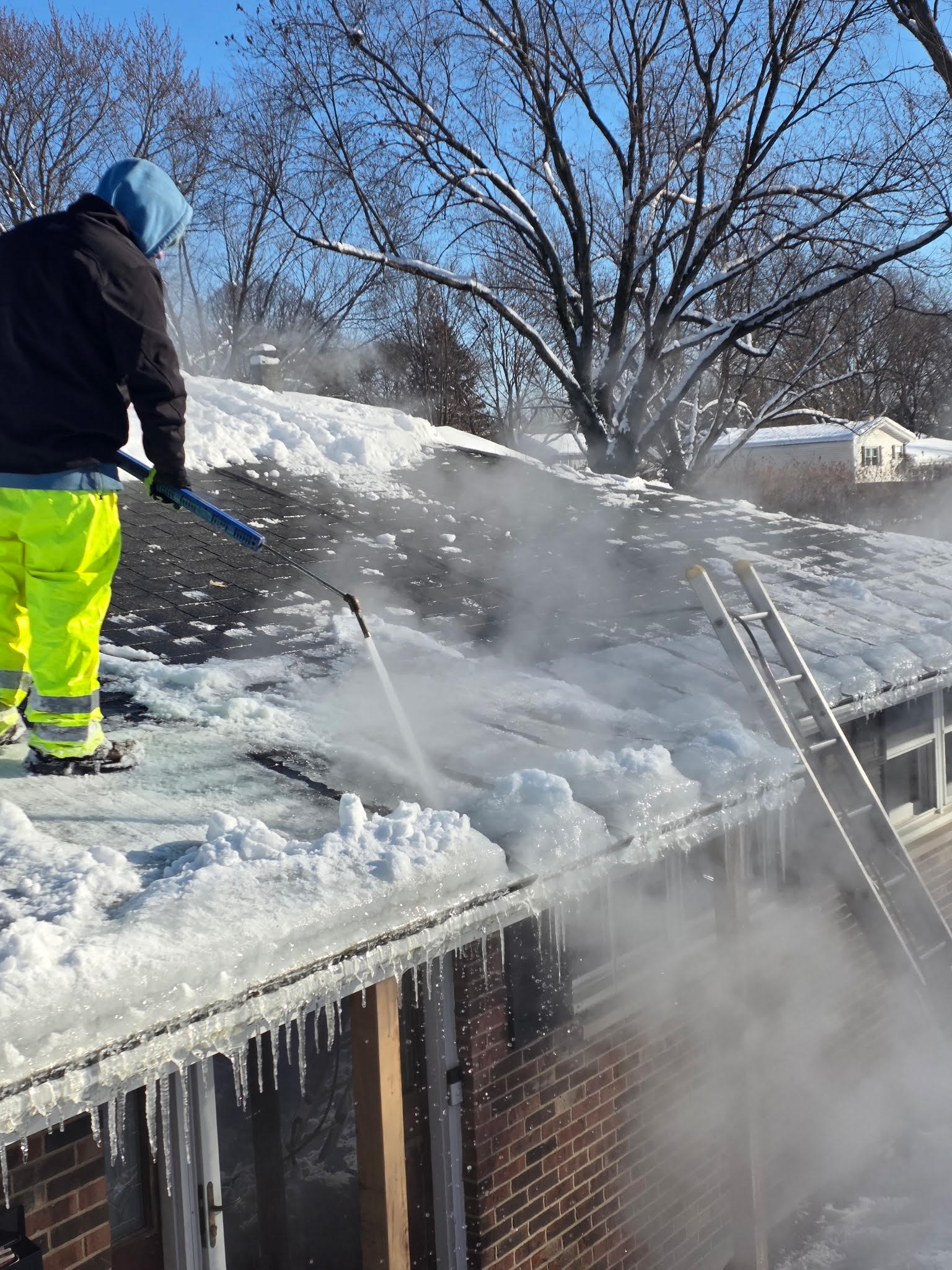
Buffalo winters can leave roofs buried beneath substantial lake-effect snowfall. When snow melts and refreezes at colder roof edges, ice dams can block normal drainage and create the potential for water damage.
Ice Dam USA provides professional ice dam removal in Buffalo, NY using specialized Arctic Steamers and controlled low-pressure steam. Our method is designed to remove roof ice without relying on aggressive chopping or high-pressure water blasting.
We welcome residential, commercial, and emergency ice dam removal inquiries throughout Buffalo, Erie County, and the surrounding Western New York region. Service availability depends on weather, travel, safe roof access, and crew scheduling.
What's happening on your Buffalo roof?
Not every winter roof problem requires the same solution. Choose what you're experiencing to learn what the problem may mean and where to go next.
01 Water is leaking into my home
Possible ice dam emergency
Water dripping through a ceiling, appearing around windows, or staining an exterior wall may indicate trapped meltwater. However, other roofing defects can also cause winter leaks.
Stay clear of wet electrical fixtures and sagging ceilings. Do not climb onto the roof. Contact Ice Dam USA to discuss the situation and current emergency service availability.
Explore Emergency Ice Dam Removal →02 Thick ice is building along my roof
Roof-edge ice dam buildup
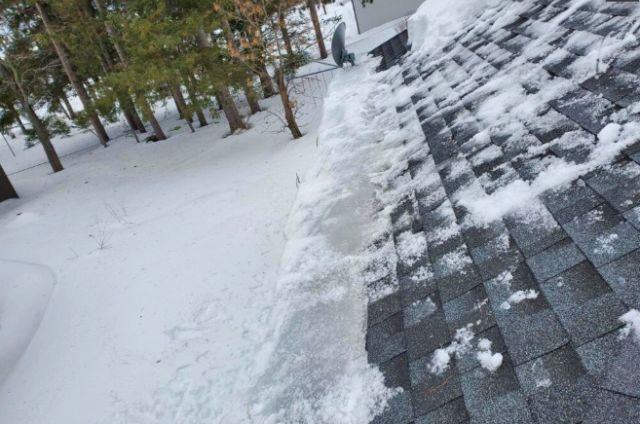
A continuous ridge of ice at the eaves may prevent melting snow from draining. The water trapped behind that ridge can reach vulnerable roofing materials.
Professional steam removal can help clear the obstruction without relying on aggressive chipping or pressure washing.
Learn About Professional Steam Removal →03 My gutters are frozen solid
Frozen gutter and downspout problems
Gutters filled with ice can obstruct drainage and add substantial weight to gutter components. The obstruction may be inside the gutters or higher on the roof.
A frozen gutter is not automatically the same thing as a roof ice dam. Identifying the affected area helps determine the right removal method.
Explore Frozen Gutter Ice Removal →04 Large icicles are hanging from my roof
Falling ice and drainage concerns
Large icicles can be dangerous to anyone walking underneath them. They may accompany an ice dam, but icicles alone do not prove that water is trapped on the roof.
Keep people away from the area. Learn how to recognize the difference between ordinary icicle formation and a roof ice obstruction.
Learn How to Identify an Ice Dam →05 Ice dams form every winter
Recurring ice dam conditions
If ice repeatedly develops in the same roof areas, there may be an underlying problem involving attic air leakage, insulation, ventilation, roof geometry, or drainage.
Steam removes existing ice obstructions, while long-term prevention focuses on the conditions that allow them to form.
Explore Long-Term Ice Dam Prevention →06 I need pricing or service information
Planning professional ice dam removal
Roof height, pitch, ice thickness, affected roof sections, accessibility, travel, and weather can influence service scope.
You can review current pricing policies or contact our team to discuss your roof and service availability.
Have an active roof leak? Calling is the best way to discuss urgent concerns. Call 855-468-4233 for current availability. Emergency inquiries are accepted 24/7; arrival times are not guaranteed.
Why Buffalo roofs develop severe ice dams after lake-effect snowstorms.
Buffalo's location near Lake Erie creates some of the most recognizable winter weather conditions in the northeastern United States. Cold air moving across the lake can produce intense bands of lake-effect snow.
These snowbands can be narrow, meaning snowfall varies dramatically from one community to another. A roof in South Buffalo or the Southtowns may receive different accumulation than a home in the Northtowns during the same winter event.
Communities such as Hamburg, Orchard Park, and West Seneca can experience significant lake-effect snow accumulation when storm bands settle over southern Erie County.
Deep snow remaining on a roof can provide the conditions for ice dams to develop. When heat from the building warms the roof deck, the underside of the snowpack may begin melting even while outside temperatures remain below freezing.
That meltwater travels toward the roof's colder eaves and overhangs. When it refreezes, a ridge of ice may form. As the ridge grows, normal drainage can become blocked.
The greatest concern is not simply the presence of snow or icicles. It is water collecting behind a frozen obstruction and potentially moving beneath shingles, flashing, or other roofing details.
Explore our guide explaining how ice dams form .
How Buffalo's neighborhoods and building designs influence ice dam formation.
Snowfall matters, but roof construction, attic heat loss, wind exposure, and drainage play equally important roles.
South Buffalo and Kaisertown
Established neighborhoods contain homes with a variety of roof designs, including dormers, additions, porches, and garages. Transitions between heated and unheated areas may develop uneven snowmelt.
North Buffalo and Parkside
Many established properties feature distinctive rooflines, steep slopes, and architectural details. Roof valleys and dormers can concentrate snowmelt in specific locations.
Elmwood Village and Allentown
Older residential buildings, multi-story construction, and complicated roof transitions may require careful planning when ice accumulates along eaves or hard-to-access areas.
Buffalo Southtowns
Homes in Hamburg, Orchard Park, and nearby communities can experience heavy snowfall. Deep roof snow may remain through extended cold periods.
Northtowns roof conditions
Properties in Amherst, Tonawanda, and surrounding communities have varied roof geometry, attic conditions, and exposure to winter winds.
Attic heat loss and shaded eaves
Warm air leaking into an attic may cause uneven melting. North-facing roof sections and sheltered eaves may remain cold enough for that water to refreeze.
Four stages of a Buffalo roof ice dam.
Snow accumulates.
Lake-effect storms and other winter precipitation cover the roof with snow.
Melting begins.
Building heat, sunlight, or changing temperatures cause part of the snow to melt.
Water refreezes.
Meltwater reaches colder roofing near the eaves and forms an ice ridge.
Drainage is blocked.
Additional meltwater collects behind the ice and may enter vulnerable roofing areas.
Arctic Steamers versus hot-water pressure washers.
When ice is attached to shingles, flashing, or other roof materials, the removal method matters. Ice Dam USA uses controlled steam rather than aggressive force.
Our professional Arctic Steamers apply low-pressure steam to melt ice along affected roof sections. The purpose is to work through accumulated ice without relying on mechanical chopping or concentrated high-pressure water.
Before removal, technicians consider ice thickness, roof slope, roofing materials, building height, access, weather, and worksite safety.
Arctic Steamer
- Uses heat as the primary removal method.
- Applies controlled low-pressure steam.
- Allows targeted melting of roof ice.
- Reduces reliance on chopping and prying.
- Can help reopen obstructed drainage areas.
- Requires trained operators and careful technique.
Hot-Water Pressure Washer
- Directs heated water under pressure.
- Is commonly designed for cleaning applications.
- Aggressive spray can dislodge shingle granules.
- Improper use can damage flashing or roofing.
- Can force water into vulnerable roof joints.
- Is not Ice Dam USA's chosen ice removal method.
Professional removal addresses the ice obstruction. It does not replace roof repairs, insulation improvements, or other building work that may be necessary.
See professional steam ice removal in action.
These photographs show actual Ice Dam USA winter roof conditions and professional steam removal work. They are not presented as verified Buffalo customer projects.
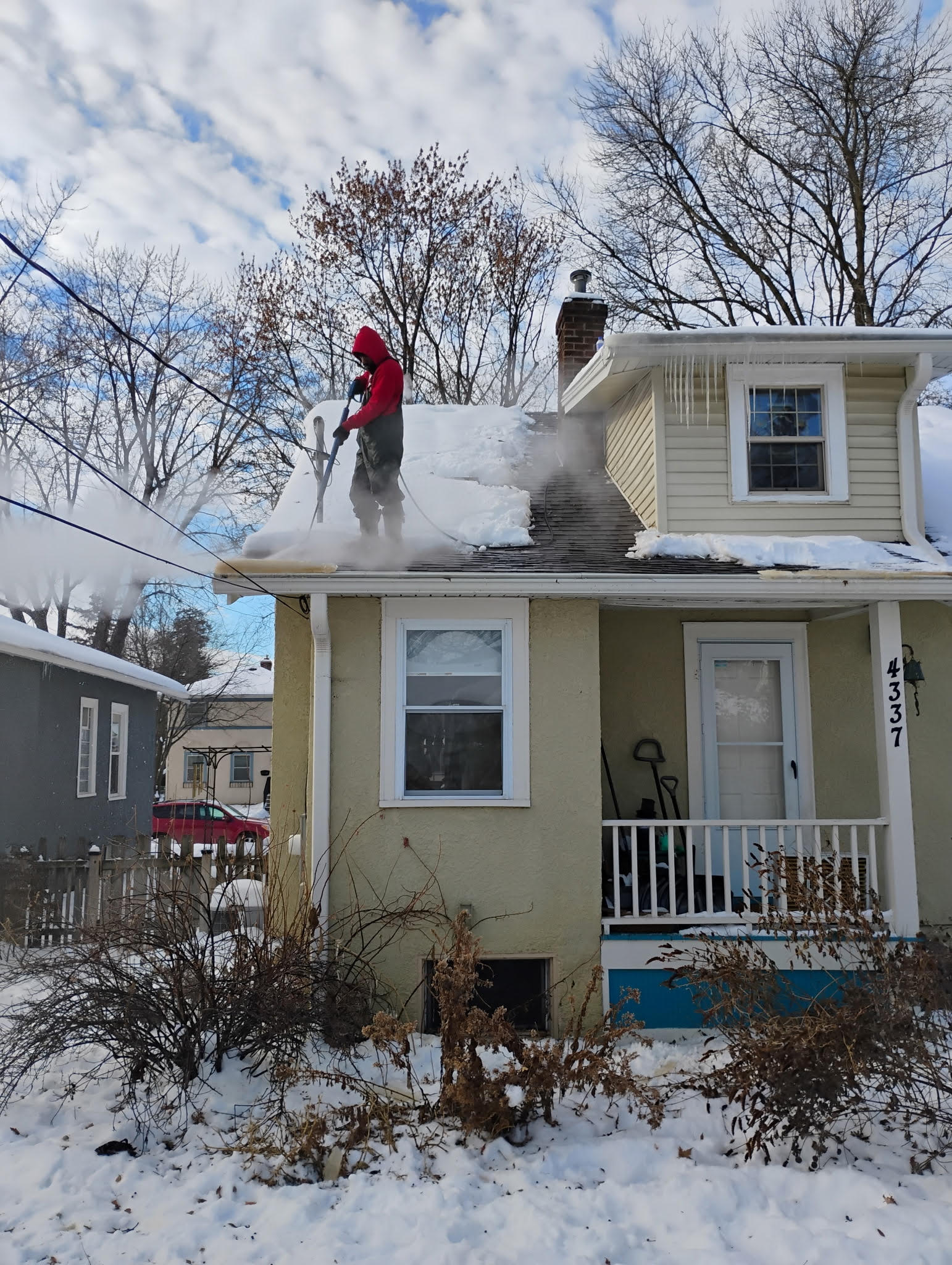
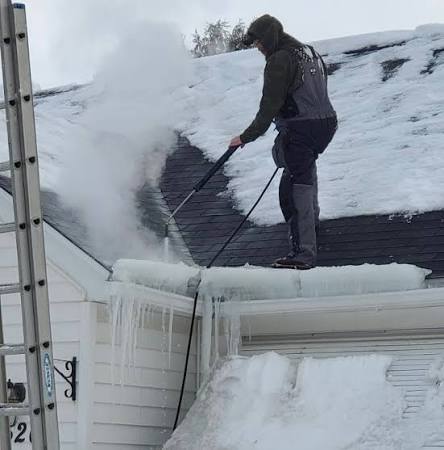
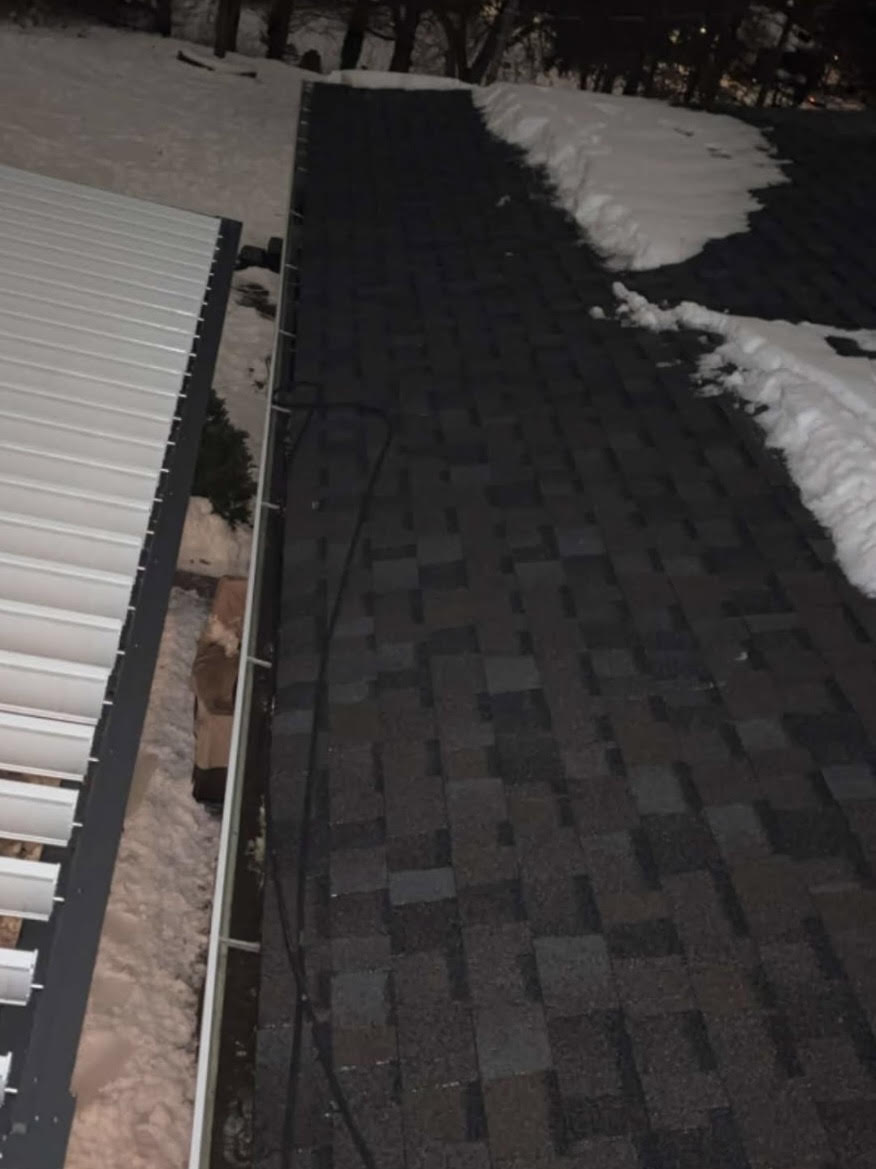
View more authentic Ice Dam USA project photographs to better understand our equipment and professional removal method.
Water entering your Buffalo home after heavy snow?
An ice dam can prevent melting snow from draining. Water trapped behind the ice may enter through vulnerable roof joints, flashing, or other openings.
In Buffalo homes with finished attics, dormers, or older roof assemblies, water may travel through insulation and concealed spaces before appearing on ceilings or walls.
What to do when you notice water
- Stay clear of wet electrical fixtures.
- Keep away from sagging ceilings.
- Move belongings if it is safe.
- Document visible moisture damage.
- Never climb onto an icy roof.
- Contact professional removal help.
Steam removal may help reopen blocked drainage. However, water already inside the roof assembly can continue moving, and separate roofing repairs may be necessary.
Helpful details when calling
- Buffalo-area property address
- Approximate number of stories
- Location of the roof ice buildup
- Whether water is actively dripping
- Approximate affected roof length
- Roof pitch and access challenges
Photographs taken safely from the ground can help our team understand the situation. Do not climb onto a ladder or roof to obtain them.
Emergency inquiries are accepted 24/7. Dispatch and arrival depend on weather, travel, availability, and safe access.
When should Buffalo homeowners be concerned about roof ice?
Thick ice along the eaves
A substantial ice ridge may prevent melting snow from draining off the roof.
New ceiling stains
Interior discoloration during winter may indicate water entering through the roof assembly.
Ice around dormers
Dormers and additions create roof transitions that can concentrate meltwater and ice.
Water during winter warmups
Leaks may appear when melting accelerates while existing roof-edge ice remains frozen.
Ice in roof valleys
Valleys collect drainage from multiple roof slopes and can develop difficult ice buildup.
Recurring winter leaks
Ice returning to the same roof sections may indicate persistent heat-loss or roof design concerns.
Frozen gutters and downspouts in Buffalo.
Buffalo homeowners sometimes experience heavy ice buildup inside gutters and downspouts following repeated snowmelt and refreezing.
Ice-filled gutters can obstruct normal drainage, place weight on attachments, and create additional problems around roof edges.
A frozen gutter is not necessarily the same thing as a roof ice dam. Some properties experience both problems at once, while others have ice confined to the gutter system.
The correct removal approach depends on where the ice is located, whether drainage is blocked, and the condition of the roofing and gutters.
Learn About Gutter Ice RemovalRoof ice dam or frozen gutter?
Roof ice dam: An ice ridge forms on the roof and may hold meltwater behind it.
Frozen gutter: Ice accumulates inside a gutter or downspout and may interfere with drainage.
Both problems: Ice may extend across the roof edge and into the gutter system.
A professional evaluation helps identify the affected areas before removal begins.
Professional ice dam removal throughout Greater Buffalo.
Ice Dam USA coordinates service inquiries throughout Buffalo and surrounding Western New York communities, subject to technician availability and winter working conditions.
We serve homeowners, business owners, landlords, and property managers through traveling crews. The communities below represent service areas, not separate permanent offices.
City of Buffalo neighborhoods
Buffalo's residential neighborhoods include historic houses, duplexes, multi-story buildings, dormers, and varied rooflines. The location of ice buildup can differ significantly between buildings.
Buffalo Southtowns
Communities south of Buffalo can receive heavy lake-effect snow. We have dedicated ice dam removal information for the surrounding markets.
Buffalo Northtowns
Homes across the Northtowns can experience ice buildup after winter snowfall, thawing, and refreezing. Explore nearby location guides.
Eastern Erie County & Niagara
Winter roof ice is also a concern in suburbs east of Buffalo and throughout nearby Niagara County.
Find ice dam removal information for your Buffalo-area community.
Explore our dedicated local service pages across Erie and Niagara counties. Each page provides information about local winter roof conditions and professional steam ice dam removal.
Buffalo Southtowns
Southern Erie County communities often experience significant lake-effect snowfall. Find information for nearby residential and commercial properties.
Buffalo Northtowns
Northern Buffalo suburbs include established residential neighborhoods and varied roof configurations. Explore the communities closest to your property.
Eastern Buffalo Suburbs
Established communities east of Buffalo include homes with a variety of rooflines, dormers, and attic construction.
Niagara County
Properties north of Buffalo can experience winter roof ice, frozen gutters, and difficult drainage conditions during snowmelt and refreezing.
Looking beyond the Buffalo metro? Explore Rochester ice dam removal or our New York service directory .
Professional ice dam removal for different Buffalo buildings.
Single-family homes
Professional ice removal inquiries for affected eaves, valleys, gutters, and roof transitions.
Historic Buffalo homes
Older roof construction, dormers, porches, and intersecting rooflines may require careful assessment.
Duplexes and multifamily housing
Shared rooflines, multi-story properties, and several occupied units can make winter ice removal more complex.
Apartment buildings
Larger residential properties may require coordinated access, planning, and additional safety considerations.
Commercial buildings
Building height, roof design, materials, and access conditions determine whether service is appropriate.
Rental properties
Landlords and property managers can contact Ice Dam USA about roof ice, frozen drainage, and active winter leaks.
Learn more about our residential ice dam removal services and the professional steam removal process .
What affects ice dam removal costs in Buffalo, NY?
Professional ice dam removal costs depend on the amount of ice, roof configuration, accessibility, and the work required to address the affected areas.
Factors that influence project scope
- Building height and roof pitch
- Ice thickness and affected roof length
- Number of affected roof sections
- Roof valleys, dormers, and additions
- Equipment and technician access
- Weather and worksite safety
- Travel and scheduling requirements
A residential roof with one obstructed eave may require a different amount of work than a larger building with several affected rooflines.
For current service rates and policies, visit our dedicated pricing page. We do not list specific rates on this Buffalo landing page.
Prepare for a service request.
The following information helps our team understand your roof ice problem:
- Your Buffalo-area property address
- Number of stories
- Approximate roof slope
- Location of heavy ice
- Whether water is entering indoors
- Ground-level photographs if available safely
Never climb onto an icy roof or ladder to obtain photographs.
Request Service InformationWhy ice dams can return after the next Buffalo snowstorm.
Professional steaming removes existing roof ice, but it does not necessarily correct the conditions that caused the ice to form.
Some Buffalo homes repeatedly develop ice in the same roof locations because heat escaping from the living space warms parts of the roof assembly.
During prolonged snow cover, that heat can create meltwater beneath the snowpack. The water moves toward the colder roof edges and refreezes.
Conditions worth investigating
- Attic air leakage
- Uneven attic insulation
- Ventilation where appropriate
- Roof valleys and dormers
- Roofing and flashing condition
- Recurring snowmelt patterns
- Complicated roof drainage
The appropriate long-term solution depends on the specific building. A qualified roofing or building-envelope professional can evaluate the contributing conditions.
Removal and prevention solve different problems.
Immediate removal: Steam works through existing ice that may be obstructing roof drainage.
Long-term prevention: Air sealing, insulation improvements, roofing repairs, or other building work may help address recurring ice dam conditions.
An evaluation of the specific property can help determine which improvements are appropriate.
Visit Our Ice Dam Learning CenterHow Ice Dam USA coordinates ice dam removal in Buffalo.
Tell us about your roof.
Contact Ice Dam USA with your address, building height, affected roof sections, and any active leaks. Photographs taken safely from the ground may also help.
Review the service requirements.
Our team discusses available information, current service policies, roof access, weather conditions, travel logistics, and scheduling.
Coordinate professional removal.
When service is scheduled and conditions allow safe access, technicians evaluate the worksite and perform the agreed ice removal.
Buffalo ice dam removal FAQs.
Does Ice Dam USA provide ice dam removal in Buffalo, NY?
Yes. Ice Dam USA welcomes professional roof ice dam removal inquiries throughout Buffalo and neighboring Western New York communities. Scheduling depends on available crews and safe working conditions.
Why can Buffalo develop severe ice dams?
Lake-effect storms can leave deep snow on roofs. When heat causes snow to melt and the water refreezes at colder roof edges, ice dams can grow and obstruct drainage.
Do lake-effect snowstorms automatically cause ice dams?
No. Snow provides the potential meltwater, but ice dam formation also depends on roof temperature, heat transfer, weather, and roof configuration.
Why do roof leaks sometimes appear during a winter warmup?
Warmer temperatures can increase snowmelt while existing ice remains at colder roof edges. The additional water may collect behind the obstruction.
What equipment does Ice Dam USA use?
We use professional Arctic Steamers for controlled low-pressure steam ice dam removal.
How is steam different from a pressure washer?
Steam removal relies on heat to break down ice while reducing the need for aggressive water pressure. High-pressure washing can create additional risks for roofing materials.
Is steam better than chopping ice off a roof?
Steam uses heat instead of relying on forceful mechanical impact. Aggressive chopping may damage shingles, flashing, and roof components.
Does low-pressure steam guarantee no roof damage?
No. Controlled steam reduces reliance on aggressive removal, but existing roof condition, operator technique, and site safety matter. No method is entirely risk-free.
Can ice dams form on roofs without gutters?
Yes. Ice dams form on the roof surface when refrozen meltwater obstructs drainage. Gutters are not required.
Can an ice dam cause water to enter my walls?
Yes. Trapped meltwater may reach vulnerable roofing areas and travel through insulation, walls, or ceilings before becoming visible.
Will ice dam removal immediately stop my roof leak?
Not necessarily. Removing obstructing ice can improve drainage, but water already inside the roof assembly may continue moving. Roofing repairs may also be necessary.
Do you accept emergency ice dam removal requests?
Yes. Ice Dam USA accepts urgent requests, including active winter roof leaks. Dispatch depends on available crews, weather, travel, and safe access.
How much does Buffalo ice dam removal cost?
The scope and cost depend on ice buildup, roof height, accessibility, and required work. Visit our ice dam removal pricing guide for current information.
Does homeowners insurance cover ice dam damage?
Coverage depends on the specific insurance policy and circumstances. Contact your insurer about resulting water damage and removal expenses.
Can newer Buffalo homes develop ice dams?
Yes. Building age alone does not determine whether ice develops. Attic heat transfer, snow conditions, roof design, and drainage all matter.
Do you serve Amherst, Cheektowaga, and Tonawanda?
We welcome inquiries throughout these communities. Explore our Amherst, Cheektowaga, and Tonawanda service pages for additional local information.
Do you serve Hamburg, Orchard Park, and West Seneca?
Yes, Ice Dam USA welcomes service inquiries throughout the Buffalo Southtowns. Visit our dedicated Hamburg, Orchard Park, and West Seneca pages for more information.
Do you provide ice dam removal near Niagara Falls?
We welcome inquiries throughout the Buffalo–Niagara region. Explore our Niagara Falls ice dam removal and Lockport ice dam removal guides.
Does Ice Dam USA have a permanent Buffalo office?
Ice Dam USA is Minnesota-based and coordinates traveling crews for New York assignments. The local service pages describe areas where inquiries are accepted, not separate permanent offices.
How do I request ice dam removal in Buffalo?
Call 855-468-4233 or use our contact page. Include the property address, roof information, and any active leak concerns.
More professional ice dam removal information.
Explore service guides, winter roof education, and additional New York locations through our internal resource network.
