New York City Ice Dam Removal
Professional ice dam removal in NYC using Arctic Steamers and controlled low-pressure steam for frozen roof edges, blocked meltwater drainage and winter roof ice problems.
From pitched-roof homes in Queens and Staten Island to attached Brooklyn rowhouses and multifamily buildings in the Bronx and Manhattan, New York City's winter roof problems require a property-specific approach.
When snow melts on a warmer roof and refreezes at a colder eave, an ice dam can trap water behind the frozen obstruction. That water may enter vulnerable roof joints, flashing or shingles and lead to interior water damage.
Ice Dam USA specializes in professional roof ice removal using Arctic Steamers, rather than aggressive chopping or high-pressure hot-water washing. We accept residential, commercial and emergency inquiries throughout the five boroughs, subject to roof conditions, safe access, travel and available crews.
What's happening on your New York City roof?
Not every winter roof problem is an ice dam. Select the condition you're seeing to understand what may be happening and which service information is most relevant.
01 / Water is leaking into my ceiling
A roof ice dam may be holding back meltwater, but damaged flashing, roof penetrations and membrane defects can also cause winter leaks.
Avoid wet electrical fixtures and sagging ceilings. Tell our team if the leak is active.
02 / Thick ice covers my roof edge
An ice ridge near the eave may block normal runoff from melting roof snow. Water trapped above the ridge can reach vulnerable roofing materials.
Professional low-pressure steam may help remove suitable obstructions.
03 / My apartment or commercial roof drain is frozen
A frozen drain or scupper on a low-slope roof is different from a conventional ice dam on pitched shingles.
Roof membrane compatibility, drainage layout and standing water need evaluation.
04 / Dangerous icicles hang over a sidewalk
Keep pedestrians, tenants and vehicles away from falling ice. Icicles can be hazardous even when no traditional roof ice dam is trapping water.
If falling ice presents an immediate danger, seek emergency assistance.
05 / Gutters and downspouts are frozen solid
Gutter ice can obstruct drainage and put extra weight on gutter attachments. Some properties have gutter ice without a substantial ice dam on the roof surface.
06 / Ice returns to the same spot every winter
Recurring buildup may involve attic air leakage, uneven insulation, roof geometry, or repeatedly blocked drainage.
Removing ice addresses the current obstruction. Longer-term prevention requires investigating why the ice develops.
07 / I need NYC ice dam removal pricing
For current service rates, minimums and booking policies, please refer to our official pricing page.
08 / I'm a property manager arranging service
Have the building address, roof type, number of stories, drain locations, occupancy concerns and available access information ready when contacting our team.
Ice dam removal in NYC isn't the same on every building.
New York City's mix of pitched-roof houses, rowhouses, apartment buildings, brownstones and commercial roofs creates several different types of winter drainage problems.
Understanding the roofing system is the first step. A traditional ice dam forms when meltwater refreezes into an obstruction, typically near a colder roof edge. A flat-roof drain covered with ice may require a different approach altogether.
Detached and semi-detached houses
Pitched roofs in neighborhoods throughout Queens, Staten Island and parts of Brooklyn and the Bronx may have dormers, garages, gutters and roof valleys.
Ice can build where melted snow reaches a colder eave or lower roof section.
Brownstones and attached rowhouses
Many attached buildings have low-slope roofs, parapets, roof drains or limited exterior work space.
A leak in a top-floor room does not automatically mean that a pitched-roof ice dam is responsible.
Multifamily and commercial roofs
Apartment buildings, co-ops, condominiums and commercial properties may use internal drains, scuppers and specialized roof membranes.
Safe access, occupied spaces and material compatibility must be evaluated.
A pitched-roof ice dam and a frozen flat-roof drain are different problems.
Traditional pitched-roof ice dam
A layer of roof snow melts on a warmer upper section. Meltwater travels downhill and freezes at a colder eave or roof transition.
- Often involves a sloped roof
- May form at eaves or valleys
- Can obstruct melting snow runoff
- May cause water backup above the ice
- Can occur with or without gutters
The removal goal is to address the ice blocking normal drainage.
What is a roof ice dam?Low-slope roof drainage obstruction
Flat and low-slope roofs may depend on drains, scuppers or other designed outlets. Ice or debris can prevent water from leaving the roof.
- May involve a membrane roof
- Can occur near drains and scuppers
- May cause standing water
- Requires roof-system assessment
- Can involve structural concerns
The next step may involve a qualified commercial roofer or another specialist.
Commercial roof ice removalBoth conditions can contribute to water entering a building. However, the method used to address an ice ridge on asphalt shingles is not automatically appropriate for every low-slope roof or membrane system.
NYC doesn't need a record snowstorm to develop damaging roof ice.
New York City often experiences winter conditions that differ from Buffalo, Rochester and the Lake Ontario snowbelt. Snowstorms may be followed by a thaw, rain, strong winds or another period of freezing temperatures.
For a traditional ice dam, the key is the relationship between snow on the roof, heat moving through the building and the temperature of the roof edge.
A heated roof section can melt snow even when outside temperatures are below freezing. The meltwater then reaches a colder eave and refreezes. Repeated cycles can create a ridge that blocks drainage.
A new warm period or rain event can send additional water toward that existing obstruction. That is one reason an interior leak may become visible well after the original snowfall.
Four factors that matter
1. Snow cover A roof needs a source of meltwater for a traditional snowmelt-driven ice dam.
2. Roof temperature Building heat, sunlight and outdoor conditions affect where snow melts.
3. Cold drainage points Eaves, valleys and lower roof sections may refreeze before other areas.
4. Repeated cycles Melting and refreezing can grow the obstruction over multiple days.
Explore the Ice Dam Learning CenterFour NYC building conditions that can change an ice removal project.
Attached buildings and narrow access
Rowhouses and closely positioned properties may leave little room for equipment staging or safe access beneath the affected roofline. Neighboring buildings and property boundaries must also be considered.
Roof edges above sidewalks
Ice above a stoop, storefront, walkway or busy pedestrian area creates a falling-object hazard. The area below must be addressed before work begins.
Dormers, skylights and additions
A dormer, skylight or roof extension can create intersections where meltwater concentrates. These details may also contain flashing that needs careful handling.
Taller buildings and specialty roofs
Three-story and taller properties can have more complicated access. Roof membranes, slate and fragile materials require evaluation before any removal approach.
Water coming through your ceiling after snow or freezing weather?
An active winter roof leak deserves attention, whether it is caused by an ice dam or a separate roofing issue.
When an ice ridge blocks roof drainage, meltwater can move underneath vulnerable shingles, flashing or roofing joints. The first visible ceiling stain may be some distance from where the water entered.
What to do while seeking help
- Keep away from wet lights, outlets and wiring.
- Avoid sagging or damaged ceilings.
- Move valuables if safe.
- Document visible damage from a safe location.
- Keep people away from falling ice.
- Do not climb an icy roof or fire escape.
- Do not use a torch, hammer or pressure washer on roof ice.
If you suspect structural danger or immediate risk to occupants, leave the affected area and contact appropriate emergency assistance.
What can ice dam removal accomplish?
When existing roof ice is obstructing drainage, professional steam removal may help reopen a path for melting snow.
It cannot guarantee that water already inside the roof assembly will stop moving immediately.
Roof repairs and interior drying may still be needed, especially where flashing, roofing materials or insulation have been damaged.
When you call, tell us:
- Your complete NYC address
- The borough and building type
- How many stories the building has
- Whether the roof is pitched or low-slope
- Where ice is visible
- Whether water is actively entering
- Any roof-access restrictions
Why Ice Dam USA uses Arctic Steamers instead of pressure washers.
Ice Dam USA uses professional Arctic Steamers to apply controlled low-pressure steam to suitable roof ice obstructions.
Steam transfers heat into the ice, allowing technicians to work through buildup without relying on forceful chopping or concentrated high-pressure water spray.
This distinction matters around roof valleys, dormers, flashing, gutters and other details where aggressive force may damage roofing materials.
Arctic Steamer — our method
- Uses steam heat to melt ice.
- Applies controlled low pressure.
- Allows targeted work on suitable ice.
- Reduces reliance on sharp chopping tools.
- Requires trained operators.
- Requires assessment of roof conditions.
Hot-water pressure washer
- Uses heated water delivered under pressure.
- Is commonly designed for cleaning work.
- Aggressive spray can affect vulnerable roofing.
- May damage flashing, shingles or joints.
- Is not Ice Dam USA's standard ice dam method.
- Should not be assumed equivalent to true steam.
What technicians evaluate before starting
Roof and ice conditions
Roof pitch, surface material, ice thickness, location and the amount of affected roofline.
Safe worksite access
Building height, entry points, equipment access and hazards beneath the working area.
Appropriate removal scope
Whether controlled steam is suitable and what drainage areas need to be addressed within the agreed work.
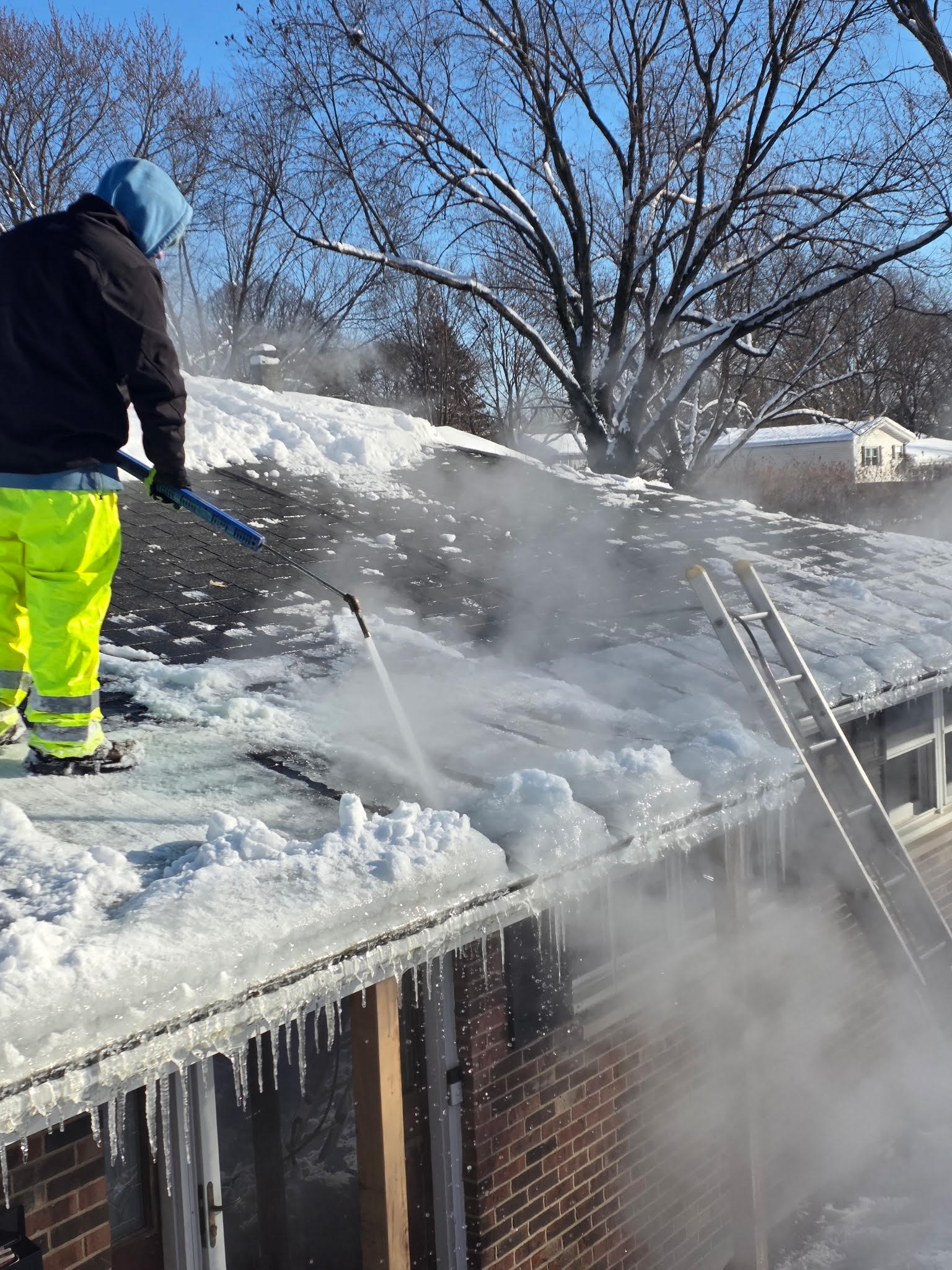
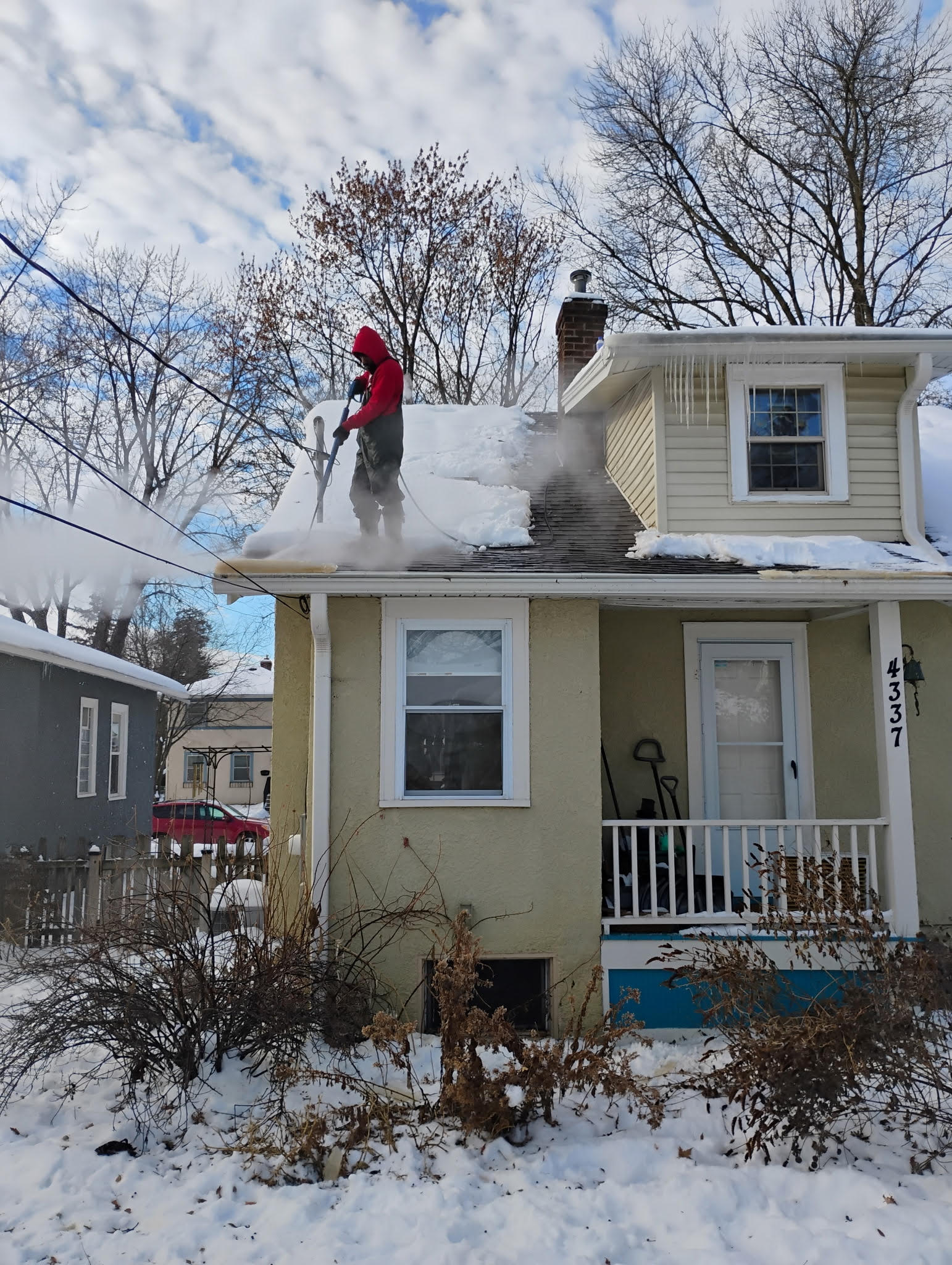
See the equipment and professional roof ice work behind our service.
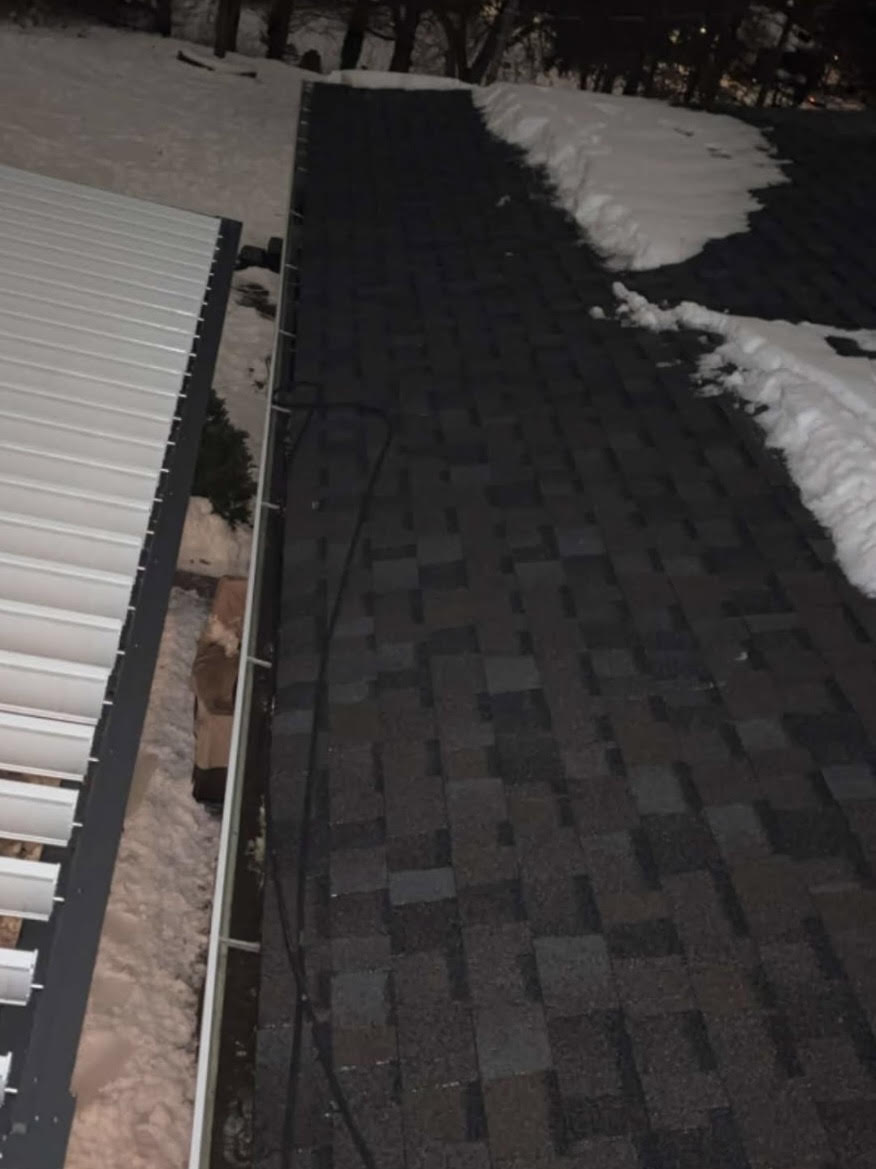
Ice Dam USA maintains a gallery of actual winter roof ice removal projects, including professional steam equipment, heavy ice buildup and cleared roof sections.
These photographs help show the work our technicians perform and the types of ice conditions that may be encountered on a property.
Ice dam removal information for all five NYC boroughs.
Explore borough-specific roof conditions and ice dam removal information. The right approach depends on each building's roofing materials, drainage and accessible work areas.
Brooklyn Ice Dam Removal
Brooklyn includes brownstones and attached rowhouses with low-slope roofing as well as detached homes with pitched roofs in neighborhoods such as Bay Ridge, Marine Park, Midwood and Dyker Heights.
Winter problems may include roof-edge ice, frozen gutters, or blocked drains above occupied spaces.
Brooklyn NY ice dam removal →Queens Ice Dam Removal
Queens has a broad range of pitched-roof residential properties in areas such as Bayside, Little Neck, Forest Hills and Whitestone, along with attached homes and commercial buildings.
Dormers, additions, roof valleys and colder eaves can contribute to localized ice dam formation.
Queens NY ice dam removal →Bronx Ice Dam Removal
The Bronx combines detached and semi-detached houses in residential neighborhoods with taller multifamily buildings and commercial properties.
For apartments and managed buildings, roof access, drainage design and pedestrian safety can be especially important.
Bronx NY ice dam removal →Staten Island Ice Dam Removal
Staten Island includes many detached and semi-detached houses with pitched roofing, attached garages, additions and residential gutters.
These roof types may develop traditional ice dams after snowmelt refreezes at colder roof sections.
Staten Island ice dam removal →Manhattan Roof Ice Removal
Manhattan's building stock includes many taller, attached and low-slope roofs. Frozen roof outlets, parapets, occupied sidewalks and complex building access may be more relevant than a standard residential eave.
An assessment may determine that the property needs a commercial roofing specialist rather than conventional ice dam removal.
Discuss a Manhattan roof problem →Not sure which NYC service you need?
Some customers call about traditional roof-edge ice. Others have frozen gutters, dangerous icicles or winter water intrusion from an unknown source.
Tell us what you're seeing and the type of building. We'll discuss whether our steam removal service may be suitable.
Contact Ice Dam USA for guidance →Ice dam removal in Westchester and Nassau County.
The New York City metro extends beyond the five boroughs. We also maintain location-specific information for communities throughout southern Westchester and western Nassau County.
Select your city to explore the area's roof types, winter drainage issues and professional removal information.
Westchester County
Nassau County and western Long Island
Multifamily and commercial ice removal requires additional coordination.
For a New York City building manager, the roof ice problem may involve more than just the ice itself.
Property access, tenant communication, public sidewalks, roof materials and equipment staging all affect whether work can proceed safely.
Co-ops and condominium buildings
Building management or an authorized board representative may need to coordinate access to the roof and establish the scope of work.
The roofing system, existing water damage and occupied areas should be documented beforehand.
Rental and multifamily properties
A winter leak in one apartment may originate elsewhere on a shared roof.
Identifying the building's drainage system and the affected areas helps avoid treating an unrelated leak as an ice dam.
Commercial buildings
Storefronts, office buildings, retail properties and other facilities can have low-slope roofs, canopies, drains and public access below.
Specialized access or roofing professionals may be necessary.
What to expect when contacting Ice Dam USA.
Good information about your roof helps us discuss the correct service approach before scheduling.
Tell us what you're seeing
Provide the complete address, building type, location of the ice and whether water is entering the building.
Review scope and availability
Our team discusses roof height, access, weather, travel requirements, service policies and current scheduling.
Coordinate suitable removal
When work is scheduled and conditions permit, technicians assess the site and perform the agreed professional steam removal.
How can New York City property owners reduce recurring ice dams?
Professional steam removal addresses an existing obstruction. It does not necessarily correct why the roof develops ice during future winter weather.
For pitched-roof residential properties, a qualified building-envelope or roofing professional may evaluate attic air leakage, insulation continuity, ventilation and drainage.
For flat and low-slope buildings, proper maintenance of drains, scuppers, flashing and roof membranes may be more relevant.
Recurring ice in the same valley or along the same eave is useful information when investigating the underlying cause.
Explore Long-Term Ice Dam PreventionImmediate removal versus lasting repairs
Ice dam removal addresses existing roof ice blocking drainage.
Roof repairs correct damaged shingles, flashing, membranes or other roofing defects.
Building improvements may address attic heat loss, insulation gaps or roof drainage problems.
Interior restoration may be necessary after water has entered ceilings, walls or insulation.
Visit Our Ice Dam Learning CenterCommon questions about NYC roof ice removal.
Does Ice Dam USA provide ice dam removal in New York City?
Ice Dam USA accepts professional ice dam removal inquiries throughout the five boroughs. Availability depends on the building, roof conditions, travel and regional crews.
Can NYC homes develop ice dams without heavy upstate snowfall?
Yes. A traditional ice dam requires snowmelt that refreezes and blocks drainage. A record-breaking snowfall is not necessary.
What is the difference between an ice dam and icicles?
An ice dam is an obstruction that prevents meltwater from draining normally. Icicles may be present, but they do not automatically prove that water is trapped.
Can a Brooklyn brownstone have an ice dam?
It depends on the roof type. Brownstones often have low-slope roofs with drains or parapets, while some pitched sections can develop traditional ice dams. The cause of a leak must be evaluated.
Can Queens and Staten Island houses develop roof ice dams?
Yes. Detached and attached homes with pitched roofs, dormers and colder eaves can develop ice dams when snowmelt refreezes.
Can you remove roof ice from an apartment building?
Ice Dam USA accepts multifamily inquiries. Whether steam removal is appropriate depends on roof materials, building height, the actual obstruction and safe access.
Is a frozen flat-roof drain the same as an ice dam?
Not necessarily. A low-slope roof may have blocked internal drains or scuppers rather than a conventional roof-edge ice ridge. It requires roof-system-specific evaluation.
Why does Ice Dam USA use Arctic Steamers?
Professional low-pressure steam melts suitable ice using heat rather than aggressive chopping or high-pressure water.
Can professional steam removal damage roofing?
Any roof ice removal has risks. Material condition, existing damage, ice thickness and technique all matter. Low-pressure steam reduces reliance on forceful methods but does not guarantee a damage-free result.
Will removing an ice dam stop an active ceiling leak immediately?
Not necessarily. Removing the obstruction may help drainage, but water already inside the roof or walls can continue moving. Unrelated roof defects may also need repair.
Where can I find current NYC ice dam removal pricing?
Current service rates, minimums and booking policies are published on the official Ice Dam USA pricing page. You can also contact our team to discuss your property.
Is emergency ice dam removal available 24/7?
Ice Dam USA accepts emergency inquiries 24 hours a day, seven days a week. Actual scheduling and arrival depend on weather, travel, worksite safety and crew availability.
Can you guarantee an arrival time in Manhattan or Brooklyn?
No. Service must be reviewed for the specific address, roof conditions and available crews. We do not promise a universal arrival time across NYC.
What should I do if ice is falling above a sidewalk?
Keep people away from the hazard and contact the property owner or authorized building manager. In NYC, an immediate danger from falling ice should be reported to 911.
Can ice dams form on roofs without gutters?
Yes. Meltwater can freeze directly at the roof edge and form an obstruction even without gutters.
What if I see standing water on a flat roof?
Standing water may indicate blocked drainage. The roof membrane, outlets and any structural concerns should be evaluated by appropriately qualified professionals. Avoid unsafe roof access.
Will homeowners insurance cover ice dam removal?
Coverage depends on the policy and the circumstances. Ask your insurer about water damage, removal expenses, applicable deductibles and documentation.
Can ice dams return after steam removal?
Yes. If snowmelt and refreezing conditions occur again, another ice ridge may develop. Long-term prevention addresses underlying causes.
Do I need to climb on my roof to show you the problem?
No. Do not climb a snowy or icy roof or ladder to obtain photos. Ground-level images, the address and a description of the problem may help.
How do I request professional ice dam removal in NYC?
Call 855-468-4233 or use the Ice Dam USA contact page. Tell us your borough, address, roof type, height, visible ice and any active leaks.
New York City and the surrounding metro area.
This map identifies New York City for geographic reference. It is not an Ice Dam USA office, storefront or dispatch facility marker.
To discuss service availability at your specific address, call 855-468-4233.
Explore Ice Dam USA's major New York regional service areas.
Winter roof conditions vary substantially between New York City's mixed urban building stock and the lake-effect snow regions farther upstate.
These regional hubs provide detailed service and ice dam information for their respective parts of New York.
New York City Metro
The five boroughs, southern Westchester, Nassau County and nearby downstate communities.
You are viewing the NYC metro hub.
Buffalo & Niagara Region
Lake Erie snowbands, heavy roof snow, Southtowns, Northtowns and Western New York ice dam conditions.
Buffalo NY ice dam removal →Rochester & Monroe County
Lake Ontario snowfall, Rochester-area neighborhoods, roof ice, gutter freezing and surrounding suburbs.
Rochester NY ice dam removal →Syracuse & Central New York
Lake Ontario snowbelt conditions, recurring roof ice and communities throughout the greater Syracuse region.
Syracuse NY ice dam removal →Albany & Capital District
Hudson and Mohawk valley winter weather, historic rooflines, residential properties and the broader Capital Region.
Albany NY ice dam removal →All New York State Locations
Explore statewide information and Ice Dam USA's broader New York service directory.
New York State ice dam removal →More information before scheduling roof ice removal.
Need professional ice dam removal in NYC?
Whether you're dealing with ice along the eaves of a Queens home, frozen roof valleys in Staten Island, roof ice above a Brooklyn walkway or winter drainage concerns on a managed building, contact Ice Dam USA to discuss the actual roof conditions.
Our professional team uses Arctic Steamers for suitable low-pressure steam ice dam removal and accepts emergency inquiries 24 hours a day.
Service depends on technician availability, travel, weather, roofing materials, building access and safe worksite conditions.
