Gloversville NY Ice Dam Removal
Roof ice on a historic Gloversville home or a property near the Adirondack foothills? Ice Dam USA provides professional ice dam removal using Arctic Steamers.
A winter thaw should not mean water entering your walls or ceilings. Unfortunately, ice along the edge of a snow-covered roof can trap meltwater and create that risk.
Ice Dam USA helps Fulton County property owners address existing roof ice dams using low-pressure steam, without relying on aggressive chopping or high-pressure water blasting.
We welcome service inquiries from Gloversville, Johnstown, Mayfield, Broadalbin and nearby Fulton County communities, subject to regional crew availability.
Protecting older rooflines in a city built on craftsmanship.
Gloversville's history as a major American glove-manufacturing center is still visible in its historic downtown and established neighborhoods.
The community includes late nineteenth-century architecture, older residential neighborhoods, commercial buildings and properties with additions made during different periods.
These buildings may have layered roof designs, dormers, porch roofs and flashing details that deserve attention during winter.
Older construction does not automatically cause ice dams. What matters is how snow melts, where water flows and which portions of the roof remain cold enough to refreeze that water.
Roof additions
When a house has been expanded, two roof sections may intersect and direct water toward a smaller drainage area.
Dormers and upper floors
Dormer walls, finished upper stories and roof penetrations can create temperature differences and vulnerable intersections.
Older roofing details
Existing flashing, roofing joints and material condition are important considerations when ice has formed on the roof.
Winter conditions can change from Gloversville to rural Fulton County.
Gloversville sits near the southern foothills of the Adirondacks. The surrounding area includes established city neighborhoods, wooded properties, rural homes and higher-elevation terrain.
Snow depth, shade, wind exposure and the duration of cold weather can differ from one property to another.
On a snow-covered roof, heat escaping from living space can warm part of the roof deck. Melting snow then flows toward colder roof edges, where it may refreeze.
When that process continues, a ridge may grow large enough to obstruct drainage. Water collecting behind the ice can reach vulnerable roofing areas.
That is why we look beyond the amount of snow visible from the street.
What makes roof ice dangerous to a Gloversville property?
Large icicles may attract attention, but an ice dam is specifically an obstruction that prevents melting snow from draining normally from a roof.
Water collecting uphill of the ice
A ridge of ice near a colder eave can hold back additional meltwater. That water may reach roofing joints not designed for standing water.
Unusual stains near exterior walls
Interior staining during a thaw may indicate water intrusion. The actual entry point may be farther away than the visible stain.
Ice concentrated around a valley
Valleys carry runoff from several roof surfaces. An ice blockage at one intersection may affect drainage from a larger area above it.
Repeated freezing at the same location
An obstruction returning every winter may indicate persistent heat-loss or drainage conditions that should be investigated after the ice is removed.
We use heat to remove roof ice—not force to break it loose.
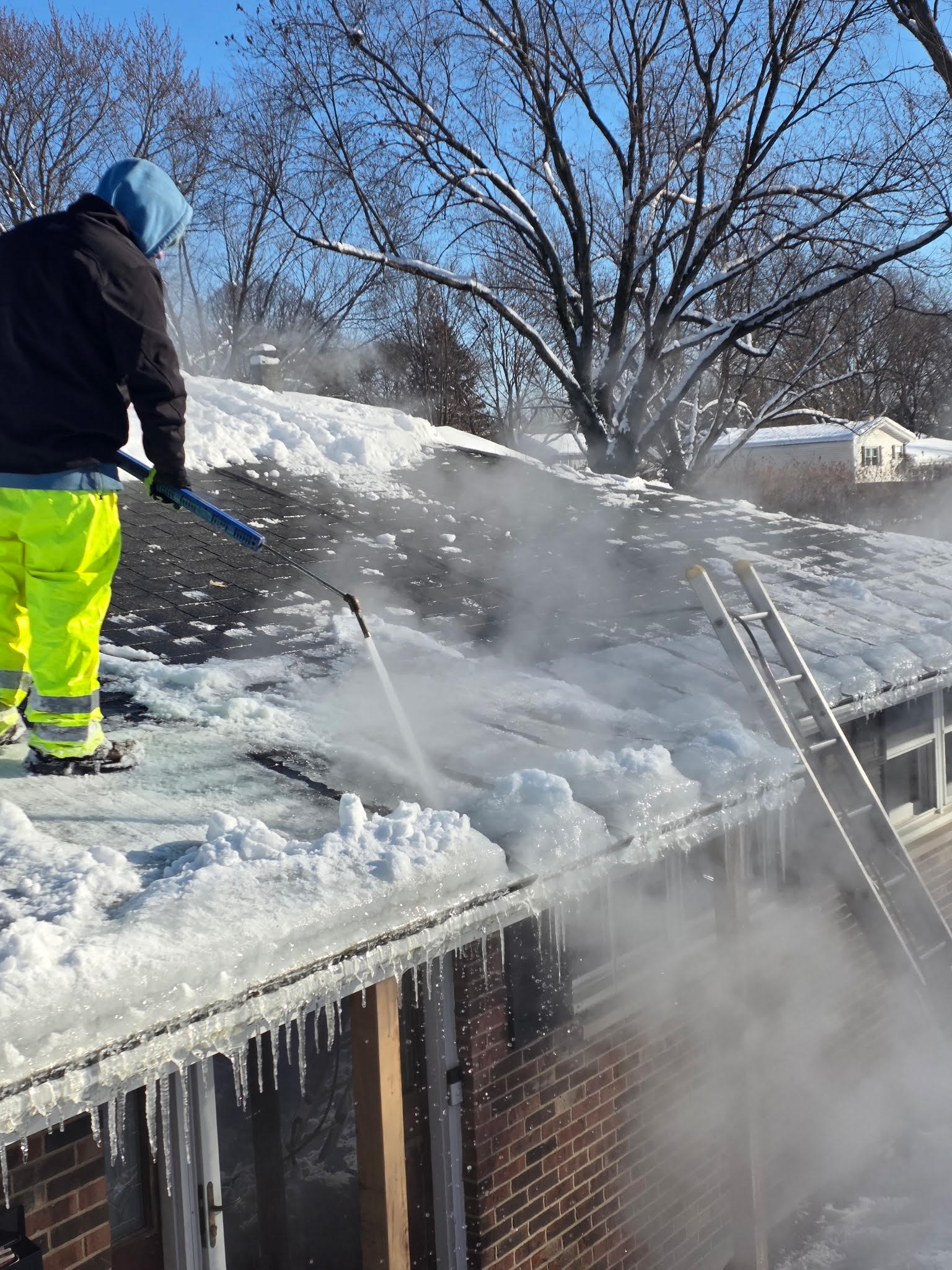
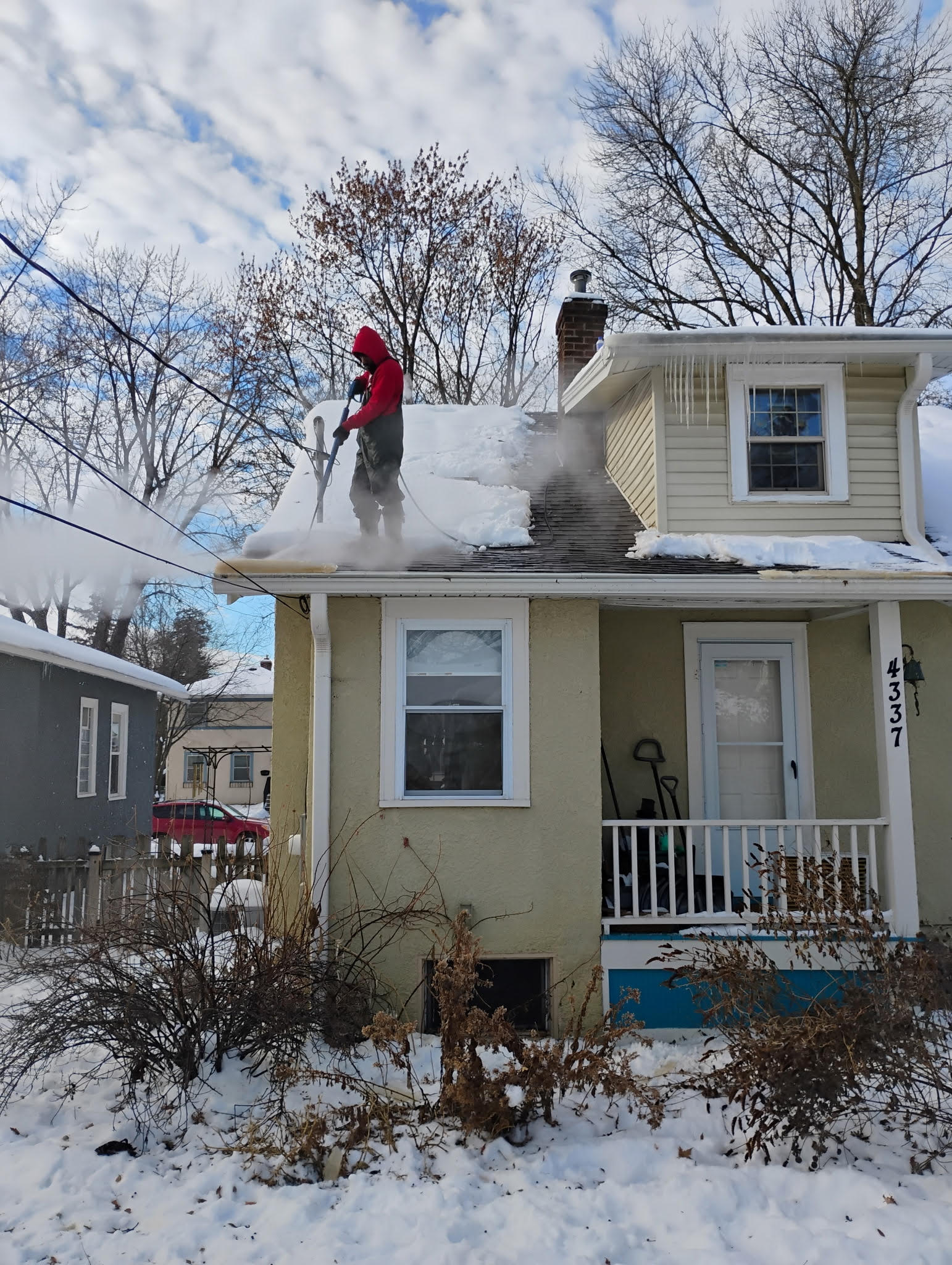
Ice Dam USA uses professional Arctic Steamers to apply low-pressure steam to ice buildup on a roof.
The steam works through the ice using heat, reducing the need for axes, chisels, prying or aggressive pressure washing.
Before work begins, the site and roof conditions must be considered, including ice location, roof material, pitch, height and safe access.
The agreed work focuses on removing the existing obstruction and helping restore drainage where possible.
Why the equipment matters
Heat: Steam melts ice rather than requiring strong mechanical impact.
Pressure: The method uses low-pressure steam, not a high-pressure water jet.
Technique: Operators must consider existing roof damage, materials and worksite safety.
No removal technique is completely risk-free. The roof's condition still matters.
Why a hot-water pressure washer is not the same as an Arctic Steamer.
Both machines involve heat, but the way water reaches the roof can be very different.
Arctic Steamer — our equipment
- Uses steam heat to melt ice.
- Applies low-pressure steam.
- Reduces reliance on impact and prying.
- Supports targeted removal work.
- Requires careful operator judgment.
Hot-water pressure washer
- Delivers water under significant pressure.
- Is commonly designed for cleaning work.
- Aggressive spray may damage roofing.
- Can affect vulnerable joints or flashing.
- Is not Ice Dam USA's roof ice removal method.
Roof ice can be closely attached to shingles and other materials. Using too much force may create damage that was not present before the removal began.
See professional steam roof ice removal in action.
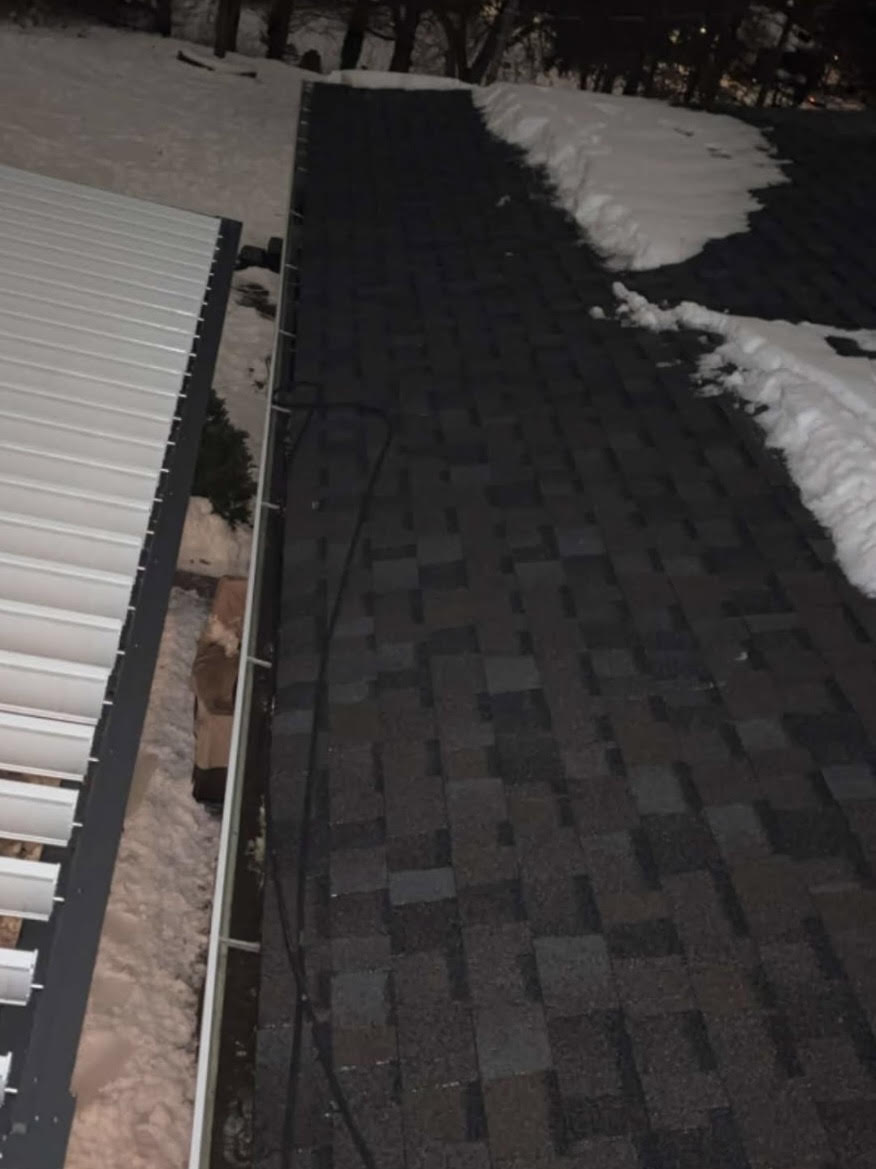
These are actual Ice Dam USA gallery photographs showing roof ice conditions and removal work. They are not presented as verified Fulton County projects.
If water is entering your house, address the indoor hazard too.
Ice dam removal may help reopen drainage outside, but interior water intrusion needs careful attention.
What homeowners can do safely
- Stay clear of wet electrical fixtures.
- Avoid damaged or sagging ceilings.
- Move belongings when safe.
- Photograph visible water damage.
- Keep people away from areas below falling ice.
- Do not climb onto frozen roofing.
What removal does not guarantee
Removing an ice obstruction can help restore roof drainage.
It cannot guarantee that moisture already inside insulation, walls or roofing will immediately stop moving.
A separate roofing repair or building restoration may be necessary.
Emergency ice dam removal informationIce dam removal inquiries around Gloversville and Johnstown.
Ice Dam USA welcomes calls from homeowners, landlords and commercial property managers in and around Gloversville.
Actual service availability depends on regional technician schedules, winter travel, weather and safe roof access.
City of Gloversville
Older houses, finished upper floors, dormers and attached additions can create varied winter roof conditions.
Johnstown and Nearby Communities
Residential and commercial roofs can vary in height, access and the number of affected roof sections.
Mayfield and Adirondack Foothills
Rural properties and wooded lots may experience different snow exposure, roof shading and winter access requirements.
Other Fulton County Communities
We welcome inquiries from smaller towns and surrounding communities. Coverage and scheduling are confirmed for the specific address.
Help us understand the roof before technicians arrive.
Roof height, pitch, ice thickness and property access can affect how a removal job is planned.
Useful details to provide
- Your full property address
- Approximate building height
- Location of the visible ice
- Whether water is actively leaking
- Complex dormers or roof valleys
- Driveway and equipment access
- Safe ground-level photographs, if available
Never climb onto an icy roof or ladder to take photos.
What affects the scope?
Ice coverage: One roof edge or several affected sections?
Complexity: Multiple roof levels, steep slopes or limited access?
Conditions: Heavy snow, falling ice or unsafe weather?
Timing: Standard scheduling or an urgent active leak?
The right service approach is based on actual worksite conditions.
How much does ice dam removal cost in Gloversville?
Ice Dam USA prices removal by time and the applicable service rate, rather than a single flat price for every roof.
Roof accessibility
A tall or steep roof can require different planning than an easily accessible one-story property.
Amount of ice
A thick, extensive ridge or several affected roof sections may require more removal time.
Scheduling needs
Standard appointments and expedited or complex service may carry different hourly rates.
What causes ice to return to the same roof year after year?
Removing today's ice does not necessarily correct why it formed in the first place.
Attic air leakage
Warm indoor air can reach the roof deck through attic penetrations and other openings.
Uneven insulation
Insulation gaps can create different roof temperatures and encourage localized snowmelt.
Roof design and detailing
Dormers, valleys, additions and other transitions can influence how snowmelt moves downhill.
Common questions about Fulton County roof ice dams.
Does Ice Dam USA provide ice dam removal in Gloversville?
Ice Dam USA welcomes professional roof ice removal inquiries from Gloversville and surrounding Fulton County communities. Availability depends on technician schedules and safe access.
Why can historic homes develop ice around additions?
Roof additions can create intersections where meltwater collects. Different roof temperatures may cause water to refreeze at those transitions.
Can a newer Gloversville home develop an ice dam?
Yes. Building age alone does not determine ice dam risk. Snow cover, roof heat transfer and drainage all matter.
Does an ice dam always create large icicles?
No. An ice dam is a roof drainage obstruction. Large icicles are not required for an ice dam to be present.
Can ice dams form even when it is below freezing outside?
Yes. Heat escaping from the building can melt snow on the roof. The water may refreeze near colder eaves.
What equipment does Ice Dam USA use?
We use professional Arctic Steamers to remove existing roof ice with low-pressure steam.
Why not chop the ice into chunks?
Sharp tools and forceful impact can damage shingles and flashing. Our method uses heat rather than aggressive chopping.
How is a true steamer different from a hot-water pressure washer?
An Arctic Steamer uses low-pressure steam to melt ice. Pressure washers deliver heated water under pressure that may damage vulnerable roofing materials.
Does low-pressure steam guarantee no roof damage?
No. Roof condition, material type, weather and operator technique must be considered. No winter roof removal method is entirely risk-free.
Will removing the ice immediately stop an interior leak?
Not necessarily. Removing the ice may restore drainage, but water already inside the roof assembly may continue moving. Roof repairs may also be necessary.
Can ice dams form on a roof without gutters?
Yes. Ice dams form on the roof surface when refrozen meltwater blocks normal drainage. Gutters are not required.
Can landlords request service for rental properties?
Yes. Ice Dam USA welcomes inquiries from landlords, property managers, homeowners and commercial property owners.
How much does ice dam removal cost?
The cost depends on ice extent, roof access, work duration and the applicable rate. See the official pricing guide for current details.
Does insurance cover roof ice dam damage?
Coverage depends on the individual insurance policy and circumstances. Ask your insurer about damage coverage and removal expenses.
Do you accept urgent calls about winter roof leaks?
Yes. Contact our team about active water intrusion or severe roof ice. Actual service timing depends on crew availability, weather and access.
How can I request Gloversville ice dam removal?
Call 855-468-4233 or use our contact page. Have the property address and roof ice details available.
Gloversville, New York and surrounding communities.
The map below is centered on Gloversville, Fulton County. It is a geographic service reference only, not a permanent Ice Dam USA office location.
To confirm availability at your address, call 855-468-4233.
Find nearby ice dam removal information.
Explore nearby Fulton County and Mohawk Valley pages, plus Ice Dam USA's roof ice removal and prevention guides.
Need professional roof ice dam removal in Gloversville?
Whether ice is forming along your roof edge, a historic home's roofline is causing concerns, or water has begun entering your property, contact Ice Dam USA to discuss professional Arctic Steamer ice dam removal in Fulton County.
Service depends on regional technician availability, weather, travel and safe roof access.
