Johnstown NY Ice Dam Removal
Roof ice building up around your eaves, dormers or roof valleys? Ice Dam USA provides professional removal using Arctic Steamers.
A winter ice dam can block the path melting snow needs to leave your roof. When water collects behind the ice, it may enter vulnerable roofing materials and reach your home.
Ice Dam USA provides professional low-pressure steam ice dam removal for properties in Johnstown and the surrounding Fulton County area.
From older city homes to larger houses outside Johnstown, each roof requires attention to ice thickness, materials, slope and safe access.
Winter roof ice deserves special attention on established and historic properties.
Johnstown has a long architectural history, with documented historic homes and landmarks dating back to the city's early development.
Johnson Hall, built in the eighteenth century, is one of the community's best-known historic sites. It is part of Johnstown's heritage, not an Ice Dam USA project or customer reference.
For owners of older Johnstown properties, the concern is not simply how much ice is visible. Roofing details, previous repairs, additions and the condition of flashing can all affect the removal plan.
Older and newer roofs can have different conditions. Weathered shingles, flashing and existing repairs need consideration.
Dormers, upper-story additions and multiple roof levels may direct snowmelt toward concentrated areas.
Narrow access, steep slopes and snow surrounding the property can affect what removal work is feasible.
How does a ridge of roof ice become a threat to your home?
During winter, snow covering a roof may begin melting from building heat, sunshine or warmer air.
That meltwater moves toward the roof edge. When it reaches a section cold enough to freeze, ice can accumulate.
Over time, the ridge may grow large enough to prevent additional water from draining normally.
The trapped water may work beneath vulnerable roofing joints and flashing. Moisture can travel inside the roof assembly before you notice a ceiling stain.
This is why an ice dam is different from ordinary icicles: the key problem is restricted drainage.
Learn how an ice dam forms .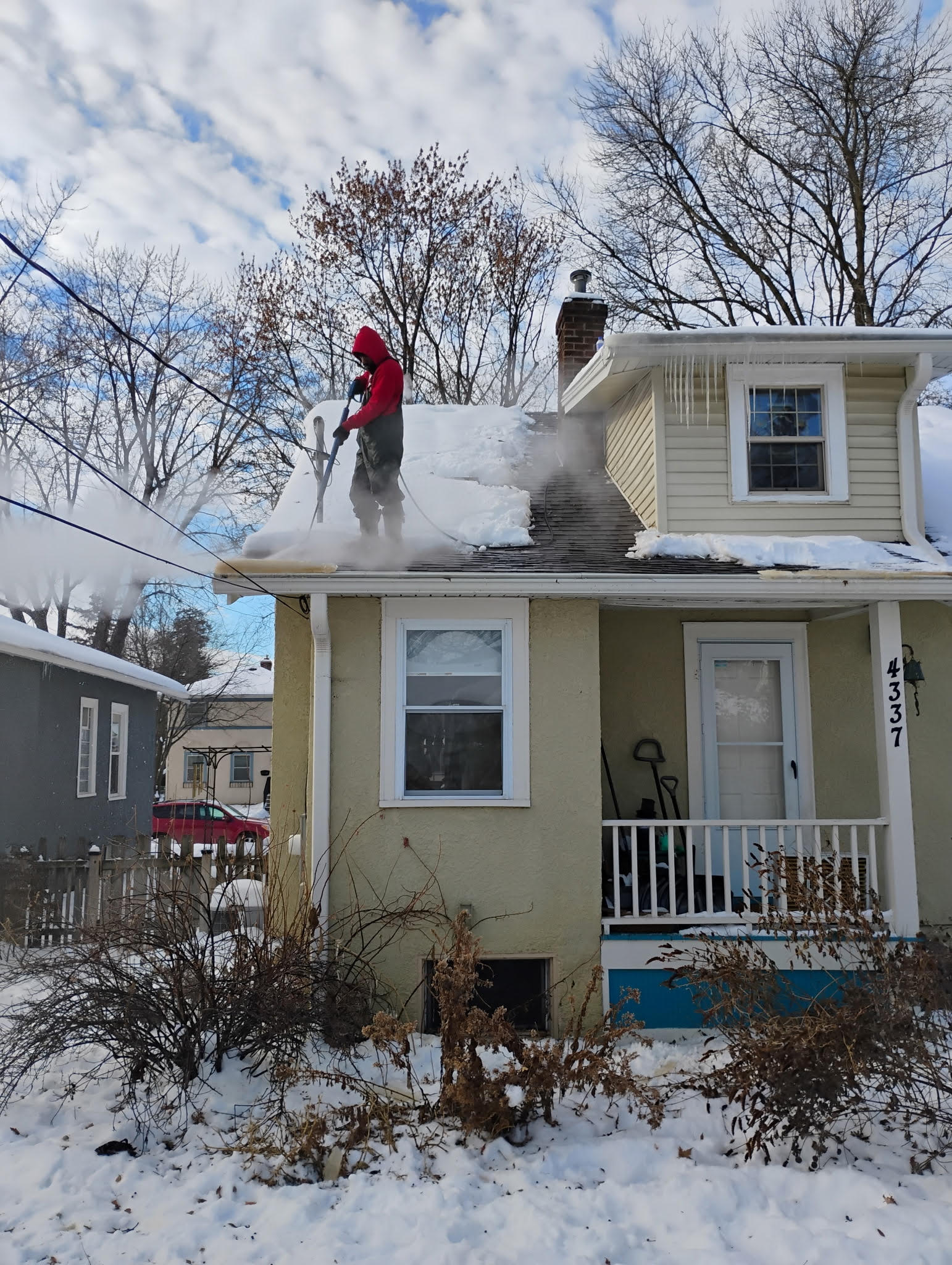
Five conditions worth checking from a safe location.
You do not need to climb onto an icy roof to describe what you are seeing. Look from the ground and take photographs only when safe.
A solid ridge below the snow
Ice accumulating along an eave may restrict meltwater movement. The amount of visible ice is only part of the assessment.
Ceiling stains during a thaw
New staining or water dripping during warming may indicate winter water intrusion. An ice dam is one possible cause.
Ice near roof additions
An upper roof may release water onto a lower section that remains colder. Ice can build around these transitions.
Heavy ice in a valley
Valleys direct runoff from more than one roof slope. A localized blockage can affect drainage from a larger area uphill.
Repeated trouble in one location
Ice returning to the same roof section may indicate a persistent heat-loss or roof design issue worth evaluating after winter.
When to seek assistance
If water is entering, ice is growing, or the roof condition is uncertain, contact qualified professional help instead of trying to break the ice.
Call Ice Dam USAWe melt the ice with low-pressure steam.
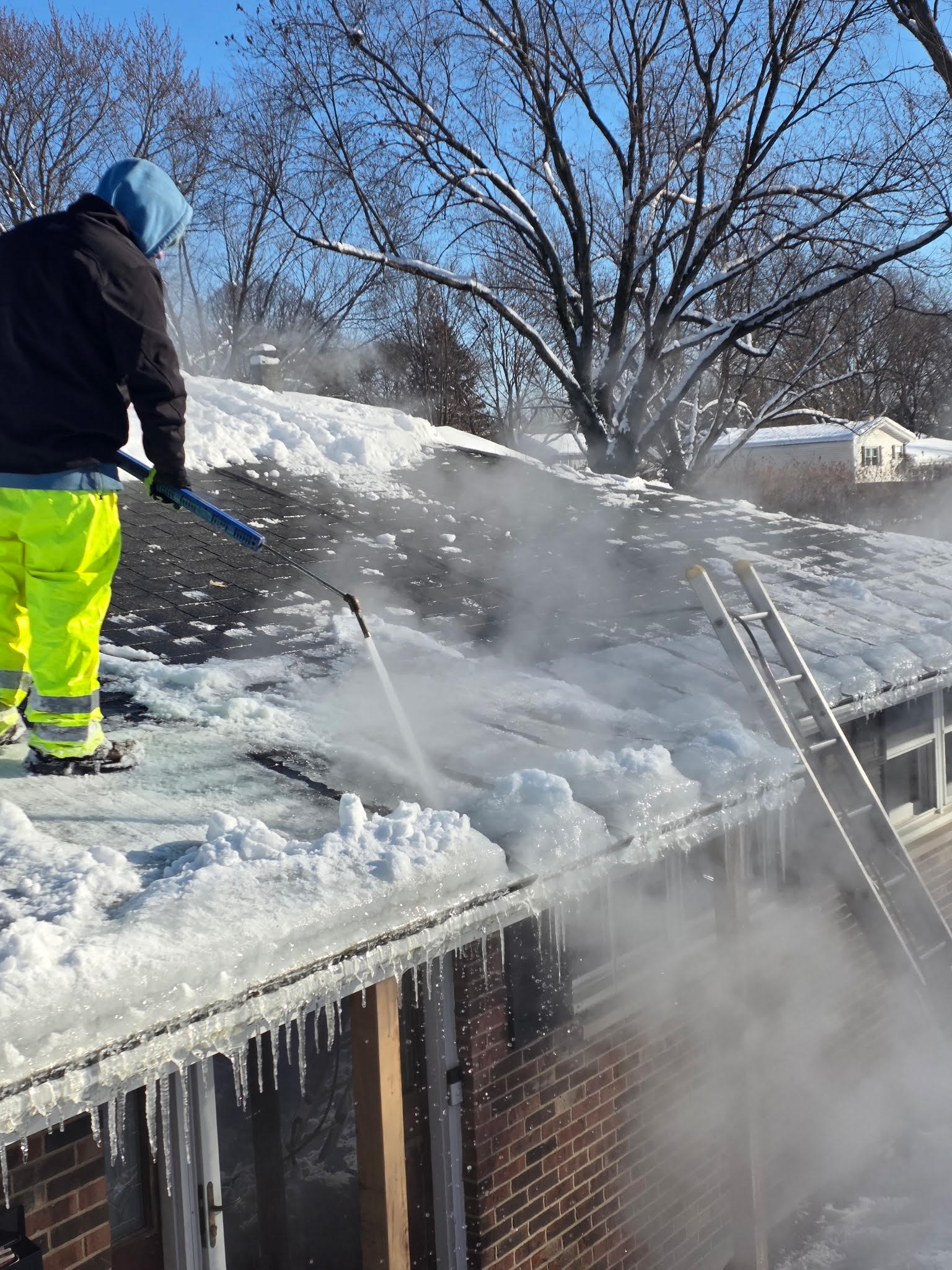
Ice Dam USA uses professional Arctic Steamers designed to apply heat to accumulated roof ice.
Our approach reduces reliance on hammering, chipping or using a high-pressure water jet against roofing materials.
Technicians assess roof height, pitch, visible ice and access conditions before performing agreed removal work.
The goal is to address the ice obstruction and help reopen drainage paths where site conditions allow.
Why our approach matters
Controlled heat: Steam melts ice rather than relying on aggressive strikes.
Low pressure: The equipment is not a hot-water pressure washer blasting the roof.
Roof assessment: Existing material condition and safe access remain important.
No removal method can guarantee the absence of damage under every roof and weather condition.
Why we don't use hammers or high-pressure washers.
An ice dam can be bonded to roofing materials. Excessive force may damage the roof underneath.
Arctic Steamers — our approach
- Uses steam heat to melt ice.
- Applies low-pressure steam.
- Allows targeted treatment.
- Reduces mechanical impact.
- Requires experienced technique.
Methods we avoid
- Forceful chopping against shingles.
- Hammering around roof flashing.
- Prying large ice sections loose.
- Aggressive high-pressure water spray.
- Unsafe DIY climbing on frozen roofing.
See our technicians and roof ice removal work.
These photographs come from Ice Dam USA project materials. They illustrate professional winter work but are not presented as verified Johnstown projects.
If water is coming inside, safety comes first.
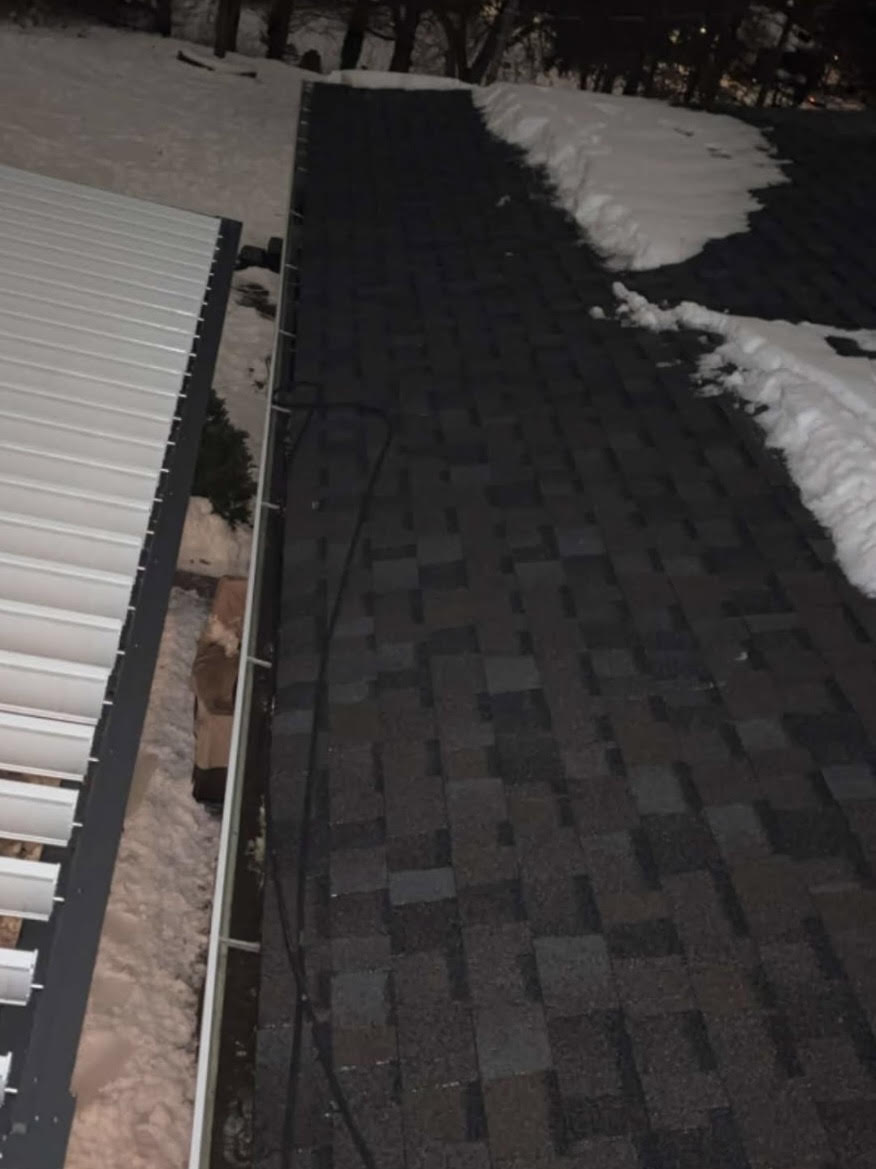
Clearing a roof ice dam can help restore drainage, but water already inside your roof may continue moving after removal.
What you can do indoors
- Stay clear of wet electrical fixtures.
- Avoid sagging or damaged ceilings.
- Move personal belongings when safe.
- Document visible water damage.
- Keep others away from falling roof ice.
- Do not climb onto frozen roofing.
Understand what removal can and cannot do
Removing an ice obstruction may help water drain rather than collect on the roof.
However, an active leak is not guaranteed to stop immediately. Water may still be present in insulation, framing and concealed spaces.
A separate roofing repair or water damage restoration may be needed.
Emergency ice dam removal informationRoof ice dam removal inquiries throughout the Johnstown area.
Ice Dam USA welcomes requests from homeowners, landlords and commercial property managers in Johnstown and surrounding Fulton County communities.
Regional crew availability, winter travel and safe access determine scheduling. These are inquiry areas, not separate company office locations.
City of Johnstown
Established residences, commercial buildings and older rooflines may include dormers, porches, additions and complex flashing.
Town of Johnstown & Perth
Rural and suburban properties may have different roof pitches, snow exposure and equipment access requirements.
Nearby Fulton County
Rooflines in wooded and less densely developed areas can experience differing shade, snow accumulation and winter access conditions.
Wider Mohawk Valley
Customers outside Fulton County can contact us about current availability for their specific New York address.
Help our team understand your ice dam removal needs.
An accurate description of the property can help clarify pricing, accessibility and service requirements.
Useful information
- Full Johnstown-area address
- Number of stories
- Approximate roof pitch
- Where ice is accumulating
- Whether water is entering indoors
- Known roof damage or access challenges
- Ground-level photographs, if safe to take
Never climb onto a snowy roof or ladder to take photographs.
What can affect the job?
Roof height: Multi-story work may require additional planning.
Ice coverage: One affected eave or multiple roof sections?
Weather: Snow, wind and temperature may affect safe access.
Urgency: Active water intrusion may change scheduling considerations.
Service is confirmed based on current regional availability.
How much does roof ice dam removal cost in Johnstown?
Ice Dam USA bases pricing on the applicable hourly service rate and work required. Ice thickness, building height, roof pitch and accessibility can all affect job duration.
Standard service
Our published standard service rate is $875 per hour, with a three-hour minimum of $2,625 plus tax.
Qualifying work is scheduled for the next available standard appointment.
Expedited or complex service
Our published emergency, expedited or complex service rate is $1,375 per hour, with a three-hour minimum of $4,125 plus tax.
This can apply to priority, steep, high or otherwise complex projects.
Once the ice is gone, what should you investigate?
Steam removal addresses existing ice. Long-term prevention requires understanding why meltwater keeps refreezing in the same place.
Air leakage
Warm indoor air escaping into attic spaces can raise roof temperatures and melt snow from below.
Insulation
Uneven or missing insulation may contribute to temperature differences across the roof.
Roof detailing
Dormers, valleys, additions and roofing condition may influence how water moves and where ice forms.
Frequently asked questions about Johnstown ice dam removal.
Does Ice Dam USA provide ice dam removal in Johnstown, NY?
Ice Dam USA accepts service inquiries from Johnstown and nearby Fulton County communities. Actual scheduling depends on regional technician availability and safe access.
Are older Johnstown houses more vulnerable to ice dams?
An older roof may have complex details or heat-loss conditions, but building age alone does not cause ice dams. Snow, roof temperature and drainage matter.
Can an ice dam develop around a dormer?
Yes. Dormers create roof intersections that can direct meltwater toward colder areas where ice accumulates.
Does an ice dam require large icicles?
No. The defining issue is ice blocking normal meltwater drainage. Large icicles are not required.
Can water enter my home without a visible roof leak?
Yes. Moisture may enter vulnerable roofing joints and travel through insulation or framing before becoming visible.
What equipment does Ice Dam USA use?
We use professional Arctic Steamers and low-pressure steam to melt existing roof ice.
Do technicians chop the ice off my shingles?
Our method uses steam heat rather than aggressive chopping, prying or hammering against roofing materials.
What makes a true steamer different from a pressure washer?
Our equipment uses low-pressure steam to melt ice. High-pressure washers deliver pressurized water that can damage vulnerable roofing if misused.
Is roof ice removal guaranteed to cause no damage?
No. Existing roofing conditions, material type, ice thickness and worksite safety must be considered. No technique is completely risk-free.
Will removing the ice immediately stop a leak?
Not necessarily. Clearing the obstruction may restore drainage, but water already inside the structure can continue moving. Roof repairs may also be needed.
Can ice dams return later in winter?
Yes. If snowmelt and refreezing conditions return, new ice may form after removal.
How much does Johnstown ice dam removal cost?
The current published standard rate is $875 per hour, with a three-hour minimum plus tax. Complex or priority work may have a higher rate. See the official pricing page.
Can Ice Dam USA help landlords or commercial buildings?
We welcome residential, commercial and multifamily inquiries. Roof access, building height and conditions determine feasibility.
Does homeowners insurance cover ice dam damage?
Coverage depends on your individual policy and the circumstances. Contact your insurer about resulting damage and any removal expenses.
Do you accept urgent roof leak requests?
Yes. Call us about active water intrusion or significant ice buildup. Service timing depends on crews, weather and safe access.
How do I request service in Johnstown?
Call 855-468-4233 or use our contact page. Have your address, roof details and leak information ready.
Johnstown, NY and nearby Fulton County communities.
This map is centered on Johnstown, New York for geographic reference only. It does not indicate an Ice Dam USA storefront or permanent local office.
Call 855-468-4233 to discuss availability at your property.
Find nearby Ice Dam USA roof removal information.
Need professional ice dam removal in Johnstown?
Whether you're concerned about ice on an older roofline, water entering during a winter thaw, or recurring ice at a Fulton County property, contact Ice Dam USA about professional Arctic Steamer removal.
Scheduling depends on regional technician availability, weather, travel and safe roof access.
