Burnsville MN Ice Dam Removal
Professional roof ice dam removal for Burnsville homes, condominiums, townhomes and commercial properties throughout Dakota County.
Burnsville has a distinctive combination of established neighborhoods, wooded hillsides, sloping residential lots and larger buildings near Heart of the City.
When roof snow melts and refreezes at a colder eave, ice can build into a ridge that blocks drainage. Water trapped behind that ice may reach vulnerable roofing details and contribute to winter leaks.
Ice Dam USA uses professional Arctic Steamers and low-pressure steam to melt roof ice rather than aggressive chopping or high-pressure water blasting.
Why Burnsville roof ice removal requires a property-specific plan.
Burnsville is a large south-metro community with residential neighborhoods, hillier terrain, parks, commercial districts and multifamily housing.
The city includes established ramblers, split-level homes, larger two-story houses, townhome developments and modern condominium buildings near Heart of the City.
Roof construction differs across those properties. A rambler may have a long cold eave. A split-level may have several roof elevations. A larger home may contain intersecting gables, valleys and attached garage roofs.
Established split-level homes
Roof levels and attached garages may create upper-to-lower runoff paths where water can refreeze.
Hillside and wooded properties
Sloping yards, retaining walls and shaded roof sections may affect snowmelt patterns and equipment access.
Condominiums and townhomes
Shared roof assemblies can require work authorization, resident coordination and careful access planning.
How melting snow becomes a frozen roof drainage barrier.
Roof ice dams form when snow melts above a warmer part of the roof and the runoff freezes farther downhill on colder roofing.
Snow accumulates
Winter snowfall covers the roof, sometimes collecting heavily around valleys and dormers.
Melting begins
Heat escaping through the building, sunlight or changing weather creates meltwater.
Water refreezes
Runoff reaches a colder eave or roof transition and freezes before it can drain.
Drainage is blocked
Repeated freezing creates an ice ridge that may hold additional water behind it.
Water trapped behind a roof ice dam may enter vulnerable shingles, flashing or roof connections. It can then move through insulation and framing before appearing indoors.
An ice dam may continue growing even during below-freezing weather if heat from the building melts snow beneath the snowpack.
Roof access in the Buck Hill area, Crystal Lake neighborhoods and sloped lots.
Burnsville's terrain includes rolling land and higher elevations around Buck Hill, with residential neighborhoods near Crystal Lake and other wooded areas.
Homes on sloping lots can be more difficult to reach safely in winter. The same roof may be one story above the ground on one side and much taller on another.
That variation matters when technicians evaluate roof height, access, equipment positioning and the potential path of falling ice.
Buck Hill area
Hilly terrain and different yard grades may create challenging winter worksite access. Roof height should be evaluated from the actual working side.
Crystal Lake neighborhoods
Established homes, tree cover and varied roof designs can experience different snow and melting patterns. Lake proximity alone does not cause ice dams.
Minnesota River bluff areas
Wooded slopes and changes in ground elevation may influence safe winter access. The river itself is not a direct cause of roof ice damming.
When is Burnsville roof ice more than an inconvenience?
An ice dam becomes concerning when a frozen ridge prevents meltwater from draining normally off the roof.
The most useful warning signs include both visible roof ice and evidence that water may be entering the building.
- A thick ice ridge along an eave
- Ice collecting at an intersecting roof valley
- New stains on an upper ceiling or wall
- Ice repeatedly growing above an attached garage
- Damp attic insulation during a thaw
- Ice hanging above a frequently used entryway
Large icicles do not always indicate an ice dam. Likewise, an interior stain may have another roofing cause.
Why roof valleys, garages and lower sections can develop heavy ice.
Some Burnsville houses have several roof elevations that direct melting snow across more than one surface. These transitions can concentrate runoff in colder areas.
Garage roofs below living space
A higher roof may send runoff toward a lower, colder garage roof. Refreezing can restrict drainage at that transition.
Intersecting roof valleys
A valley collects water from adjoining slopes. When ice forms there, it can obstruct a concentrated drainage path.
Dormers and additions
Roof intersections may have flashing details and snow accumulation patterns that require careful evaluation.
Long, cold roof overhangs
Unheated eaves may stay colder than roofing above heated living space, encouraging refreezing.
Low-pressure steam removes roof ice by melting the obstruction.
Ice Dam USA uses professional Arctic Steamers to apply low-pressure steam to roof ice.
The equipment uses heat to melt frozen obstructions, reducing reliance on chisels, hammers and high-pressure water blasting.
The objective is to help restore normal drainage while considering the condition of the roofing.
Burnsville properties on steep lots or with elevated roof sections may require extra planning around safe access.
What technicians consider
- Where ice is restricting drainage
- Roof height and slope
- Ice thickness and affected length
- Condition of shingles and flashing
- Valleys, dormers and multiple roof sections
- Ground elevation and winter access
- Weather and falling-ice hazards
Every roof requires an approach based on its actual conditions.
Arctic Steamers are not conventional hot-water pressure washers.
Both systems involve heated water, but they use different pressure and delivery methods around roofing.
Ice Dam USA Arctic Steamers
- Apply professional low-pressure steam
- Primarily use heat to melt frozen ice
- Support targeted work on obstructions
- Reduce reliance on aggressive impact tools
- Require careful technique near roof details
Conventional hot-water pressure washers
- Deliver heated water under spray pressure
- May apply forceful water at the nozzle
- Can disturb shingles when misused
- May damage vulnerable flashing and joints
- Are not our roof ice removal method
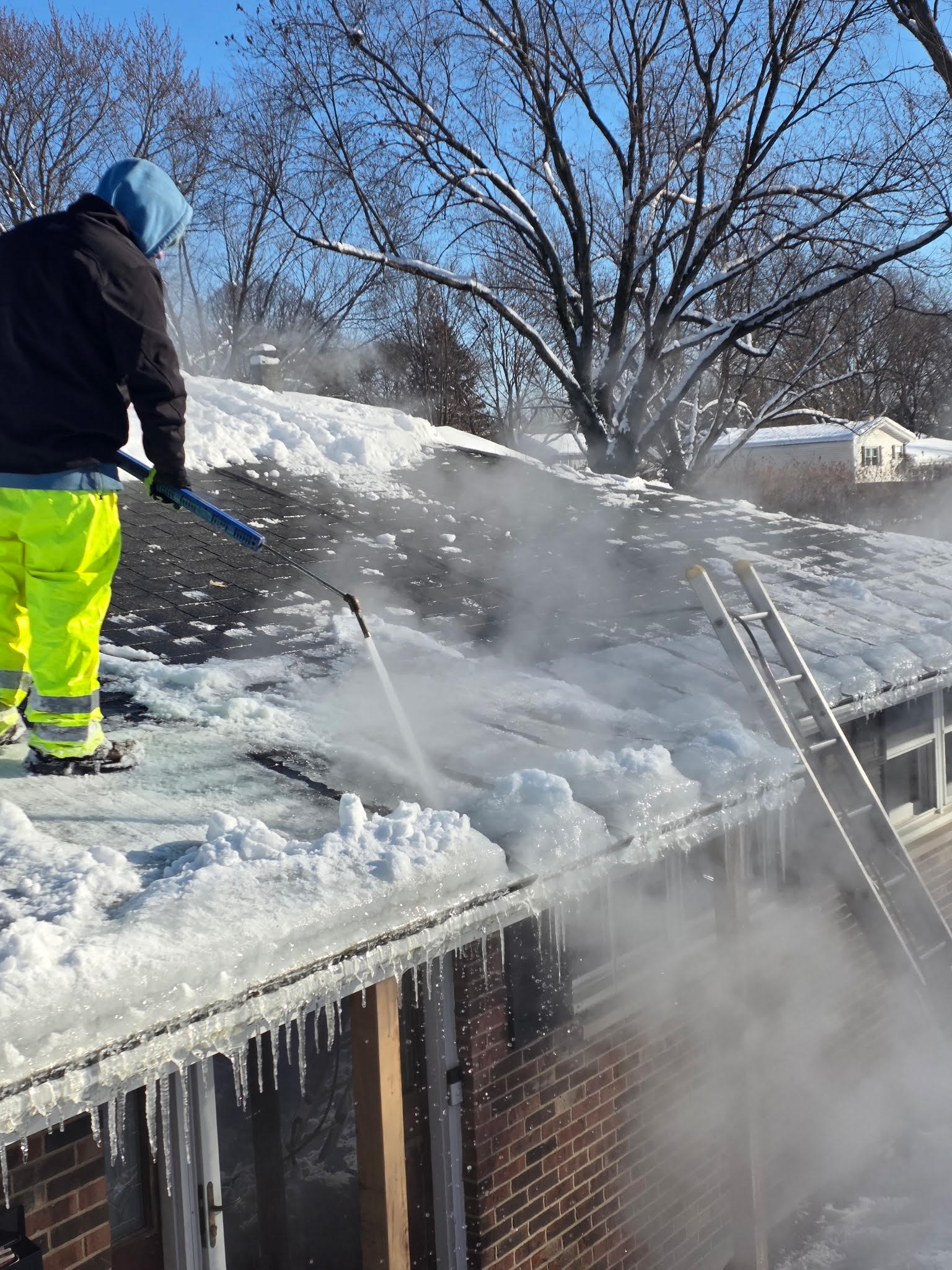
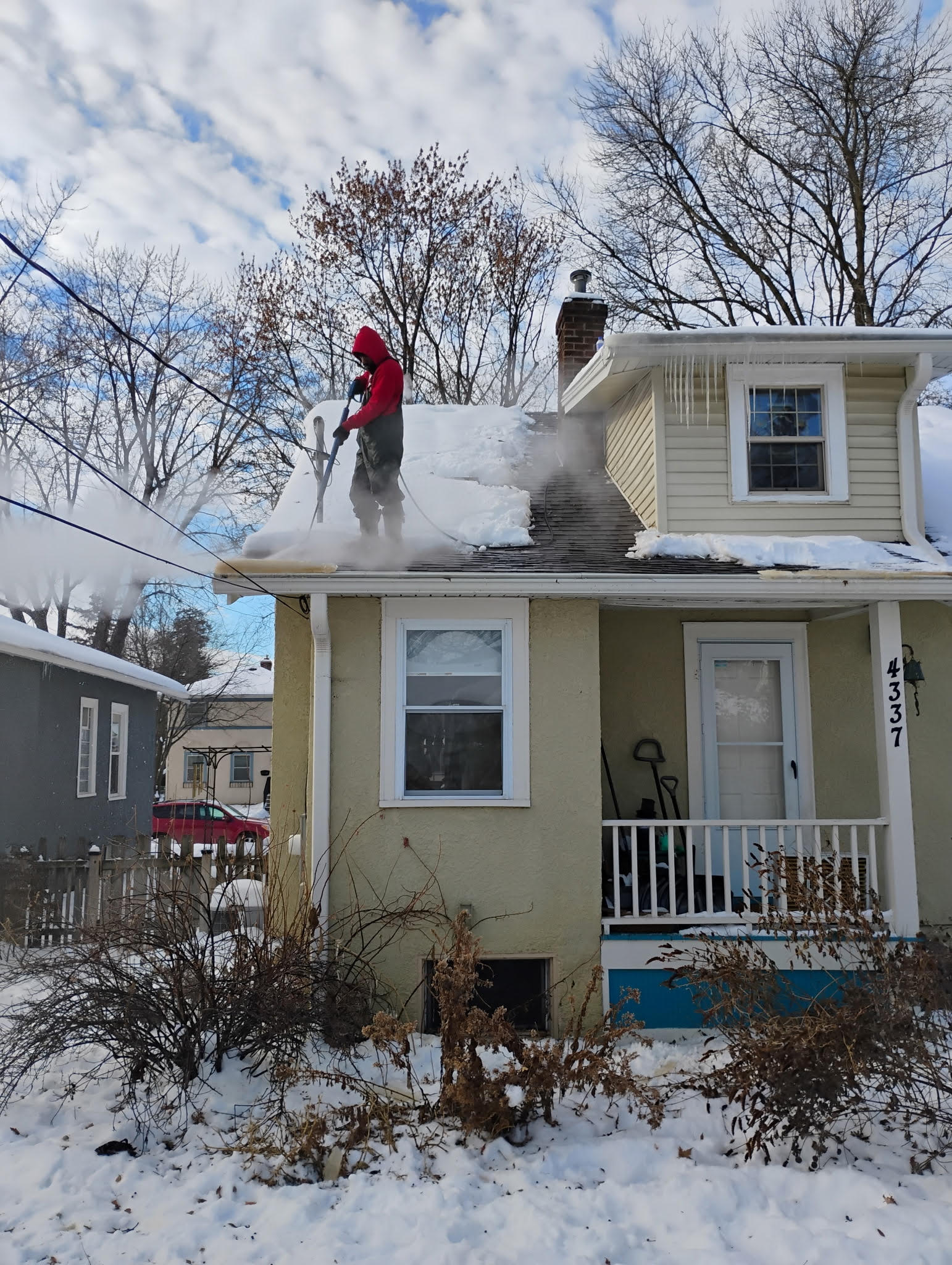
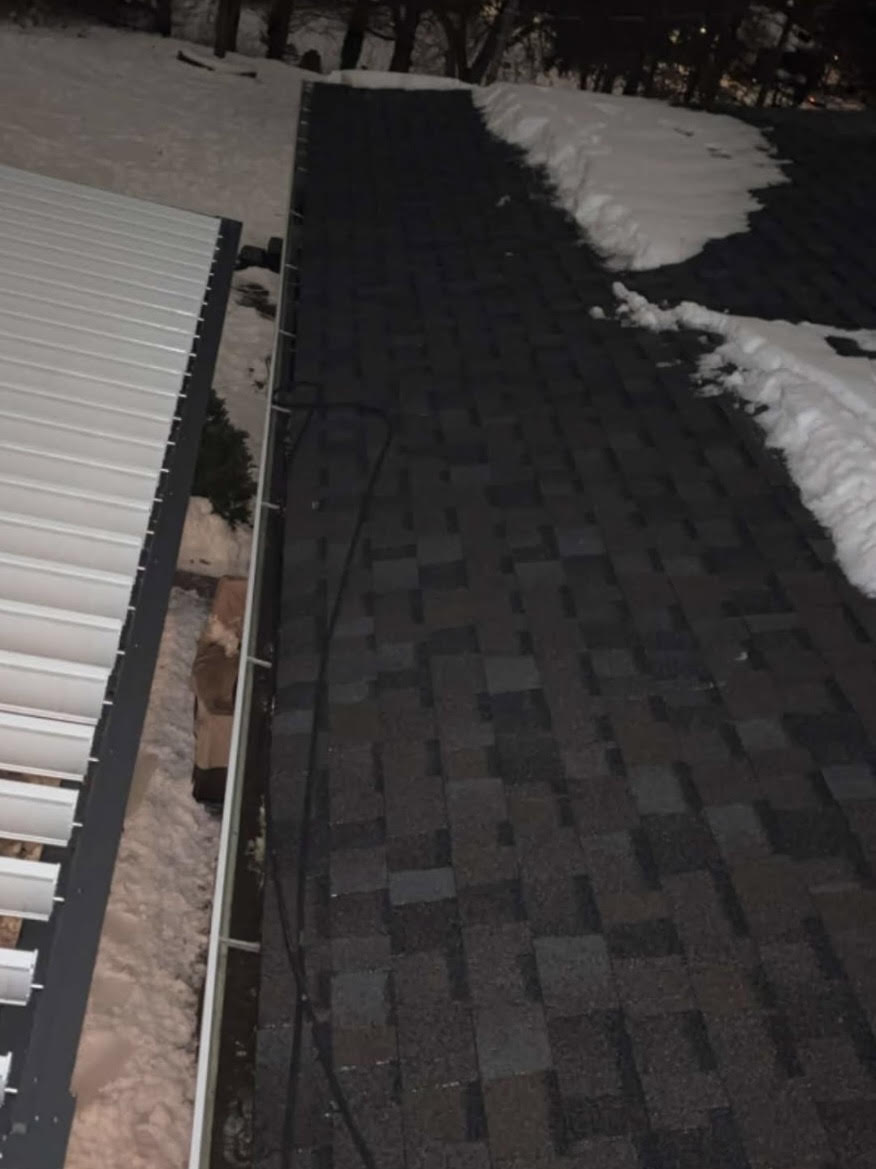
Real winter roof conditions and professional steam removal.
These photographs come from Ice Dam USA project photography. They are not identified as jobs performed specifically in Burnsville.
What if water is entering your Burnsville home?
Ice dams can contribute to winter water intrusion when meltwater becomes trapped behind a frozen ridge.
Other roof defects can cause leaks too, so interior staining alone does not prove the cause.
- Stay clear of wet electrical fixtures.
- Avoid sagging or water-filled ceilings.
- Move belongings when safe to do so.
- Document visible water damage.
- Keep people away from falling roof ice.
- Do not climb an icy roof or ladder.
What ice removal may accomplish
Melting a roof ice obstruction may reopen drainage and reduce additional water backing up.
Water already inside the roof assembly may continue moving after ice removal.
Damaged roofing, wet insulation or interior materials may need separate repair or drying.
An immediate end to every existing leak cannot be guaranteed.
Emergency Ice Dam Removal InformationHeart of the City and larger residential buildings need coordinated roof access.
Burnsville's Heart of the City includes condominium and mixed-use buildings that differ from ordinary detached houses.
Other areas feature townhome associations, rental buildings and managed residential communities.
Ice removal on these properties may require building management approval, advance coordination and control of entrances or parking areas beneath the work.
Townhome and condominium roofs
Shared roof assemblies may involve multiple occupants and different units under the same affected roof section.
Commercial and mixed-use roofs
Height, roof access and nearby public areas can affect the safe removal approach and service category.
What affects the cost of Burnsville roof ice removal?
The applicable service category depends on the roof and work conditions.
A straightforward one-story roof may require different work than a tall building on a sloped lot or a roof with multiple ice obstructions.
- Roof height and steepness
- Thickness and length of the ice
- Number of blocked roof sections
- Existing roof and flashing condition
- Safe equipment and technician access
- Standard or expedited scheduling
Published service rates
Ice Dam USA publishes standard and emergency, expedited or complex service pricing, together with hourly billing terms and minimum charges.
Roof slope, building height, access, travel and scheduling can affect the applicable category.
Review the official guide for up-to-date rates before booking.
Call 855-468-4233Three things to tell us about your Burnsville roof.
Building information
Provide the address, number of stories, roof type and whether the property has shared roof sections.
Ice and leak location
Explain where ice is forming, which roof sections are affected and whether water is entering the building.
Winter access conditions
Mention sloping yards, snowbanks, retaining walls, fences, parking or areas below hanging roof ice.
Why the same roof edge may freeze again next winter.
Steam removal addresses the ice obstruction that exists today. Preventing recurring ice may require correcting conditions that create uneven rooftop snowmelt.
Attic air leakage
Warm indoor air escaping into attic spaces can heat the roof deck and melt snow above it.
Uneven insulation
Insulation gaps may lead to differences in roof temperature and localized snowmelt.
Complex roof transitions
Valleys, dormers and lower roofs may concentrate runoff where water can refreeze.
A qualified roofing or building-envelope professional can investigate recurring issues when the weather permits safer inspection.
Frequently asked questions from Burnsville property owners.
Does Ice Dam USA provide roof ice dam removal in Burnsville?
We welcome requests from Burnsville and the surrounding south metro. Appointments depend on regional technician availability and safe access.
Can homes in the Buck Hill area develop ice dams?
Yes. Homes in that area can develop ice dams like other Minnesota properties. Roof heat and refreezing are the causes, not hill proximity itself.
Does living near Crystal Lake cause roof ice?
No. Lake proximity alone does not cause ice dams. Snowmelt and refreezing on the roof are necessary.
Why does my split-level house have ice above the garage?
Water from a higher roof may reach a colder lower garage section and refreeze.
Can a sloped backyard affect roof ice removal?
Yes. The working height of the roof and ground access may vary across the property, affecting service planning.
Do you accept requests for townhomes and condominiums?
Yes. Property owners and managers may contact Ice Dam USA about shared roofs, subject to authorization and safe access.
Can roof valleys develop separate ice dams?
Yes. Valleys collect runoff from adjoining slopes, which may refreeze and block drainage.
Do large icicles always indicate a damaging ice dam?
No. Icicles can form without a substantial roof drainage obstruction.
Can ice dams form without gutters?
Yes. Ice dams form on roofing when meltwater refreezes and restricts drainage.
What equipment does Ice Dam USA use?
We use professional Arctic Steamers that apply low-pressure steam to melt roof ice.
Is steaming the same as hot-water pressure washing?
No. Low-pressure steam primarily relies on heat. Pressure washing delivers water under spray pressure.
Should I chip roof ice away with a hammer?
No. Impact tools can damage shingles and flashing. Icy roofs also present serious fall hazards.
Does low-pressure steam guarantee no roof damage?
No. Existing roof condition, ice thickness, weather and operator technique all affect risk.
Can ice dams cause interior ceiling stains?
Yes. Trapped water may enter vulnerable roofing details and travel through the building.
Will ice removal immediately stop an active roof leak?
Not necessarily. Restoring drainage may reduce water backup, but existing moisture can continue moving inside the roof.
Can ice return after professional removal?
Yes. Future snowfall and refreezing may create new ice when underlying conditions remain.
How much does Burnsville ice dam removal cost?
Pricing depends on service category, roof conditions and access. Review our current pricing guide.
Does homeowners insurance cover ice dam damage?
Coverage depends on the policy and circumstances. Contact your insurance company for details.
How do I request Burnsville roof ice removal?
Call 855-468-4233 or use our contact page. Provide the address, roof details and any leak symptoms.
Burnsville, Dakota County, Minnesota.
This map is centered on Burnsville, Minnesota. It provides geographic context for the service area and does not represent a physical Ice Dam USA office.
Call 855-468-4233 for current service availability.
Nearby Minnesota service pages and helpful information.
Explore professional roof ice removal, pricing, prevention and dedicated service pages for nearby communities.
Need professional roof ice dam removal in Burnsville?
Whether ice is building along an eave, blocking a roof valley, forming above an attached garage or contributing to a winter roof leak, contact Ice Dam USA about professional Arctic Steamer ice dam removal in Burnsville and surrounding Dakota County.
Service scheduling depends on regional technician availability, weather, roof conditions and safe access.
