
Dellwood MN Ice Dam Removal
Professional low-pressure steam ice dam removal for Dellwood homes, historic lake cottages and large residential properties near White Bear Lake.
Dellwood is a distinctive community on the northeast side of White Bear Lake, known for wooded surroundings, rolling countryside and residential properties on spacious lots.
When melting snow refreezes near a cold roof edge, ice can block drainage. Trapped meltwater may reach vulnerable roofing and cause interior leaks.
Ice Dam USA uses professional Arctic Steamers to melt these frozen obstructions without aggressive chipping or high-pressure water blasting.
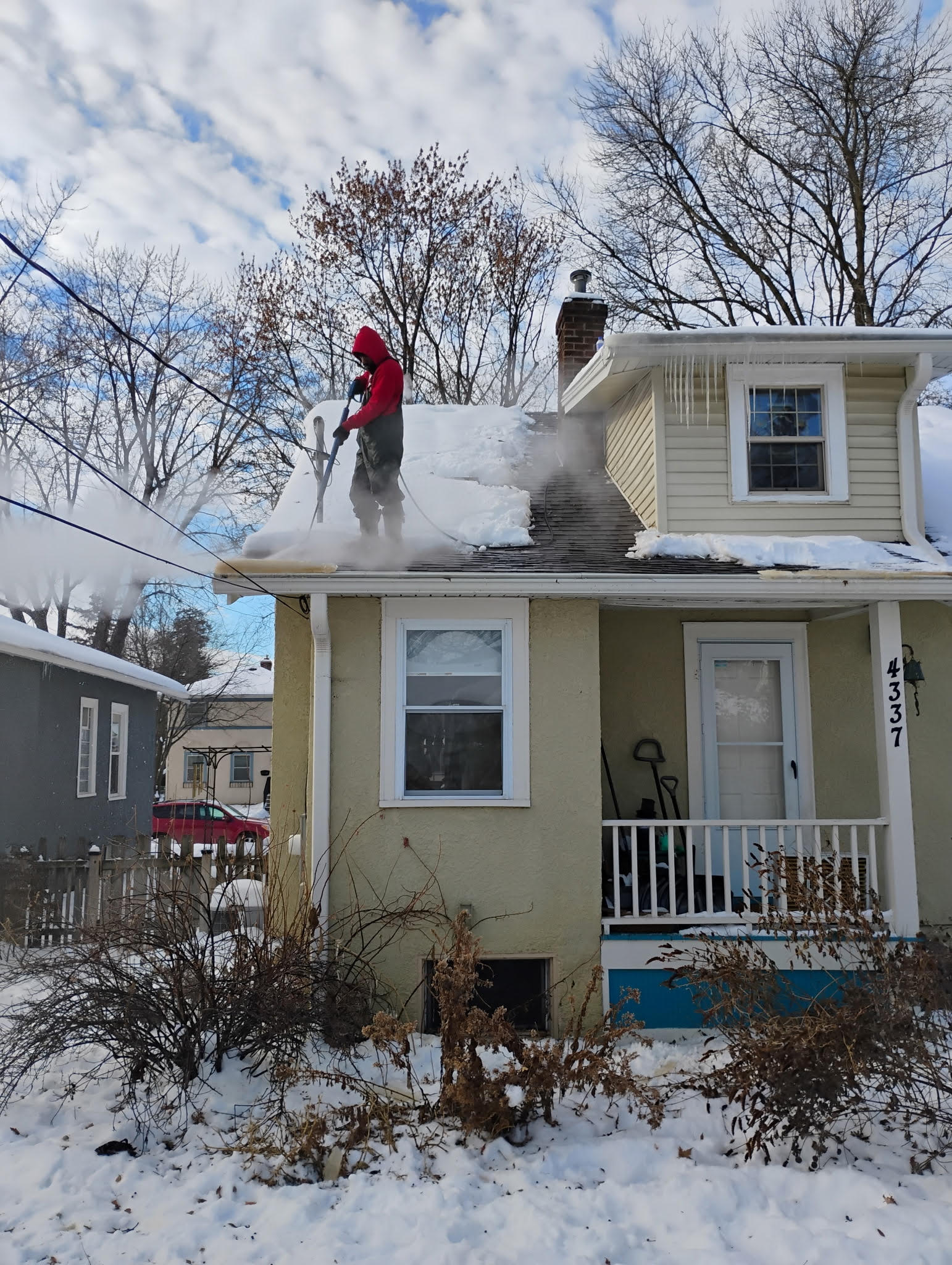
From historic White Bear Lake cottages to today's large-lot homes.
Dellwood's housing history began long before modern suburban development. The community was platted in 1882, during the era when White Bear Lake was a popular summer destination.
Some early properties included large, architect-designed cottages. Today, the city remains primarily residential, with a mix of established homes, renovated properties and newer single-family houses.
Those differences matter when ice forms along a roof edge. An original roofline, remodeled attic or custom home with multiple gables may each have different areas where meltwater refreezes.
Historic lake residences
Older pitched roofs may feature dormers, extended eaves or detailed flashing that requires consideration during ice removal.
Renovated homes
Additions and changes in attic insulation can influence roof temperatures and snowmelt patterns.
Custom residential roofs
Multiple roof levels, covered porches and intersecting gables can create additional locations where runoff may freeze.
Important: The age or value of a house does not determine whether it develops an ice dam. The underlying factors are roof temperatures, meltwater, refreezing and blocked drainage.
Large lots, wooded yards and lakeside roof access.
The City of Dellwood covers approximately 1,800 acres and has worked to preserve a semi-rural residential character.
Dellwood's spacious lots can give technicians more distance around a house than in a compact subdivision, but the property may also have steep ground, mature trees and a long driveway.
White Bear Lake shoreline
Some properties face sloping ground or outdoor living spaces on the lakeside. A rear eave may be higher above the ground than it appears from the driveway.
Dellwood Road corridor
Homes along and around Dellwood Road may be set back from the street. Snow-covered driveways and landscaping can affect winter equipment access.
Pine Tree Apple Orchard area
This established local landmark reflects Dellwood's agricultural and semi-rural surroundings. Nearby properties can have spacious yards and wooded areas.
Established residential estates
Larger houses may have multiple roof heights, steep pitches and detailed roof intersections. Each roof requires a property-specific removal plan.
Local geography is not the cause. White Bear Lake, wooded lots and nearby orchards do not directly create roof ice dams. They are relevant mainly to property layout, snow exposure and service access.
When does visible roof ice become a drainage problem?
A few icicles hanging from a roof do not necessarily mean a damaging ice dam is present.
The concern is a frozen ridge that prevents melting roof snow from draining normally. Once water accumulates behind that barrier, it may reach vulnerable roofing materials.
Heavy ice at the eave
A substantial ridge along a cold roof edge may hold back additional meltwater from above.
Ice in a roof valley
When two roof slopes drain toward one valley, a frozen obstruction may interfere with water leaving both areas.
Water inside the home
Ceiling stains or dripping water during a thaw may indicate roof intrusion, although other causes are possible.
Safety first: Never climb an icy roof or ladder to inspect the problem. Do not strike frozen shingles with tools, and stay away from unstable hanging ice.
Why a custom roof can develop ice in more than one place.
Some Dellwood homes have several roof levels, dormers, skylights or covered outdoor areas.
A roof valley can collect runoff from multiple slopes. A lower porch or garage roof may receive water from a warmer upper section.
If that water reaches colder roofing and refreezes, ice may form in a concentrated drainage area.
Professional removal requires identifying which frozen sections are affecting runoff rather than assuming all visible ice has the same cause.
Common areas to discuss
- Roof valleys between gables
- Lower roofs beneath upper slopes
- Long unheated overhangs
- Porch and garage connections
- Dormer roof intersections
- Areas around vulnerable flashing
- Ice above entrances and decks
These are possible roof configurations, not claims of a specific defect in Dellwood homes.
Snow can melt from beneath even during freezing weather.
Snow on a roof acts as an insulating layer. If a portion of the roof deck becomes warm enough, snow above it may melt.
Snow begins melting
Escaping building heat, sunshine or changing weather produces meltwater beneath the snow cover.
Water reaches a cold area
Runoff travels toward an unheated roof edge, valley or lower roof section.
A frozen barrier develops
Water refreezes and may obstruct additional runoff, allowing meltwater to accumulate behind the ice.
Trapped water may enter through vulnerable shingles or flashing. Where it appears inside the home can differ from where it originally entered the roof.
For a fuller explanation, read our guide to how roof ice dams form.
Why Ice Dam USA uses Arctic Steamers on residential roofing.
Ice Dam USA uses professional Arctic Steamers to melt frozen roof obstructions with low-pressure steam.
This method relies primarily on heat rather than forceful impact. It allows targeted melting around the area where ice is restricting drainage.
Roof height, pitch, existing material condition, ice thickness and safe access influence the removal approach.
What professional service considers
- Roofing and flashing condition
- Thickness of the frozen buildup
- Areas where water is trapped
- Safe technician positioning
- Nearby decks and landscaping
- Entrances and occupied areas below
- Winter weather and falling ice
No method can guarantee zero roof damage, especially when roofing materials are already deteriorated.
True steam versus hot-water pressure washing.
Steam equipment and conventional hot-water pressure washers do not apply heat and force in the same way.
Ice Dam USA Arctic Steamers
- Apply professional low-pressure steam
- Rely mainly on heat to melt ice
- Allow work on targeted obstructions
- Reduce reliance on chiseling
- Require careful operation near roofing
Conventional pressure washers
- Use heated water under pressure
- Can apply force to shingles
- May disturb vulnerable flashing
- Can damage roofing if misused
- Are not our roof ice removal method
Roof protection: Low-pressure steam reduces reliance on aggressive impact, but it is not a guarantee that existing roof damage cannot worsen.
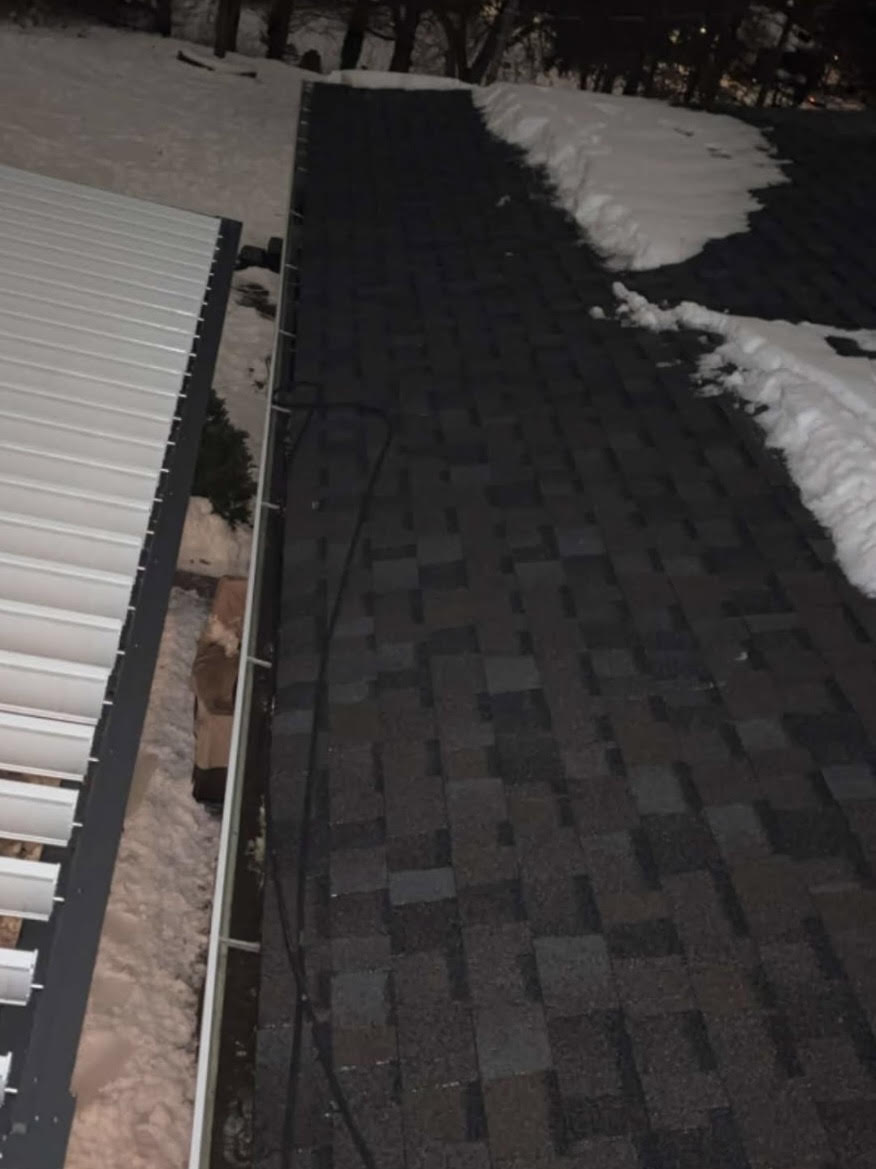
See a real residential roof after ice has been cleared.
The image shown here comes from Ice Dam USA's project gallery and shows an exposed shingle roof after ice removal work.
Professional removal is intended to open drainage where frozen buildup has obstructed the roof.
This photograph is not identified as a Dellwood property.
Concerned about an active roof leak at your Dellwood home?
An ice dam may hold meltwater against vulnerable roofing, allowing moisture to enter the building.
Water can travel through insulation and framing before becoming visible as a ceiling stain or interior dripping.
Keep people away from wet electrical fixtures, unstable ceilings and overhead falling ice. Move belongings only when safe.
What removal may accomplish
Removing the ice obstruction can help reopen drainage and reduce additional water collecting behind the ice.
Moisture already inside the roof may continue moving after the ice is gone.
Roof repairs or water-damage restoration may still be necessary. An immediate leak stop cannot be guaranteed.
Emergency Ice Dam Removal InformationWhat to have ready when requesting roof ice removal.
A few details help Ice Dam USA understand the worksite and discuss current service availability.
Describe the building
Share the complete Dellwood address, building height and roof configuration.
Identify the ice
Explain which roof edge or valley is affected and whether water is entering the home.
Explain property access
Mention long driveways, snowbanks, sloping yards, decks, trees and nearby structures.
Helpful: Photographs taken from a safe ground-level location may help describe the ice. Never climb an icy roof or ladder to obtain them.
What affects the cost of professional steam ice removal?
Ice Dam USA publishes standard and emergency, expedited or complex hourly service categories with a minimum appointment charge.
Larger, higher or more complicated rooflines may qualify for a different service category even without emergency scheduling.
Roof and property factors
- Roof height and steepness
- Length and thickness of ice
- Number of affected roof sections
- Dormers, valleys and complex slopes
- Access around the home
- Weather and scheduling priority
Check the current rates
The official Ice Dam USA pricing guide lists current hourly rates, three-hour minimums and billing policies.
Refer to that guide rather than older prices on archived city pages.
View Current Ice Dam Removal CostWhy the same Dellwood roof edge may freeze each winter.
Professional steam removal treats an existing ice dam. It does not necessarily correct the conditions that allowed the ice to form.
Warm air entering the attic
Air leaks from heated rooms may warm the roof deck and melt the snow above it.
Uneven insulation
Older additions and remodeling may create differences in heat transfer across the roof.
Complicated drainage
Intersecting roofs, porches and valleys may direct runoff toward colder areas where it refreezes.
A qualified roofing or building-envelope professional can investigate recurring problems when safe inspection conditions are available.
Learn About Long-Term Ice Dam Prevention .Frequently asked questions about roof ice dam removal in Dellwood.
1. Does Ice Dam USA provide ice dam removal in Dellwood, Minnesota?
Yes. Ice Dam USA accepts service requests from Dellwood homeowners. Scheduling depends on crew availability, weather and safe roof access.
2. Can historic White Bear Lake cottages develop ice dams?
Yes. Older cottages may have roof overhangs, dormers or attic conditions where snowmelt can refreeze. Each property is different.
3. Does being on White Bear Lake cause ice dams?
No. Lake proximity does not directly cause an ice dam. Roof temperature differences and blocked drainage are more important.
4. Can a large custom home have multiple ice dams?
Yes. A roof with several slopes and valleys may develop more than one frozen obstruction during the same winter.
5. Does a steep lakeside yard affect ice removal?
It can. Ground elevation affects the working height and may restrict safe equipment access.
6. What if there are trees or landscaping below the roof?
Describe the obstacles when calling. Existing landscaping and nearby structures are part of worksite planning.
7. Can roof ice collect near dormers or skylights?
Yes. Roof intersections can concentrate runoff and introduce details where water may become trapped behind ice.
8. Is low-pressure steam different from hot-water pressure washing?
Yes. Steam primarily uses heat to melt ice, whereas pressure washing uses heated water under pressure.
9. Can steam removal guarantee no roof damage?
No method is entirely risk-free. Existing roofing, ice thickness, weather and technique all affect risk.
10. Will my leak stop immediately after removing the ice?
Not necessarily. Removal may help restore drainage, but water already inside roof materials can continue moving. Separate repairs may be needed.
11. How can I request Dellwood roof ice dam removal?
Call 855-468-4233 or use our contact page. Provide your address, ice location and any active leak details.
Professional roof ice removal inquiries throughout Dellwood.
Ice Dam USA welcomes service inquiries throughout Dellwood, including the White Bear Lake shoreline and the city's larger residential properties.
Dellwood locations
- Dellwood Road area
- Northeast White Bear Lake shoreline
- Pine Tree Apple Orchard vicinity
- Established residential areas
- Wooded and large-lot homes
- All areas in between
Nearby communities
- White Bear Lake
- Mahtomedi
- Willernie
- Grant
- White Bear Township area
- Surrounding Washington County
Service depends on the specific property, roof accessibility, winter weather and technician availability. These locations represent service inquiries, not separate Ice Dam USA offices.
Map shown for geographic reference only.
Explore related services and homeowner resources.
Need professional roof ice dam removal in Dellwood?
Whether ice is blocking a roof valley on a custom home, collecting along an older lakeside cottage or contributing to water entering your house, contact Ice Dam USA about professional low-pressure steam ice dam removal.
Professional Arctic Steamer service. Scheduling depends on weather, roof conditions and technician availability.
