
St Louis Park's #1 Ice Dam Removal Service
Servicing Cities All Over Minnesota
St Louis Park's, MN Ice Dam Removal
1-855-GOT-ICEE (1-855-468-4233)
Why Do Minneapolis Homes Get Ice Dams?
You probably didn’t search for St. Louis ice dam removal because you noticed a little ice on the roof. You searched because something changed. Maybe water is staining the ceiling. The gutters are buried under a thick ridge of ice. Icicles are getting bigger by the day. Or you can actually hear dripping inside when the afternoon sun starts warming the roof.
Homes throughout St. Louis, Minnesota, from older neighborhoods near the city center to residential areas closer to the Minneapolis side of the community, can develop ice dams when heat escaping through the roof melts the snow above while the colder eaves remain frozen. The water runs downhill, freezes again, and eventually creates a barrier that prevents the next round of snowmelt from draining. That's when a roof ice problem can become a water problem inside your home.
If you're seeing ice along the roof edge, frozen gutters, large icicles, ceiling stains, or an active winter roof leak, don't start swinging a hammer at it. Ice Dam USA provides professional ice dam removal in St. Louis, MN using low-pressure steam that melts the blockage without beating up the shingles underneath it. No chisels. No pressure washers. No guessing about what the roof can handle.
Are You Fixing Today's Problem, Or Preventing Next Winter's?
🚨 I Need Help Now
You've got an active problem — ice, leaking, or something you're not sure about. Skip straight to removal, the process, and pricing.
See How Removal Works🗓️ I'm Planning Ahead
No active emergency — you want to understand insulation, ventilation, gutters, and what to check before next winter arrives.
Go To PreventionHow do Ice Dams form?
Most times when we get large amounts of snow, or as the snow builds up over time, your vents can become covered. We don't think about these roof vents often but they are very important. As heat rises, your roof needs to breath and these vents allow your roof to do that. If your vents are covered and the heat has no way to excape, your roof then starts to heat up. Once the roof heats up, the snow melts and drains off of your roof. However, if temperatures remain low, the draining water will start to freeze, causing ice to form near to edge of your roof. Over days of this happening, the ice dams buiilds and becomes too large and starts to hold water. The water then backs up under your shingles, causing leaks into your home.
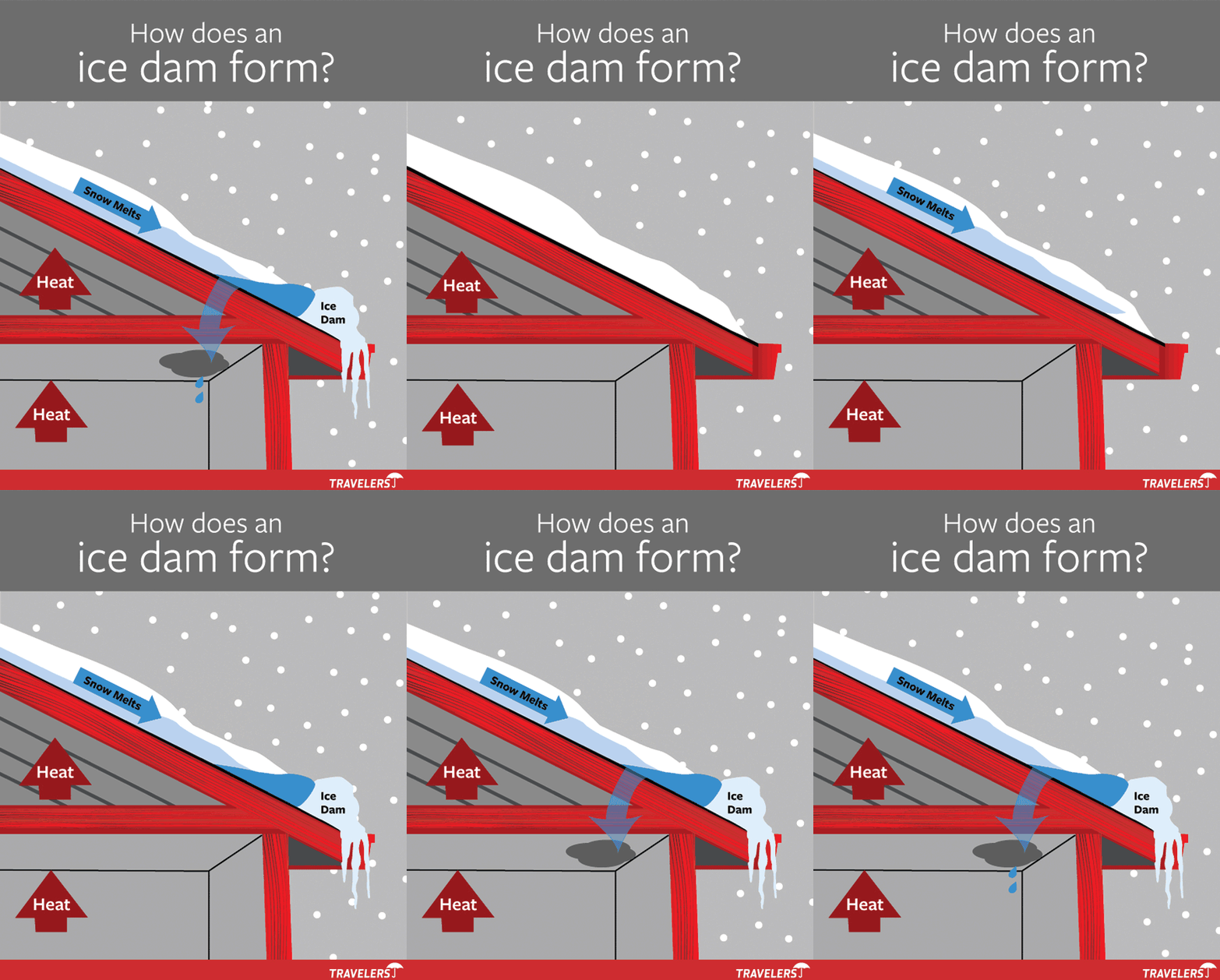
What is an Ice Dam?
Shingles and other roofing materials are designed to help water flow off your home. As water backs up from the wall of ice, that water starts moving under your shingles and starts looking for the easiest way to move down. Your roofing materials aren’t designed for this. Water will win and start to creap under the shingles, causing an even bigger issue.
Heat escaping from your home rises and melts the snow, but not all at the same time or in the same areas. As the water from the melted snow comes in contact with the snow that hasn’t melted, it gets colder and colder until it eventually freezes. That ice builds up and creates a wall (roof ice dam) that holds water that either freeze and increases the size of the wall or puddles up behind it. The heat is always released from your home, however, it comes more rapidly from vents, skylights, and other areas that have less insulation. This means snow melts in those areas before it melts in areas that have better insulation or are lower on the roof. A lot of times this is near the gutters which are where ice damming on roofs begin.
How do I prevent Ice Dams from forming on my roof in St Louis Park, MN?
Here are a few tips to keep your roof clear of snow:
1. If you choose to do it yourself, always have safety gear when climbing onto your roof. Use chains for your boots, harness yourself so you do not fall, use a plastic shovel (not one with a metal tip), and always shovel towards the ground so you do not tear shingles off of your roof.
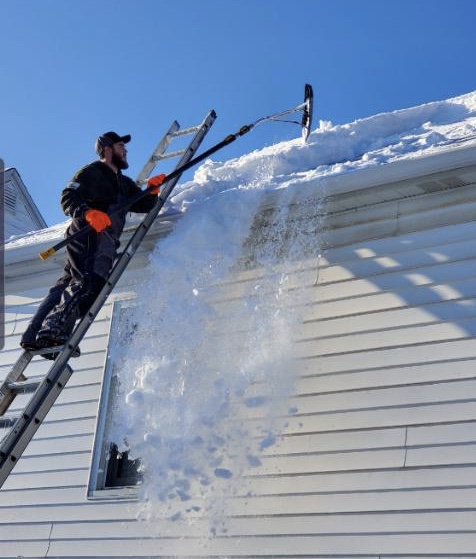
2. When using a snow rake to remove snow from your roof, be sure to remove all of the snow, not just the top layer. You should scrape all the way down to your shingles. When only the top layer is removed, the snow rake actually packs down the snow onto your roof, and this packed down snow causes ice damming. In most cases the ice dam moves further up your roof and can cover the entire length or your roof.
3. Uncomfortable with removing ice damming yourself? If you need to hire a professional to remove the snow and ice from your roof, be sure to find the right company. Check to make sure they are bonded and insured. When they are on your roof, don't be afraid to ask questions to ensure safety procedures.
How do remove Ice Dams in St Louis Park?
Bonded and insured companies typically charge $300-$500 per hour. Using a bonded and insured ice dam removal prevention company is important because standing on an icy roof in the middle of winter is risky. Putting a ladder up and then climbing to reach the roof during these conditions is something that should be done by professionals. If someone falls and gets hurt, or an ice chunk falls off of your roof and damages something but you didn't make sure they were insured, you could potentially be sued or have to pay out of pocket to repair any damages.
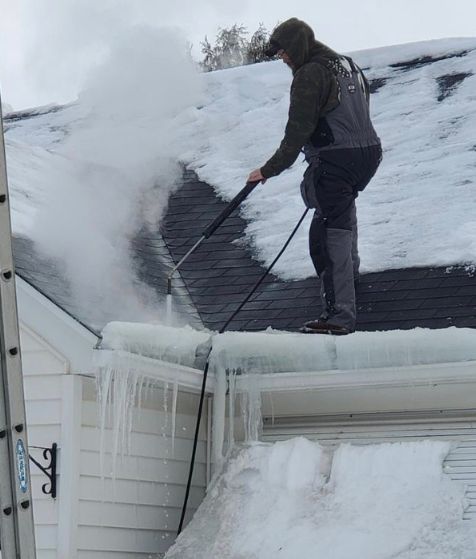
Another factor in removing ice dams in an efficient way is using the correct equipment. Ice Dam USA uses true low pressure steamers and not hot water pressure washers. When you hire a roof ice dam company, you can easily find out what kind of machine they will be using. All you need to do is ask to see their wand. If it has a trigger, they are using a hot water pressure washer. If it does not have a trigger, it is a true steamer. Hot water pressure washers do not burn as hot as a true steamer and therefore creates much more damage because of the high PSI. If you encounter this situation, kindly ask them to leave and call Ice Dam USA! Our company uses only a true steamer for your ice dam removal in St Louis Park.
How can I stop my roof from leaking because of ice damming?
If you are in Minnesota, you know how hard our winters can be and how much snow we can see. If you have snow on your roof and icicles coming down from your gutters, the water can be from ice damming that is preventing the water from running off the top of your home. Normally water will flow down your roofing materials and into your gutters, but something may be blocking that process. The only way to stop it is to remove the ice damming on your roof.
Ice Dam USA is the leading and most trusted Ice Dam Removal company in Minnesota! Ice Dam USA is fully bonded and Insured for all residential and commercial properties in St Louis Park, MN. We are a family owned company that guarantees to stop your leak within 30 minutes of arrival.
We use low pressure steamers that are custom made for ice dams so they do not damage your roof. We DO NOT use hot water pressure washers like most Ice Dam Removal companies. High pressure washer can damage your roof and shingles when they blast 4000 PSI out of the tip of the hose, and they do not burn as hot as a true custom steamer. Check out our FAQ's page to see the difference between our true ice dam removal steamer and our competitor's hot water pressure washer.
Although Ice Dam USA may not be the "cheapest" company out there, we guarantee customer satisfaction while still being fully bonded and insured. Ice Dam USA are the true professionals and skilled at operating in harsh winter conditions. We work all over Minnesota, from Andover to St. Paul, to Rochester and everywhere in between. Ice Dam USA is the most trusted company in the USA at finding and removing ice dams from roofs.
Contact your trusted Ice Dam USA at 1-855-GOT-ICEE (1-855-468-4233) to get started.
Is there an Ice Dam USA near St Louis Park, MN?
Our Service Area
Proud to Serve The Following Minnesota Cities:
- Afton
- Albertville
- Alexandria
- Andover
- Anoka
- Apple Valley
- Arden Hills
- Baxter
- Becker
- Bemidji
- Bethel
- Big Lake
- Blaine
- Bloomington
- Brainerd
- Brooklyn Center
- Brooklyn Park
- Buffalo
- Burnsville
- Cable
- Cambridge
- Carver
- Cedar
- Cedar-Isles-dean
- Center CIty
- Centerville
- Champlin
- Chanhassen
- Chaska
- Chisago City
- Circle Pines
- Clearwater
- Cloquet
- Columbia Heights
- Columbus
- Coon Rapids
- Corcoran
- Cottage Grove
- Crosslake
- Crystal
- Cushing
- Cuyuna
- Dayton
- Deephaven
- Delano
- Dellwood
- Duluth
- Eagan
- East Bethel
- Edina
- Eden Prairie
- Farmington
- Golden Valley
- Lakeville
- Linden Hills
- Lowry Hill
- Elk River
- Elko
- Hibbing
- Mankato
- Maple Grove
- Minneapolis
- Minnetonka
- Moorhead
- Plymouth
- Prior Lake
- Ramsey
- Rochester
- Savage
- St. Cloud
- St. Louis Park
- St. Paul
- Shakopee
- Willmar
- Woodbury
- All Minnesota Locations
If you are experiencing issues with ice dams beyond those areas, just give us a call! We work throughout the United States and we can take care of your ice dam removal and the problems they are causing you.
Frequently Asked Questions
In most cases it isn't the snow itself. Sun and escaping attic heat melt snow higher on the roof, that water runs down to a colder edge, refreezes, and builds an ice dam. Meltwater then backs up behind the dam and can work its way under shingles — even if the roof is otherwise in good condition.
Not automatically. Small icicles are common on almost every Minneapolis roof in winter. Large, thickening icicles combined with ice buildup at the roof edge or in the gutters are the stronger signal.
Yes. Ice dams are about heat loss, roof geometry, and snow accumulation, not roof age alone. A newer roof with poor attic insulation or ventilation can still develop one.
For the ice itself, an ice dam removal company with the right equipment is the more direct call. If the ice dam has caused roof damage — cracked or lifted shingles, deck damage — a roofer may be needed afterward for repairs.
Generally, no. Hammers, chisels, and ice picks can crack or lift shingles, and you can't always see the roof deck underneath the ice you're striking. Combined with the fall risk of an icy roof or ladder, most homeowners are better off having it evaluated professionally.
It varies by roof size, pitch, ice thickness, gutters, accessibility, weather, and building height — which is why Ice Dam USA prices by the hour instead of promising a fixed time up front.
Ask what likely contributed to it, document where the ice formed, and plan to look at insulation, air leaks, and ventilation before next winter using the off-season checklist above.
Minneapolis winters combine steady roof snow (about 51" a year on average) with repeated freeze-thaw cycling, including a January thaw in roughly 8 out of 10 winters historically. That melt-and-refreeze pattern builds ice dams. A lot of Minneapolis housing stock, especially older homes in South and Northeast Minneapolis, was also built before modern insulation standards, which can add to attic heat loss.
Historically, conditions favorable to ice dams run from December through February or into March, whenever Minneapolis has both accumulated roof snow and a freeze-thaw swing. Exact timing changes winter to winter and can't be predicted for a specific date — watch conditions rather than the calendar.
After a heavy snow event, it's reasonable to watch the roof edge and gutters for ice buildup over the following days, especially once temperatures swing back above freezing. A roof rake can safely clear accessible snow from the ground; climbing onto the roof or ladder to deal with ice is where the risk — and the case for calling a professional — goes up.
