
St. Cloud MN Ice Dam Removal
Professional roof ice dam removal in St. Cloud, Minnesota, using low-pressure Arctic Steamers for homes, rental properties, apartments and commercial buildings.
St. Cloud's established neighborhoods, historic homes and growing residential areas feature a wide variety of roof designs. When melting snow refreezes along a colder roof edge, trapped water can damage vulnerable roofing.
Ice Dam USA uses professional steam equipment to melt roof ice and help restore drainage without aggressive chiseling or high-pressure water blasting.
Family-Owned • 30+ Years of Experience • Fully Insured • Professional Steam Equipment

Ice on the roof or water coming inside your St. Cloud home?
Ice dams become a serious concern when they prevent melting snow from draining normally. A frozen ridge can hold water above the roof edge, allowing it to reach vulnerable shingles, flashing or roof joints.
Heavy ice at the eaves
A thick frozen ridge along the roof edge may stop meltwater from draining away.
Ice blocking a roof valley
A frozen valley can hold water coming from two or more adjoining roof slopes.
Water appearing indoors
Dripping water, damp insulation or new ceiling stains during a thaw can indicate a roof leak.
Safety first: Keep clear of wet electrical fixtures, sagging ceilings and unstable ice above entrances. Never climb an icy roof or ladder to inspect the problem.
If water is already entering the property, review our emergency roof ice dam removal service or call 855-468-4233 to discuss current availability.
From Pantown to Southside: different homes, different roof conditions.
St. Cloud has distinctive residential districts with different architectural histories. The age of a building does not cause an ice dam, but roof alterations, insulation changes and drainage details may influence where ice develops.
Pantown Historic District
Pantown grew from housing associated with the Pan Motor Company. The area's historic designs include compact homes, houses with porches and larger residences.
Some older roof assemblies may have changed over time through renovations, roof replacement or attic improvements.
Southside Historic District
Southside contains some of St. Cloud's earliest residential development. Traditional homes may include dormers, extended eaves, porches and roof intersections needing careful evaluation.
Barden Park and the University area
Established residential buildings near the historic districts and university include different roof styles and property uses.
Rental homes and shared properties may require coordination with the owner or property manager.
Seberger–Roosevelt and Northside
Established neighborhoods contain a mix of house sizes, additions and roofing configurations. Ice can form at cold eaves, attached additions or roof valleys when snowmelt refreezes.
For homeowners, our residential ice dam removal guide explains how professional steam service is adapted to different roof designs.
Modern St. Cloud homes can develop ice dams too.
A house does not need to be old to develop roof ice. Newer properties may have intersecting gables, lower garage roofs, covered entrances or multiple roof elevations.
Attached garage transitions
Snowmelt from a warmer upper roof may refreeze when it reaches a colder lower section.
Intersecting valleys
Several roof slopes can send runoff into one drainage path. Ice at that location can restrict water movement.
Covered entries and additions
A porch or entry roof can collect runoff from the main roof and create another location for refreezing.
Important: These are common roof configurations, not evidence that particular St. Cloud neighborhoods have construction defects.
Property access matters across the St. Cloud area.
The Mississippi River runs through the St. Cloud region, with established neighborhoods, older streets, riverfront properties and commercial areas on both sides.
In winter, snowbanks, fences, narrow driveways, deck structures or nearby buildings can affect how a crew reaches the roof.
A roof edge above an entrance or public walkway may also require additional planning to keep people clear of falling ice.
Proximity to the river does not directly cause ice dams. Roof temperatures, snowmelt and refreezing determine whether a frozen obstruction forms.
Tell us about the worksite
- Complete property address
- Building height and number of stories
- Which roof edge or valley is blocked
- Any active interior leak
- Snowbanks or restricted driveway access
- Decks, fences and adjacent buildings
- Entrances or walkways below the ice
Safe ground-level photographs can help describe the job.
How melting snow becomes a frozen roof drainage barrier.
Snow stays on the roof
Snow accumulates during winter weather and may remain on the roof for extended periods.
Meltwater develops
Heat escaping from the home, sunshine or changing weather can melt snow above the roof.
Runoff refreezes
Water reaches a colder eave or roof transition, freezing into an obstruction.
As the frozen ridge grows, additional water may collect behind it and move beneath vulnerable roofing materials. The location of a ceiling stain may be different from the point where water originally entered.
Learn more in our guide explaining what an ice dam is.
Why Ice Dam USA removes frozen roof ice with steam.
Ice Dam USA uses professional low-pressure Arctic Steamers to melt the ice obstructing roof drainage.
Steam relies primarily on heat, rather than aggressive impact tools or high-pressure water blasting.
Technicians consider roofing condition, pitch, height, ice thickness and safe access before determining the appropriate removal approach.
Read about our professional ice dam removal method for additional information.
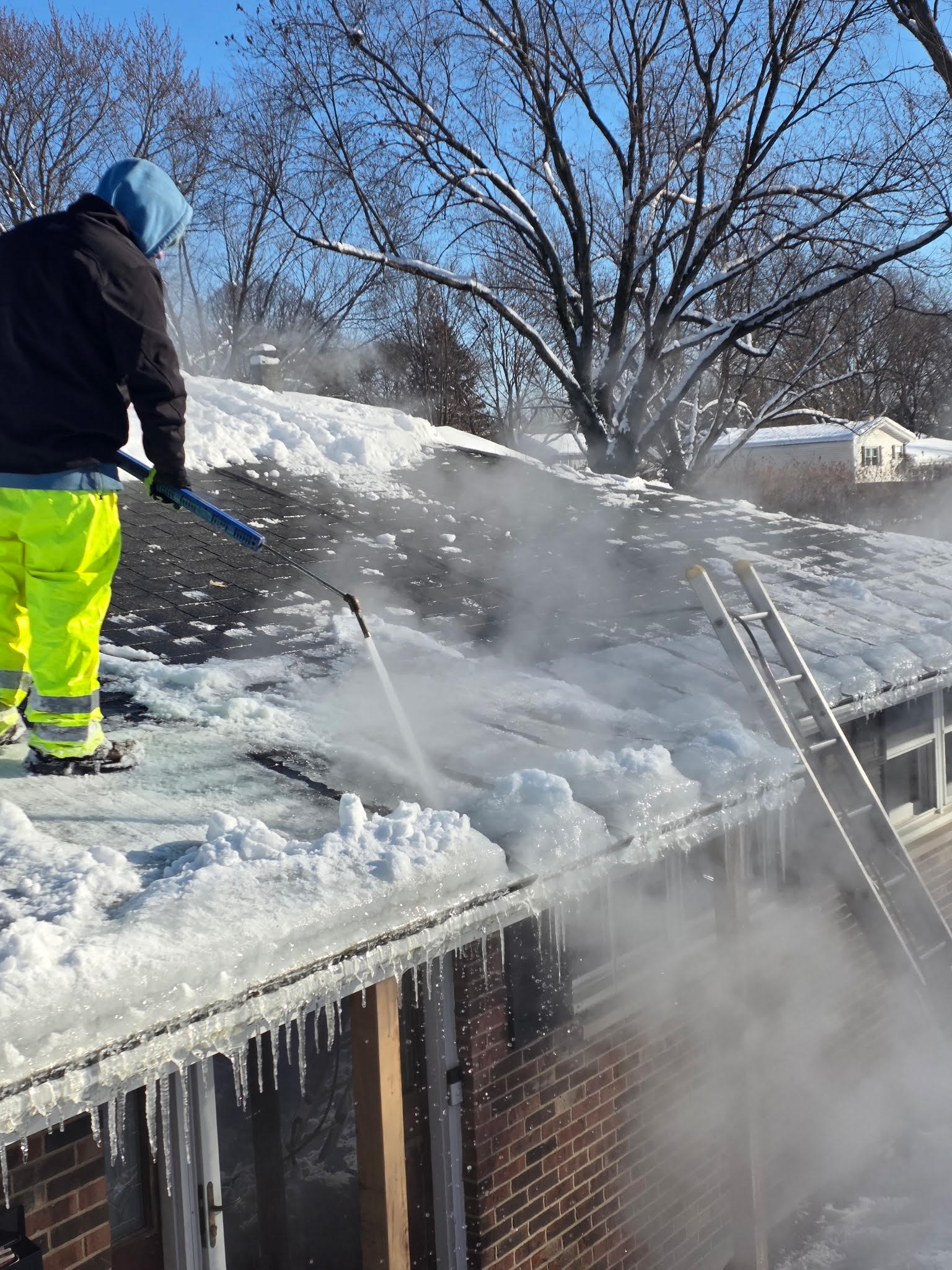
The method used to melt ice matters for roofing materials.
A professional steamer and a hot-water pressure washer are different systems. The amount of force applied to shingles, flashing and roof details is an important consideration.
Professional Arctic Steamers
- Low-pressure steam
- Heat-focused ice melting
- Targeted removal of obstructions
- Less reliance on striking tools
- Careful work around roofing details
Conventional pressure washers
- Heated water under pressure
- Can apply force against shingles
- May disturb weakened flashing
- Can damage roofing when misused
- Not our roof ice removal method
Roof protection: Low-pressure steam reduces reliance on aggressive chipping, but no winter roof work can guarantee zero damage, particularly when roofing is already deteriorated.
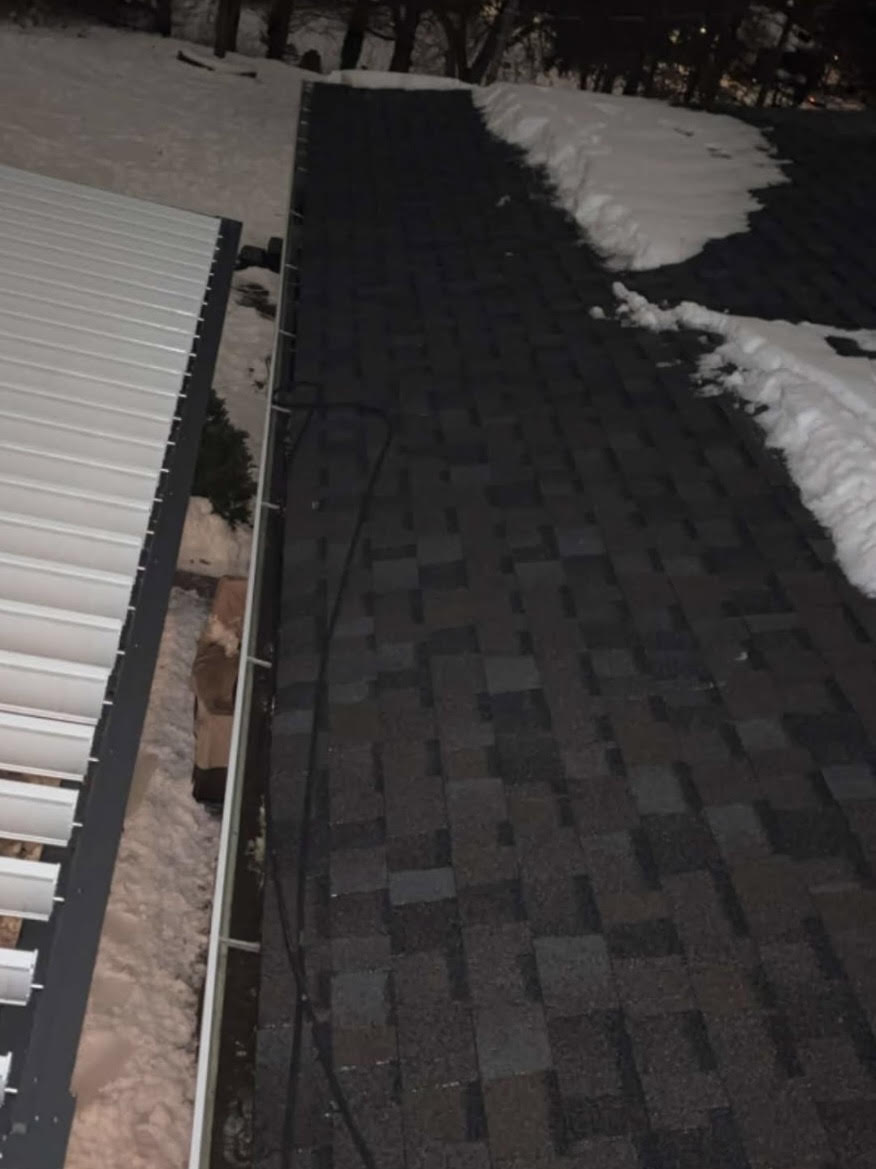
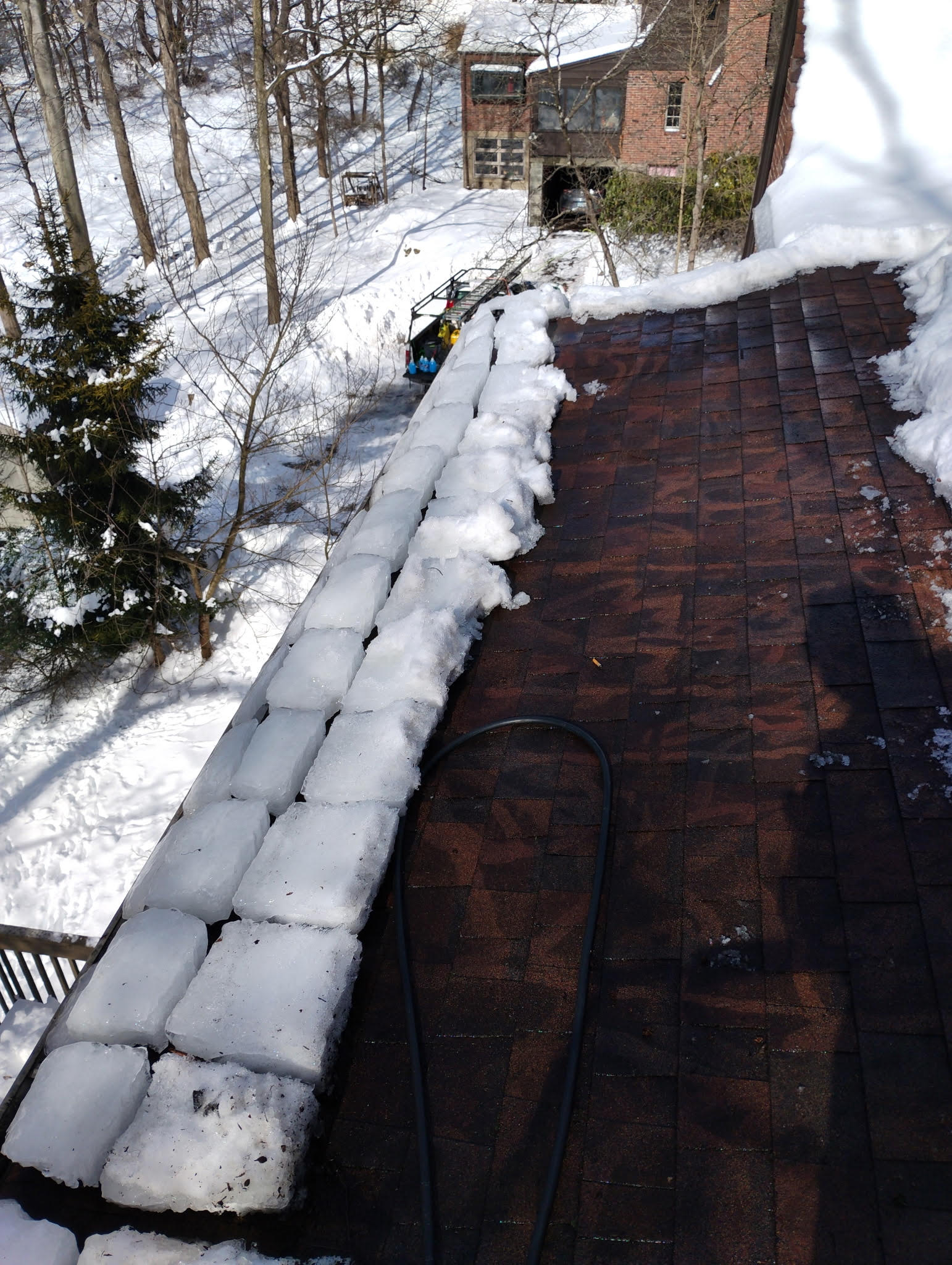
Real roof ice conditions and professional steam removal.
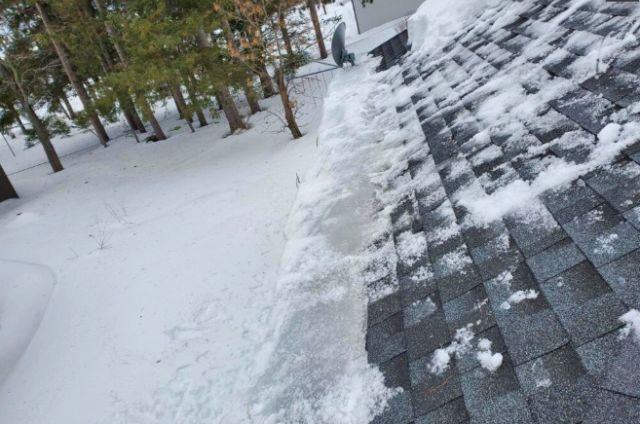
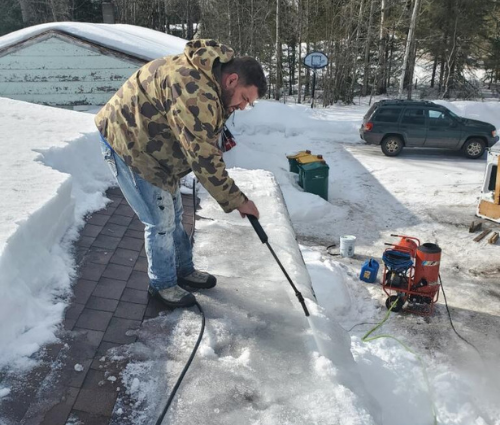
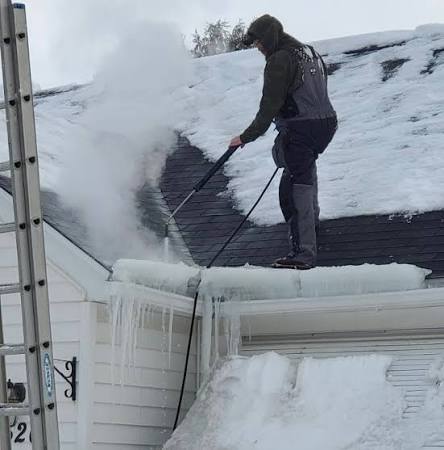
These photographs show different ice buildup patterns, professional steam equipment and roof sections after removal.
Water entering your home during a winter thaw?
A frozen roof obstruction may allow meltwater to collect against vulnerable roofing materials. Water can then travel inside the building before appearing as a ceiling stain or leak.
Keep clear of wet electrical fixtures and sagging ceilings. Move belongings only when safe and avoid standing beneath unstable outdoor ice.
Call Ice Dam USA and explain that water is actively entering the property so our team can discuss the applicable emergency removal options.
What removal may accomplish
Removing the frozen obstruction may help restore drainage and reduce additional water backup.
However, moisture already inside roofing, insulation or framing may continue moving after the ice is gone.
Roof repair or interior drying may still be necessary. An immediate end to leaking cannot be guaranteed.
Commercial ice dam removal in the St. Cloud metro area.
St. Cloud serves as a regional business, education and healthcare center. Its commercial buildings, apartment properties and shared residential roofs can require different service planning from a typical single-family home.
Downtown commercial buildings
Roof ice above entrances, sidewalks and occupied spaces may require pedestrian safety coordination.
Apartments and rental properties
Ice affecting shared roofs may require approval from property managers, owners or building associations.
Larger facilities
Roofing systems, building height, drainage design and equipment positioning must be evaluated individually.
Review our commercial ice dam removal service for additional details about larger and managed properties.
How to request professional roof ice removal in St. Cloud.
Describe the building
Provide the complete address, building type, roof height and where the ice is forming.
Review the roof conditions
Explain the ice buildup, access restrictions and whether water is leaking.
Discuss service availability
Our team can explain current scheduling, the service category and applicable pricing.
Helpful: Photos taken from a safe ground-level location can help show the ice and roof geometry. Do not climb a snowy roof or icy ladder to take pictures.
What affects the cost of professional steam removal?
Ice Dam USA publishes hourly service categories for standard and emergency, expedited or complex ice dam removal. The applicable category depends on the actual roof and the work required.
Factors affecting service cost
- Height and pitch of the roof
- Length and thickness of the ice
- Number of affected roof sections
- Roof valleys and complex transitions
- Safe access around the building
- Travel and scheduling priority
Check current published rates
Our official pricing guide provides the current hourly rates, minimum charges, service classifications and billing information.
Using one central guide avoids outdated prices on individual city pages.
View Current Ice Dam Removal PricingWhy the same St. Cloud roof may freeze every winter.
Steam removal addresses the ice obstruction that exists now. If ice repeatedly forms at the same roof edge, separate investigation may identify contributing building conditions.
Attic air leakage
Warm indoor air entering attic spaces may heat the roof deck beneath the snowpack.
Insulation differences
Older insulation or gaps around additions can create uneven roof temperatures.
Roof design and drainage
Dormers, valleys and lower roof sections can send water toward colder locations where it refreezes.
A qualified roofing or building-envelope professional can investigate recurring conditions when inspections can be performed safely.
Explore our ice dam prevention guide and Ice Dam Learning Center.
Frequently asked questions about St. Cloud roof ice dam removal.
1. Does Ice Dam USA provide ice dam removal in St. Cloud?
Yes. Ice Dam USA welcomes residential and commercial service inquiries throughout St. Cloud and Central Minnesota. Scheduling depends on availability, weather and safe roof access.
2. Does Ice Dam USA serve Sartell and Sauk Rapids?
Property owners in Sartell and Sauk Rapids can contact our team about current service availability.
3. Can historic Pantown homes develop ice dams?
Yes. Snowmelt can refreeze on older or renovated roofs, especially where temperature differences and cold eaves affect drainage.
4. Can rental houses near St. Cloud State experience ice dams?
Yes. Rental properties can develop roof ice dams like other residential buildings. Owners or managers should coordinate exterior roof work.
5. Can newer St. Cloud homes develop ice dams?
Yes. Newer homes with multiple roof sections may experience meltwater refreezing at colder eaves or roof transitions.
6. Does proximity to the Mississippi River cause ice dams?
No. Roof ice dams form because melting snow refreezes and restricts drainage, not simply because a property is near a river.
7. Are large icicles always evidence of a damaging ice dam?
No. Icicles can form without a significant roof drainage obstruction or an interior leak.
8. Can Ice Dam USA assist commercial property managers?
Yes. We accept inquiries for apartments, commercial buildings and other managed properties.
9. Why does Ice Dam USA use low-pressure steam?
Steam uses heat to melt frozen buildup without relying primarily on aggressive chopping or high-pressure water spray.
10. Will removing the ice immediately stop a leak?
Not necessarily. Removal may improve roof drainage, but water already inside the building can continue moving afterward.
11. How do I request St. Cloud ice dam removal?
Call 855-468-4233 or visit our contact page. Provide the property address, roof details and any active leak symptoms.
Roof ice dam removal inquiries throughout Central Minnesota.
Ice Dam USA welcomes inquiries from St. Cloud and the surrounding Stearns, Benton and Sherburne County communities.
St. Cloud neighborhoods and areas
- Downtown St. Cloud
- Pantown
- Southside
- Barden Park area
- Seberger–Roosevelt
- Hester Park and Northside
- Lake George area
- University area
- East St. Cloud
- All areas in between
Surrounding communities
- Sartell
- Sauk Rapids
- Waite Park
- St. Joseph
- St. Augusta
- Clearwater
- Becker
- Big Lake
- Cold Spring area
- All areas in between
These are service areas, not separate Ice Dam USA offices. Scheduling depends on the property's location, roof conditions, weather and crew availability.
Explore nearby and regional ice dam removal city pages.
St. Cloud is a major Central Minnesota service area. We've connected this page to existing city pages throughout the surrounding region so property owners can navigate to the service location that best matches their address.
Closest verified city pages
Clearwater Ice Dam Removal
Roof ice removal inquiries for Clearwater and nearby Central Minnesota properties.
Becker Ice Dam Removal
Professional steam removal for homes and buildings along the Highway 10 corridor.
Big Lake Ice Dam Removal
Roof ice dam removal information for Big Lake and nearby Sherburne County.
More Central Minnesota city guides
For regional information beyond St. Cloud, visit the Minnesota ice dam removal hub.
Professional service information and homeowner education.
Need professional roof ice dam removal in St. Cloud?
Whether frozen roof ice is blocking an eave on an older home, collecting along a valley in a newer neighborhood or contributing to water inside an apartment or commercial building, contact Ice Dam USA about professional low-pressure steam ice dam removal.
Family-Owned • Professional Arctic Steamers • Central Minnesota Service • Scheduling Subject to Availability
