
Thick Ice at the Eaves
A raised ice ridge along a roof edge may obstruct melting snow.
|
|||
|
|
When heavy roof ice blocks melting snow from draining, water can work beneath roofing materials and enter your home or building.
Ice Dam USA provides professional ice dam removal throughout Montana using Arctic Steamers and true low-pressure steam.
From Billings and Missoula to mountain communities and rural properties, our traveling technicians help customers address roof ice buildup and winter water intrusion.
Montana is a large state with considerable differences in elevation, snowfall, wind exposure and winter temperature patterns.
Roof ice problems in a Yellowstone Valley home can differ from those affecting a mountain cabin outside Missoula or a vacation property near Big Sky.
Some buildings experience repeated winter warming periods. Others face persistent snow cover, shaded rooflines or wind-driven snow drifting.
An ice dam forms when melting snow flows toward a colder section of roofing and refreezes.
As the frozen ridge grows, additional meltwater can become trapped behind it. That water may enter vulnerable roof joints, flashing or shingles.
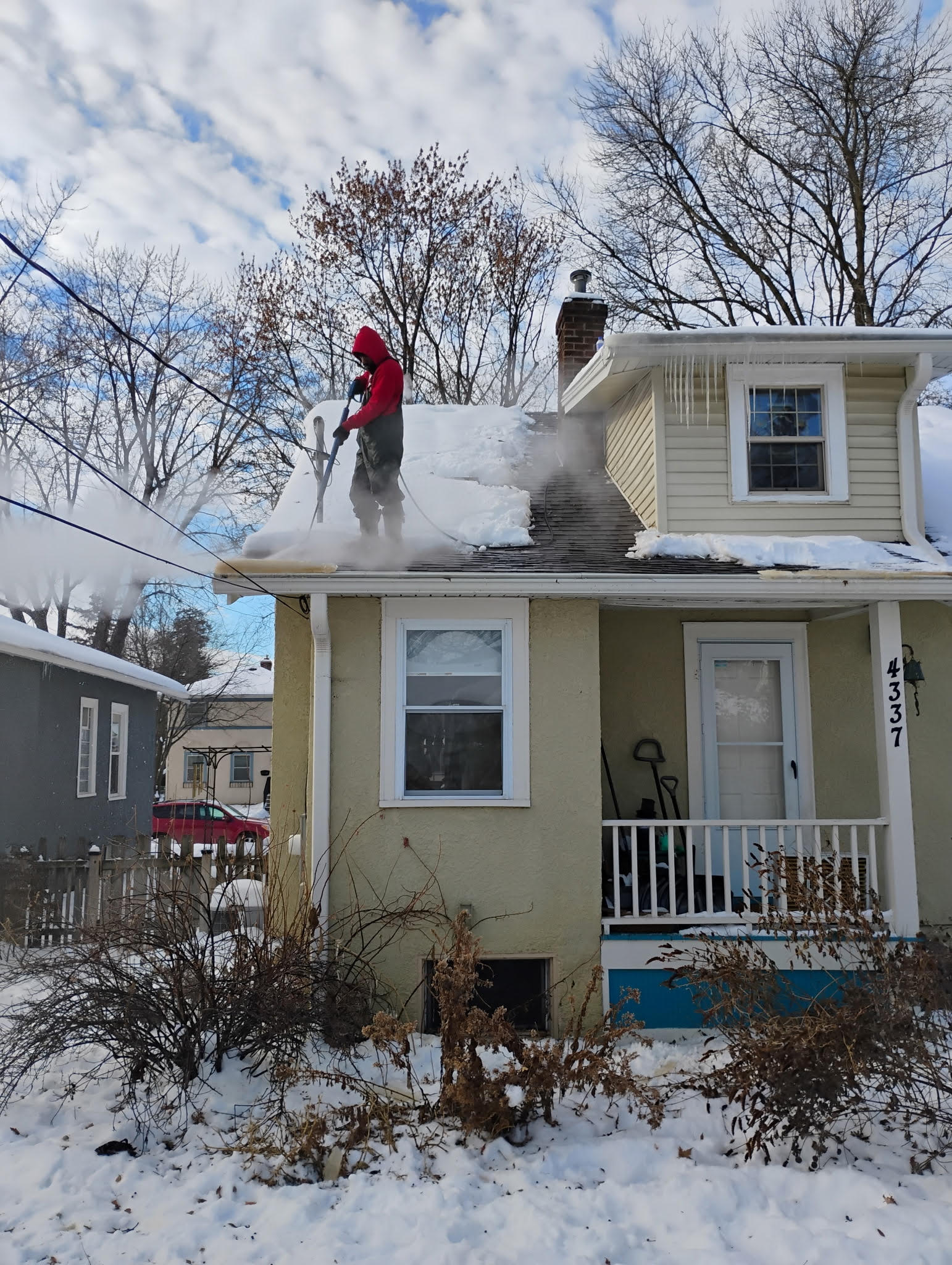
Company project photograph illustrating professional roof ice removal. Not represented as a Montana job.
A homeowner may look outside, see freezing temperatures, and wonder how water could be moving on the roof.
Heat escaping through attic air leaks and inadequately insulated assemblies can warm part of the roof surface. Sun exposure and changing outdoor temperatures can also contribute to melting.
A layer of snow accumulates across the roof.
Heat or changing weather causes some snow to melt.
Water travels to colder roofing near the eaves.
Repeated freezing creates an obstruction that can trap water.
A raised ice ridge along a roof edge may obstruct melting snow.
New moisture marks during a thaw may indicate water entering through the roof.
Intersecting roof slopes can concentrate melting snow into one area.
Complex roof transitions may accumulate and refreeze runoff.
Repeated winter water intrusion deserves evaluation for ice damming or other defects.
Large ice formations above entrances and walking areas can present hazards.
Icicles can occur without a significant roof ice dam. An accurate assessment looks at where ice has formed and whether roof drainage is obstructed.
Established roof ice can bond tightly to shingles, flashing and roof transitions.
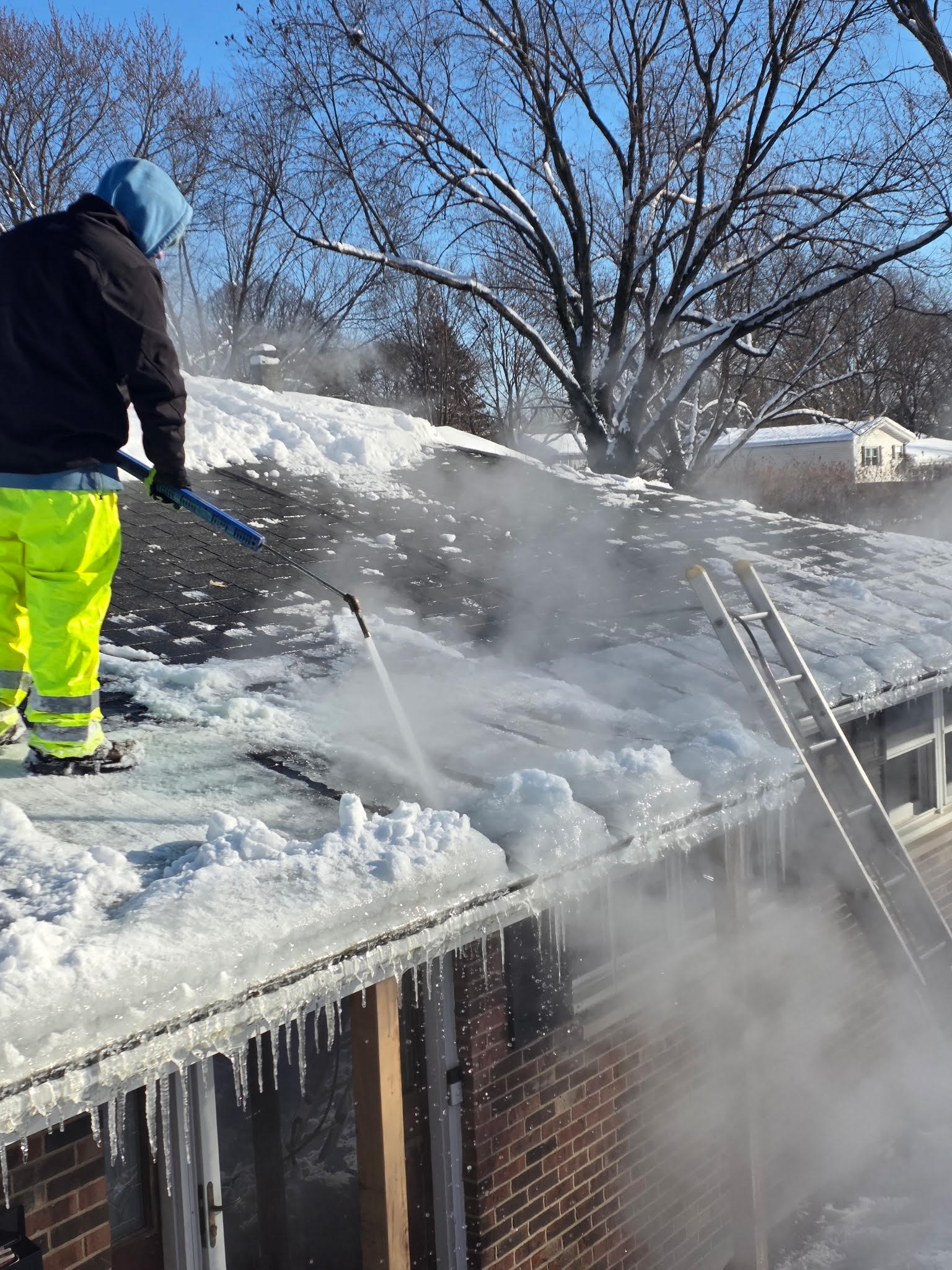
Breaking ice by force can damage vulnerable roofing materials. Ice Dam USA instead uses professional Arctic Steamers to melt existing ice.
True steam uses heat to melt accumulated roof ice with low-pressure application.
Aggressive chopping or forceful water jets can damage roof materials, particularly when ice is firmly bonded.
Low-pressure steam offers important advantages when used appropriately, but every roofing system has limitations. No ice removal method guarantees zero damage.
Water trapped behind a roof ice dam can find vulnerable areas beneath roofing materials.
By the time a stain appears on the ceiling, water may have traveled through framing or insulation.
If you notice an active leak, move valuables away from affected areas when safe. Collect water only when it can be done without exposure to electrical hazards.
Stay clear of sagging ceilings and wet electrical fixtures.
Ice removal can help reopen roof drainage paths. However, moisture already inside the building may continue to appear after the ice is removed.
These details help with scheduling, equipment planning and an initial discussion of service scope.
Contact Ice Dam USAMontana's geography makes one-size-fits-all winter advice less useful. Roof ice formation depends on the specific building and its conditions.
Temperature swings, sun exposure and changing snow cover can affect roof melting.
Mountain influence, shaded roof slopes and accumulated snowfall can affect winter roof drainage.
Steep roof designs, dormers and mountain snow can complicate ice dam removal.
Snow-covered roof sections and variable solar exposure can create uneven melting patterns.
Wind-driven snow accumulation and occasional warmer periods can change roof ice patterns.
Roof orientation, cold shaded eaves, and building heat loss can influence localized ice buildup.
Explore every currently verified Montana city-specific ice dam removal page on Ice Dam USA.
We maintain dedicated roof ice dam removal pages for Billings and Missoula. For other Montana communities, please contact our team about service availability.
Ice Dam USA is a family-owned specialist that coordinates traveling technicians for winter ice dam removal assignments across the country.
Montana properties may be far apart, and conditions can change quickly on mountain roads and rural access routes.
Please contact us to discuss availability for your address. We do not claim a permanent crew or local office in every Montana community.
Statewide geographic reference only. This map does not identify office or crew locations.
The cost of professional ice dam removal varies according to the amount of ice, building height, roof slope, accessibility and scheduling.
Large roof-edge ridges or multiple affected areas can increase the work required.
Steep roof pitches, multistory buildings and difficult property access require additional planning.
Priority requests, distant properties and complex assignments may affect the applicable service rate.
Ice Dam USA maintains one authoritative pricing guide with current service rates, minimums and billing policies.
Tell us about your roof ice and any active interior leaking.
Share building height, location, access and photos if available.
We discuss current availability, scope, pricing and scheduling.
Technicians work through the affected ice using steam where safe.
Steam removal addresses existing roof ice. It does not automatically correct the condition that caused ice to form.
Sealing unwanted warm-air pathways into the attic may help limit roof heating.
Appropriate insulation helps reduce heat transfer from living spaces toward the roof.
Roof transitions, ventilation conditions and repeated problem areas may warrant professional review.
Ice Dam USA specializes in removing existing roof ice. Insulation, air-sealing and roofing improvements may require separate qualified contractors.
See our Ice Dam Learning Center for additional homeowner education.
Ice can form around eaves, roof valleys, dormers and other transitions on Montana homes.
Unoccupied or seasonal properties may experience unnoticed ice buildup and water intrusion.
Larger roofs may require additional planning for access, safety and service scope.
These Ice Dam USA gallery images illustrate the type of ice buildup and steam removal work performed by our technicians.
We do not identify them as Montana projects unless their actual locations have been verified.
Professional roof ice removal.
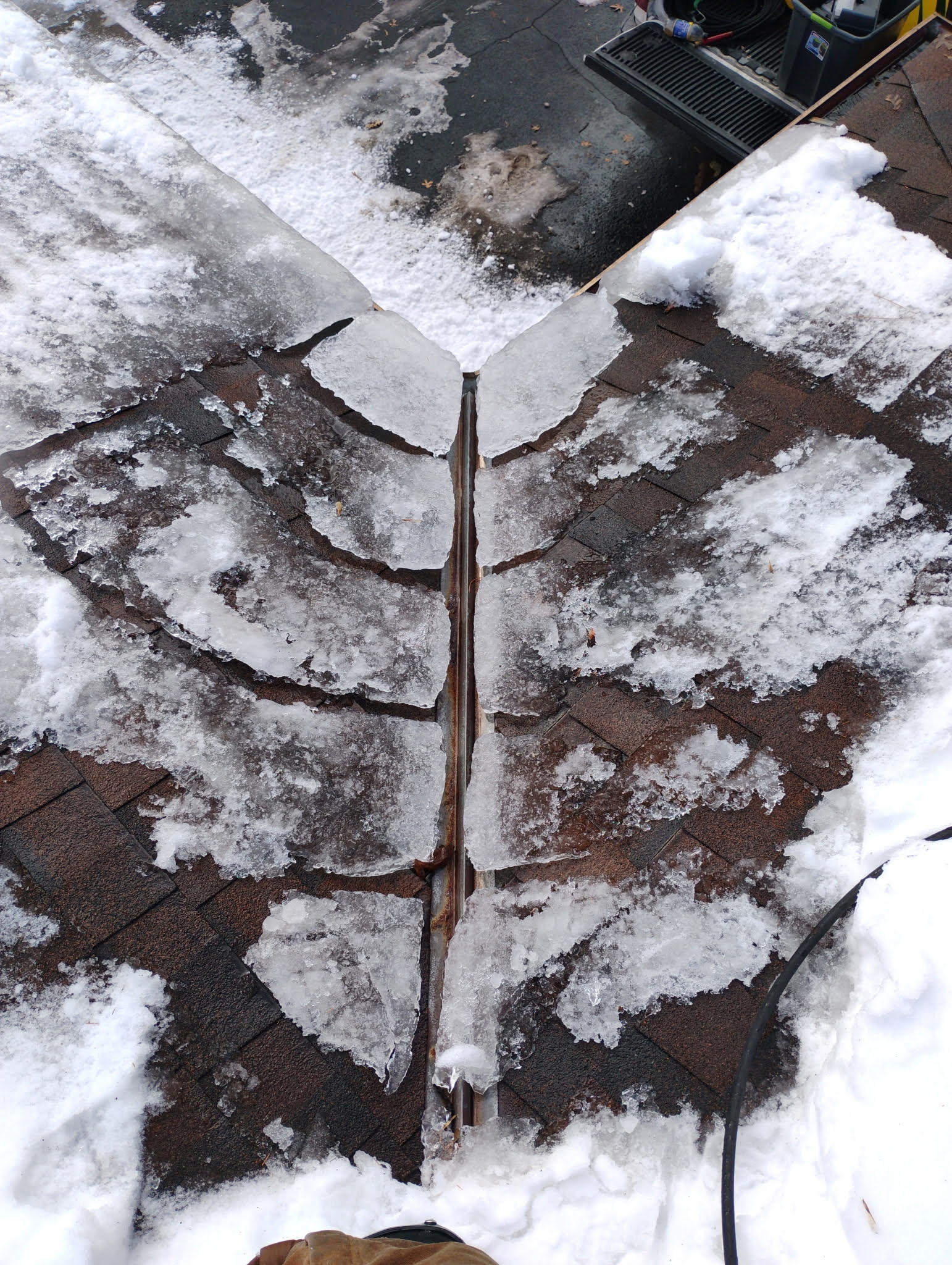
Roof ice buildup and affected roofing.
Ice Dam USA coordinates traveling professional ice dam removal technicians and welcomes inquiries from across Montana. Scheduling depends on current availability, location and weather.
Our crews use Arctic Steamers and professional low-pressure steam equipment designed to melt accumulated roof ice.
Heat escaping from a building can warm the roof deck enough to melt snow. Water may then refreeze near colder eaves.
Rapid warming can increase snowmelt, but ice dam formation also depends on roof temperatures and whether meltwater refreezes at a colder location.
Yes. Ice dams can obstruct drainage, allowing meltwater to accumulate and enter vulnerable roofing areas. Other roof defects can also cause leaks.
Not necessarily. Removing ice may restore a drainage path, but water already inside the building or separate roof defects may cause continued leaking.
Yes. Steam removal primarily relies on heat to melt ice. A hot-water pressure washer delivers heated liquid water under pressure. Excessive pressure can harm roofing materials.
Chipping and prying ice can damage roofing, and icy roof work presents severe fall hazards. Contact an experienced professional instead.
Pricing depends on roof conditions, service complexity, scheduling and location. View the current Ice Dam USA pricing guide for service rates and minimums.
Yes, we maintain dedicated information for Billings and Missoula . Contact us to confirm current appointment availability.
Yes. Removing existing ice does not always correct air leaks, insulation problems or other conditions that contribute to new ice formation.
Our service model uses coordinated traveling technicians. Listing a Montana community does not indicate a permanent office or crew stationed there.
From roof-edge ice buildup to winter water intrusion, contact Ice Dam USA about professional Montana ice dam removal service.
Our specialized technicians use Arctic Steamers and true low-pressure steam to address accumulated roof ice.
