
Persistent Snow Cover
Mountain terrain, trees, and building orientation can keep some roof areas shaded. Snow may remain on those sections longer than on adjacent sun-exposed roofing.
|
|||
|
|
Heavy ice building along your roofline? Water appearing inside your home during a winter thaw? A roof ice dam can stop melting snow from draining and allow water to reach vulnerable roofing areas.
Ice Dam USA provides professional ice dam removal in Missoula, Montana, using Arctic Steamers and true low-pressure steam.
Our traveling technicians help homeowners and property managers address existing roof ice without depending on aggressive chopping or high-pressure water blasting.
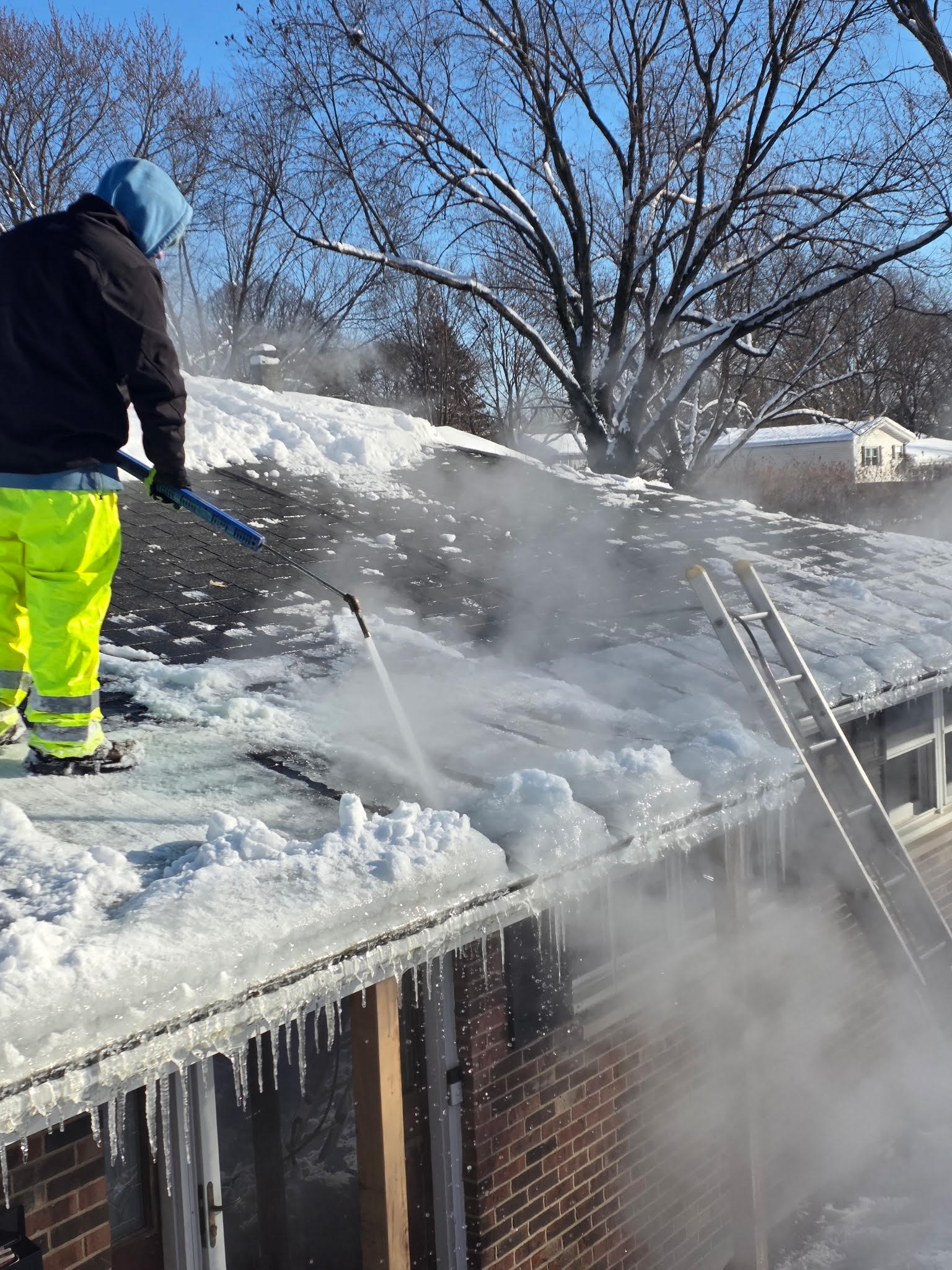
Missoula sits along the Clark Fork River, where several mountain valleys meet in western Montana. The Bitterroot Valley extends south, while the Clark Fork corridor runs westward toward surrounding communities.
The city's winter conditions differ from eastern Montana. Missoula can experience valley cold-air pooling, limited winter sunshine, and periods of snow that persist on shaded surfaces.
A north-facing roof slope may retain snow long after a sunnier slope has started melting. Wooded lots, nearby terrain, and complex rooflines can create additional differences between buildings in the same neighborhood.
In areas such as the University District, the Rattlesnake, the South Hills, and older central neighborhoods, roof geometry and attic conditions may vary considerably.
These conditions can influence how meltwater moves and where ice dams form, particularly near cold eaves and roof intersections.
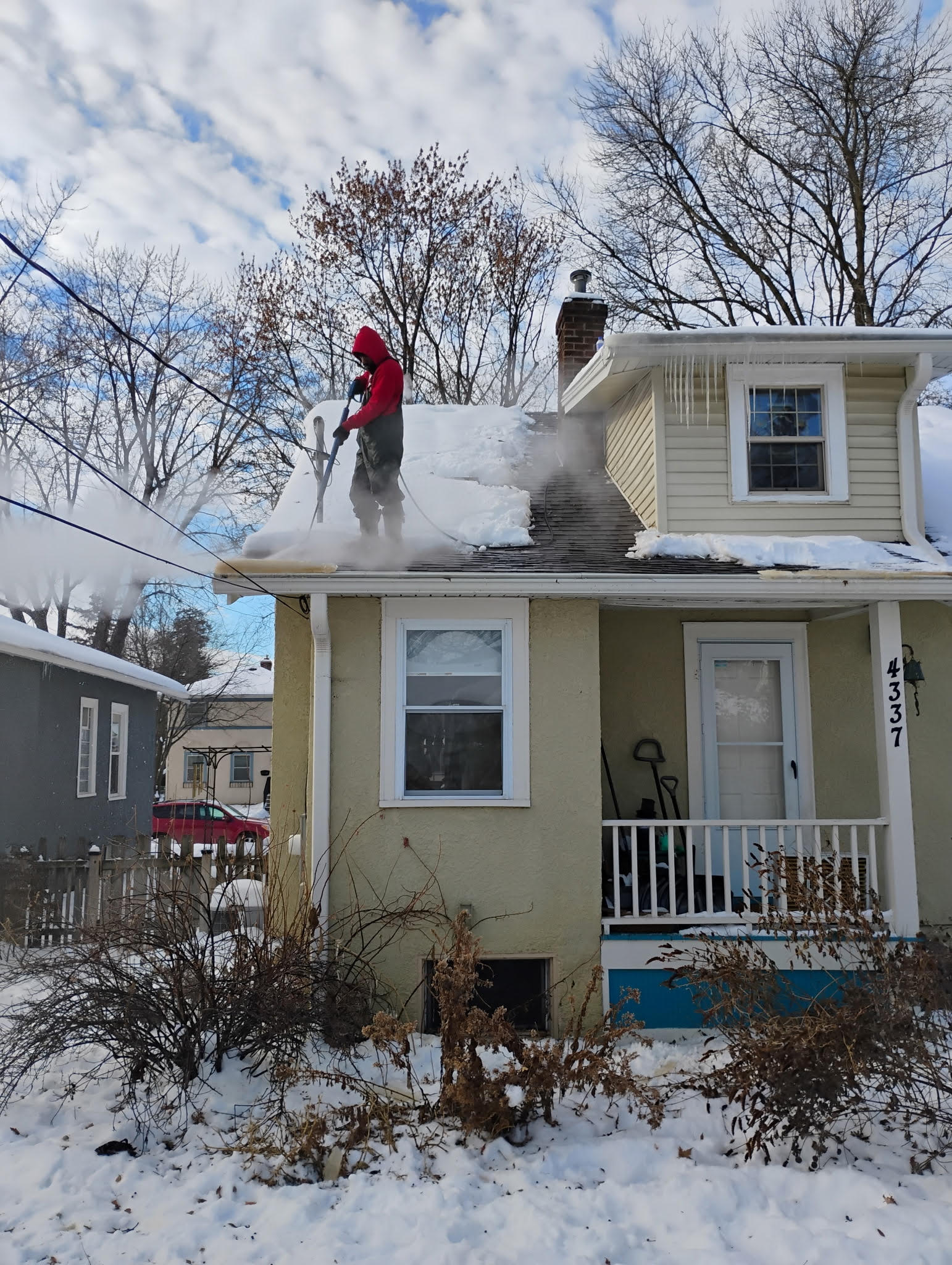
Actual Ice Dam USA project photograph. Not represented as a Missoula job.
Mountain terrain, trees, and building orientation can keep some roof areas shaded. Snow may remain on those sections longer than on adjacent sun-exposed roofing.
Intersecting roof sections can concentrate runoff. Water may refreeze where the roofline changes direction or temperatures vary.
Older buildings may have attic air leaks, inconsistent insulation, or penetrations that allow warm air to reach the underside of the roof.
Newer construction can experience ice dams too. Roof design, insulation, air sealing, and actual weather conditions matter more than a building's age alone.
Ice dams are not simply piles of snow at the roof edge. They develop when melting snow produces water that refreezes and builds a ridge which interrupts normal roof drainage.
Accumulated snow remains across roof slopes, valleys, and eaves.
Building heat, sunshine, or warmer conditions create meltwater.
Water reaches a colder roof section and starts turning to ice.
The growing ridge can trap additional runoff behind the obstruction.
For a deeper explanation, visit our Ice Dam Learning Center .
A raised ice formation along a roof edge may prevent melting snow from draining normally.
Discoloration that appears during winter thaws can indicate water intrusion through vulnerable roofing.
Valleys may collect runoff from multiple slopes, creating localized ice problems.
Snow and meltwater can collect where dormers or lower roofs meet taller building sections.
Moisture that returns during freeze-thaw periods may indicate an ice dam or a separate roofing defect.
Heavy ice near the roof edge can threaten people and property below.
Large icicles do not always mean an ice dam has formed. The important issue is whether ice is obstructing drainage on the roof.
An established ice dam may bond tightly to shingles, flashing, and roof transitions. Trying to break frozen ice loose with impact tools can damage materials beneath it.
Ice Dam USA uses professional Arctic Steamers to apply true low-pressure steam, melting the ice rather than relying on aggressive force.
Heat-based removal allows technicians to work through accessible accumulated ice using low-pressure steam.
Forceful methods can damage roofing, particularly when ice has bonded to vulnerable surfaces.
Low-pressure steam is not completely risk-free. Roof condition, weather, operator technique, and accessibility must all be evaluated. We do not promise zero damage.
When an ice dam blocks normal roof drainage, additional meltwater may collect behind the ice ridge. That water can move beneath vulnerable roofing materials.
Moisture may travel through attic insulation, framing, or wall cavities before becoming visible inside the building.
If you notice water entering, move valuables away from the affected area if you can do so safely.
Avoid wet electrical fixtures, sagging ceilings, and standing under heavy overhanging roof ice. Do not climb an icy roof or attempt to break the ice away with tools.
Professional ice removal can help restore a drainage path. However, water already inside the structure or an unrelated roofing problem may continue to cause moisture after removal.
We'll use these details to discuss current availability, service scope, scheduling, and pricing.
Contact Ice Dam USAAn ice dam may extend farther along a roof edge than the section where water is visibly entering the building.
Cutting a narrow temporary drainage channel can sometimes provide limited relief, but substantial frozen buildup may remain in place.
Ice Dam USA generally recommends removing all accumulated ice from affected problem areas when conditions and the agreed scope of work permit.
The final removal scope is discussed between the customer and technicians.
Professional removal cost depends on the amount of roof ice, building height, roof pitch, accessibility, and scheduling.
Long ice ridges, several roof valleys, or heavily frozen sections can increase the work required.
Steep mountain-style rooflines, multiple stories, and difficult access may require additional planning.
Remote properties, expedited requests, and winter road conditions can affect service arrangements.
Ice Dam USA maintains one authoritative pricing guide with current rates, minimums, booking terms, and billing rules.
Tell our team about the roof conditions and any active leak.
Provide the location, building height, and access information.
Confirm available service options, pricing, and booking requirements.
Technicians address the agreed affected areas when conditions permit safe work.
Ice Dam USA welcomes roof ice dam removal inquiries from Missoula, nearby Missoula County communities, and surrounding western Montana areas.
These include Lolo, Bonner, East Missoula, Frenchtown, and communities farther south in the Bitterroot Valley such as Florence and Stevensville.
Our technicians travel to assignments based on current availability, weather, and access. Listing a community does not indicate a permanent local office or stationed crew.
Geographic reference only. This map does not identify a physical Ice Dam USA office or permanently stationed technician.
Removing existing ice can address a present drainage obstruction. Preventing future formation requires understanding why the roof snow melted and refroze in the first place.
Warm air escaping through attic openings may heat the roof deck and contribute to uneven snowmelt.
Appropriate insulation may reduce unwanted heat transfer toward roofing during cold weather.
Ventilation, roof design, recurring shaded areas, and complex transitions may deserve evaluation.
Ice Dam USA specializes in removing existing roof ice. Insulation, air-sealing, and roofing improvements may require other qualified professionals.
Single-family homes can develop ice near eaves, dormers, additions, and other roof transitions.
Properties used intermittently may experience roof ice and moisture that isn't noticed until someone visits.
Larger structures may require additional access planning and safety coordination for affected roof areas.
These photographs illustrate Ice Dam USA work and ice conditions. They are not represented as Missoula projects unless the locations are verified.
Ice Dam USA project photography.
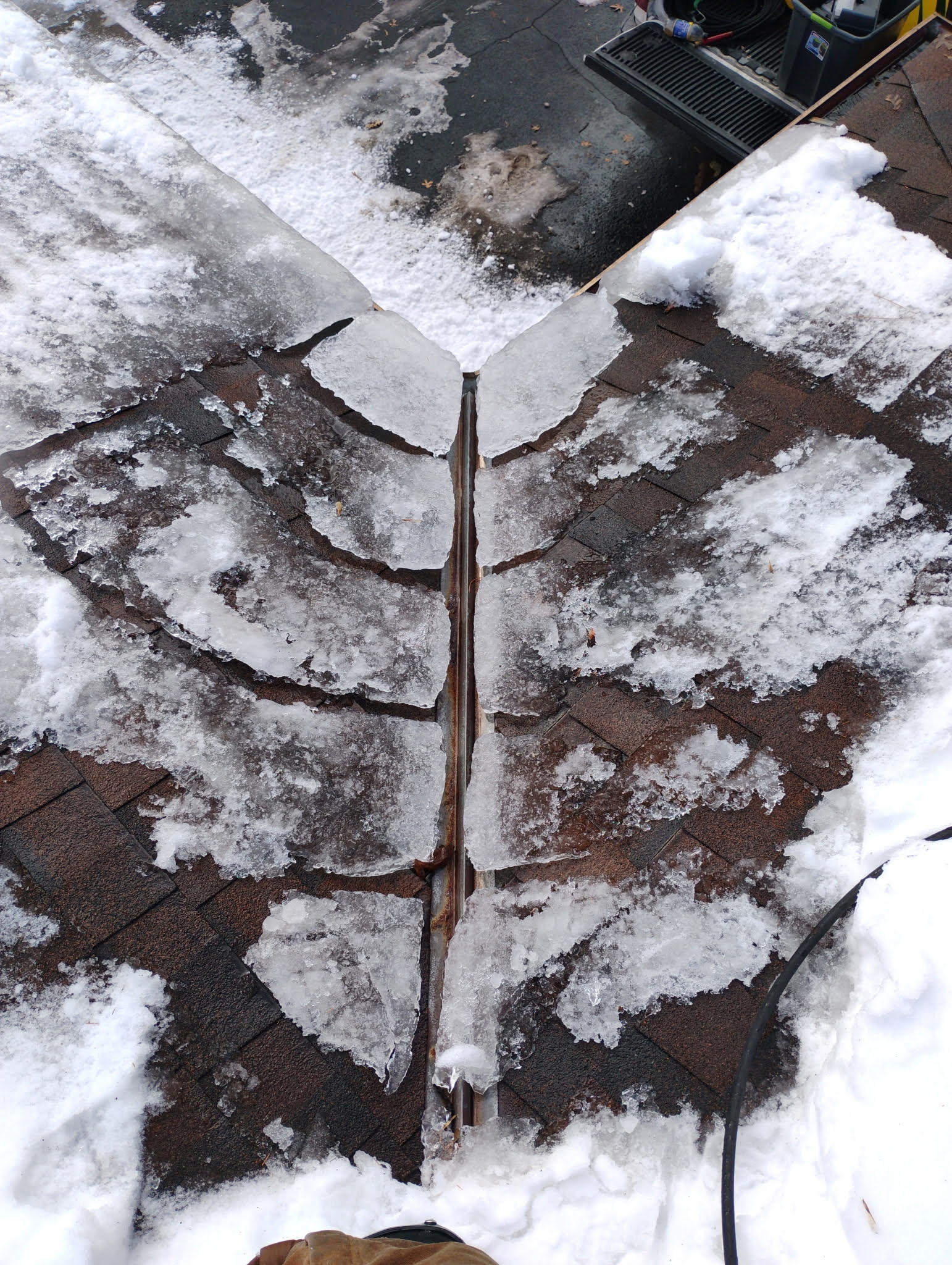
Roof ice buildup and affected roofing.
Ice Dam USA maintains a statewide Montana ice dam removal hub and a dedicated Billings ice dam removal page. These are the other existing Montana roof-service pages identified on the website.
Yes. Ice Dam USA welcomes Missoula ice dam removal inquiries and coordinates traveling technicians. Appointments depend on location, current availability, and worksite conditions.
Heat from inside a building can warm roofing enough to melt snow, even while cold outdoor conditions allow runoff to refreeze near the eaves.
Cold-air pooling can help keep exposed surfaces cold, but an ice dam also requires meltwater and refreezing at a roof location that restricts drainage.
Yes. Shading and building orientation can affect snow persistence, while roof heat and drainage patterns determine whether an ice dam develops.
Yes. Water trapped behind a roof ice ridge may enter vulnerable roofing materials and travel into the building. Other roof defects may also produce leaks.
No immediate result can be guaranteed. Removal may reopen drainage, but existing interior moisture or separate roofing issues can cause ongoing leaking.
Our preferred method is true low-pressure steam using professional Arctic Steamers, rather than high-pressure water blasting.
No method is entirely risk-free. Material condition, ice thickness, worksite safety, and professional technique must be considered.
Yes. Complex roof intersections may collect snow and runoff, creating areas where melting water refreezes.
Pricing depends on the property, roof configuration, ice accumulation, travel, and scheduling. See our current pricing guide for applicable rates and terms.
We do not recommend forceful chopping or prying of roof ice. It can damage roofing, while snowy and icy roof access creates serious fall hazards.
Yes. Removal addresses existing ice, but air leakage, insulation issues, roof temperatures, and future weather may cause new ice to form.
Ice Dam USA provides professional steam ice dam removal for existing roof ice using Arctic Steamers and true low-pressure steam.
Contact us to discuss your Missoula property, the affected roof areas, and current scheduling availability.
