
Multiple Roof Levels
Upper roofs may drain toward lower sections. Where those lower surfaces stay colder, refreezing can produce localized ice concentrations.
|
|||
|
|
Thick roof ice. Frozen eaves. Water showing up inside your home during a winter thaw. A blocked roof drainage path can turn ordinary snowmelt into a serious problem.
Ice Dam USA provides professional ice dam removal for Lowville, WI, property owners using Arctic Steamers and true low-pressure steam to melt accumulated ice.
We help address existing roof ice without relying on aggressive hammering, chiseling, or high-pressure water blasting.
The Town of Lowville is located in Columbia County in south-central Wisconsin, with Poynette, Arlington, and Rio nearby.
The area's rural character means some homes and outbuildings are more exposed to open winter winds than properties surrounded by neighboring buildings or mature trees.
Wind can move snow across the roof and deposit deeper drifts around valleys, dormers, chimneys, and roof transitions.
Those snow deposits can influence ice accumulation when the roof surface underneath becomes warm enough to produce meltwater.
A thick ridge of ice near a colder eave can stop meltwater from draining normally, potentially allowing it to reach vulnerable roofing and flashing details.
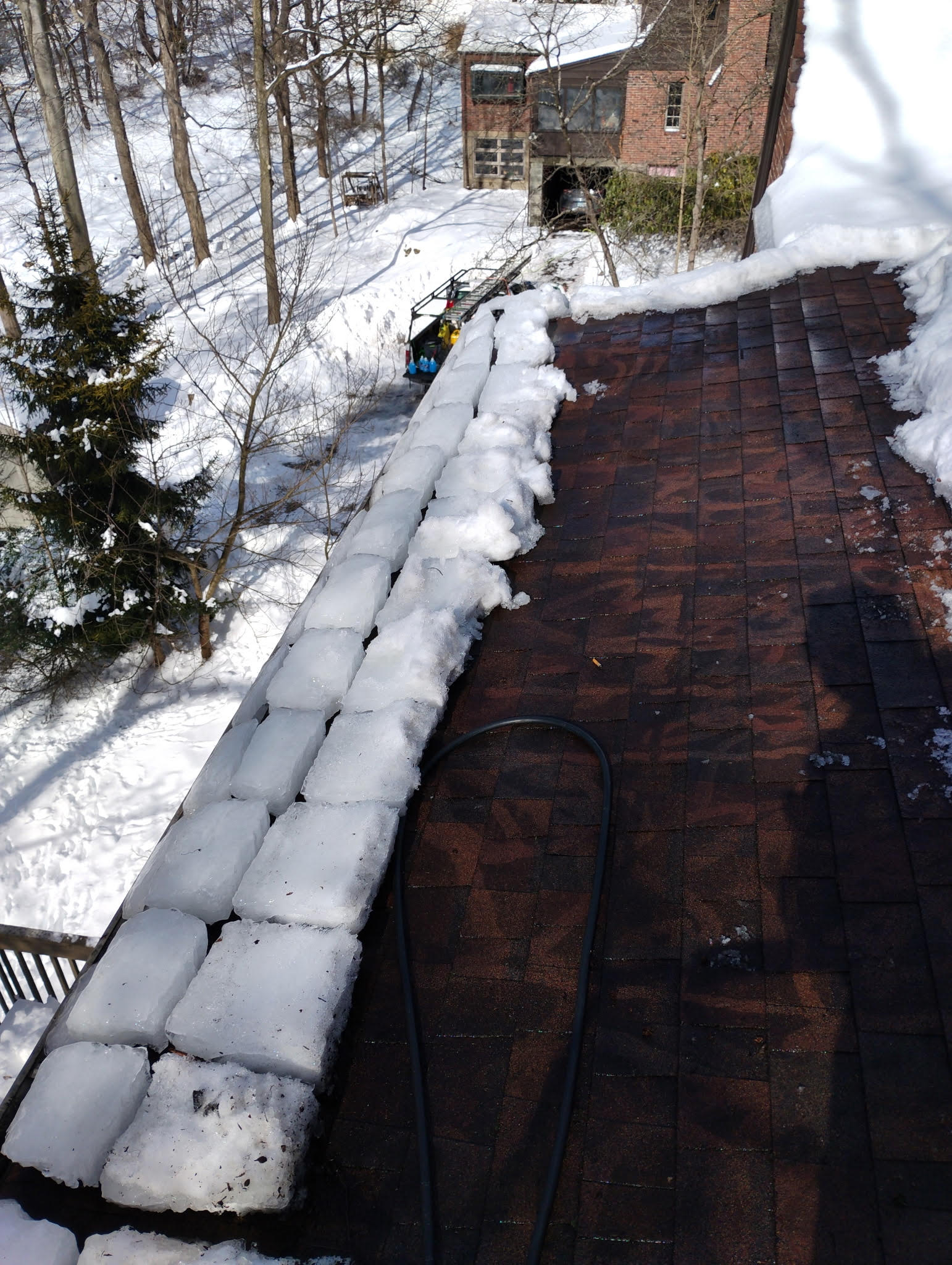
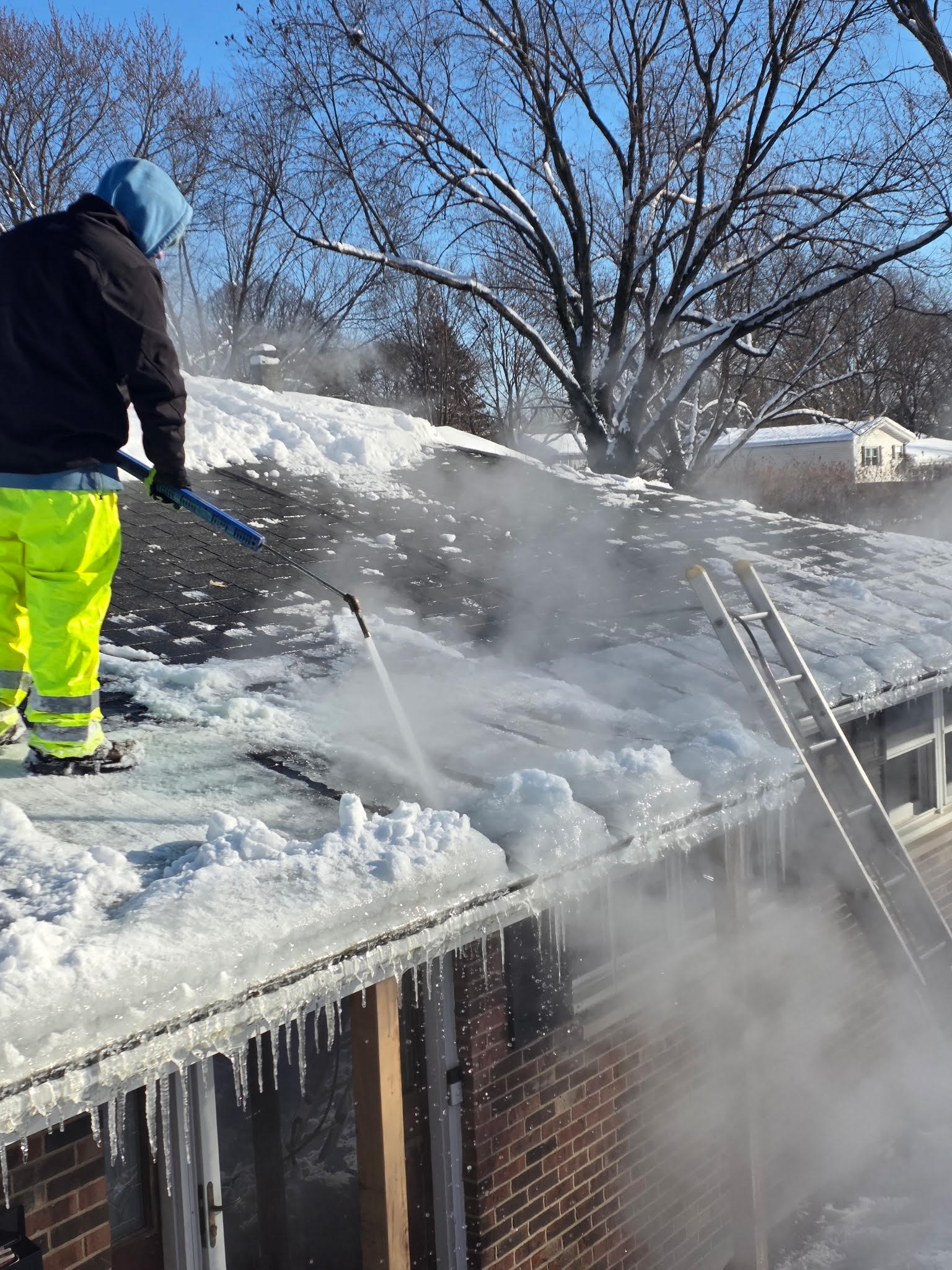
Actual Ice Dam USA project image. Not represented as a Lowville property.
Not every building in Lowville has the same roofing configuration. A simple roof on a newer house behaves differently from an older residence with connected additions, porches, dormers, or attached utility areas.
Upper roofs may drain toward lower sections. Where those lower surfaces stay colder, refreezing can produce localized ice concentrations.
Exposed properties may have uneven snow cover, with drifting snow collecting in sheltered roof areas and around projections.
Attic air leaks, insulation gaps and differing interior temperatures may cause some roof areas to warm more than others.
Detached buildings can also experience ice problems, but the appropriate removal approach depends on their roof material, conditions and use.
Ice dams develop when melting snow moves down a roof and refreezes near a colder section. The resulting ice ridge can prevent additional meltwater from draining normally.
Snow covers roof slopes, valleys and sheltered sections.
Building heat or changing weather produces meltwater beneath snow.
Runoff reaches a colder eave or other cold roof area.
Repeated freezing forms a ridge that can trap additional water.
See our detailed explanation of what ice dams are and how they form .
Removing existing roof ice requires care around roofing materials. Ice Dam USA uses Arctic Steamers because true low-pressure steam melts ice using heat instead of depending on aggressive water pressure.
Specialized equipment applies low-pressure steam to work through ice accumulation.
Pressure washing equipment delivers heated liquid water through a pressurized nozzle.
Even with low-pressure steam, proper roof assessment, technician technique and safe access remain essential. No removal method is completely free of risk.
Thick ice ridges may prevent meltwater from draining.
Damp ceilings or walls during winter can indicate moisture entering the building.
Roof intersections may collect drifting snow and refrozen meltwater.
Icicles can indicate repeated melting and refreezing but do not always mean a dam exists.
Frozen gutters or downspouts can interrupt drainage and stress the gutter system.
Water intrusion during thaws deserves evaluation for ice dams and other roof defects.
When an ice dam holds water behind a frozen ridge, moisture can enter vulnerable roofing areas and travel through the roof structure.
A ceiling stain may appear some distance from the roof entry point, so the visible interior damage may not show exactly where the ice dam is.
Move valuables away from water where it is safe. Photograph the damage and avoid wet electrical fixtures and sagging ceilings.
Do not climb an icy roof to chip away ice. Contact a professional to discuss removal options.
These images come from actual Ice Dam USA projects. They show real roof ice conditions and steam removal work, rather than stock photography.
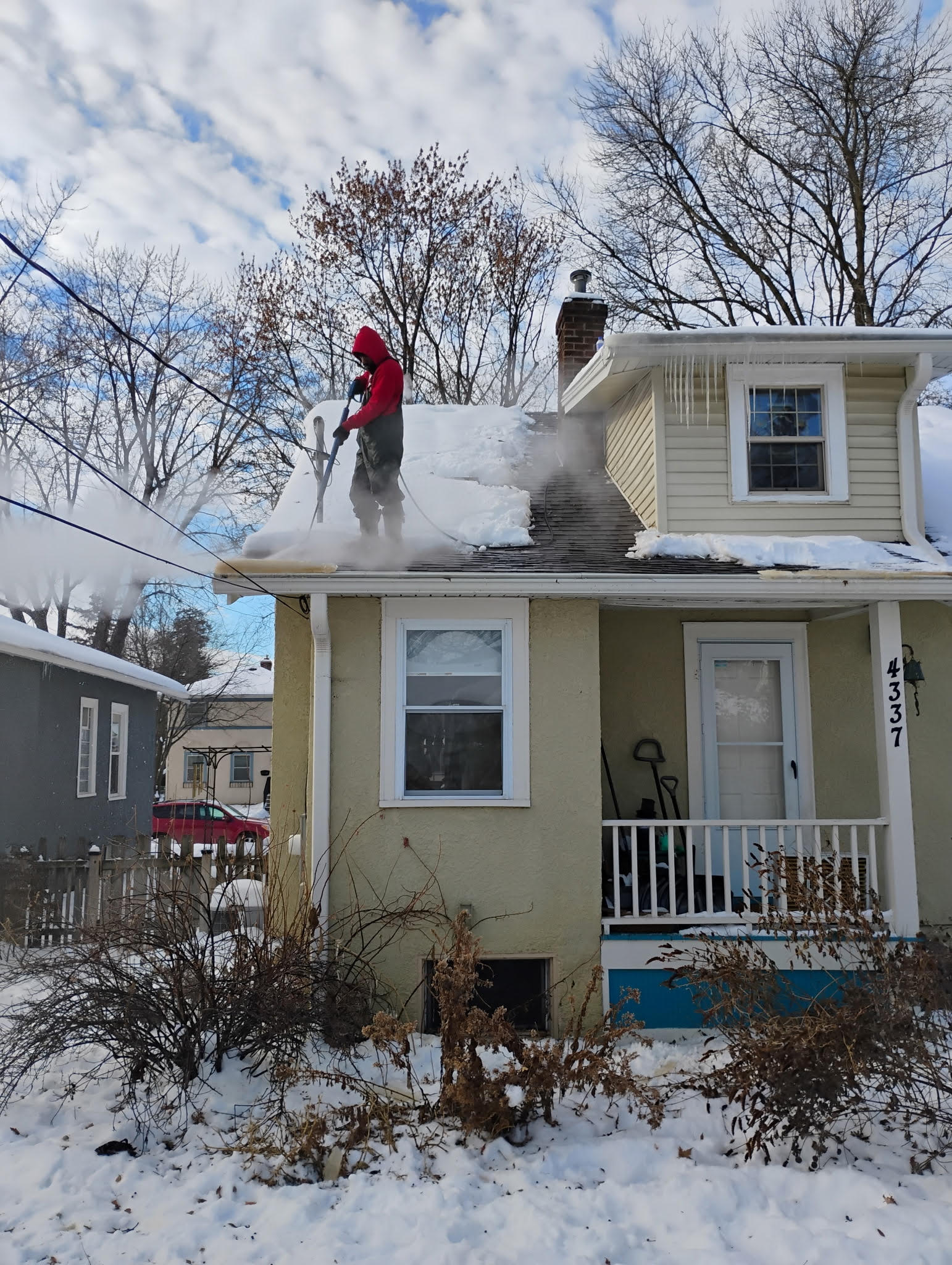
Ice Dam USA technician performing professional steam removal.
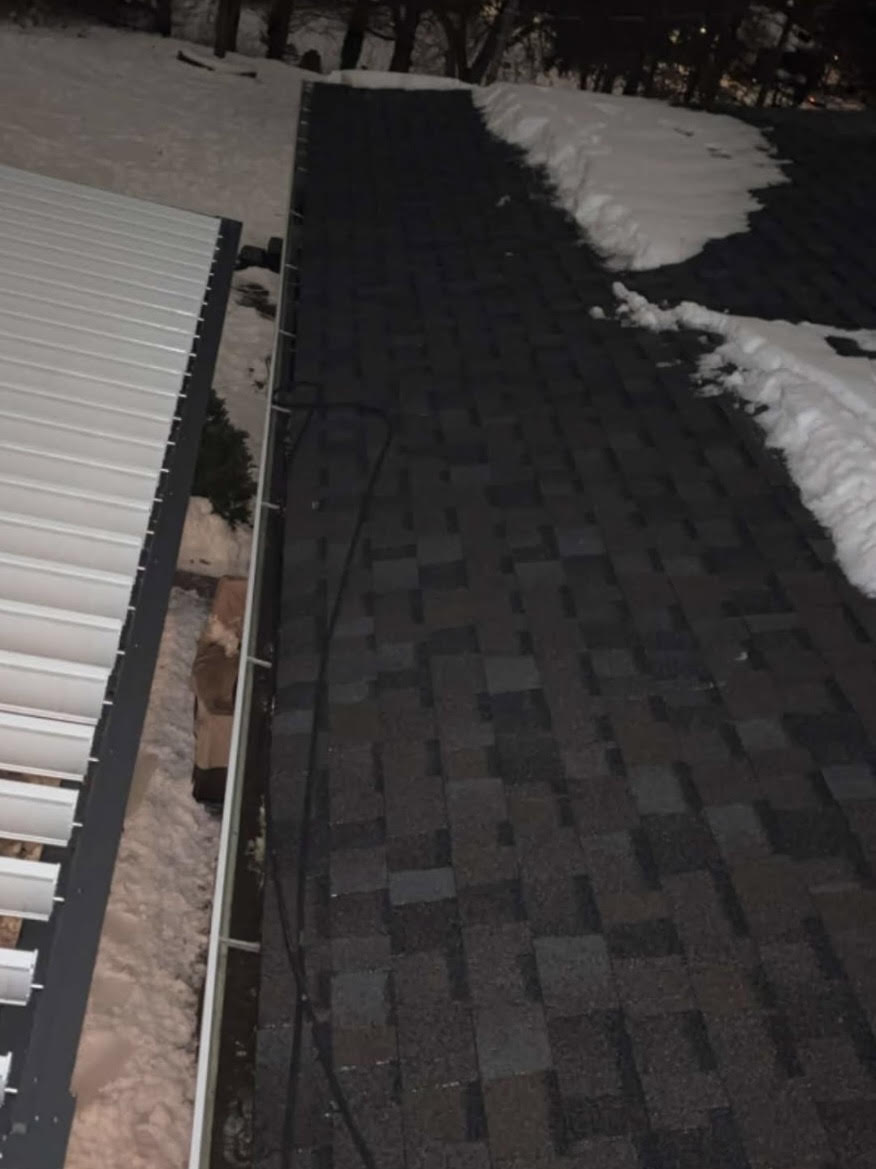
Roof section photographed during an Ice Dam USA project.
These photographs document company work from its broader service regions. They are not identified as Lowville jobs.
Rural properties can involve different access considerations than compact village neighborhoods.
The distance from a driveway to the affected building, snow accumulation around the structure, overhead hazards and the stability of ground access can all influence removal planning.
Building height, slope and nearby structures affect how a technician approaches the work.
Snow-covered driveways and limited access around a building may require planning.
Roof material, condition and accumulated ice determine what removal is appropriate.
Ice Dam USA welcomes residential and commercial inquiries, with service feasibility evaluated for the particular property.
Pricing depends on roof height, access, ice thickness, roof configuration and scheduling needs.
Ice Dam USA publishes its current hourly service rates and minimum appointment requirements on its dedicated pricing page.
Qualifying standard-pitch, one- or two-story properties may be eligible for regular appointment pricing.
Taller buildings, steep roofs, difficult access or complex configurations can require a higher service rate.
Priority service requests may fall under the company's expedited service pricing.
Steam removal addresses the existing ice obstruction. It does not automatically correct the building conditions responsible for ice dams.
Limiting warm-air leakage into the attic can help reduce unwanted roof warming.
Appropriate insulation helps control heat transfer between living spaces and the roof.
Ventilation, flashing, valleys and roof geometry may also need professional evaluation.
Learn more at the Ice Dam USA Learning Center .
Ice Dam USA welcomes inquiries from Lowville and nearby Columbia County communities. Our regional technician network coordinates work based on weather, scheduling and safe access.
Lowville is near Poynette, Arlington and Rio. Explore the related existing local service pages below.
This map shows Lowville's geographic location within Columbia County.
Geographic reference only. The map does not indicate an Ice Dam USA office or permanent technician location. Service availability is confirmed when scheduling.
Learn more about the causes of roof ice, removal equipment, gutter ice and service costs.
Ice Dam USA welcomes ice dam removal inquiries from Lowville and surrounding Columbia County communities. Contact us to confirm availability.
Our technicians use Arctic Steamers and true low-pressure steam to melt existing roof ice.
Wind can redistribute snow and create deeper accumulations near sheltered roof areas. Ice dams form when meltwater refreezes and obstructs drainage.
Yes. Rural homes, farmhouses and other buildings can develop ice dams depending on roof temperatures, snow and drainage.
No. Both new and established buildings can develop ice dams when roof conditions cause melting and refreezing.
Removing ice can help reopen drainage paths, but moisture already in the structure and separate roofing defects can cause leaking to continue.
No method is completely risk-free. Professional technique, roof condition and safe access are important considerations.
Hammering, chiseling and prying thick ice can damage shingles and flashing. Working on icy roofs also presents fall hazards.
Yes. Ice dams form when meltwater refreezes near colder roofing areas. Gutters are not required.
Ice Dam USA provides professional gutter ice removal where site conditions permit safe service.
Cost depends on roof height, access, ice accumulation, job complexity and scheduling. See our current pricing page .
We do not claim a permanent Lowville office. Ice Dam USA coordinates service through its regional technician network.
Yes. Removal addresses existing ice but does not automatically eliminate the conditions that caused it to develop.
Scheduling depends on regional technician availability, weather and site conditions. Call 855-468-4233 to discuss current service options.
Ice Dam USA provides professional ice dam removal using Arctic Steamers and true low-pressure steam for residential and commercial properties.
If roof ice is interfering with drainage or you're dealing with a winter roof leak, contact our team to discuss your Lowville property.
