
Rio WI Ice Dam Removal.
Ice building up along your roof edge? Water appearing on an upstairs ceiling? A frozen ridge can stop melting snow from draining and create conditions for damaging winter roof leaks.
Ice Dam USA provides professional ice dam removal in Rio, Wisconsin, using Arctic Steamers and true low-pressure steam.
Our removal method uses heat to melt accumulated ice rather than relying on aggressive chopping, hammering or high-pressure water blasting.
We welcome inquiries from Rio village properties, surrounding rural homes and nearby Columbia County communities. Contact our team to discuss regional technician availability.
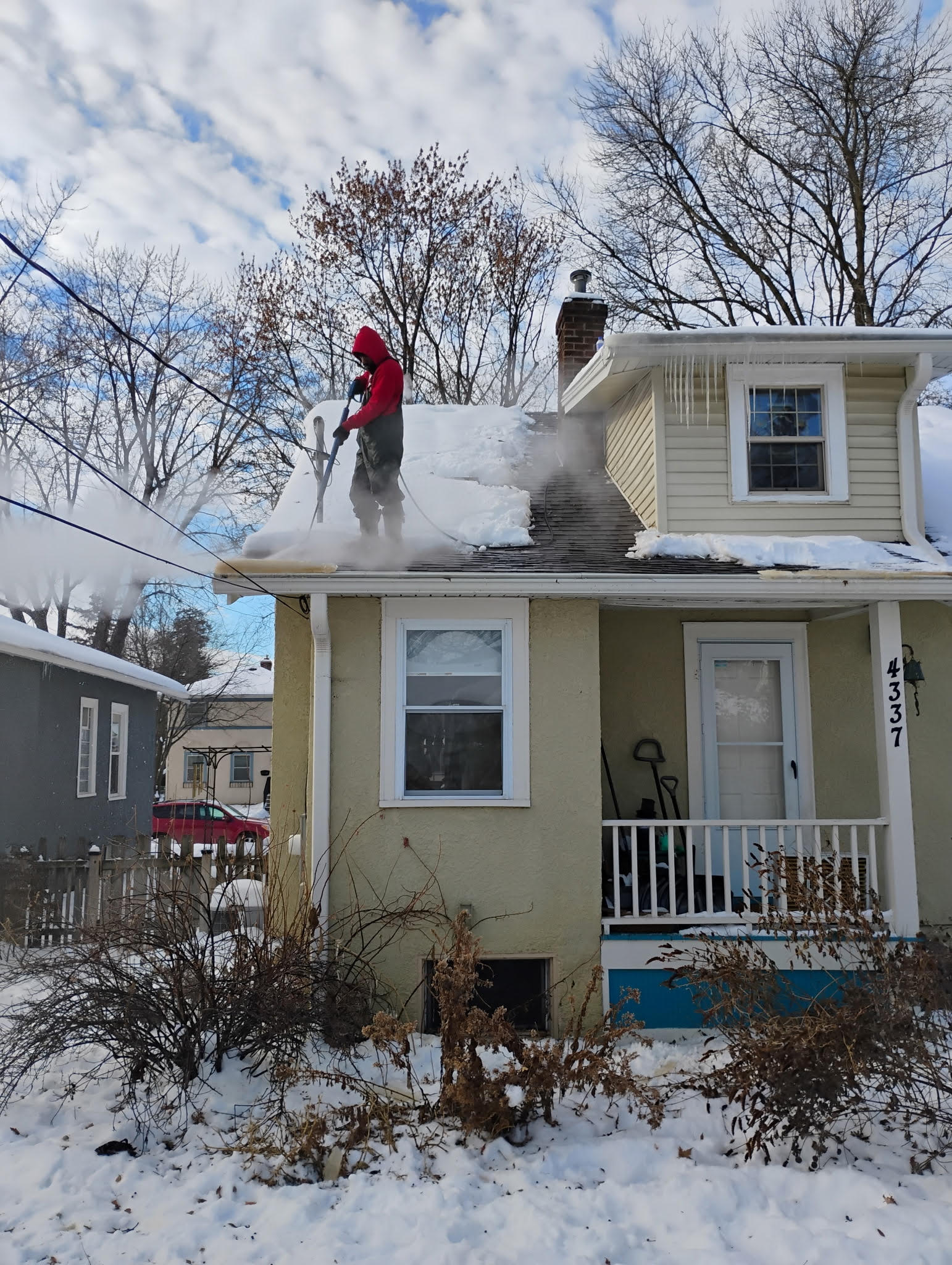
Why ice dams form on roofs in Rio, Wisconsin.
Rio is a village in Columbia County, northeast of Madison. It is located along Wisconsin Highway 16 between Columbus and Portage.
Like much of south-central Wisconsin, Rio experiences snow accumulation, prolonged freezing weather and occasional winter warming periods.
Ice dams develop when snow melts on a warmer portion of a roof and the water refreezes near colder eaves.
As the ice ridge grows, additional meltwater can collect behind the frozen obstruction instead of draining normally.
Snow Builds on the Roof
Accumulated snow remains on roof slopes, valleys and protected areas.
Some Roof Areas Warm
Heat escaping from a building, sunlight or changing weather can melt snow.
Cold Eaves Form Ice
Meltwater freezes near colder roof edges, creating a ridge that may block runoff.
How different rooflines affect winter ice accumulation.
Rio includes established village neighborhoods, newer homes and nearby rural residences. These properties can have very different roof configurations.
Some roofs feature dormers, attached garages, porch roofs or additions with different elevations.
An upper roof may direct meltwater onto a lower, colder roof section. That runoff can refreeze where drainage becomes concentrated.
Roof valleys can also collect drifting snow and channel water toward one location.
Even two neighboring homes exposed to the same snowfall may develop very different amounts of ice.
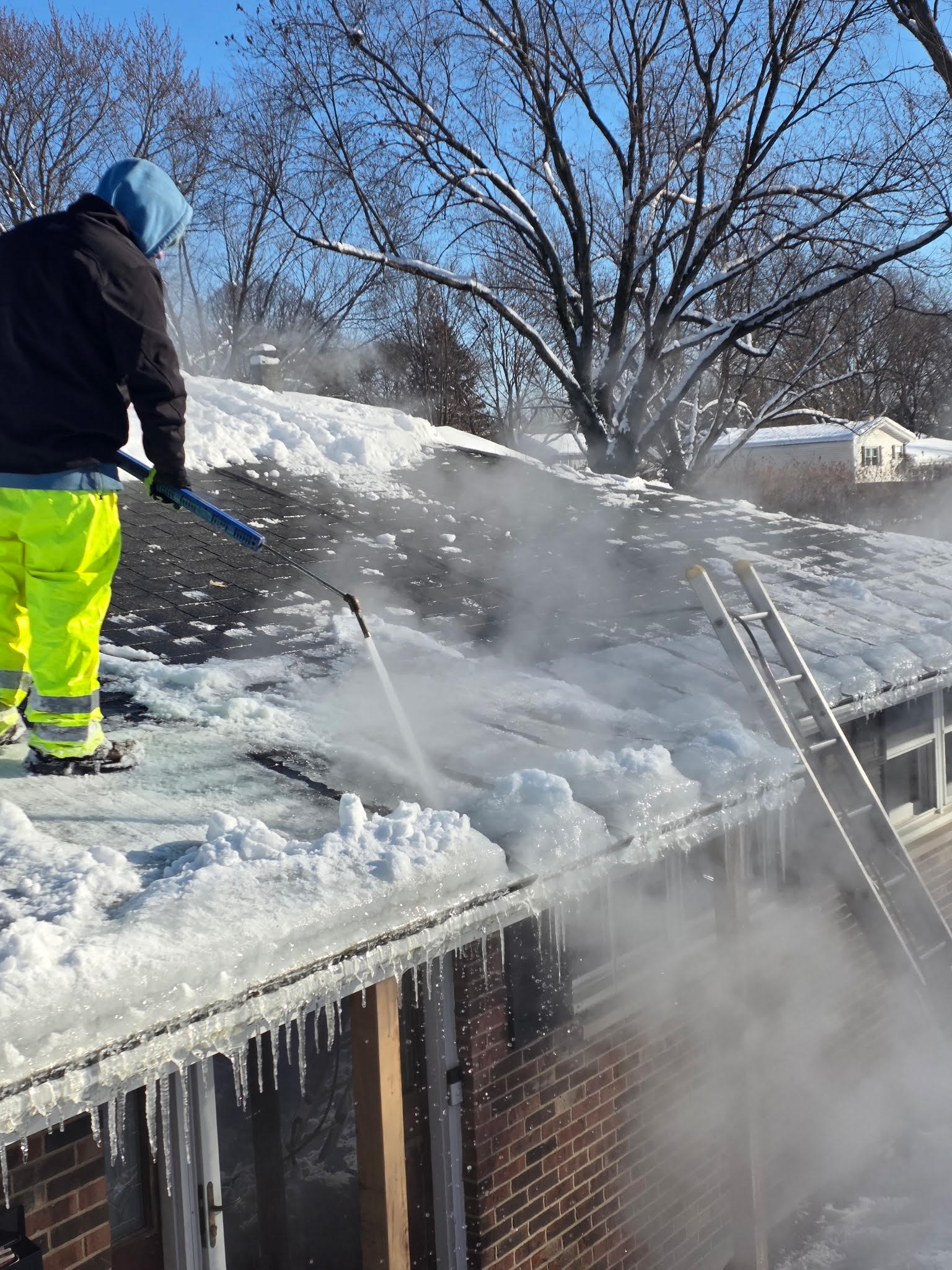
How wind and snow exposure change conditions outside the village.
The countryside around Rio and the Town of Otsego contains rural homes and agricultural landscapes.
Open areas can experience wind-driven snow movement. Wind may remove snow from one slope while creating deeper deposits in roof valleys or protected sections.
Open Roof Exposure
Wind may redistribute snow across roof surfaces after storms.
Snow Drifts
Dormers, roof transitions and sheltered intersections can accumulate deeper snow.
Uneven Sunlight
Differences in winter sun exposure can affect where snow melts first.
How to recognize an ice dam before water damage spreads.
Thick Roof-Edge Ice
A frozen ridge develops along the eaves and may restrict runoff.
Ceiling Water Stains
Discoloration appears during snowmelt or winter thaws.
Frozen Roof Valleys
Ice accumulates where multiple roof slopes direct runoff together.
Moisture Near Upper Walls
Water appears around ceiling corners, upper windows or trim.
Heavy Hanging Icicles
Large formations may create hazards over entrances and walkways.
Repeated Winter Leaks
The same roof area develops moisture during successive snow-heavy winters.
Arctic Steamers versus hot-water pressure washers.
Ice can freeze tightly against shingles, flashing and roof joints. Aggressive removal methods may damage roofing materials.
Ice Dam USA uses Arctic Steamers to deliver true low-pressure steam. Heat melts existing ice, reducing the need for chopping, prying or forceful water jets.
Arctic Steamers
- Use true steam to melt existing roof ice
- Deliver steam at low pressure
- Reduce reliance on aggressive chopping
- Support targeted work where safely accessible
- Require proper operation and roof assessment
Hot-Water Pressure Washers
- Deliver heated liquid water
- May operate at substantially higher pressures
- Improper spraying can damage shingles
- Forceful jets may affect flashing and joints
- Are not Ice Dam USA's chosen removal equipment
Ice Dam USA uses Arctic Steamers rather than competitors' custom-built steam systems.
How an ice dam can allow water inside your home.
Sloped roofs are generally designed to shed water downhill. An ice ridge can interrupt that drainage.
When meltwater collects behind the obstruction, it may enter through vulnerable roofing, flashing or roof joints.
Once inside the roof assembly, water may travel through insulation, framing and sheathing before becoming visible on a ceiling.
The first visible stain may not be directly beneath the water entry point.
Removing obstructing ice can help reopen drainage, but it does not repair roof damage or guarantee an immediate end to a leak.
Conditions Requiring Extra Caution
- Water near electrical fixtures
- Bulging or sagging ceilings
- Heavy ice above occupied entrances
- Significant interior water accumulation
Keep clear of dangerous areas and seek appropriate professional assistance.
Two winter drainage problems that are not the same.
Ice on the Roofing Surface
Meltwater refreezes near colder roofing and forms a ridge that may hold water.
Roof ice dams can form even when gutters are absent.
Ice Inside the Drainage System
Water freezes within a gutter trough, outlet or downspout, restricting its flow.
Wisconsin Gutter Ice Removal →Both conditions can occur together. Tell our team whether ice is on the roof, inside gutters or affecting both areas.
Protect your property without risking a winter fall.
Safer First Steps
- Keep people away from unstable hanging ice.
- Move belongings away from leaks if safe.
- Document visible interior water damage.
- Use another entrance if falling ice is a concern.
- Contact a qualified removal professional.
Methods to Avoid
- Do not climb icy roofs or ladders.
- Do not strike roof ice with axes or hammers.
- Do not pry frozen flashing or shingles.
- Do not apply open flames or torches.
- Do not stand beneath heavy unstable icicles.
Ice dam removal for Rio-area buildings.
Village Homes
Porches, dormers and roof additions can influence ice buildup.
Rural Residences
Wind exposure may redistribute snow along different slopes.
Newer Homes
Connected garages, valleys and multiple roof elevations can concentrate runoff.
Rental Properties
Owners and managers can explain affected roof areas and access.
Multifamily Buildings
Shared roofs and occupied entrances may require coordination.
Commercial Buildings
Roof height, drainage layout and site access influence planning.
What happens when you contact Ice Dam USA?
Share Your Address
Tell us your Rio-area property location, building type and approximate roof height.
Describe the Roof Ice
Explain which sections are affected and whether water is entering the property.
Discuss Service Options
Our team can review regional technician availability, weather, access and scheduling.
Rio and nearby Wisconsin communities.
Rio is located between Columbus and Portage along Highway 16. Nearby communities include Fall River, Wyocena and Doylestown.
We welcome inquiries throughout this portion of Columbia County, subject to availability.
Rio
Village and rural roof ice removal inquiries.
Service-area pages do not indicate local permanent offices or guaranteed dispatch.
See real professional roof ice removal work.
The following photographs come from Ice Dam USA's project gallery. They are not represented as specific Rio customer jobs.
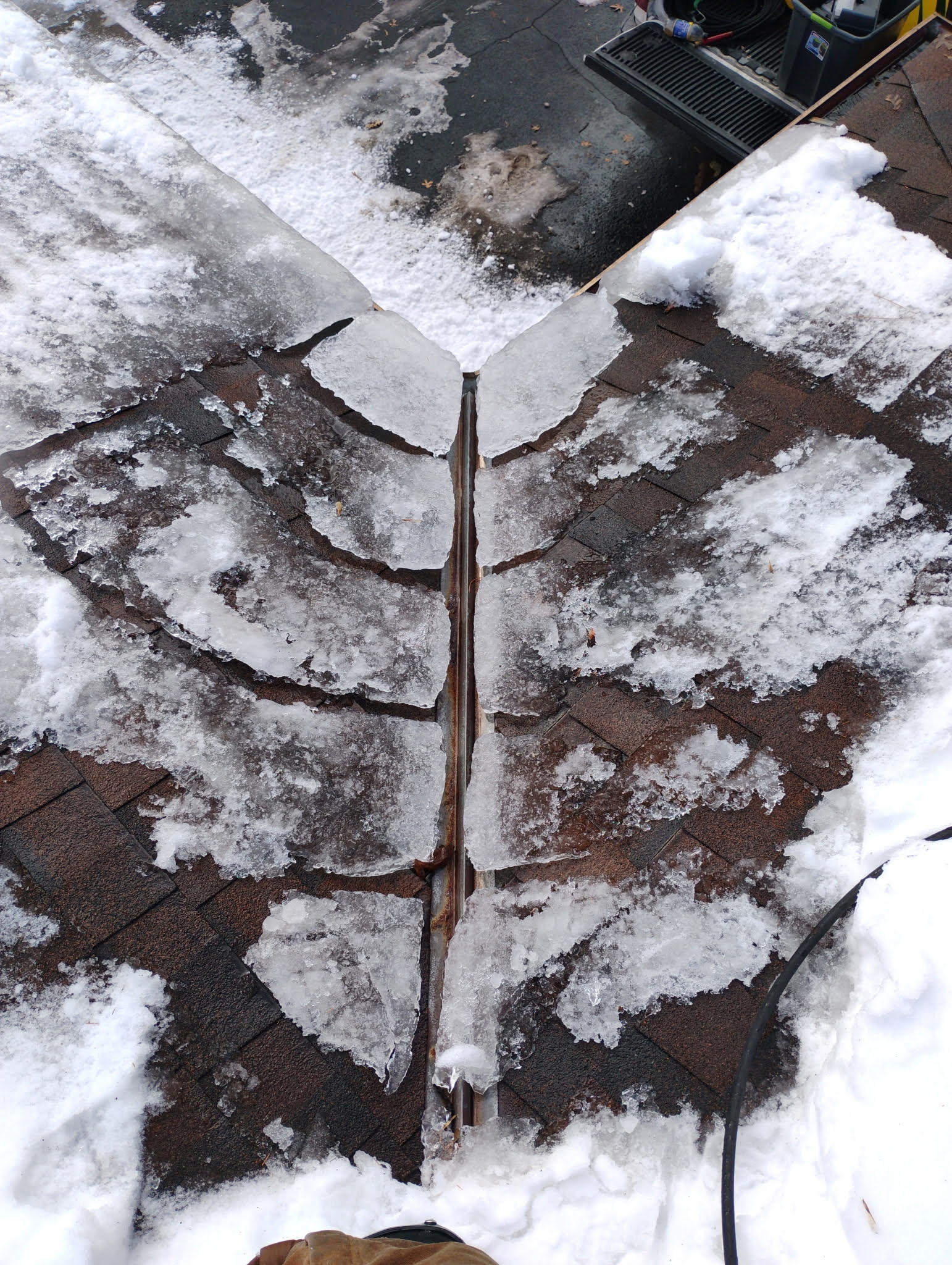
Why roof ice may return after steam removal.
Steam removal addresses the ice already blocking drainage. It does not automatically correct the causes of future ice buildup.
If a Rio property develops ice dams in the same locations repeatedly, a qualified roofing or building-envelope evaluation may be useful.
Attic Air Sealing
Warm indoor air escaping into the attic can heat the roof assembly.
Insulation
Appropriate insulation may reduce unwanted heat transfer.
Roof Ventilation
Ventilation should be reviewed as part of the overall building system.
Roof Valleys
Intersections can concentrate snow and meltwater.
Flashing Condition
Existing roofing damage may need separate repairs.
Qualified Assessment
Recurring ice dams may warrant closer investigation of roof and attic conditions.
How much does ice dam removal cost in Rio, WI?
Professional ice dam removal pricing depends on the property, ice conditions and amount of work required.
Factors include roof height, pitch, ice thickness, access, the number of affected areas and overall complexity.
A single accessible roof edge may present different requirements from multiple frozen valleys or a roof with difficult access.
Ice Dam USA maintains current service rates, billing terms and appointment policies on one dedicated pricing page.
Explore more Ice Dam USA information.
Rio and Columbia County, Wisconsin.
Use this map as a geographic reference for Rio and neighboring Columbia County communities.
Contact Ice Dam USA to discuss regional availability for your address.
This map does not identify a physical Ice Dam USA office or guaranteed service boundary.
Rio ice dam removal FAQs.
What causes ice dams on Rio roofs?
Roof snow melts on warmer roofing and refreezes near colder eaves, forming an ice ridge that can obstruct runoff.
Can ice dams form when it is below freezing?
Yes. Heat escaping from a building can warm the roof enough to melt snow despite freezing weather.
Can rural homes near Rio develop ice dams?
Yes. Roof temperature, wind-driven snow and roof design can contribute to ice buildup.
Can newer homes develop roof ice dams?
Yes. Newer roofs can develop ice dams where snow melts and refreezes.
Do all icicles mean I have an ice dam?
No. Icicles can form without a significant ridge blocking roof drainage.
Can roof ice cause interior ceiling leaks?
Yes. Water trapped behind ice may enter vulnerable roofing and travel through building materials.
Does Ice Dam USA use Arctic Steamers?
Yes. Ice Dam USA uses Arctic Steamers and true low-pressure steam for ice dam removal.
Why use steam instead of chopping roof ice?
Steam melts ice with heat and reduces reliance on impact tools that may damage roofing.
Are hot-water pressure washers the same as steamers?
No. Hot-water pressure washers apply heated liquid water and may operate at higher pressures. Arctic Steamers deliver true low-pressure steam.
Is professional steam removal risk-free?
No. Existing damage, roof materials, access and operator technique still affect the work.
Can ice dams form without gutters?
Yes. Roof ice dams form on the roofing surface whether or not gutters are installed.
Are frozen gutters different from roof ice dams?
Yes. Roof ice dams form on roofing. Frozen gutters involve ice inside the drainage system.
Will removing an ice dam immediately stop a leak?
Not necessarily. Water already inside building materials may continue moving, and roof damage may need repair.
How much does ice dam removal cost in Rio?
Pricing depends on roof access, height, ice conditions and project requirements. Visit our current pricing guide.
Can ice dams return after removal?
Yes. Later snowfall, melting and refreezing can cause new ice dams. Building improvements may reduce recurrence.
Does Ice Dam USA serve Columbus and nearby communities?
We welcome inquiries from Rio, Columbus, Fall River and other nearby areas, subject to regional availability.
What information should I provide when contacting Ice Dam USA?
Share your address, approximate roof height, ice location, active leaks and photographs taken safely from the ground.
Need professional ice dam removal in Rio?
If roof ice is blocking drainage or winter snowmelt is entering your property, contact Ice Dam USA to discuss Arctic Steamer removal and regional technician availability.
