
Grand Forks Ice Dam Removal.
Heavy ice along your roofline? A winter leak appearing near a ceiling or exterior wall? Ice dams can interrupt roof drainage and threaten your home.
Ice Dam USA provides professional ice dam removal in Grand Forks, North Dakota, using Arctic Steamers and low-pressure steam.
Rather than aggressively chopping ice from roofing, our approach uses heat to melt obstructions and help reopen drainage paths.
We welcome inquiries from Grand Forks, Thompson, Emerado and surrounding northeastern North Dakota communities. Service depends on regional technician availability.
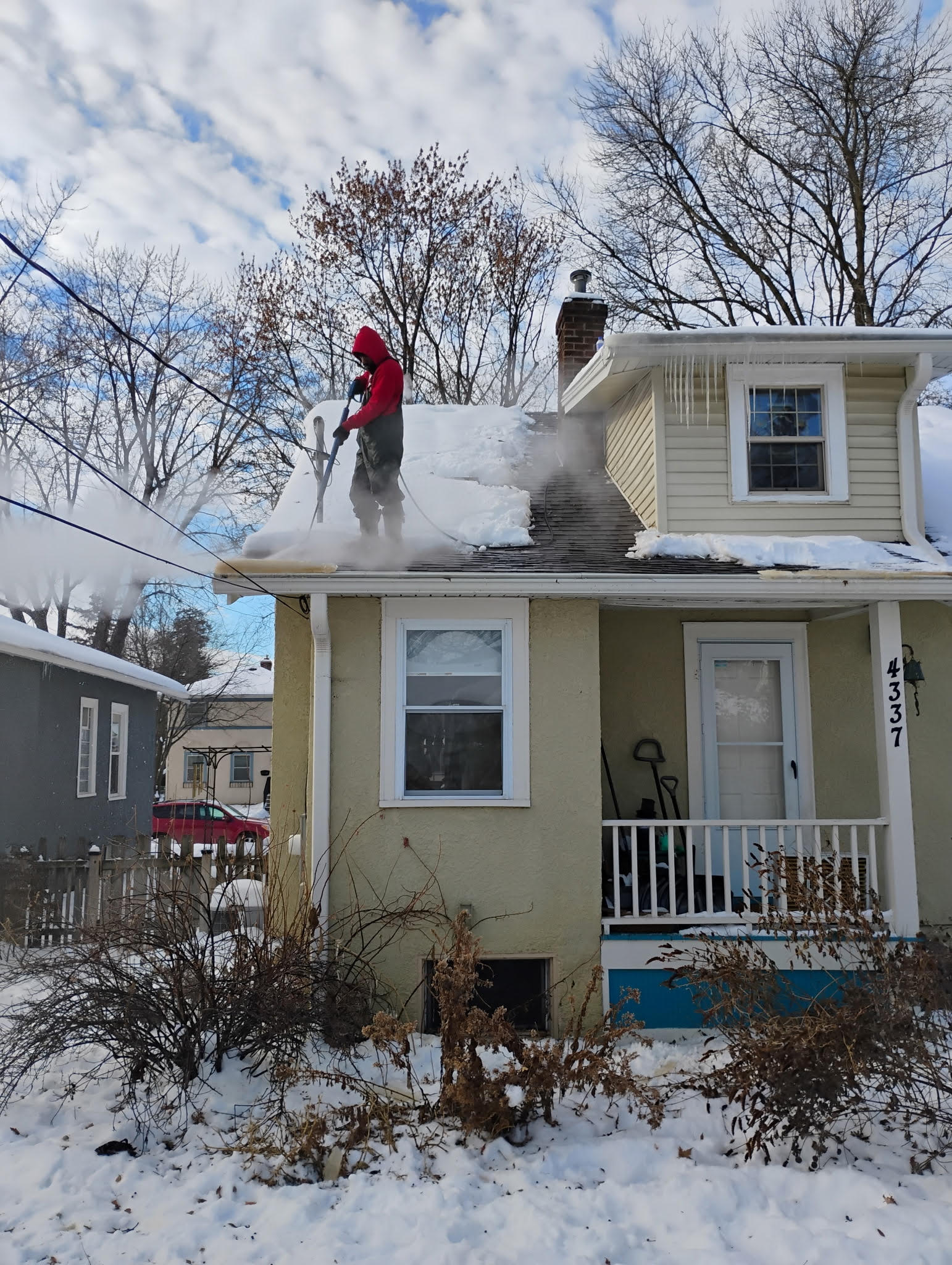
How ice dams form on Grand Forks roofs.
An ice dam forms when snow melts on a warmer section of roofing and the resulting water refreezes near a colder roof edge.
As ice accumulates, it can form a ridge that blocks additional meltwater. Water may collect behind the ridge instead of draining normally from the roof.
Snow Accumulates
Snow gathers on roof slopes, valleys and sheltered roof intersections.
Snow Begins Melting
Heat escaping from the building or winter sunshine can produce meltwater.
Water Refreezes
Meltwater reaches a colder roof section and freezes, gradually creating a ridge.
Why the Red River Valley can be challenging for roofs.
Grand Forks experiences prolonged winter cold and wind-driven snow. The open landscape of the Red River Valley can contribute to drifting around sheltered roof areas.
Roof valleys, dormers and intersections between roof levels may collect more snow than exposed surfaces.
When part of a roof warms from escaping indoor heat or sunlight, meltwater can move toward colder eaves and refreeze.
Older homes and newer construction can both develop ice dams. Insulation, air leakage, roof geometry and ventilation details can influence the conditions.
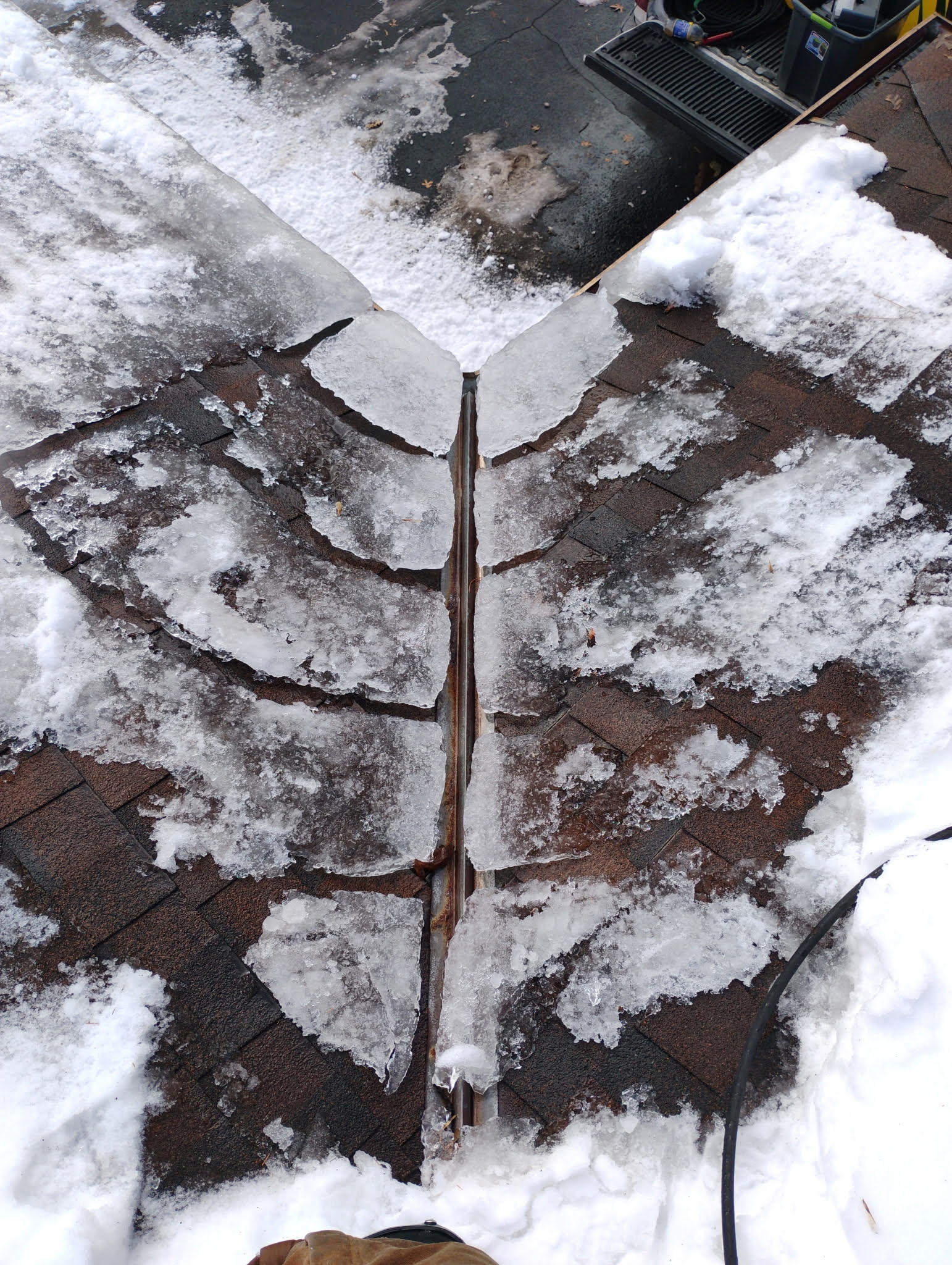
When roof ice becomes more than a winter inconvenience.
Thick Ice at the Eaves
A solid ridge extends along the roof edge and may restrict runoff.
Ice in Roof Valleys
Ice accumulates where two roof slopes intersect and runoff is concentrated.
Ceiling Stains
New discoloration appears during snowmelt or periods of winter warming.
Water Near Exterior Walls
Moisture becomes visible where ceilings meet walls or around upper-floor trim.
Large Hanging Icicles
Heavy ice may accompany a roof ice dam, although icicles alone do not prove one.
Recurring Winter Leaks
Water intrusion appears repeatedly when snow on the roof begins to melt.
Arctic Steamers vs. hot-water pressure washers.
Thick roof ice can adhere closely to shingles, flashing and other roof materials. Chopping or high-pressure water can increase the risk of damaging those surfaces.
Ice Dam USA uses Arctic Steamers to deliver true low-pressure steam. Heat is the primary method used to melt existing ice.
Arctic Steamer
- Uses true steam to transfer heat into ice
- Applies low-pressure steam
- Reduces reliance on chisels and hammers
- Allows targeted work where safely accessible
- Requires care around weakened roofing details
Hot-Water Pressure Washer
- Delivers heated liquid water
- Can operate at higher spray pressures
- Improper use can affect roofing materials
- Forceful spray may damage vulnerable flashing
- Is not our chosen ice dam removal method
Ice Dam USA uses Arctic Steamers, not another contractor's custom-built steamers.
Why an ice dam can cause water to enter your home.
Most pitched roofing materials are designed to shed water down the roof, rather than hold standing water against their overlapping edges.
When an ice dam blocks runoff, water can collect behind the ridge and may work beneath vulnerable shingles or flashing details.
Water can travel along roof decking, insulation or framing before becoming visible inside the building. That means the ceiling stain may not be directly below the original entry point.
Removing the ice may help restore drainage, but it does not repair a damaged roof or guarantee that existing interior moisture will stop immediately.
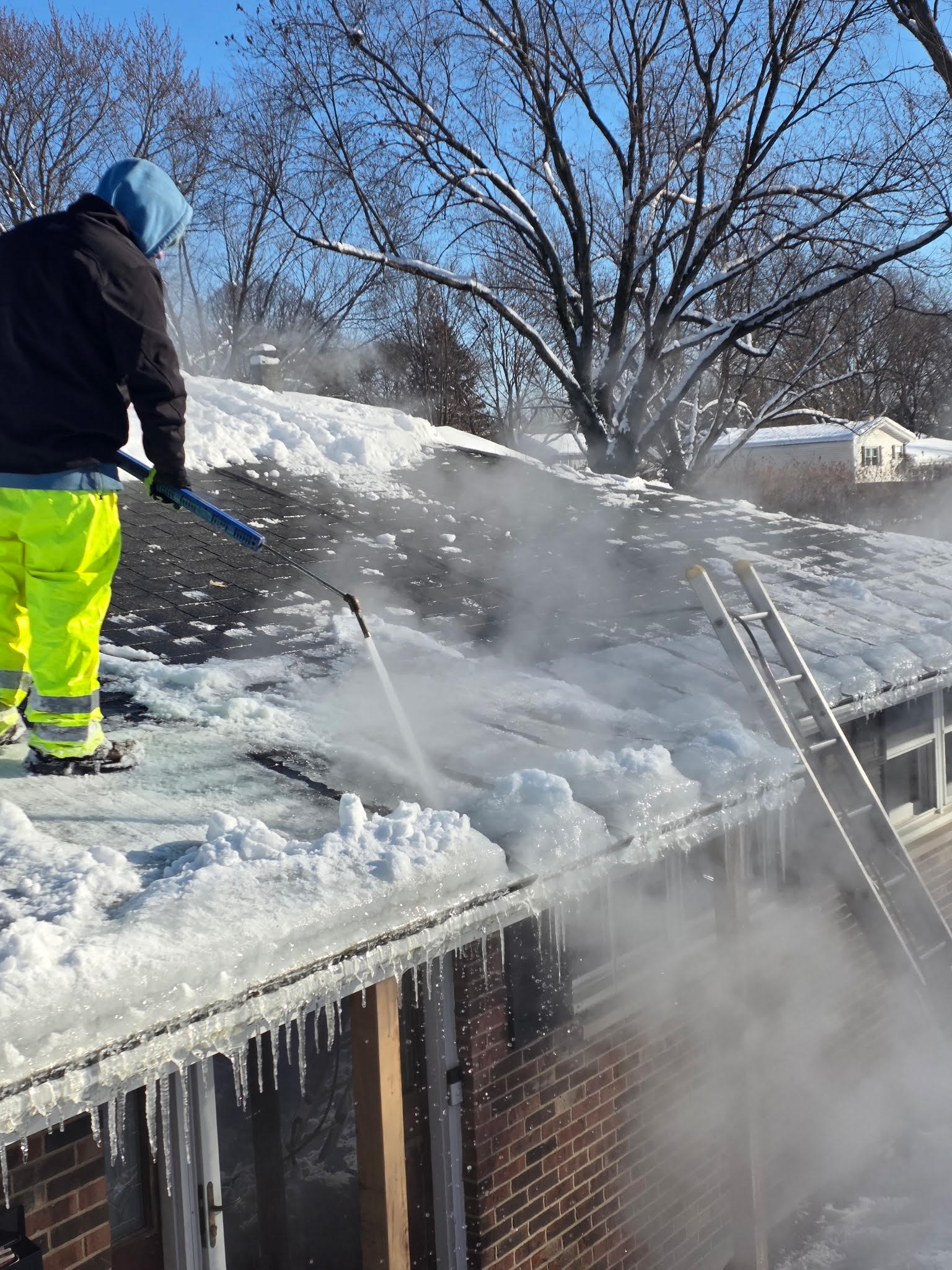
Is the ice on your roof or inside your gutters?
Ice Blocking Meltwater on Roofing
A ridge of ice forms at a colder section of the roof and prevents normal runoff.
This is the main focus of our Grand Forks ice dam removal service.
Ice Blocking Gutters and Downspouts
Water freezes inside a gutter trough, outlet or downspout, potentially creating overflow or heavy hanging ice.
Explore our North Dakota Gutter Ice Removal page .
Some Grand Forks properties experience both conditions. Explain where you see ice when contacting our team.
Ice dam concerns on different property types.
Grand Forks has older residential neighborhoods, newer subdivisions, student rental properties and commercial buildings.
Different roof arrangements can create different winter drainage challenges.
Established Homes
Dormers, roof additions and attic heat loss can influence where ice forms.
Townhomes and Rentals
Shared roof slopes and multiple occupied units may require coordination when ice dams develop.
Commercial Properties
Height, drainage design, roof materials and access can affect removal planning.
Low-slope commercial roofs with internal drains require their own evaluation and should not be treated the same as a shingled residential roof.
Practical steps while arranging ice dam removal.
Protect the Interior
If safe, move electronics and valuables away from dripping water. Use a container to collect water and document visible damage.
Avoid Unsafe Roof Work
Do not climb an icy roof or ladder, strike ice with tools or pull frozen roofing materials loose. Large ice formations can fall unexpectedly.
Grand Forks and surrounding northeastern North Dakota.
Ice Dam USA welcomes service inquiries from Grand Forks and nearby North Dakota communities. Service is coordinated through regional traveling crews, with availability dependent on weather, scheduling and access.
Grand Forks
Roof ice dam and winter leak inquiries throughout the city.
Thompson
Winter roof ice concerns south of Grand Forks.
Emerado
Roof ice inquiries west of Grand Forks.
Larimore
Ice dam questions from homes farther west in Grand Forks County.
Manvel
Winter ice buildup inquiries north of Grand Forks.
Grafton Region
For northeastern North Dakota coverage, see our Grafton Ice Dam Removal page .
Why roof ice may return after removal.
Steam removes existing ice, but later snowfall and temperature differences may create another ice dam.
Long-term prevention often involves understanding how heat moves from the building into the roof assembly.
Attic Air Sealing
Unsealed penetrations and ceiling openings can allow warm air to escape into the attic.
Insulation
Appropriate insulation can help reduce heat moving toward the roof deck.
Ventilation
Ventilation should be evaluated as part of the overall roof and attic design.
Roof Valleys
Valleys and intersections may collect substantial snow and concentrate runoff.
Attic Access Points
Hatches and penetrations may need sealing to reduce unwanted air movement.
Professional Evaluation
Recurring ice dams may warrant a qualified building-envelope or roofing assessment.
How much does ice dam removal cost in Grand Forks?
The required work depends on roof height, pitch, ice accumulation, access conditions and the number of affected areas.
Ice Dam USA maintains current service pricing, minimums and billing terms on its official pricing page rather than duplicating amounts on city pages.
Explore Grand Forks and North Dakota ice removal services.
Grand Forks ice dam removal service area.
This map provides geographic context for Grand Forks and the surrounding area. Contact Ice Dam USA to confirm technician availability for your property.
This map does not represent a permanent company office or guaranteed service boundary.
Grand Forks ice dam removal FAQs.
What causes ice dams on Grand Forks roofs?
Roof snow melts on warmer sections and refreezes near colder eaves, creating an ice ridge that blocks runoff.
Can an ice dam cause water to enter my home?
Yes. Trapped meltwater may work beneath vulnerable roofing details and cause interior moisture damage.
Does Ice Dam USA use Arctic Steamers?
Yes. We use Arctic Steamers for professional low-pressure steam ice removal.
Why is steam used instead of chopping?
Steam uses heat to melt ice and reduces reliance on striking or prying frozen roofing materials.
Is steam ice dam removal risk-free?
No. Roof condition, safe access and proper operating technique still influence risk.
Are icicles always a sign of an ice dam?
No. Icicles can form without a major roof ice dam being present.
Can I remove an ice dam myself?
Climbing icy roofs and using impact tools can cause serious injury or damage roofing. Professional assistance is generally safer.
Will removing an ice dam immediately stop my roof leak?
Not necessarily. Existing water inside the building may continue moving, and damaged roofing may need repair.
Are frozen gutters the same as roof ice dams?
No. Gutter ice forms inside a drainage system, while roof ice dams form on the roofing surface.
Can Ice Dam USA address frozen gutters?
We welcome gutter ice inquiries. See our North Dakota Gutter Ice Removal page.
How much does Grand Forks ice dam removal cost?
Requirements depend on the property and ice buildup. Visit our official pricing page.
Can ice dams return after professional removal?
Yes. Future melting and refreezing can create additional ice. Building improvements may help reduce recurring conditions.
Do you serve Thompson and Emerado?
We welcome inquiries from these communities. Contact us to confirm available service.
What information should I provide when calling?
Share the address, building height, location of the ice, any active leaking and safely taken ground-level photographs if available.
Need professional ice dam removal in Grand Forks?
Whether ice is blocking roof drainage or you are dealing with a winter roof leak, contact Ice Dam USA about Arctic Steamer removal and regional availability in northeastern North Dakota.
