
Attic Air Leakage
Warm indoor air may escape through attic access openings, recessed fixtures, wiring penetrations, and other gaps. This can warm the roof deck above.
|
|||
|
|
Roof ice building up during a Wisconsin winter? Water appearing near your ceiling or exterior walls? Ice dams can become a costly problem when melting snow has nowhere to drain.
Ice Dam USA provides professional ice dam removal in Lake Windsor, WI, using Arctic Steamers and true low-pressure steam. We use heat to melt accumulated roof ice rather than aggressive chopping or high-pressure water blasting.
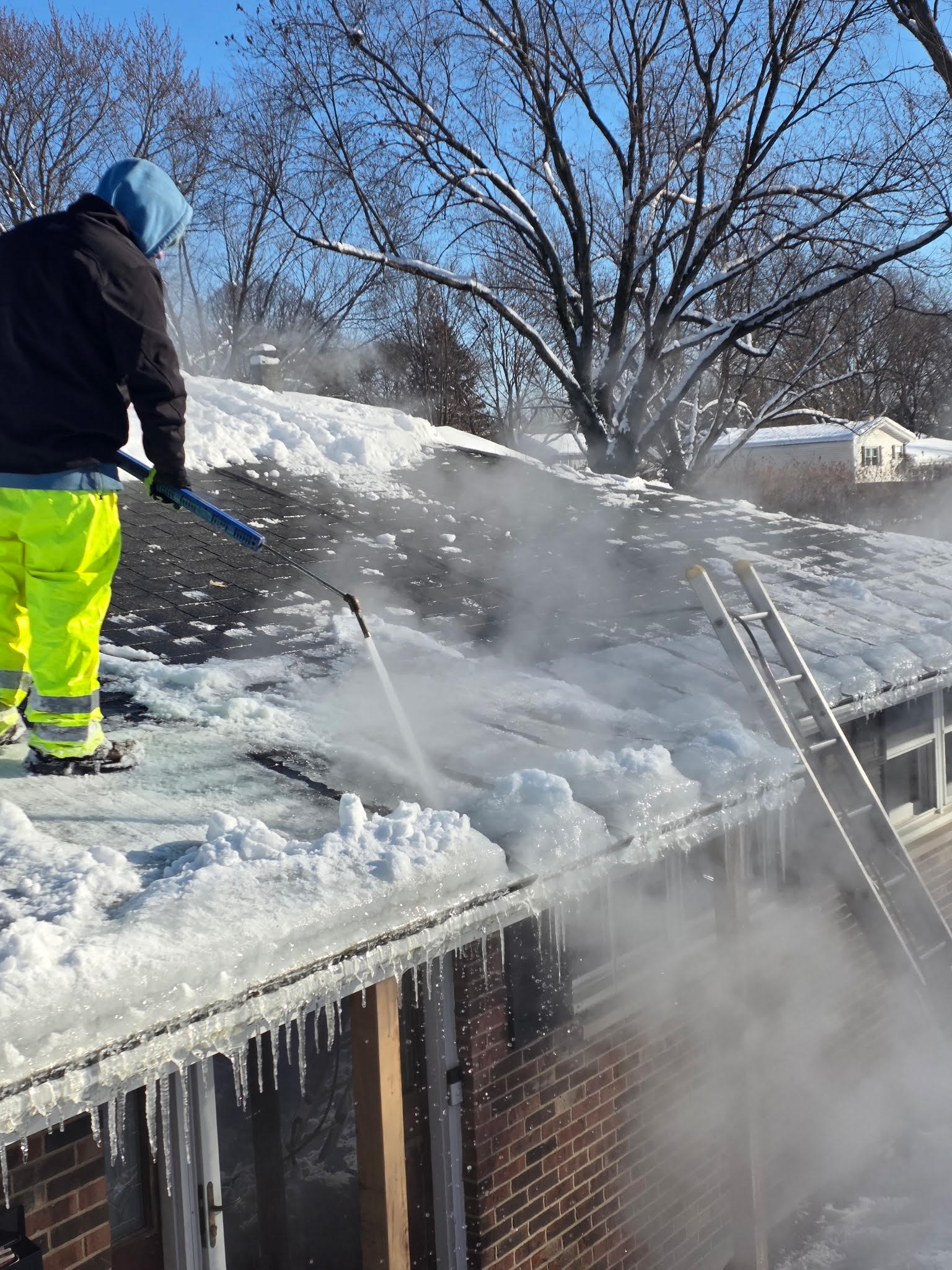
Lake Windsor is located within the Village of Windsor in northern Dane County, Wisconsin. The community is near DeForest and north of Madison, with residential neighborhoods surrounding the Lake Windsor area and golf course.
During winter, snow accumulation and freezing temperatures can create conditions for ice dams. Periods of sunshine, changes in temperature, and heat escaping through a building can cause snow to melt unevenly.
When that meltwater reaches colder roofing near the eaves, it can refreeze and create a barrier.
Additional water may collect behind the growing ice ridge instead of draining from the roof normally. This can increase the risk of water entering vulnerable roof areas.
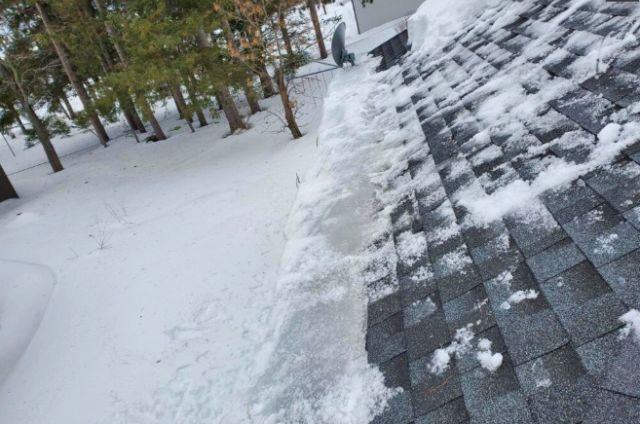
Actual Ice Dam USA roof ice photograph. Not identified as a Lake Windsor job.
Two homes can experience the same snowstorm but develop very different amounts of roof ice. Building construction and roof exposure often explain the difference.
Warm indoor air may escape through attic access openings, recessed fixtures, wiring penetrations, and other gaps. This can warm the roof deck above.
Attached garages, dormers, and lower roof sections can create intersections where melting water collects or flows toward colder surfaces.
Wind can deposit snow unevenly. Sunlit roofing may melt earlier than shaded sections, contributing to repeated freezing and thawing.
An ice dam is a ridge of ice that prevents melting snow from draining normally. It often forms near the eaves, where roofing outside the heated walls of the building remains colder.
Accumulated snow covers part or all of the roof.
Heat from the building or changing weather melts some of the snow.
Meltwater flows to a colder roof edge and refreezes.
Repeated freezing can build an ice barrier that traps runoff.
Learn more in our guide to what causes ice dams .
Equipment matters when removing ice from shingles, valleys, gutters and flashing. Not every machine that produces heated water is a true ice dam steamer.
Arctic Steamers use low-pressure steam to melt existing ice. The heat does the work rather than aggressive water pressure.
Heated pressure washers deliver liquid water through a pressurized nozzle. Excessive pressure or improper application can damage roofing materials.
Low-pressure steam reduces the need for aggressive force, but no roof work is completely risk-free. Proper technician technique, roof condition, weather, and safe access all matter.
Ice dams are not always obvious from the ground. Some of the first signs may appear inside the building.
A continuous ridge of ice may obstruct melting snow from draining normally.
New water stains during winter may indicate moisture entering through vulnerable roofing.
Icicles may indicate recurring melting and refreezing, although they do not always mean an ice dam is present.
Intersecting slopes can concentrate snowfall and melting water.
Ice-filled gutters can interfere with drainage and add stress to gutter systems.
Repeated leaking during thaws deserves investigation of ice dams and other possible defects.
Ice dams can hold melting snow on a roof long enough for water to enter vulnerable roofing areas. Interior moisture may appear near ceilings, windows, or walls.
Water can travel inside the roof structure before becoming visible. The indoor leak location may not be directly beneath the ice dam.
Protect belongings where safe, document the damage, and stay clear of wet electrical fixtures and sagging ceilings.
Professional steam removal may restore drainage, but it cannot guarantee that an existing leak will stop immediately. Additional drying or roofing repairs may still be required.
These are real Ice Dam USA photographs showing our technicians working on snow-covered roofs. They illustrate actual removal conditions rather than stock photography.
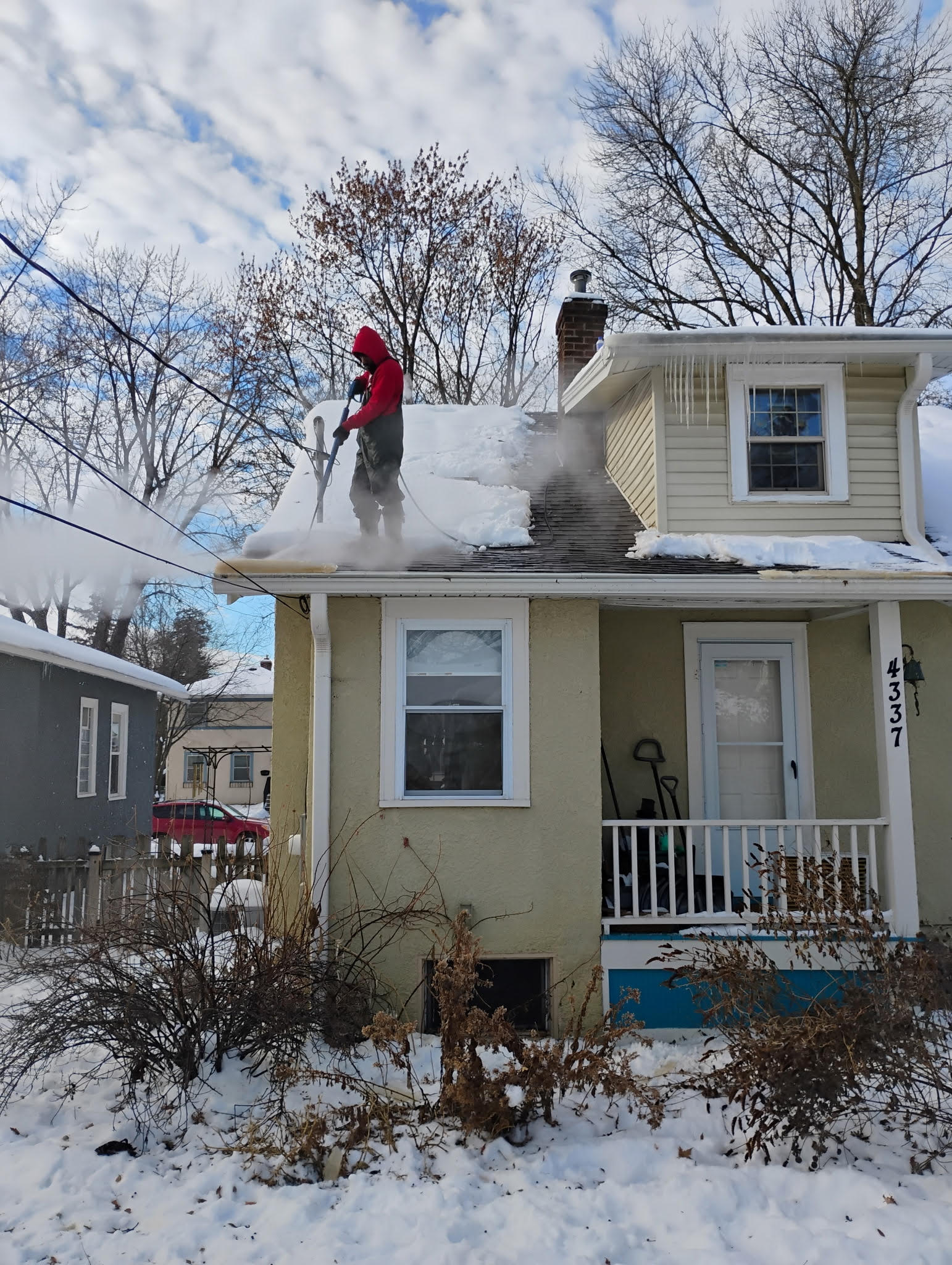
Ice Dam USA roof ice removal project.
Steam equipment working along an ice-covered roof edge.
These are company project photographs from our broader service regions, not specifically documented Lake Windsor jobs.
Roof ice dams form when melting snow refreezes at a colder roof section and obstructs runoff.
A roof can develop ice dams even when no gutters are installed.
Ice can also collect inside gutters, downspouts and outlets. Frozen drainage areas may increase the weight on gutters and prevent water from flowing normally.
Both conditions can occur together on the same property.
Ice dam removal pricing depends on the property, ice accumulation, work requirements and scheduling conditions. Jobs can vary considerably in scope.
Building height, roof pitch and available access affect how removal work is planned.
Heavy ice across several roof areas may take more work than a localized obstruction.
Site safety, regional crew availability and expedited scheduling can affect cost.
For current hourly rates and minimum service requirements, use our dedicated pricing page.
Steam removes existing ice, but recurring problems may require improvements to the building.
Warm-air leakage, missing insulation, ventilation problems and roof drainage conditions can all contribute to ice dam formation.
Reducing warm-air leakage can help limit unwanted roof deck heating.
Appropriate insulation helps limit heat transfer from the living area.
Roof and attic conditions should be evaluated as a complete system.
Tell us where ice has formed, whether leaks are present, and what type of property requires service.
We review access, equipment needs, pricing and available regional technician schedules.
When scheduled, technicians evaluate site conditions and perform agreed removal work when conditions allow.
Winter storms, hazardous roof conditions and travel limitations may affect scheduling. Contact our team for current availability.
Explore our educational guides, equipment information, service descriptions and project photographs.
Ice Dam USA welcomes ice dam removal inquiries from Lake Windsor and surrounding communities north of Madison.
Lake Windsor is part of the Village of Windsor, near DeForest. Nearby service areas include Waunakee, Sun Prairie, Madison and other Dane County locations.
Our technicians work through a regional service network and travel to properties based on scheduling, weather and site requirements.
This geographic reference map shows Lake Windsor and its surrounding northern Dane County communities.
Geographic reference only. This map does not indicate a permanent Ice Dam USA office or guarantee dispatch from Lake Windsor.
Ice Dam USA welcomes residential and commercial ice dam removal inquiries from Lake Windsor, Wisconsin. Contact our team to discuss scheduling and regional technician availability.
Lake Windsor is a community within the Village of Windsor in Dane County, north of Madison and near DeForest.
Ice Dam USA uses Arctic Steamers to melt roof ice using true low-pressure steam.
Low-pressure steam relies on heat to melt ice rather than high water pressure. Improper pressure washing can damage vulnerable roofing materials.
Yes. Heat from a building may warm a portion of the roof enough to melt snow while colder sections cause water to refreeze.
Yes. Ice dams can occur on both newer and older homes depending on roof temperatures, insulation, air leakage, snow and roof design.
Removing ice may help restore drainage. However, existing water inside building materials or other roofing defects may cause leaking to continue.
Ice dams can form with or without gutters. Frozen gutters can add drainage problems but are not required for an ice dam to develop.
Professional steam equipment can be used to address roof valley ice where access and site conditions allow safe removal.
Chipping, hammering or prying ice can damage shingles and flashing. Icy roofs also create serious fall hazards.
Cost depends on building height, roof access, ice thickness, job duration and service requirements. See our current pricing guide .
Ice Dam USA welcomes commercial and residential inquiries. Building type, access and worksite conditions determine how removal can be approached.
Arrival times depend on regional crew availability, winter weather, travel and worksite conditions. Call 855-468-4233 to discuss the current service schedule.
Improvements to attic air sealing, insulation, ventilation and roof drainage can reduce ice dam risks depending on the building.
Heavy roof ice, frozen gutters, and winter roof leaks can become serious property concerns.
Ice Dam USA uses Arctic Steamers and true low-pressure steam to help remove existing ice and restore roof drainage.
Contact our team to discuss your Lake Windsor property and available service options.
