Ice Dam USA | Homeowner Education
Ice Dam Steamer vs. Pressure Washer
Both machines use heated water, but that doesn't mean they remove roof ice the same way.
When choosing an ice dam removal company, the equipment matters. High-pressure water can damage shingles, flashing, and other roofing materials if used improperly.
Ice Dam USA uses professional Arctic Steamers designed for low-pressure ice removal. Our approach relies on heat to work through frozen buildup rather than using aggressive water pressure to break it apart.
Learn what makes these systems different, how to evaluate an ice dam removal contractor, and why the correct equipment is important.
Understanding the Equipment
Is an Ice Dam Steamer the Same as a Hot-Water Pressure Washer?
No. A purpose-built ice dam steamer and a conventional hot-water pressure washer use different methods of applying heat and force to frozen roof ice.
A hot-water pressure washer heats water and delivers it through a spray nozzle under pressure. The pressure can be useful for cleaning some surfaces, but excessive force against roofing materials creates unnecessary risks.
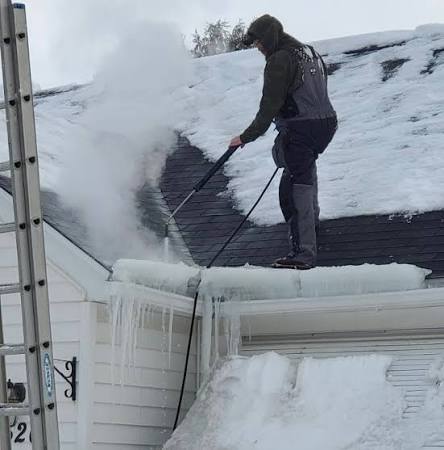
A professional low-pressure ice dam steamer is designed to transfer heat into ice using a much gentler application. Heat performs most of the melting work rather than a powerful water jet.
That's especially important when ice covers vulnerable areas such as shingle edges, valleys, flashing, gutters, and roof intersections.
The Main Difference
A true ice dam steamer relies primarily on heat. A hot-water pressure washer delivers heated water through a pressurized spray.
Ice Dam USA chooses low-pressure Arctic Steamers because they allow our trained technicians to melt ice without relying on aggressive water pressure or sharp impact tools.
No ice removal method is completely risk-free. Proper equipment, operator training, roof condition, and technique all affect the outcome.
A Closer Look at Both Systems
Arctic Steamers vs. Hot-Water Pressure Washers
Understanding how each machine works helps homeowners ask the right questions before hiring someone to remove ice from their roof.
Professional Arctic Steamer
Arctic Steamers are purpose-built for professional ice dam removal in freezing winter conditions.
These machines are designed to apply high-temperature steam at low pressure, allowing trained technicians to melt roof ice in controlled sections.
- Designed specifically for ice removal
- Uses heat as the primary melting method
- Low-pressure application
- Can target ice at roof edges and valleys
- Reduces reliance on impact tools
- Requires trained operators and safe access
The Arctic Steamer manufacturer describes operating temperatures around 290°F. Actual conditions at the point of application vary by equipment and setup.
This is the equipment approach used by Ice Dam USA.
Hot-Water Pressure Washer
A hot-water pressure washer heats water and sends it through a nozzle using mechanical pressure.
These machines are commonly used for pressure-cleaning applications. Their operating pressures, temperatures, and nozzle configurations vary by model.
- Delivers heated liquid water
- Uses a pressurized spray
- Pressure may vary significantly
- Excessive force can disturb shingles
- Water can be driven into vulnerable joints
- Not Ice Dam USA's removal method
Heating the water does not automatically turn a pressure washer into a purpose-built, low-pressure ice dam steamer.
Homeowners should ask which machine and application method will actually be used on their roof.
| Feature | True Low-Pressure Steamer | Hot-Water Pressure Washer |
|---|---|---|
| Main purpose | Specialized melting and removal of accumulated ice | Pressurized washing and cleaning |
| How ice is removed | Heat melts and separates ice | Heated water and spray pressure act on the buildup |
| Pressure | Designed for low-pressure application | Depends on equipment and settings; can be substantially higher |
| Roof material concerns | Still requires controlled technique around shingles and flashing | Excessive spray force may damage shingles, flashing, or joints |
| Application | Targeted work through ice and drainage obstructions | Directed spray with potentially significant force |
| Ice Dam USA method | Yes — Arctic Steamers | No |
Equipment specifications vary by model. The comparison describes the general operating differences, not every machine sold in either category.
Our Preferred Removal Method
Why True Steam Is Better for Ice Dam Removal
Ice dams frequently form in places where roof components are vulnerable. Ice may cover the edges of shingles, flashing, gutter hangers, roof valleys, and other important details.
Forcing that ice away with a powerful water stream or striking it with a sharp tool can damage the materials underneath.
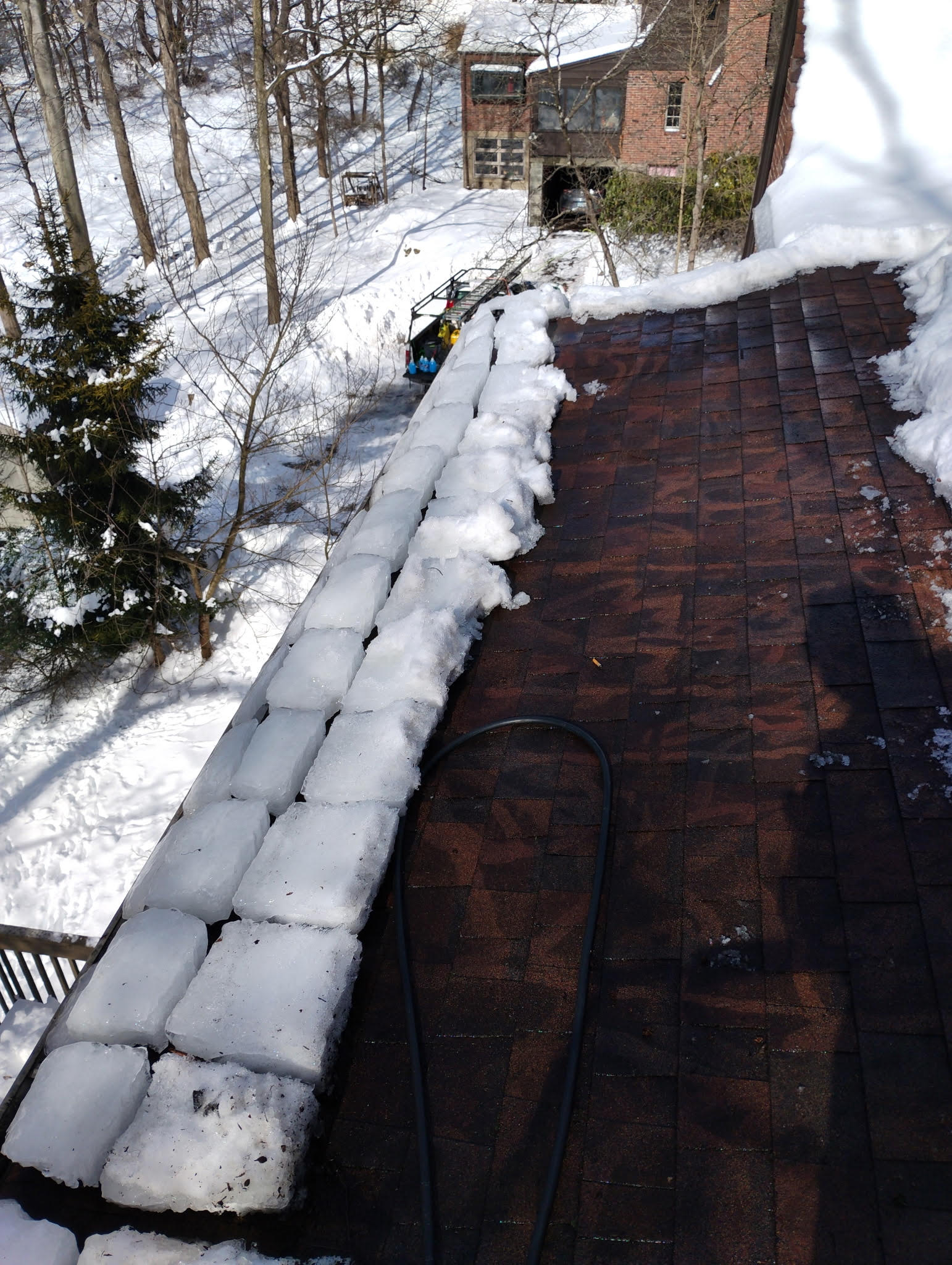
A professional low-pressure steamer allows the technician to work into the frozen buildup using heat. The ice is gradually melted or separated into manageable sections.
This reduces the need to apply excessive force against the roof and makes it possible to concentrate on the areas where meltwater is being trapped.
The objective isn't simply to remove visible ice. It's to reopen drainage while minimizing avoidable roof damage.
Why Removal Technique Matters
Can Pressure Washing Damage a Roof During Ice Dam Removal?
Yes. Excessive pressure can damage roofing materials, particularly when it is directed at shingles, joints, or flashing.
Loss of Protective Granules
Asphalt shingles use surface granules for protection. An improperly directed high-pressure stream can dislodge granules or damage the shingle surface.
Water Entering Vulnerable Areas
Pressurized water directed toward shingle edges, flashing, or existing defects may force moisture into areas that should remain protected from water intrusion.
Damage Around Roof Details
Roof intersections, gutter connections, and flashing can already be stressed by heavy ice. Aggressive water pressure can increase the risk of additional damage.
What About Turning Down the Pressure on a Washer?
Lowering the pressure may reduce the force from a pressure washer, but it does not by itself establish that the equipment is equivalent to a purpose-built ice dam steamer.
The actual delivery method, water temperature, nozzle, pressure at the surface, roofing material, and technician technique all matter. Ask the contractor to explain the equipment and removal method before hiring them.
The Ice Dam USA Approach
How Professional Steam Ice Dam Removal Works
Removing a heavy ice dam requires a planned process. We evaluate the roof conditions, identify affected drainage areas, and use controlled steam removal.
Assess the Problem
The technician reviews the roof layout, buildup, access, visible drainage problems, and areas where water may be backing up.
Prepare the Work Area
Safe access is established. Snow may be cleared where needed to expose the affected ice and roof features.
Apply Low-Pressure Steam
Professional steam equipment transfers heat into the ice to gradually melt or separate the frozen obstruction.
Reopen Drainage
The crew works through affected areas so meltwater has a route away from the roof when conditions permit.
Review the Results
The treated areas can be inspected, and photographs may document the condition before and after removal.
Discuss Prevention
If ice dams keep returning, we can explain contributing conditions and possible prevention measures.
Working Near Sensitive Roof Areas
Why the Right Equipment Matters Around Shingles, Valleys, and Gutters
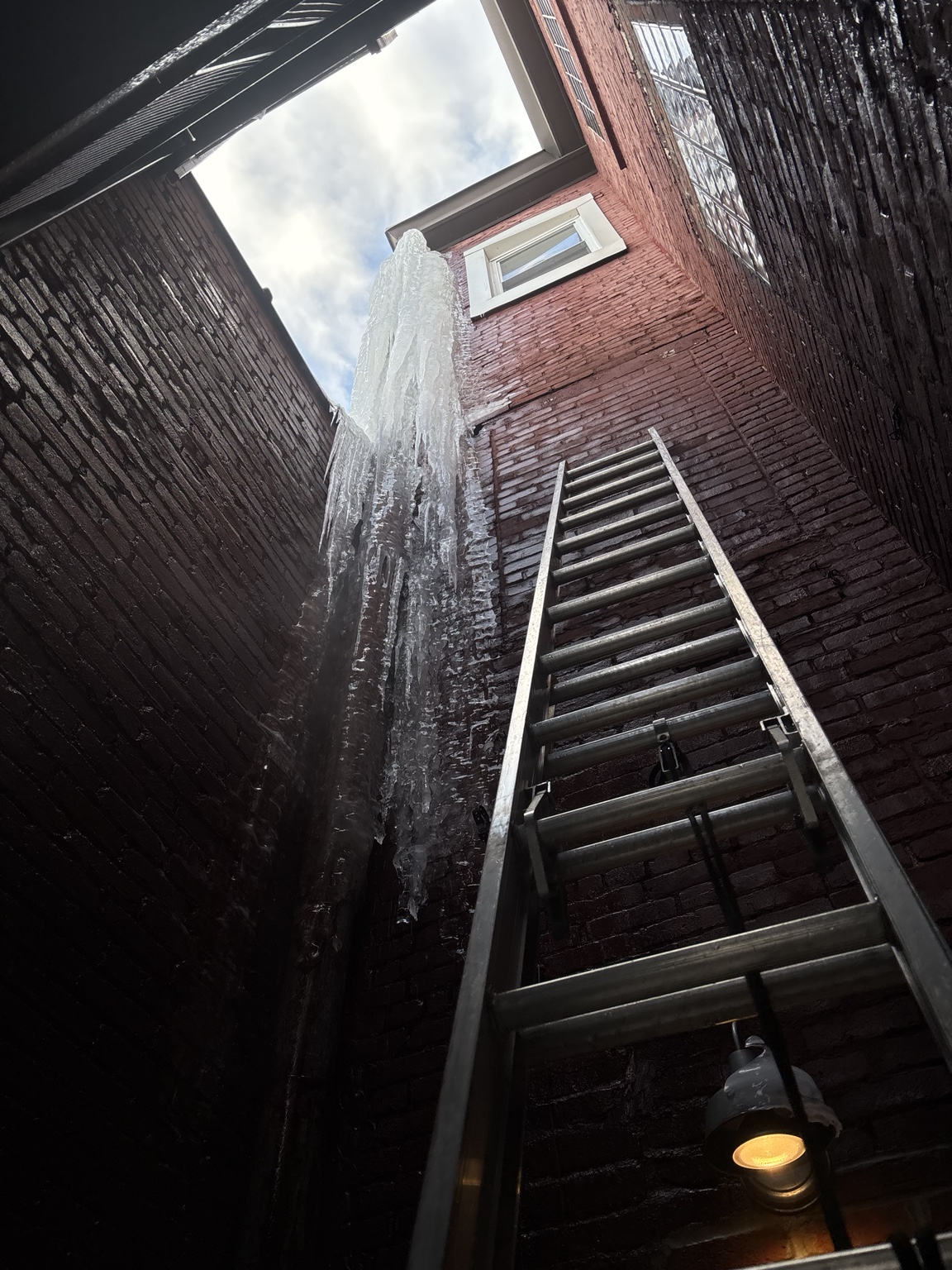
Ice dams are not limited to straight, accessible roof edges. They can extend into roof valleys, around dormers, near skylights, and into frozen gutters.
These areas may contain flashing, seams, fasteners, or roofing components that should not be struck or subjected to aggressive water pressure.
Targeted low-pressure steam allows trained technicians to work carefully through these areas while considering the condition of the roof.
A roof that already has damaged shingles, loose flashing, or deteriorated materials may need additional care or repairs. No removal equipment can guarantee a damage-free outcome on every roof.
If your gutters or downspouts are filled with solid ice, learn more about our separate professional gutter ice removal service .
Hiring an Ice Dam Removal Contractor
Questions to Ask Before Hiring an Ice Dam Removal Company
Homeowners often ask about availability and price first. Those are important, but the removal equipment and the contractor's experience deserve attention too.
Ask which machine will be used, how the contractor removes thick roof ice, and what precautions are taken around roofing materials.
You should also understand the pricing method, minimum charges, insurance coverage, and the procedure for working around an active roof leak.
An experienced contractor should be able to explain why its equipment is appropriate for the conditions at your home.
Homeowner Contractor Checklist
- Do you use a true low-pressure ice dam steamer?
- Is your equipment designed for ice dam removal?
- Will any high-pressure water be directed at the roof?
- How do you protect shingles and flashing?
- Is your company properly insured?
- How do you handle steep or difficult roof access?
- Can you explain the pricing and minimum service charge?
- Will you document the affected areas and completed work?
Our Winter Roof Experience
Why Ice Dam USA Uses Professional Arctic Steamers
Ice Dam USA is a family-owned company with more than 30 years of experience in the ice dam removal industry.
True Steam Removal
We use professional Arctic Steamers designed for melting accumulated ice without relying on aggressive high-pressure water blasting.
Experienced Technicians
Our company has handled substantial winter roof ice buildup on residential and commercial properties across northern climates.
Residential & Commercial
We provide professional ice dam removal throughout Minnesota and other northern U.S. service areas, subject to weather and availability.
Explore our Minnesota ice dam removal services , learn about our residential steam removal process , or review options for commercial ice dam removal .
Preventing Recurring Ice Dams
Steam Removal Solves the Immediate Ice Problem, Not Every Underlying Cause
Removing an ice dam helps address the frozen obstruction that may be trapping meltwater on your roof.
However, the same ice dam may return during a future freezing and thawing cycle if the underlying conditions are not addressed.
Heat escaping into the attic, uneven roof temperatures, snow accumulation, and roof drainage can all contribute to recurring ice dam formation.
Depending on the property, longer-term improvements may involve attic air sealing, insulation, ventilation, or targeted heat cable systems.
Read our guide to preventing ice dams to understand the options.
What If Your Roof Is Leaking Now?
Water entering your ceiling, attic, or walls during winter may be connected to an ice dam, although other roof problems can cause leaks too.
Avoid standing beneath water-damaged ceiling materials. Protect belongings when safe to do so and keep water away from electrical fixtures.
Contact Ice Dam USA and tell us you have an active leak so we can discuss the situation and current service availability.
Call 855-468-4233Homeowner Questions
Ice Dam Steamer vs. Pressure Washer FAQs
Answers to common questions about steam ice dam removal, pressure washers, roof damage, and choosing the right equipment.
Is a pressure washer the same as a true ice dam steamer?
No. A conventional hot-water pressure washer heats and sprays water under pressure. A purpose-built ice dam steamer uses high-temperature, low-pressure application to melt ice primarily through heat. The machines serve different purposes.
Can a hot-water pressure washer damage roof shingles?
Yes. Excessive pressure can damage asphalt shingles, dislodge protective granules, disturb flashing, and force water into vulnerable roofing joints. Risk depends on the pressure, nozzle, direction, roofing material, and technique.
Why does Ice Dam USA use Arctic Steamers?
Arctic Steamers are designed for professional ice removal using high-temperature heat and low-pressure delivery. This allows our technicians to remove ice without relying on aggressive high-pressure water or impact tools.
Does steam ice dam removal damage shingles?
Properly applied low-pressure steam reduces the need for aggressive force against roofing materials. However, no method guarantees that damage cannot occur. Existing roof deterioration, ice conditions, excessive heat, and improper technique may create risks.
Is hot water the same thing as steam?
No. Heated liquid water and steam are different physical states of water. A hot-water pressure washer is not automatically a low-pressure steam system simply because it uses heated water.
Is steam more effective than chipping an ice dam?
Professional steam removal uses heat to melt and separate ice rather than striking it with hard tools. Hammers, axes, and chisels can puncture roofing materials or damage flashing. Ice Dam USA uses steam instead of aggressive chipping.
Can steam be used on gutters and downspouts?
Steam equipment can be used to address certain frozen gutters and downspouts when their condition and construction allow safe removal. The technician must evaluate the drainage system and surrounding materials. Learn more about gutter ice removal .
How hot is an Arctic Steamer?
The Arctic Steamer manufacturer advertises an operating temperature around 290°F. Actual temperatures during field operation depend on the machine, hose, weather, and application conditions.
How much does professional steam ice dam removal cost?
Ice Dam USA bases its pricing on the service type and conditions, including roof height, access, complexity, travel, and scheduling needs. View the current rates and minimum charges on our ice dam removal pricing page .
Can I remove a large ice dam myself?
Large ice dams can be dangerous to remove. Slippery roofs, falling ice, hot equipment, and improper tools create injury and property damage risks. Do not climb onto an icy roof or attempt to chip heavy ice away.
Does removing the ice dam prevent it from coming back?
Removal addresses the existing ice buildup. It does not automatically correct heat loss, insulation deficiencies, or other causes. Long-term prevention may require additional improvements.
Where does Ice Dam USA provide steam ice dam removal?
Ice Dam USA provides professional ice dam removal in Minnesota, Wisconsin, and many additional northern U.S. service areas. Availability depends on location, weather, and crew scheduling. Call 855-468-4233 to discuss your address.
Learn More About Ice Dams
Related Ice Dam USA Resources
Understanding ice dam formation, removal costs, and prevention can help you make a more informed decision.
Professional Steam Ice Dam Removal
Choose the Right Equipment for Your Roof
When ice dams threaten your home or business, the removal method matters. Ice Dam USA uses professional low-pressure Arctic Steamers rather than hot-water pressure washers.
With more than 30 years of company experience, we provide professional steam ice dam removal for residential and commercial properties across northern U.S. service areas.
Tell us about your roof, the ice buildup, and whether water is entering your property. We'll explain the next steps and current availability.
Ice Dam USA | 855-468-4233 | Residential & Commercial Steam Ice Dam Removal
