
Ice Dam USA | Seattle, Washington
Professional Ice Dam Removal in Seattle, WA
A Puget Sound snowstorm can leave Seattle homeowners dealing with frozen roof edges and drainage problems they rarely see during a typical rainy winter.
When snow melts on a warmer section of roofing and refreezes near colder eaves, an ice dam can form. Water trapped behind the ridge may reach vulnerable roofing materials and enter the home.
Ice Dam USA provides professional ice dam removal using Arctic Steamers and true low-pressure steam for Seattle residences, commercial buildings, and nearby communities.
Professional roof ice removal. Specialized steam equipment. Traveling service technicians.
Seattle Winter Conditions
Why Even a Short Seattle Snowstorm Can Cause Roof Ice Problems
Seattle generally experiences milder, wetter winters than eastern Washington. That does not mean the city's roofs are immune to ice dams.
During a winter snow event, snow can accumulate on roofs that typically see mostly rain. When indoor heat, sunlight, or warmer air begins melting that snow, runoff travels toward the roof edges.
If a lower section remains cold enough to freeze the water, an ice ridge can begin forming. Additional runoff may then collect behind the ice.
Seattle's hills and varied elevations also mean snow accumulation and surface temperatures can differ among nearby neighborhoods.
A property that receives mostly rain in one storm may see significant snow accumulation during another. The building's specific roof conditions matter more than annual snowfall averages.
Seattle-specific consideration: Snow followed by a daytime thaw and overnight refreezing may create a roof drainage issue, especially where snow remains on shaded roof sections.
Seattle Buildings & Roof Access
Seattle's Hillside Homes and Older Rooflines Present Different Challenges
Ice Dam USA evaluates roof conditions on the individual building. Seattle's housing varies from older homes with detailed rooflines to modern townhomes and larger managed properties.
Ballard & Wallingford: Older Residential Roofs
Established Seattle neighborhoods include homes with dormers, additions, porch roofs, and multiple intersecting slopes.
Roof valleys and transitions can concentrate meltwater. Attic air leakage or inconsistent insulation may affect where snow melts during a cold spell.
Queen Anne & Magnolia: Sloping Terrain
Hillside properties may have different roof heights above the ground on opposite sides of the same home.
A roof edge that looks reachable from the street may require a very different access plan from the downhill side.
Capitol Hill & Attached Housing
Close neighboring buildings, townhomes, and shared roof areas may limit safe access for equipment and technicians.
Working near adjoining properties can require additional planning to protect occupied spaces and pedestrian areas.
West Seattle: Varied Roof Exposure
Homes with different sun exposure, tree cover, and roof orientations may have uneven snowmelt.
A shaded lower roof can retain ice longer than a sunnier upper roof. The actual risk depends on the individual structure.
These examples describe potential local building conditions, not claims that every property in these neighborhoods develops ice dams.
Understanding Ice Dam Formation
How a Roof Ice Dam Forms During Seattle's Freeze-Thaw Weather
Snow Begins Melting
Heat escaping through the roof assembly, sunshine, or rising outdoor temperatures melt snow on portions of the roof surface.
Runoff Reaches a Colder Area
Meltwater moves downhill toward the eaves. A colder roof section may cause that water to refreeze.
An Ice Ridge Restricts Drainage
Repeated refreezing creates a barrier. Water collecting behind that ridge may enter vulnerable roof joints, flashing, or shingles.
Important: An ice dam forms on a roof. It can develop with or without gutters. The key issue is meltwater refreezing and obstructing roof drainage.
For a more detailed explanation, read our What Is an Ice Dam? guide.
Warning Signs
When Should a Seattle Homeowner Be Concerned About Roof Ice?
Thick Ice Along the Eaves
A solid ice ridge may restrict water flowing from upper roof sections.
Winter Ceiling Stains
Moisture appearing near exterior walls during a thaw may indicate water entering through vulnerable roofing.
Ice Around Dormers
Snow and runoff can concentrate around dormer intersections and lower roof additions.
Blocked Roof Valleys
Ice in a roof valley may interfere with water arriving from more than one slope.
Overhanging Ice
Heavy ice above entrances and walkways can create a dangerous falling-object hazard.
Repeated Thaw-Time Leaks
Moisture that returns during snowy and freezing periods deserves evaluation for ice dams or other roof defects.
Icicles alone do not prove that a significant ice dam is blocking drainage. A proper assessment considers the roof ice ridge and where runoff is traveling.
Professional Arctic Steamers
Why Ice Dam USA Uses True Low-Pressure Steam
Existing roof ice can bond to shingles, flashing, and other roofing components. Removing frozen material by striking, scraping, or prying can damage those surfaces.
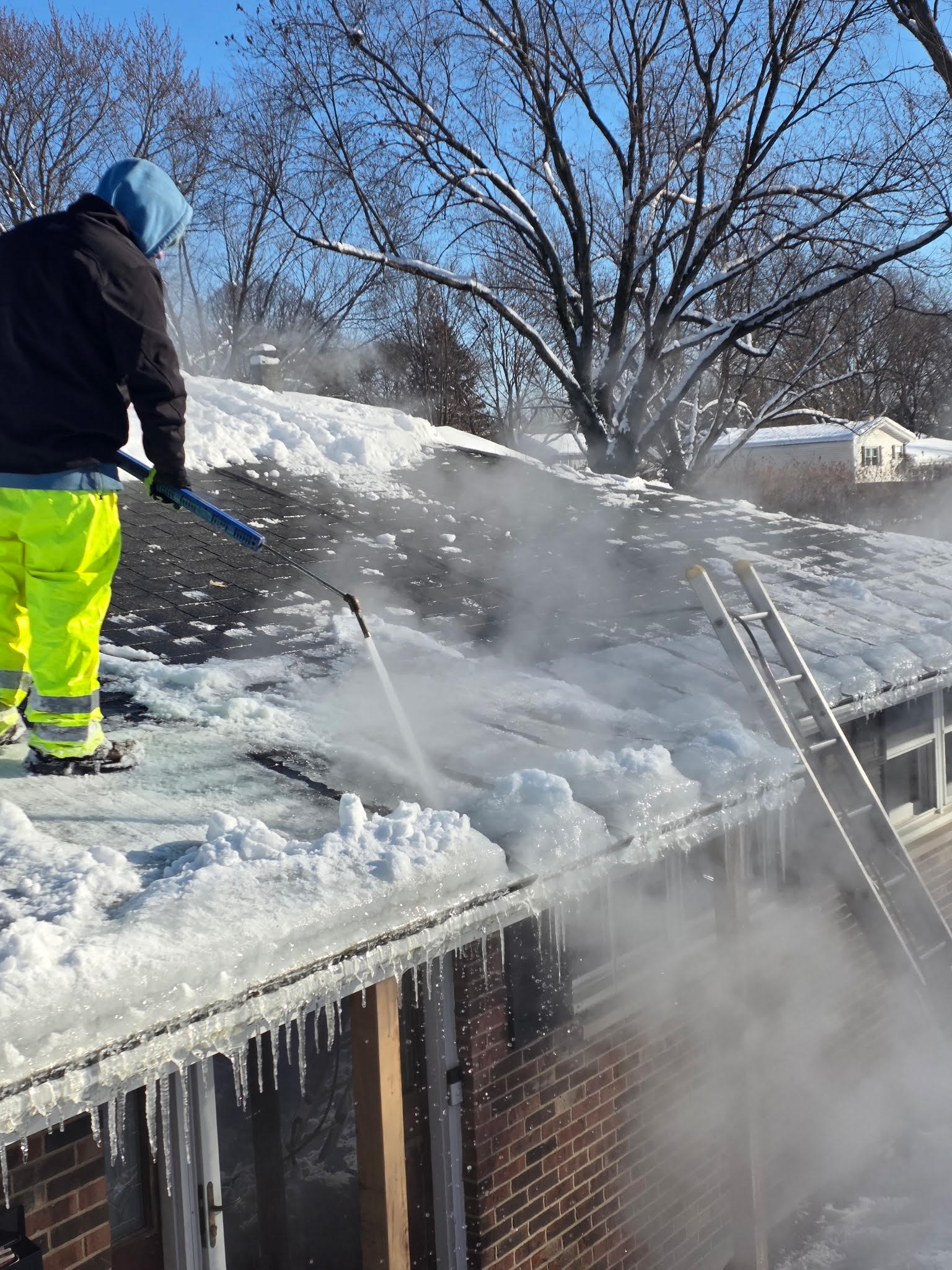
Ice Dam USA uses professional Arctic Steamers to melt accumulated ice with true low-pressure steam. Heat does the primary work rather than aggressive mechanical force.
This method differs from hot-water pressure washing, which delivers heated liquid water through a pressurized nozzle. Excessive pressure can damage roofing materials.
When appropriate, we generally recommend removing all ice from the affected problem areas instead of leaving substantial ice behind.
The final scope is discussed between the customer and technicians based on roof conditions, access, and the worksite.
No removal method is entirely risk-free. Previously damaged roofing, hidden defects, and unsafe conditions may affect the work.
What Our Technicians Evaluate
- Location and thickness of roof ice
- Roof height and slope
- Condition of shingles and flashing
- Ice buildup near valleys and dormers
- Equipment and ground access
- Falling-ice hazards
- Current temperature and wind
- Agreed scope of ice removal
Real Ice Dam USA Projects
Professional Roof Ice Removal in Action
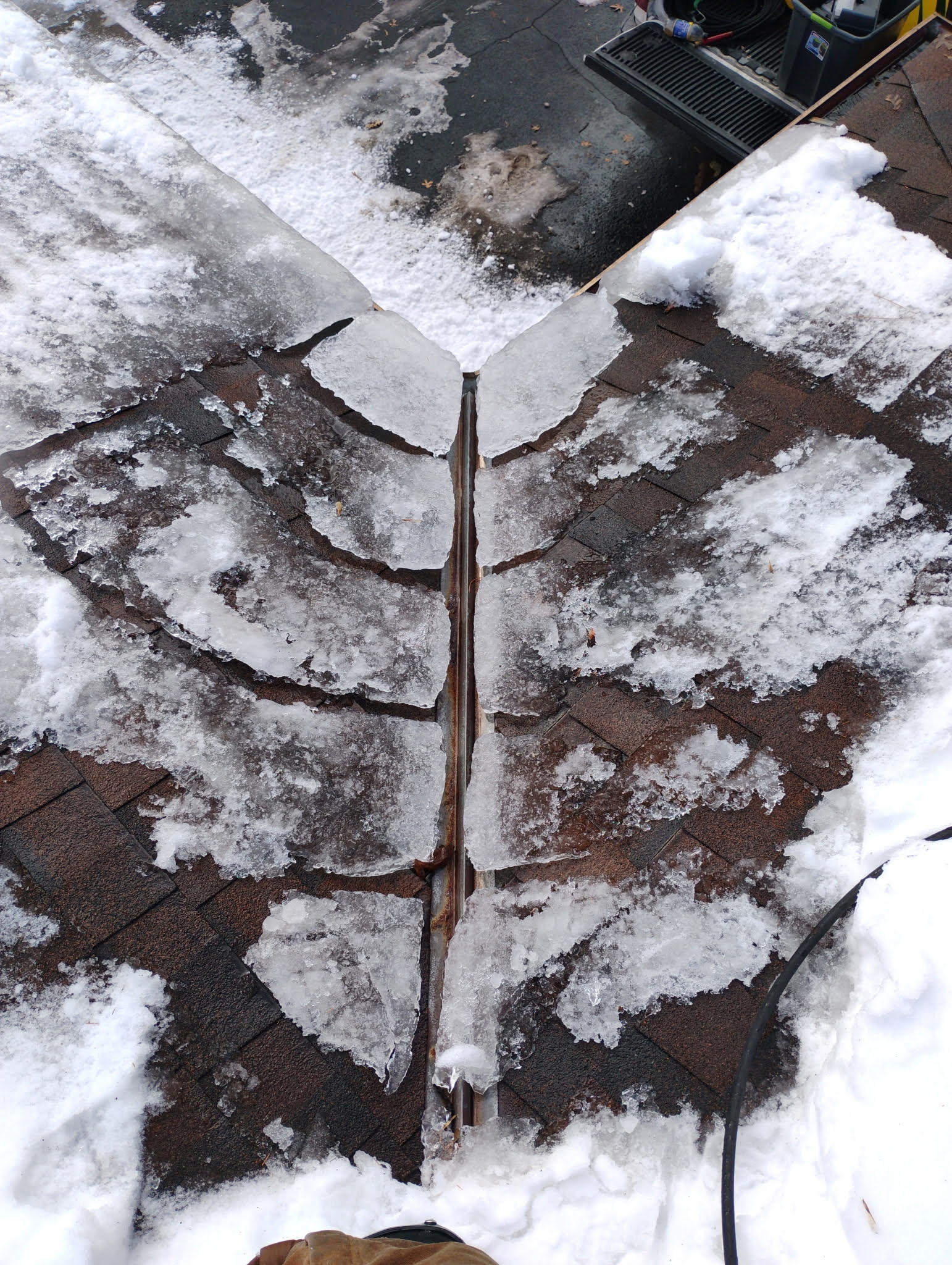
These Ice Dam USA gallery photographs illustrate professional roof ice removal work and existing ice buildup. They are not represented as Seattle projects unless their locations have been verified.
Active Winter Roof Leaks
What to Do If Water Is Leaking Into Your Seattle Home
When melting snow becomes trapped behind a roof ice dam, water may travel beneath roofing materials and into the building.
Visible moisture inside the home may not be directly beneath the place where water entered. It can travel along framing, insulation, and other building materials.
Protect People and Belongings
- Move valuables away from leaking water
- Collect dripping water when safe
- Document visible damage with photos
- Avoid wet electrical fixtures
- Stay clear of sagging ceilings
- Contact qualified help for active hazards
Avoid Dangerous Roof Work
- Do not climb an icy roof
- Avoid axes, chisels, and hammers
- Never use an open flame on roofing
- Do not pressure wash shingles
- Stay clear of falling ice
- Do not attempt repairs from icy ladders
Will ice removal stop the leak immediately? Not necessarily. Reopening a drainage path may help, but water already inside the structure or unrelated roof defects may cause continued moisture after ice removal.
Residential & Commercial Service
Ice Dam Removal for Different Seattle Properties
Single-Family Homes & Townhomes
Ice dams can develop along eaves, dormers, roof valleys, porch roofs, and additions.
For attached homes, access may be limited by narrow side yards or neighboring structures. A detailed description of the property helps with service planning.
Commercial & Managed Buildings
Larger roofs and multifamily properties may require more planning for occupied entrances, pedestrian access, roof height, and equipment placement.
Share the building's height, affected roof areas, and any access requirements when requesting service.
Current Service Pricing
How Much Does Ice Dam Removal Cost in Seattle?
What Affects Your Service Cost?
The amount of accumulated roof ice, roof height, pitch, number of affected areas, and available equipment access all influence the work.
Travel, property complexity, and requested scheduling priority can also affect the applicable service category.
We maintain current rates, minimums, booking requirements, and payment policies on one authoritative pricing page. This helps prevent outdated prices across city pages.
Review Current Pricing
Check the current rates and service policies before scheduling.
View Ice Dam Removal PricingSeattle Service Scheduling
How to Request Professional Ice Dam Removal in Seattle
Describe the Problem
Provide the property address, roof height, visible ice, and any active interior leaking or moisture.
Review the Property
Tell us about steep terrain, limited side-yard access, roof complexity, and ground-level photographs.
Discuss the Appointment
Our team reviews availability, pricing, travel considerations, and appropriate work scope.
Scheduling and safety: High winds, unsafe roof conditions, or very cold temperatures, often around or below 10°F, can require postponement. When Ice Dam USA delays work for safety, booking credit and scheduling position are preserved under company policy.
Ice Dam USA is based in Minnesota and coordinates traveling technicians for Washington service. This page does not represent a permanent Seattle office or guarantee immediate crew arrival.
Reducing Recurring Ice Dams
How Seattle Homeowners Can Reduce Future Roof Ice Problems
Steam removal addresses the ice already present. It does not permanently change the conditions that caused snow to melt and refreeze on the roof.
Attic Air Sealing
Warm interior air leaking into the attic can heat the roof deck and contribute to uneven snow melting.
Insulation Assessment
Uneven or inadequate insulation may allow more heat to reach the roof. A qualified professional can evaluate appropriate improvements.
Roof Design & Ventilation
Recurring ice near roof valleys, dormers, and shaded eaves may warrant evaluation of roof details and ventilation alongside air sealing and insulation.
Ice Dam USA specializes in removing existing roof ice. Long-term insulation, air-sealing, and roofing improvements may require other qualified contractors.
Read more in the Ice Dam Learning Center .
Seattle & King County
Seattle Ice Dam Removal Service Area
Ice Dam USA welcomes roof ice dam removal inquiries from Seattle and surrounding Puget Sound communities.
Nearby cities include Bellevue, Kirkland, Renton, Shoreline, Burien, Mercer Island, Everett, Tacoma, and Federal Way.
Service is coordinated according to crew availability, winter conditions, travel, and property access. Listing a community does not imply a permanent Ice Dam USA branch there.
The map provides geographic context, not live crew locations or guaranteed service times.
Washington Ice Dam Removal Pages
Explore Our Existing Washington Roof Ice Dam Removal Pages
The links below lead to actual service and educational pages. Nearby communities without dedicated ice dam removal pages are listed separately as non-clickable locations.
Existing Washington Roof Service Pages
Greater Seattle Service Areas
These communities do not have confirmed dedicated roof ice dam removal pages on our current Washington page inventory, so their names are intentionally not clickable.
Service-area information: These names describe places where service inquiries are welcome. They are not individual office locations or links to nonexistent city landing pages.
For a community without its own dedicated page, call 855-468-4233 to discuss service availability.
Seattle Ice Dam Removal FAQs
Questions Seattle Homeowners Ask About Winter Roof Ice
Can an ice dam form during a short Seattle snowstorm?
Yes. If enough snow accumulates to melt and then refreeze at a colder roof area, an ice dam can form even during a relatively brief winter weather event.
Why might one Seattle neighborhood have more roof ice than another?
Local elevation, shade, sun exposure, roof design, and differences in snow accumulation can change the conditions on individual properties.
Can hillside homes make ice dam removal more difficult?
Yes. A roof edge may be much higher above the ground on the downhill side of a building. Access, roof height, and equipment placement require evaluation.
Are Seattle's older homes more vulnerable to ice dams?
Some older buildings may have attic air leakage, insulation gaps, or complex rooflines. However, newer homes can also develop ice dams.
Can ice dams form around dormers and roof valleys?
Yes. These roof transitions can concentrate snowmelt. Water may refreeze where the roof surface remains cold.
Does Ice Dam USA use true low-pressure steam?
Yes. Ice Dam USA uses professional Arctic Steamers and low-pressure steam to melt existing roof ice rather than relying on aggressive chopping or high-pressure water.
Is steam removal completely risk-free?
No. The condition of the roofing, ice thickness, worksite access, and professional technique all affect the process.
Will ice dam removal immediately stop an interior leak?
Not necessarily. Removal may restore roof drainage, but moisture already inside the building or separate roof defects may require additional work.
What does ice dam removal cost in Seattle?
Cost depends on ice extent, roof configuration, building height, access, travel, and scheduling. Review the current Ice Dam USA pricing guide for rates and policies.
Can Ice Dam USA arrange expedited Seattle service?
Expedited scheduling may be available depending on crew location, demand, weather, and safe access to the property.
Should I climb onto my roof to remove ice?
No. Snowy and icy roofs present serious fall hazards. Avoid climbing onto the roof or striking ice with hammers, axes, or chisels.
Can ice dams return after professional removal?
Yes. If the underlying heat loss, roof temperature, or weather conditions remain, more ice can form later in the season.
Ice Dam USA | Seattle, Washington
Dealing With Heavy Roof Ice in Seattle?
If ice is blocking roof drainage, accumulating along eaves or valleys, or contributing to winter moisture inside your property, contact Ice Dam USA about professional steam removal.
Tell our team your address, building height, and where the ice has formed. We'll discuss available service options and current scheduling.
