
New Hampshire Ice Dam Removal.
Professional roof ice dam removal using Arctic Steamers and controlled low-pressure steam.
From the White Mountains to Manchester, Nashua and the New Hampshire Seacoast, winter roof ice can become a serious concern for homeowners and businesses.
Ice Dam USA provides professional ice dam removal using specialized Arctic Steamers. Our technicians use heat to melt existing roof ice instead of relying on aggressive chopping or high-pressure water blasting.
We welcome residential, commercial and emergency service inquiries throughout New Hampshire, subject to regional crew availability.
Why ice dams are a concern across the Granite State.
New Hampshire combines mountainous terrain, snow-prone inland communities, lakeside properties and coastal weather influences.
In the White Mountains, snow can remain on roofs for long periods. Around Manchester, Nashua and southern New Hampshire, winter storms may be followed by temperature changes that encourage melting and refreezing.
The Lakes Region brings its own challenges for seasonal homes, cabins and properties with complex rooflines.
An ice dam forms when melting snow flows toward a colder section of roof and refreezes into an obstruction.
As more water collects behind that ice ridge, it may reach vulnerable roofing joints, flashing and other openings.
A building does not need to be old or poorly maintained to develop an ice dam. Snow conditions, heat transfer and roof geometry all play a role.
Different parts of New Hampshire face different winter roof challenges.
Roof shape, insulation, snowfall and temperature patterns determine how ice dams develop on individual properties.
White Mountains & North Country
Mountain communities near Conway, Lincoln, Littleton and Berlin can experience deep snow cover, drifting and prolonged cold. Complex cabin and chalet rooflines may concentrate snowmelt near valleys.
Manchester & Nashua
Southern New Hampshire neighborhoods include older houses, multifamily buildings and newer subdivisions. Changes between daytime warming and overnight freezing can contribute to roof-edge ice accumulation.
Concord & Central NH
Inland snow accumulation, shaded roof slopes and attic heat loss can lead to recurring ice dams around eaves and dormers.
Lakes Region
Vacation properties near Lake Winnipesaukee may have steep roofs, complex dormers and periods of limited occupancy. Roof ice can develop before a leak is noticed.
Seacoast Communities
Portsmouth, Dover, Exeter and nearby coastal areas can experience mixed precipitation, winter thaws and refreezing. Older buildings may also have complicated roof intersections.
Monadnock Region
Keene and surrounding communities include historic homes, rural properties and wooded lots. Shaded rooflines can retain ice while other sections begin to melt.
How ice dams develop on New Hampshire roofs.
Snow accumulates.
Winter storms leave snow covering the roof, including valleys, eaves and dormers.
Melting begins.
Building heat, sunlight or a weather change causes snow to melt on a warmer roof section.
Water refreezes.
Meltwater moves toward colder eaves and forms a ridge of ice.
Drainage becomes blocked.
Additional water collects behind the ice ridge and may enter vulnerable roofing areas.
Why Ice Dam USA uses Arctic Steamers.
The equipment and removal technique matter when ice is attached directly to roofing materials.
Ice Dam USA uses Arctic Steamers for professional low-pressure steam removal. The purpose is to apply heat to melt the ice without relying on aggressive mechanical force against the roof.
Our technicians consider roof condition, ice thickness, building height, roof pitch and safe access before performing work.
Arctic Steamer
- Uses low-pressure steam to melt ice.
- Heat is the primary removal mechanism.
- Allows controlled treatment of ice ridges.
- Reduces reliance on chopping or prying.
- Requires careful technique near roof materials.
Hot-Water Pressure Washer
- Delivers heated water under pressure.
- Often designed primarily for cleaning.
- Aggressive pressure can damage shingles.
- Improper spray may affect vulnerable flashing.
- Is not our chosen roof ice removal method.
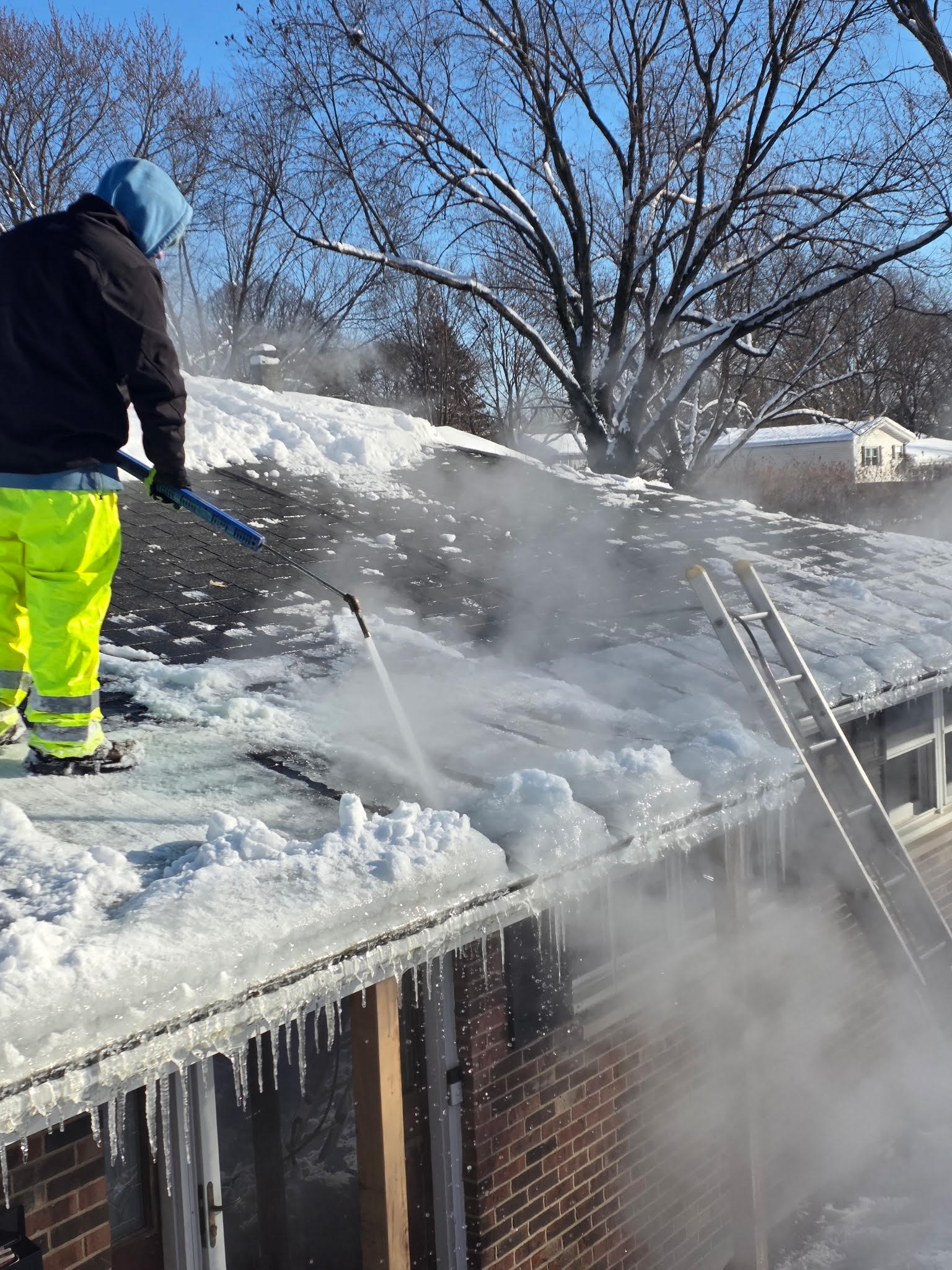
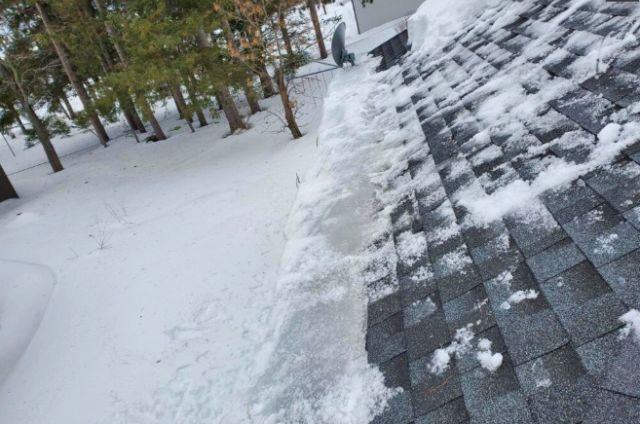
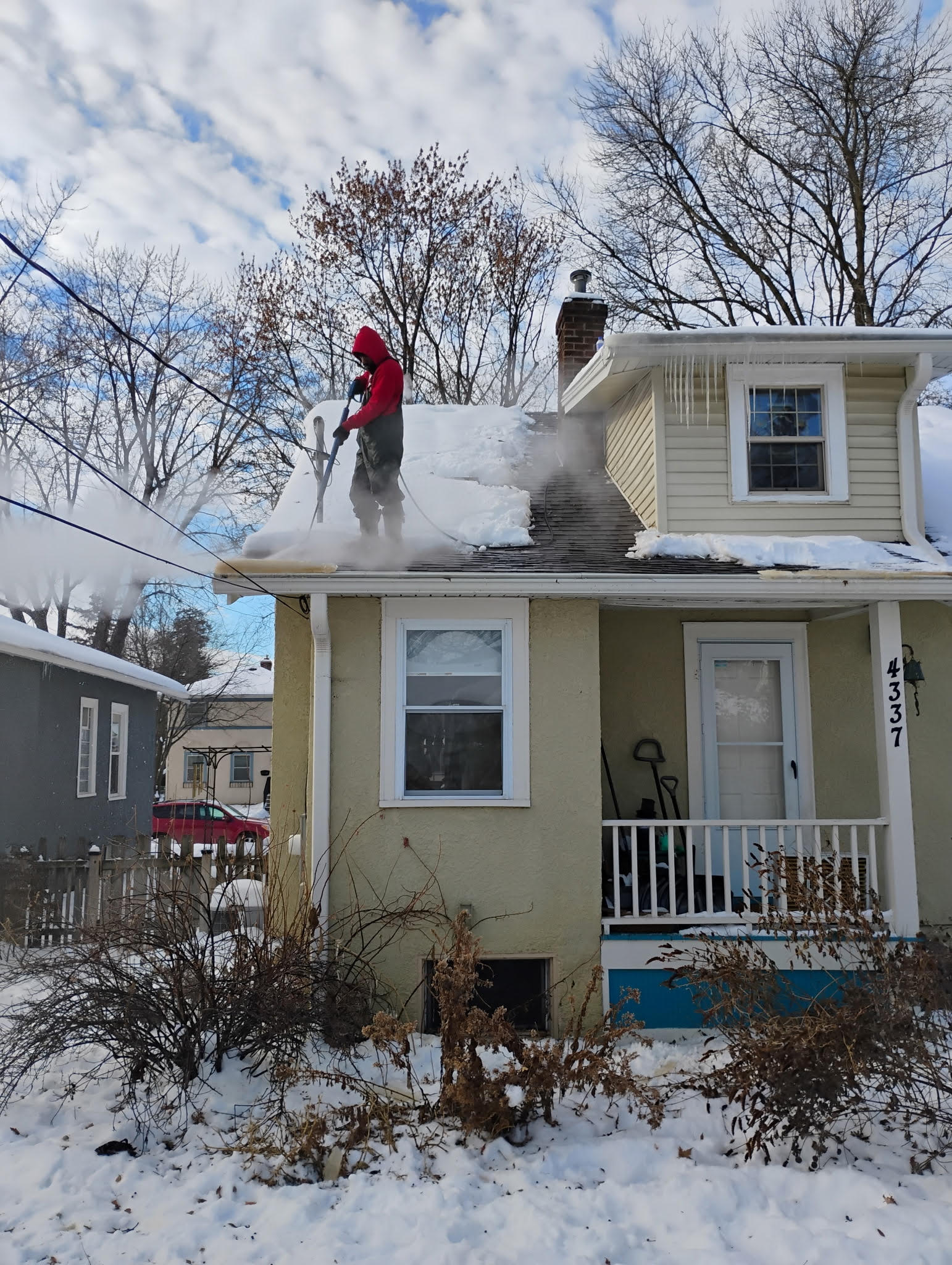
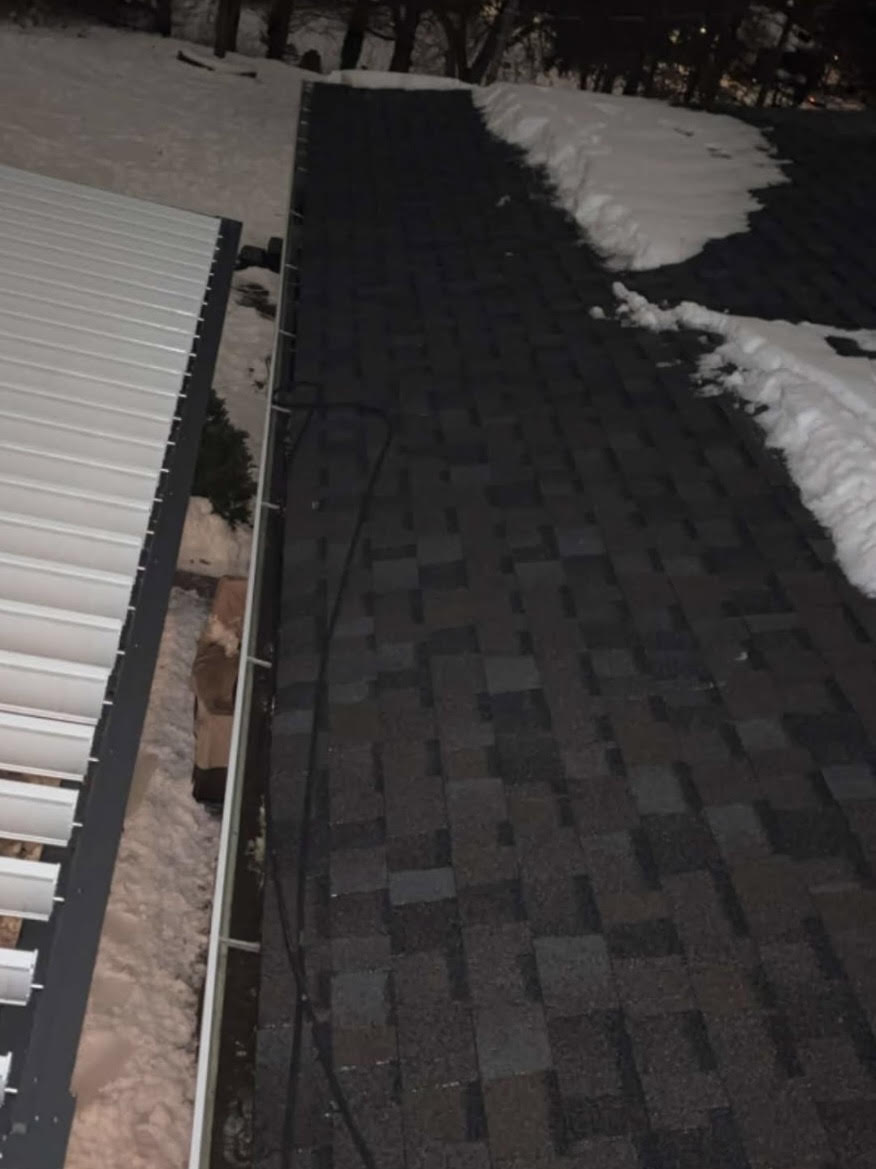
Professional roof ice removal in action.
These photographs show real Ice Dam USA projects, including steam removal, snow-covered rooflines and cleared areas. They are not presented as verified New Hampshire customer projects.
Water entering your New Hampshire home?
Ice dams can obstruct normal roof drainage. Water trapped behind a ridge may enter through vulnerable roofing details and travel through an attic, wall or ceiling.
Sometimes the first visible warning is a spreading ceiling stain rather than obvious dripping from the roof.
What homeowners should do
- Stay clear of wet electrical fixtures.
- Avoid sagging or unstable ceilings.
- Move valuables if it is safe.
- Document visible water damage.
- Do not climb onto icy roofs or ladders.
- Contact professional ice dam removal help.
Steam removal may reopen drainage pathways, but water already inside the roof structure may continue to move. Existing roofing defects may require repairs.
Tell our team about the roof.
When you contact Ice Dam USA, please provide:
- Your New Hampshire address
- Approximate building height
- Location of the visible roof ice
- Whether water is leaking indoors
- Approximate extent of ice buildup
- Known roof access limitations
Ground-level photos can be helpful. Never take unsafe risks to obtain them.
When should you be concerned about ice on your roof?
Thick ice ridges along eaves
A ridge of ice near the roof edge can obstruct water trying to drain downhill.
New ceiling or wall stains
Visible moisture may indicate water is entering through vulnerable roofing areas.
Ice concentrated in valleys
Roof valleys receive water from multiple slopes and can develop substantial localized ice.
Leaks during winter thaws
Warmer weather can produce meltwater while ice remains along colder roof edges.
Ice around dormers
Changing roof slopes and intersections can create difficult snow and ice conditions.
Recurring winter ice
Ice that returns in the same locations may suggest persistent roof heat-loss or drainage concerns.
Ice dam removal inquiries across New Hampshire.
Ice Dam USA coordinates regional service based on technician availability, winter travel and safe worksite conditions.
Our statewide service hub helps property owners understand coverage. The communities below represent areas where customers may inquire, not claims of permanent Ice Dam USA offices.
Manchester & Southern NH
Manchester-area homes, duplexes and commercial buildings can develop ice dams after accumulating snow and repeated melting and refreezing.
Nashua & Greater Nashua
Southern New Hampshire communities have a variety of roof styles, from older residential housing to large custom homes with multiple roof valleys.
Concord & Central NH
Inland winter conditions can leave snow on roofs for long periods. Heat loss, shaded slopes and complex rooflines may contribute to ice accumulation.
Seacoast & Strafford County
Coastal winter weather and older building configurations may create different challenges for removing ice from roof edges and valleys.
Lakes Region
Year-round homes, cabins and vacation properties around Lake Winnipesaukee may develop roof ice during sustained winter conditions.
White Mountains & North Country
Heavy mountain snowfall, remote properties, steep roof slopes and limited access can make professional removal particularly challenging.
Monadnock & Southwestern NH
Older homes, wooded properties and persistent inland snow cover can contribute to winter ice accumulation across the region.
Upper Valley & Western NH
The Connecticut River Valley and nearby hilly communities include residential and institutional buildings with varying roof configurations.
Professional ice dam removal for different New Hampshire buildings.
Single-family homes
Professional removal inquiries for roof edges, dormers and valleys affected by ice dams.
Historic homes
Older roofing materials and complex rooflines require assessment of condition and access.
Cabins and vacation homes
Seasonal properties may accumulate ice before a roof leak is discovered.
Duplexes and townhomes
Shared roofs and multi-story buildings may require coordinated access and planning.
Apartment properties
Multifamily work can involve multiple affected roof areas and additional safety requirements.
Commercial buildings
Commercial inquiries are evaluated according to roof design, ice conditions and safe access.
Learn more about our residential ice dam removal services .
How much does ice dam removal cost in New Hampshire?
Ice dam removal pricing depends on the ice buildup, roof conditions, equipment access, scheduling and amount of work required.
Factors affecting cost
- Building height and roof pitch
- Length and thickness of the ice dam
- Number of affected roof sections
- Complex roof valleys and dormers
- Equipment and technician access
- Weather and worksite safety
- Project duration and applicable rates
A straightforward roof edge and a steep mountain home with multiple valleys may require different amounts of time and preparation.
Our published pricing page provides current rates and service minimum information.
What should you provide for a service request?
- Your property address
- Approximate building height
- Location of roof ice buildup
- Whether water is entering indoors
- Available ground-level photographs
- Known roof access challenges
Avoid climbing onto an icy roof or ladder to obtain photos.
Contact Ice Dam USARemoving roof ice today doesn't prevent every future ice dam.
Steam removal addresses the immediate ice obstruction. Long-term prevention focuses on the conditions that allow ice to form.
Recurring ice dams may indicate uneven roof temperatures, air leakage into an attic or other building-envelope conditions.
Areas worth investigating
- Attic air sealing
- Insulation gaps and continuity
- Ventilation where appropriate
- Roof valleys and intersections
- Flashing and roofing conditions
- Recurring heat-loss patterns
Mountain cabins and vacation properties can benefit from an inspection following a winter ice dam problem, particularly when issues recur in the same roof locations.
Removal and prevention have different purposes.
Professional steam removal helps clear existing ice.
A qualified building professional can evaluate insulation, air leakage and roof details to identify possible recurring causes.
Correcting the cause may help reduce the likelihood of future ice buildup.
Visit Our Ice Dam Learning CenterWhat happens when you contact Ice Dam USA?
Describe the problem.
Tell our team your address, roof conditions, ice buildup and whether water is entering your property.
Review availability.
We discuss regional crew scheduling, weather conditions, safe access and applicable service requirements.
Coordinate removal.
When service is scheduled, technicians review site conditions and perform the agreed work where safe.
New Hampshire ice dam removal FAQs.
Does Ice Dam USA provide ice dam removal in New Hampshire?
Yes. Ice Dam USA welcomes service inquiries throughout New Hampshire. Scheduling depends on regional crew availability, weather and safe access.
What equipment does Ice Dam USA use?
We use professional Arctic Steamers for low-pressure steam roof ice dam removal.
Can roof ice dams form during freezing temperatures?
Yes. Heat moving through a building can warm portions of the roof enough to melt snow even while outside temperatures remain below freezing.
Why do White Mountains homes develop thick ice?
Deep snow cover, roof geometry, heat loss and extended winter conditions can contribute to persistent ice accumulation.
Are older New Hampshire homes more vulnerable?
Some older buildings have uneven attic insulation or air leakage that may contribute to snowmelt. Newer homes can also develop ice dams.
Do ice dams form on roofs without gutters?
Yes. A roof ice dam is a ridge of ice that obstructs meltwater drainage. Gutters are not required for one to form.
Are icicles always evidence of an ice dam?
No. Icicles can appear without a significant roof ice dam. The concern is whether ice is preventing water from draining normally.
Is low-pressure steam safe for shingles?
Steam reduces reliance on chopping and aggressive high-pressure spray. However, roof condition, operator technique and access matter. No method is entirely risk-free.
Can ice dams damage ceilings and walls?
Yes. Water trapped behind roof ice may reach vulnerable roofing openings and travel into insulation, walls or ceilings.
Do you offer emergency ice dam removal?
We accept urgent service inquiries, including active roof leak situations. Actual response depends on available technicians and working conditions.
Will removing the ice immediately stop a roof leak?
Not necessarily. Removing the obstruction can help restore drainage, but water already inside a roof assembly may continue moving. Roof repairs may also be needed.
How much does professional ice dam removal cost?
Cost depends on ice thickness, building height, accessibility, time required and applicable service rates. See our current pricing guide.
Will homeowners insurance pay for ice dam damage?
Coverage varies by policy and circumstances. Some policies cover certain resulting damage, but removal expenses may be treated differently. Contact your insurer for a policy-specific determination.
Can you remove ice dams on commercial properties?
We welcome commercial and multifamily service inquiries. Each project is evaluated according to roof design, ice conditions, access and worksite safety.
How do I request New Hampshire ice dam removal?
Call 855-468-4233 or use our contact page. Provide your address, roof conditions and details of any active leaks.
Learn more about roof ice dams and professional steam removal.
The following resources explain our removal equipment, emergency help, pricing and ways to reduce future ice dam problems.
