
Grand Rapids | Kent County | West Michigan
Grand Rapids MI Ice Dam Removal
Professional low-pressure steam ice removal for heavy winter roof ice, frozen valleys and active leaks.
Grand Rapids winters can deliver significant snow accumulation, including lake-effect snow that moves inland from Lake Michigan. When roof snow melts and refreezes at colder eaves, thick ice dams can develop and block drainage.
Ice Dam USA uses specialized Arctic Steamers to melt accumulated roof ice with true low-pressure steam. Our method focuses on heat rather than aggressive chiseling or high-pressure water washing.
We're family-owned, bonded and insured with more than 30 years of family experience. We welcome inquiries from Grand Rapids homeowners, landlords, multifamily property managers and commercial businesses throughout Kent County and West Michigan.
Why Grand Rapids Roofs Develop Heavy Ice Dams
Grand Rapids is located east of Lake Michigan, where lake-effect snowfall can reach the city during favorable winter weather conditions. Repeated snow accumulation can leave substantial snow cover on roofs for extended periods.
Snow itself does not create an ice dam. The problem begins when snow melts on a warmer section of roof and the water refreezes at a colder eave.
Heat leaking from the living space into the attic can warm roof decking enough to melt snow, even if outdoor air remains below freezing. That runoff travels downward until it reaches a roof overhang with little heat from below.
Over time, the frozen ridge can become large enough to trap water behind it. Water that finds vulnerable roofing may reach the attic, insulation, ceilings or walls.
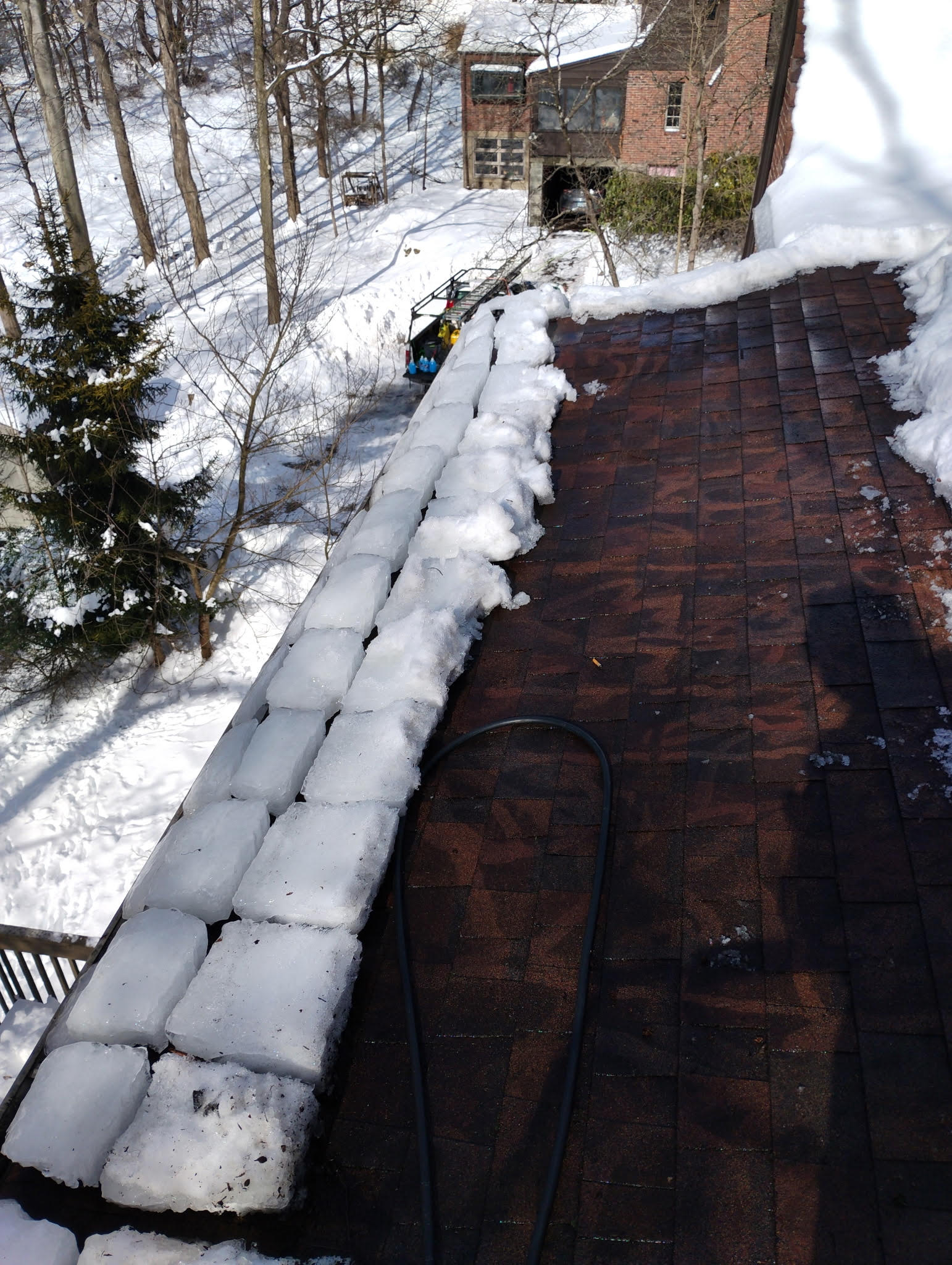
Deep Snow Can Hide the Ice Dam
A frozen ridge may be difficult to see if heavy snow remains along the roof edge. The ice may continue growing as additional runoff moves beneath the snowpack and reaches the cold eave.
This is one reason a Grand Rapids roof can develop an active leak while the exterior still appears mostly snow-covered.
Not every leak comes from an ice dam. Roofing defects, damaged flashing and other moisture sources may produce similar symptoms.
Grand Rapids Roof Ice Problem Areas
Attached Garage Roofs
Runoff from the main living-area roof can refreeze on a lower garage roof or along its colder eave.
Roof Valleys
Two roof slopes direct water toward one valley. A frozen obstruction can affect drainage from both adjoining surfaces.
Dormers and Additions
Roof intersections may collect snow and runoff around flashing that becomes concealed by thick ice.
Commercial Entrances
Heavy hanging ice above storefront doors, walkways and loading areas can create a hazard even without an interior leak.
Interactive: What Ice Problem Is Affecting Your Property?
Select the condition you recognize to explore what may be happening.
Grand Rapids Winter Roof Guide
Melting water may be trapped behind an ice ridge at the colder eave. Avoid climbing onto the roof or striking the ice.
Professional roof ice removal.Roof valleys collect runoff from two slopes. Ice may cover flashing, so aggressive removal can damage hidden materials.
Discuss the affected valley.Ice inside gutters or downspouts is a different condition from a roof-surface ice dam. Some properties have both problems.
Grand Rapids Gutter Ice Removal.Water may be backing up behind ice or entering through another roofing defect. Avoid wet electrical fixtures and unstable ceilings, and seek prompt professional assistance.
Emergency removal information.This interactive is educational and cannot replace an inspection of the affected roof.
Arctic Steamers vs. Hot-Water Pressure Washers
Ice Dam USA uses specialized low-pressure steam equipment because roof ice removal takes place close to shingles, flashing, gutter attachments and other materials that can be damaged by excessive force.
An Arctic Steamer transfers heat into the ice through steam. A hot-water pressure washer delivers heated liquid water under pressure. Both methods use heat, but they do not apply that heat in the same way.
| Comparison | Arctic Steamer | Hot-Water Pressure Washer |
|---|---|---|
| What comes out | High-temperature steam | Heated liquid water |
| Removal method | Controlled melting through heat | Heated liquid-water spray |
| Pressure consideration | Low-pressure application | Pressure varies by machine and setting |
| Roof material concern | Reduced dependence on aggressive force | Excessive pressure can disturb shingles or flashing |
| Used by Ice Dam USA | Yes | No |
Why True Low-Pressure Steam Matters
Heavy roof ice may cover flashing, shingle edges and areas where different roof sections meet. Chipping can strike hidden materials, while a high-pressure spray can damage vulnerable roofing.
Professional steam works through the ice using heat rather than depending on impact. The technician must still evaluate the roof's existing condition, height, pitch and safe access.
Steam does not guarantee that damaged roofing will be repaired, and no removal technique is entirely risk-free.
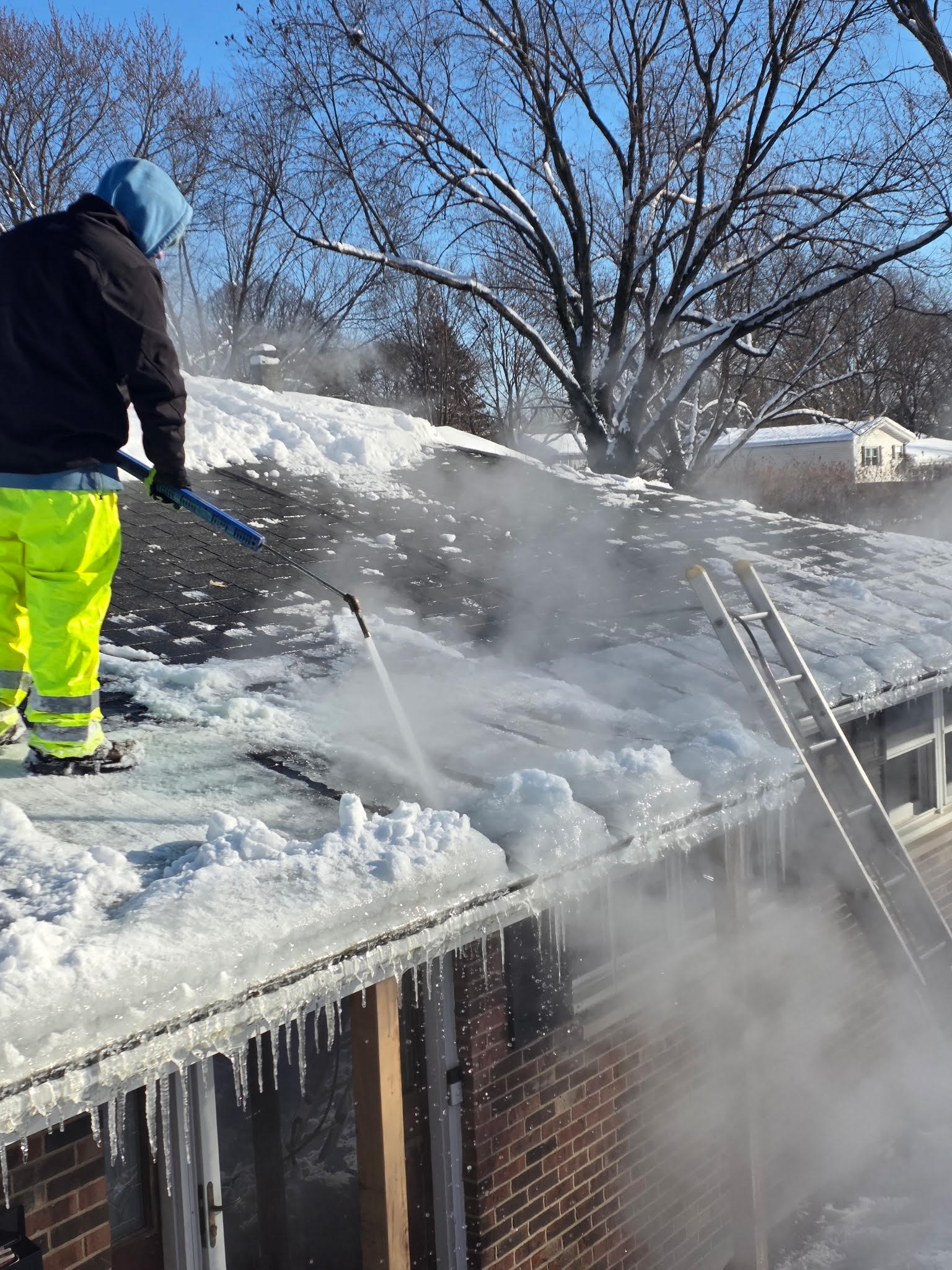
Professional Ice Dam Removal for Homes and Businesses
Residential Properties
Roof-edge ice, attached garages, dormers, porches and winter leaks in single-family homes.
Apartments and Condominiums
Shared rooflines, multiple occupied units and entrances that require coordinated access.
Commercial Buildings
Roof ice around higher elevations, business entrances, loading areas and complex drainage systems.
How the Ice Dam Removal Process Works
Tell Us About the Ice
Provide the Grand Rapids-area address, approximate roof height, affected roof sections and whether water is actively entering.
Review Access and Roof Conditions
Roof pitch, ice thickness, snow cover, weather and areas below the roofline influence the work.
Melt Ice With Professional Steam
Arctic Steamer equipment is used to work through affected ice where safe and help open blocked drainage paths.
Evaluate Remaining Damage and Causes
Existing roofing defects, water damage and recurring heat-loss problems may need separate repairs or improvements.
How Much Does Ice Dam Removal Cost in Grand Rapids?
The amount of ice, roof height, complexity, accessibility, travel and scheduling priority all affect service. Ice Dam USA maintains published rates and service minimums on its ice dam removal cost page.
Contact our team with your address and roof details to discuss current availability.
Ice Dams vs. Frozen Gutters in Grand Rapids
Lake-effect snow and repeated freezing can affect both the roof surface and the gutter drainage system. However, these are different problems.
Ice Dam on the Roof
A frozen ridge forms on the roofing and blocks meltwater from draining normally. Water may collect behind it and enter vulnerable roofing details.
Ice Inside the Gutter
Ice forms within the gutter trough or downspout, preventing water from leaving the drainage system. Overflow and added weight are common concerns.
These conditions may develop together, but they require an accurate understanding of where the ice has accumulated. Learn more at our dedicated Grand Rapids Gutter Ice Removal page.
Why Ice Dams May Return Next Winter
Ice dam removal addresses the accumulated ice but does not necessarily correct what caused roof snow to melt. Repeated ice buildup may indicate attic heat leakage, insulation gaps, inadequate ventilation design or roof drainage issues.
Air sealing and appropriate insulation can help reduce warm-air movement into the attic. Roof valleys, dormers and additions may also create recurring drainage patterns that deserve evaluation.
See the Ice Dam USA Learning Center for additional information about roof ice formation and prevention.
Grand Rapids and Surrounding Kent County Service Areas
We welcome inquiries from Grand Rapids, East Grand Rapids, Wyoming, Kentwood, Walker, Grandville, Rockford, Hudsonville and surrounding West Michigan communities. Contact us to confirm coverage and current scheduling.
Grand Rapids Michigan Service Area Map
Explore Grand Rapids and surrounding Kent County communities, including nearby cities throughout the metropolitan area.
Grand Rapids Ice Dam Removal FAQs
Can lake-effect snow contribute to ice dams?
Yes. Heavy snow increases the amount of snow on the roof, but ice dams form when melting water refreezes along colder roofing.
Can a roof ice dam form without gutters?
Yes. Ice dams form on the roof surface and do not require gutters.
Why is ice worse along some roof valleys?
Valleys concentrate runoff from adjoining slopes. A frozen outlet can obstruct drainage over a larger area.
What equipment does Ice Dam USA use?
We use specialized Arctic Steamers for professional low-pressure steam ice dam removal.
How is true steam different from a pressure washer?
Steam melts ice primarily through heat at low pressure. A hot-water pressure washer delivers heated liquid water through a pressurized nozzle.
Can ice dams damage shingles and flashing?
Trapped water may reach vulnerable roofing details, while forceful removal attempts may also damage concealed materials.
Will removal immediately stop a ceiling leak?
Not necessarily. Removing ice may restore drainage, but water already inside the roof assembly may continue moving and other roofing defects may remain.
Do you remove ice dams from commercial properties?
Yes. Ice Dam USA welcomes commercial and multifamily inquiries, with service planning based on roof conditions and access.
Do you also provide gutter ice removal?
Yes. See our dedicated Grand Rapids gutter ice removal page for more information about frozen gutters and downspouts.
Does Ice Dam USA accept Grand Rapids service requests?
Yes. Contact us to discuss current availability in Grand Rapids and surrounding areas.
