
Holland Michigan | Ottawa and Allegan Counties
Holland MI Ice Dam Removal
Professional ice dam removal using true low-pressure steam and specialized Arctic Steamers.
Holland winters can produce significant lake-effect snowfall, frozen roof valleys, and thick ice buildup around eaves. When melting snow refreezes at the roof edge, water can become trapped behind the ice, potentially leading to leaks, damaged insulation, and costly interior repairs.
Ice Dam USA uses specialized Arctic Steamers to remove ice through heat instead of aggressive water pressure. Our family-owned, bonded and insured company brings more than 30 years of family experience to winter roof problems across the northern United States.
From homes near Lake Macatawa to residential neighborhoods, seasonal properties, and commercial buildings throughout Holland, contact our team to discuss professional ice dam removal and current availability.
Why Holland Homes Develop Ice Dams
Holland sits near Lake Michigan and Lake Macatawa, where lake-effect snow can move inland during favorable winter wind conditions. Repeated snowfall can leave roofs covered for extended periods, especially in shaded areas and roof valleys.
Ice dams develop when snow melts on a warmer portion of the roof and the resulting water reaches a colder eave. The water freezes into a ridge. As additional water flows downhill, that ridge can prevent normal drainage.
Snow collects on the roof
Winter storms leave snow around eaves, dormers, valleys, and lower roof sections.
Heat causes snow to melt
Warm air escaping through the attic, sunlight, or changing weather can warm roof surfaces beneath the snow.
Water reaches the cold overhang
Roof edges often remain colder because they extend beyond the heated portion of the building.
An ice ridge begins to grow
Repeated refreezing creates an obstruction that can trap future snowmelt.
Trapped water finds vulnerable roofing
Water may reach gaps near shingles, flashing, or other roof details and eventually enter the building.
Roof Ice Conditions Around Holland and Lake Macatawa
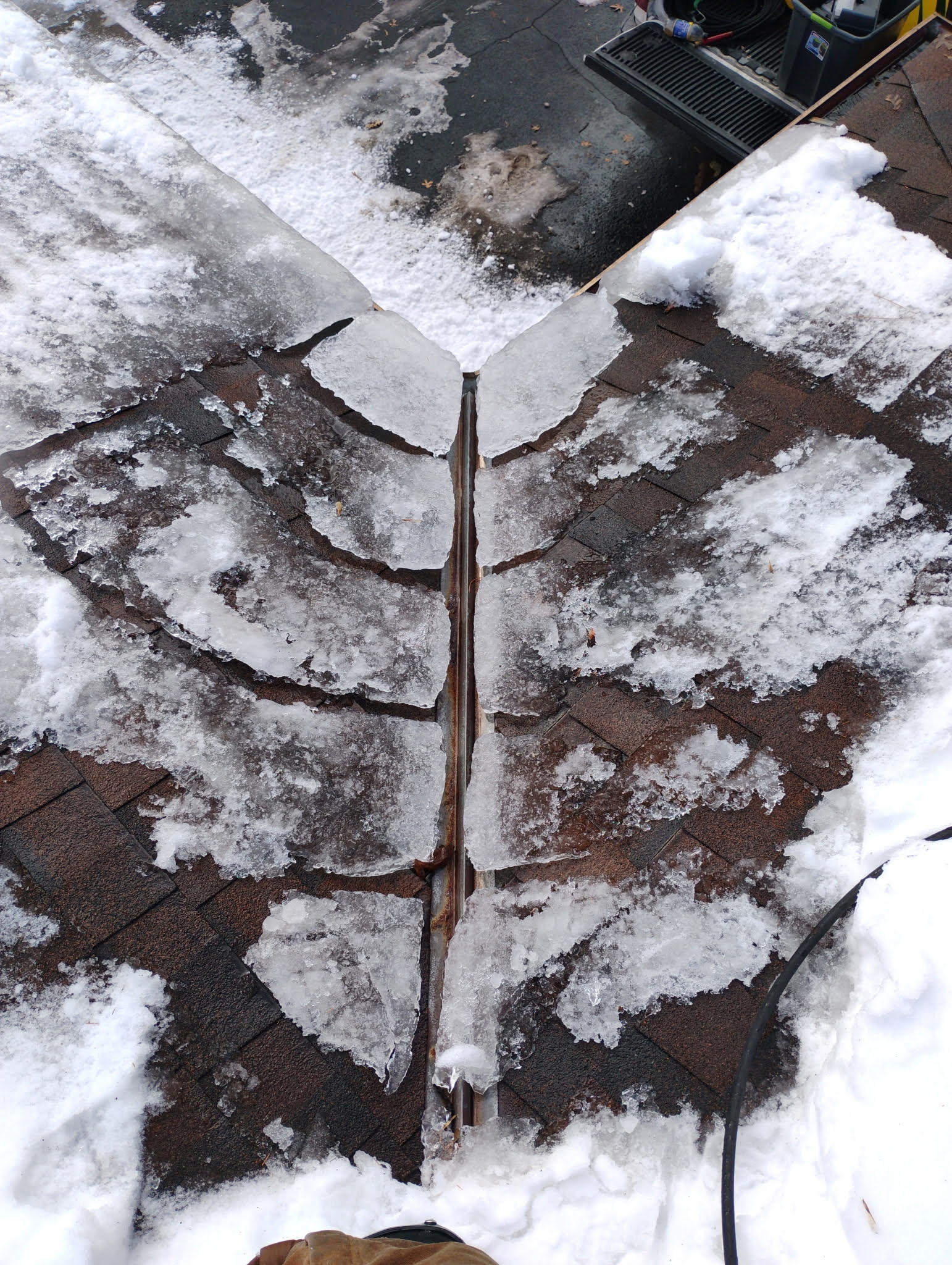
Snow and Ice Can Concentrate in Roof Valleys
Holland homes with several gables, dormers, or attached additions often have roof valleys that channel water from multiple slopes.
When ice develops near the bottom of a valley, runoff from a larger section of the roof can become restricted. Thick ice may also conceal flashing and other materials that could be damaged by chiseling.
Lake-effect snow can make this more challenging by repeatedly adding new accumulation before existing ice has fully melted.
Homes Near Lake Macatawa
Wind exposure, roof orientation, and shading can produce uneven snow accumulation. Protected roof sections may retain snow after exposed slopes begin clearing.
Historic Holland Neighborhoods
Older homes may have enclosed porches, dormers, and additions. These roof connections can create concentrated runoff and recurring ice buildup.
Attached Garage Roofs
A lower garage roof may remain colder than the main house. Meltwater from the upper roof can freeze again at the transition or along the garage eave.
Commercial and Rental Buildings
Heavy ice above occupied entrances or sidewalks creates a falling-object hazard. Shared rooflines can also complicate tracing interior leaks.
Arctic Steamer vs. Hot-Water Pressure Washer
Not every machine used for removing ice dams operates the same way. The difference between true steam and heated liquid water matters when a technician is working around shingles, flashing, gutters, and roof edges.
Arctic Steamer
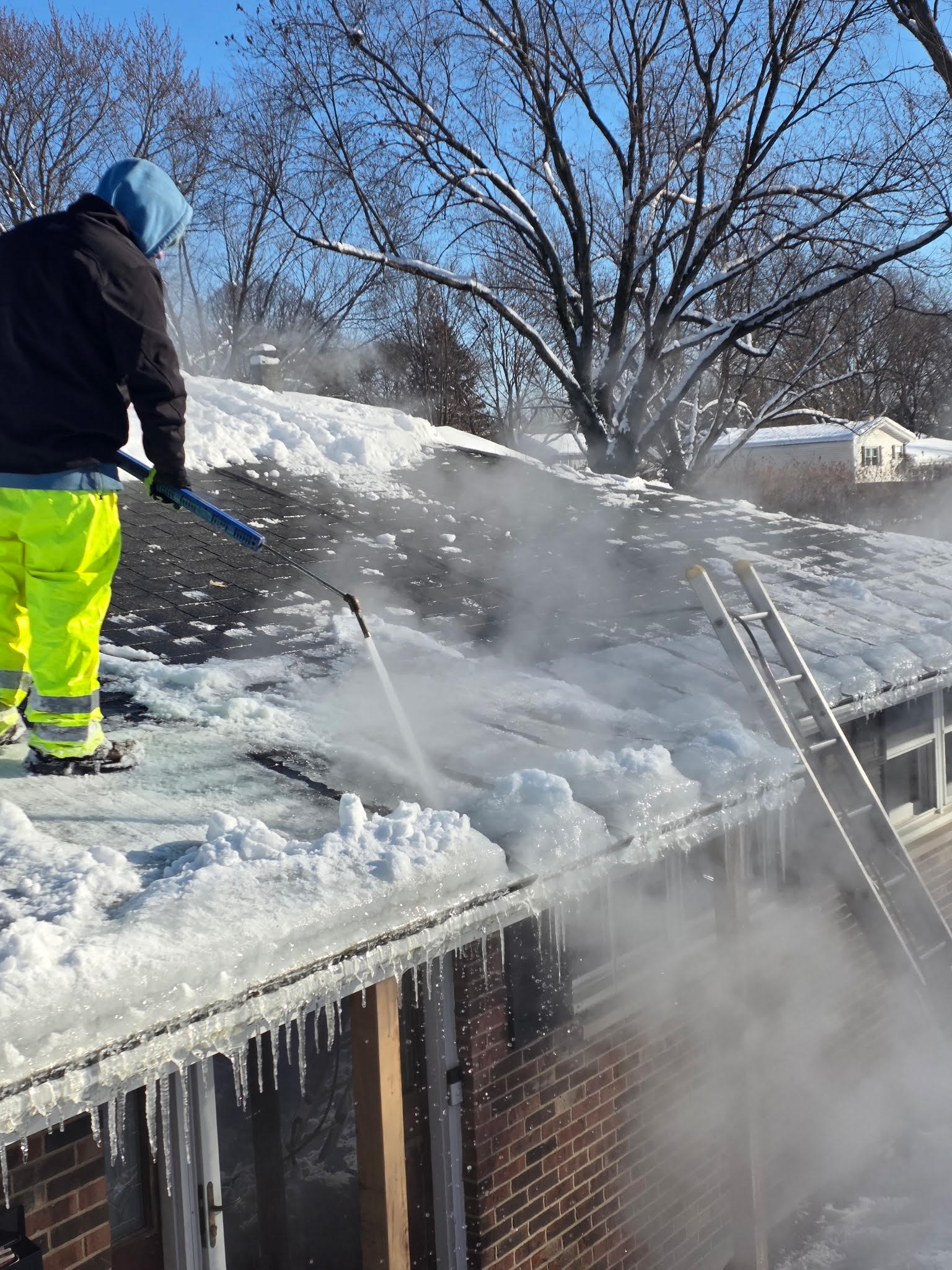
Our specialized steam equipment uses high-temperature, low-pressure steam to transfer heat into accumulated ice.
The goal is to melt the ice and restore drainage without relying on aggressive chopping or high-pressure water striking the roof.
Heat is the primary removal method.
Hot-Water Pressure Washer
A hot-water pressure washer delivers heated liquid water through a pressurized spray nozzle.
Depending on the equipment and technique, concentrated spray force can disturb shingles, loosen protective granules, or damage vulnerable flashing and gutter components.
Forceful spray can increase roofing risks.
| Comparison | Arctic Steamer | Hot-Water Pressure Washer |
|---|---|---|
| Primary output | High-temperature steam | Heated liquid water |
| Removal approach | Melts ice primarily through heat | Uses heated water and nozzle-delivered spray |
| Pressure | Low-pressure application | Pressure varies by machine and setting |
| Roofing consideration | Reduces the need for aggressive force | Excessive force can damage roofing materials |
| Ice Dam USA's method | Yes | No |
Why Equipment Choice Matters
Ice often hides the shingles, seals, and flashing underneath it. When someone attempts to break the ice away with a hammer, chisel, or forceful spray, those concealed materials can be damaged.
Low-pressure steam allows a technician to work through the frozen buildup using heat instead of depending on mechanical force.
Roof pitch, ice thickness, existing damage, and working conditions still matter. Professional steam removal requires experienced handling and is not completely risk-free.
Can a pressure washer damage asphalt shingles?
Yes. Excessive water pressure can dislodge granules, disturb shingle edges, or affect flashing and roof penetrations. The risk depends on nozzle choice, distance, pressure, and existing roofing condition.
Does hot water automatically mean the equipment produces steam?
No. Heated liquid water and steam are not the same output. A hot-water pressure washer may produce visible vapor, but its cleaning action still involves liquid water delivered under pressure.
Is low-pressure steam appropriate for every roof?
Every roof requires evaluation. Material condition, ice thickness, access, working height, and weather can affect how removal is performed.
Interactive: What Type of Roof Ice Do You Have?
Choose the condition that best matches your situation. The guide will explain what may be happening and which service to explore.
Identify Your Roof Ice Problem
Select one of the following conditions.
A solid ridge at the eave may be trapping meltwater higher on the roof. This can occur even when no interior water damage is visible yet.
Avoid chopping the ice or standing beneath unstable formations.
Water may be freezing inside the gutter or downspout instead of draining through the system.
Gutter ice and roof ice dams can occur together, but they are different conditions.
Roof valleys collect water from adjoining slopes. Heavy ice in a valley may restrict runoff and conceal flashing underneath.
Do not use hammers or chisels against roofing materials hidden beneath ice.
Water may be trapped behind an ice dam, but other roofing defects can produce similar leaks.
Avoid wet electrical fixtures and sagging ceilings. Keep people away from unsafe areas.
This interactive provides general guidance. A roof problem cannot be diagnosed conclusively from symptoms alone.
Why Your Ceiling May Leak Far From the Ice Dam
A common misconception is that a leak must appear directly beneath the roof ice.
Water trapped behind an ice dam can travel beneath roofing materials, along roof decking, through attic insulation, and against framing before it becomes visible inside.
For example, a Holland home may have ice concentrated above an attached garage, but moisture may appear near a ceiling or wall farther inside the building.
If water is actively entering the building, contact Ice Dam USA's emergency removal service to discuss the situation.
What Happens During Professional Ice Dam Removal?
1. Describe the Problem
Tell our team where the ice is forming, whether water is entering, the number of stories, and the property address. Photos taken safely from the ground can help.
2. Review the Roof Conditions
Roof pitch, ice thickness, roof height, accessibility, and weather are considered before removal work.
3. Apply Low-Pressure Steam
Our specialized equipment melts ice in controlled sections, helping open drainage paths without relying on aggressive chopping.
4. Restore Drainage
The focus is removing ice from affected areas so trapped meltwater can drain more normally as conditions allow.
How Much Does Ice Dam Removal Cost in Holland?
Ice Dam USA's published pricing separates standard service from emergency, expedited, and complex work. Rates depend on roof height, roof pitch, accessibility, travel, ice thickness, and scheduling priority. Both service categories have a three-hour minimum.
Review our current ice dam removal pricing guide for hourly rates, minimum charges, and additional factors that affect cost.
How to Reduce the Chances of Ice Dams Returning
Removing today's ice dam does not necessarily prevent a new one from developing. Repeated ice often involves differences in roof temperature and snowmelt patterns.
Attic Air Sealing
Warm indoor air escaping through ceiling penetrations can heat roof decking. Identifying and sealing those pathways may reduce uneven melting.
Insulation Improvements
Uneven or insufficient insulation can allow heat to reach roofing materials. A qualified insulation professional can evaluate attic conditions.
Ventilation Assessment
Proper attic ventilation may support a more consistent roof temperature, but ventilation alone is not a substitute for air sealing and insulation.
Roof and Drainage Design
Roof valleys, dormers, attached garages, and cold lower roof sections can produce recurring ice concentrations that warrant closer evaluation.
Explore our Ice Dam Learning Center for more information about ice dams and prevention.
Holland and Nearby West Michigan Service Areas
Ice Dam USA welcomes service inquiries from Holland, Holland Township, Park Township, Zeeland, Saugatuck, Douglas, and neighboring Ottawa and Allegan County communities.
We also serve customers throughout the broader West Michigan region, subject to current crew availability and property access conditions.
Holland Michigan Service Area Map
Explore Holland, Lake Macatawa, and surrounding West Michigan communities. Contact us to confirm current ice dam removal coverage for your property.
Holland Ice Dam Removal FAQs
Does Ice Dam USA accept ice dam removal requests in Holland?
Yes. Contact our team to confirm current availability for your Holland property.
Can lake-effect snow contribute to roof ice dams?
Yes. Repeated snowfall can keep roofs covered, but ice dams develop when melting water refreezes at colder roofing.
Why is my roof leaking when it is below freezing?
Heat escaping through the attic can melt snow against the roof decking. That water may become trapped behind an ice ridge and enter vulnerable roofing details.
Can ice dams form without gutters?
Yes. Ice dams are frozen ridges that form on the roof itself and do not require gutters.
Does Ice Dam USA use pressure washers?
Ice Dam USA uses specialized low-pressure steam equipment for professional steam ice dam removal rather than relying on aggressive high-pressure washing.
Can ice dams damage roof shingles?
Trapped water may enter through vulnerable roofing areas, while aggressive attempts to break ice loose can damage shingles, flashing, or other roofing components.
Can you remove ice dams from commercial buildings?
Yes. Ice Dam USA welcomes commercial service inquiries, including apartment buildings, managed properties, businesses, and larger facilities.
Will insurance pay for ice dam damage?
Coverage varies by insurance policy and the circumstances of the loss. Contact your insurance company to confirm what may be covered and what documentation is needed.
Will removing an ice dam prevent it from returning?
Not necessarily. Roof heat loss, insulation problems, shading, and roof drainage conditions can allow new ice dams to form after removal.
