
Cheboygan County | Lake Huron and Inland Waterway
Cheboygan MI Ice Dam Removal
Cheboygan winters can create frozen roof edges, roof valley ice, and thick ice dams around lower roof sections. When snowmelt becomes trapped behind the ice, water can reach vulnerable shingles or flashing and contribute to winter roof leaks.
Ice Dam USA uses specialized Arctic Steamers and true low-pressure steam for professional roof ice removal. We're a family-owned, bonded and insured company with more than 30 years of family experience.
Contact us about ice dam removal for Cheboygan homes, seasonal cottages, river-area properties, and commercial buildings.
Roof Ice Near Lake Huron and the Cheboygan River
Cheboygan is located near Lake Huron and the Cheboygan River, along the eastern end of Northern Michigan's Inland Waterway. Snowfall, winter winds, and periods of freezing weather can produce ice buildup on roofs throughout the area.
Ice dams form when melting roof snow refreezes at colder eaves. Heat from the building may cause melting underneath the snowpack even when outdoor air temperatures remain below freezing.
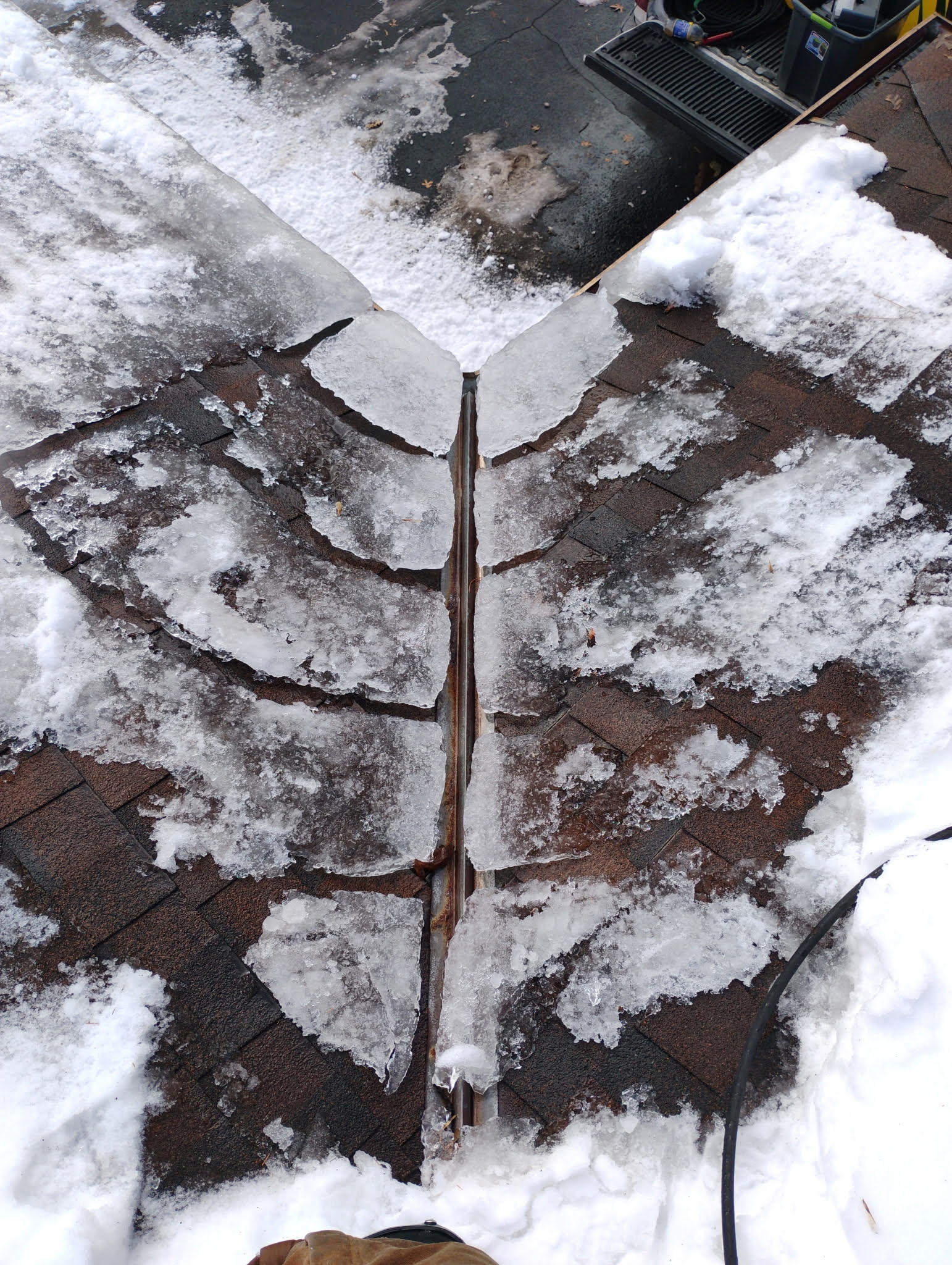
Roof Ice Risks Around Cheboygan
Riverfront and Seasonal Homes
Roof orientation, shading, and limited winter occupancy can affect how snow remains and how quickly a leak is discovered.
Attached Garages and Porches
Runoff from the upper roof can refreeze on a colder lower section or near the roof-to-wall connection.
Dormers and Roof Valleys
Multiple roof intersections can collect snow and funnel runoff into concentrated areas. Ice may conceal flashing.
Commercial Entrances
Heavy icicles over doorways or public walkways can become falling-object hazards even without an interior leak.
Cheboygan Roof Ice Warning Signs
Water is entering the ceiling
An ice dam may be trapping runoff, but damaged roofing can cause similar leaks. Avoid wet electrical fixtures and unstable ceilings. Contact our emergency removal team about active water intrusion.
There is a solid ice ridge along the roof edge
A frozen ridge can block additional meltwater. Avoid prying or breaking ice against hidden shingles and flashing.
Gutters and downspouts are completely frozen
Frozen gutters differ from ice dams forming on the roof surface. Review gutter ice removal.
Icicles hang over a cottage entrance
Keep people clear of the area below. Large pieces of hanging ice can fall without warning.
Ice returns to the same roof section each winter
Repeated buildup may indicate roof heat loss, insulation gaps, or drainage patterns. Removing existing ice does not correct all possible causes.
Arctic Steamers Instead of Hot-Water Pressure Washers
Our Arctic Steamers use true low-pressure steam to melt accumulated ice through heat transfer. Hot-water pressure washers deliver heated liquid water under force and can damage roofing materials if used aggressively.
Our removal approach accounts for roof height, pitch, ice thickness, material condition, and safe access. Steam may help restore drainage but does not repair existing roof defects or interior water damage.
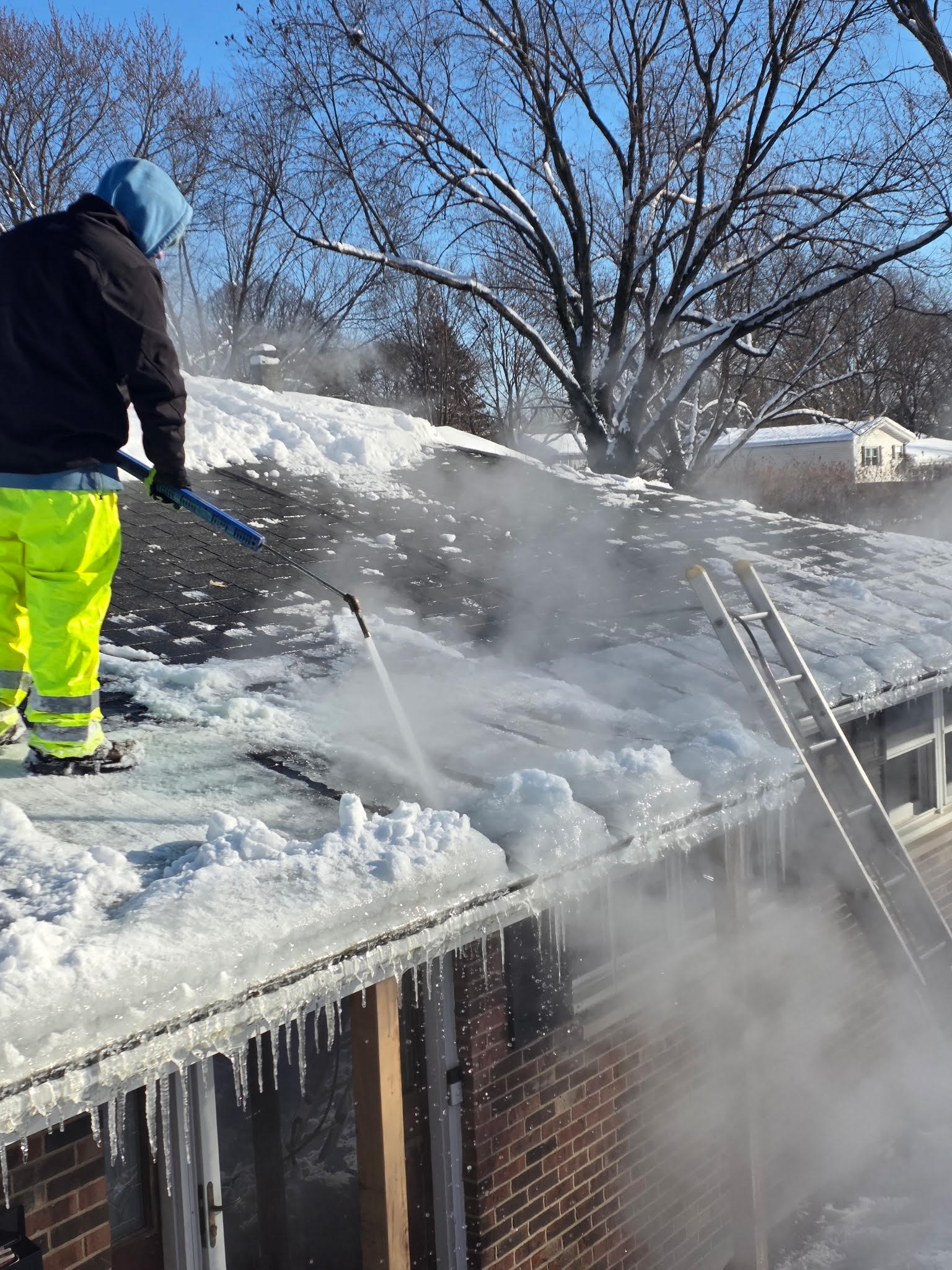
Explore our real ice removal photographs and ice dam education guide.
Cheboygan and Nearby Northern Michigan Locations
We welcome inquiries from Cheboygan, Aloha, Indian River, Topinabee, Mackinaw City, and nearby communities. Regional service availability is confirmed individually.
Cheboygan Michigan Service Area Map
This map shows Cheboygan and surrounding northern Lower Peninsula geography. It is not a physical Ice Dam USA office location.
Cheboygan Ice Dam Removal FAQs
Does Ice Dam USA accept requests in Cheboygan?
Yes. Contact us to confirm current service availability.
Can river-area homes develop ice dams?
Yes. Ice dams can form wherever snowmelt refreezes along colder roof edges.
Can steam remove ice from a porch roof?
Targeted steam may be appropriate when roof condition and safe access permit removal.
Is steam different from hot-water pressure washing?
Yes. True low-pressure steam melts through heat rather than relying on forceful liquid-water jets.
Does removing ice permanently fix a leaking roof?
No. Existing roofing damage and recurring ice dam conditions may require separate attention.
