
Ice Dam USA | Washtenaw County, Michigan
Ann Arbor MI Ice Dam Removal
Professional steam ice dam removal for Ann Arbor homes, rental properties, condominium communities, and commercial buildings.
Heavy roof ice can interfere with drainage during Michigan winters. When snow melts above a frozen roof edge, water may become trapped and reach vulnerable shingles, flashing, or roof intersections.
Ice Dam USA is a family-owned, fully insured company with more than 30 years of family experience. We use specialized Arctic Steamers for true low-pressure steam removal instead of aggressive ice chopping or high-pressure water blasting.
Whether ice is collecting near a dormer, along a roof valley, or above an exterior wall, contact our team to discuss your Ann Arbor property and current service availability.
Residential and commercial service inquiries are welcome. Emergency and expedited scheduling depend on weather, crew coverage, and safe access.
Ann Arbor's Snowfall and Its Effect on Roof Ice
Ann Arbor experiences significant winter snowfall, with colder periods interrupted by changing weather. Roof conditions can vary from one storm to another and even between neighboring buildings.
Based on NOAA National Centers for Environmental Information climate records, as compiled in the Ann Arbor snowfall normals. Individual neighborhoods and winters can differ.
The same climate records indicate that January and February typically contribute a substantial portion of the year's snowfall. Accumulated snow can remain on shaded roof sections while other parts begin melting.
An ice dam forms when water from warmer sections of a roof moves toward a colder area and refreezes. Repeated melting adds to the ridge, potentially blocking drainage.
Snowfall alone does not determine whether an ice dam forms. Heat loss from the building, attic insulation, roof exposure, and the arrangement of roof slopes all matter.
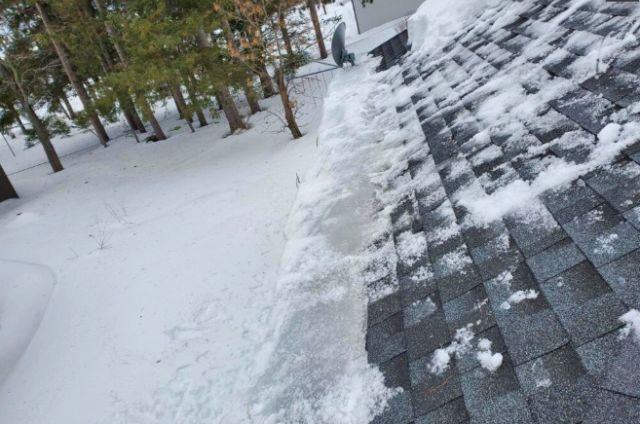
For a broader explanation, explore how ice dams form and why they cause problems.
Different Ann Arbor Properties Face Different Roof Ice Challenges
Ann Arbor includes historic residential neighborhoods, university-area rentals, townhomes, and larger commercial buildings. A roof ice problem on one property may require a very different approach from a problem on another.
Old West Side and Kerrytown
Established neighborhoods can include older rooflines, dormers, porches, and homes with finished upper floors. Changes in insulation or roof geometry may influence how snow melts and where ice forms.
Burns Park and Residential Streets
Residential properties may have gabled roofs, dormers, and shaded slopes. Ice can accumulate near roof edges and intersections where meltwater is concentrated.
University-Area Rental Housing
Rental properties can have multiple occupants, shared entrances, and owners who manage maintenance from another location. Clear reporting of active leaks and safe access is important.
Condominiums and Commercial Buildings
Connected rooflines, taller structures, and pedestrian areas may require coordination with property managers. Larger roof drainage systems can involve different concerns from a typical house eave.
Not every roof leak is caused by an ice dam. Existing flashing damage, worn roofing materials, and other drainage problems can create similar symptoms.
Why Ice Dams Can Affect Rental and Multifamily Buildings
When a roof serves multiple residents, a small area of trapped meltwater may create problems beyond the unit directly below the ice. Water can travel inside roof assemblies and appear in a different room or part of the building.
Property managers should pay attention to repeated moisture reports, roof ice above shared entrances, and conditions around adjoining roof slopes.
Information That Helps When Requesting Service
- The complete property address and building type.
- Approximate roof height and any access restrictions.
- Where the ice is visible from the ground.
- Whether residents are reporting water inside.
- Whether an entrance or walkway is below heavy ice.
- Contact information for the person authorized to arrange service.
Learn more about our residential ice dam removal services and commercial property removal options.
Why Ice Dam USA Uses True Low-Pressure Steam
Removing roof ice requires work near materials that may be concealed beneath snow and frozen buildup. The equipment and removal technique can influence the risk of damage.
Ice Dam USA uses specialized Arctic Steamers. These machines deliver true low-pressure steam that transfers heat into accumulated ice, helping technicians work through obstructions and reopen drainage paths.
Arctic Steamer Removal
- Uses steam to melt accumulated roof ice.
- Reduces the need for aggressive mechanical impact.
- Supports targeted work around roof edges and valleys.
- Does not rely on high-pressure jets to blast ice apart.
- Requires professional planning and safe roof access.
Pressure Washing and Chipping
- Hot-water pressure washers apply heated liquid water through a pressurized nozzle.
- Excessive force may damage roofing materials.
- Metal tools can cut shingles or disturb flashing.
- Falling sections of ice can create hazards below.
- Improper removal may make existing roof issues worse.
True steam and high-pressure washing are not interchangeable methods. No removal technique is entirely risk-free, and the roof's condition remains important.
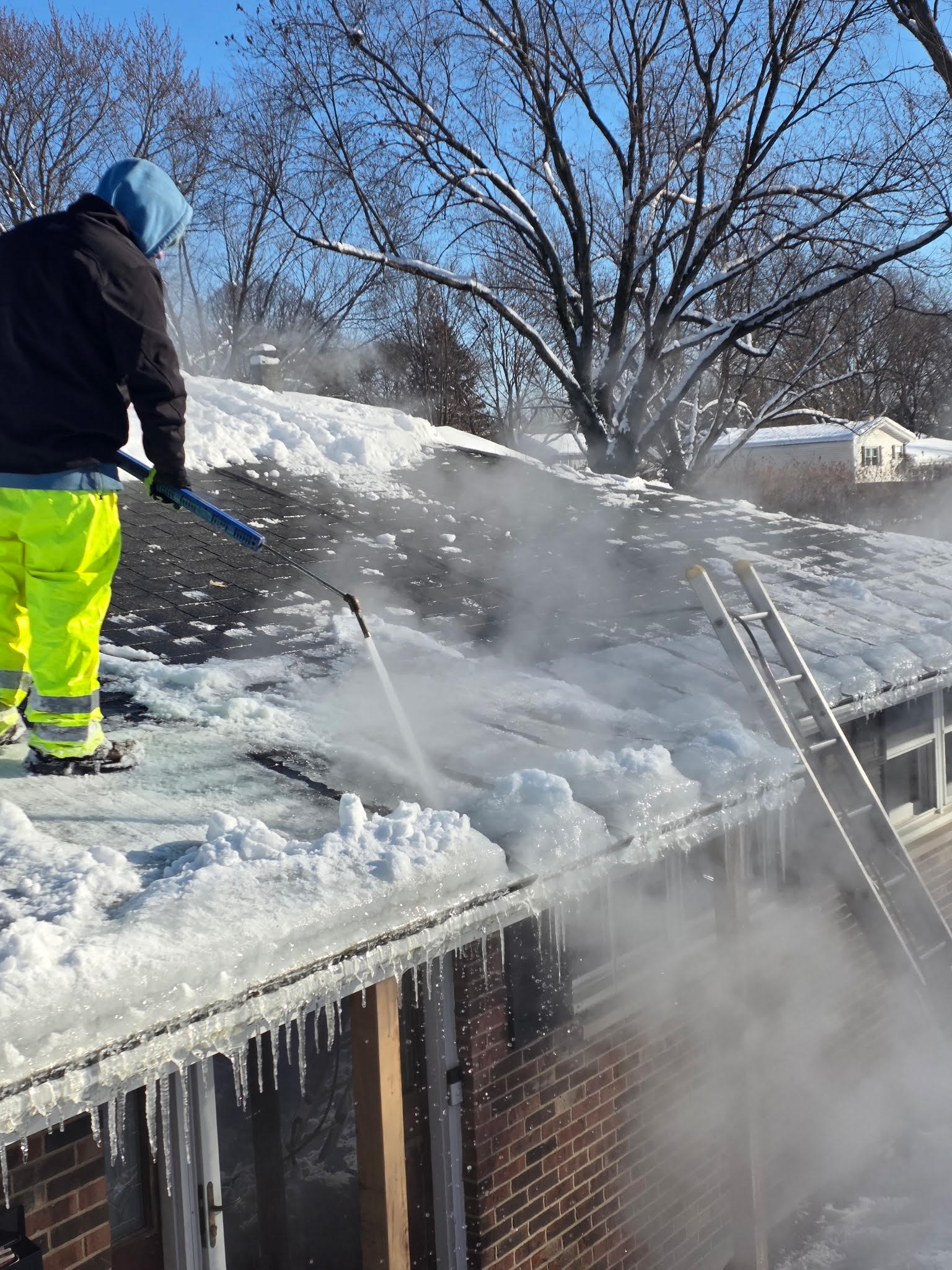
Explore our professional ice dam removal process and view more genuine projects in the Ice Dam USA photo gallery.
Ann Arbor Interactive Roof Ice Symptom Guide
Expand the situation closest to yours for general information and suggested next steps. This guide is educational and cannot diagnose a roof problem.
Water is dripping through my ceiling during snowmelt
Trapped meltwater behind a roof ice dam may be one possible cause. Stay away from wet electrical equipment and unstable ceilings. Protect belongings if safe and call 855-468-4233 to explain the active leak.
A large ice ridge has formed along the eaves
An ice ridge may obstruct water draining from the roof. Do not climb onto icy roofing or attempt to break the ice with sharp tools. Contact a qualified professional if the buildup is substantial.
Ice is accumulating near a dormer or upper-floor window
Dormers create roof intersections where snow and runoff may concentrate. Flashing details can be vulnerable to aggressive removal. Describe the exact location when contacting Ice Dam USA.
Residents are reporting moisture in multiple rooms
Water can travel inside roofing and wall assemblies before becoming visible. Building managers should document the reports, identify safety concerns, and arrange evaluation. Avoid assuming that every wet area has the same entry point.
There are large icicles above an apartment entrance
Heavy hanging ice can be hazardous even without an interior leak. Keep people away from the area below and seek professional guidance about the ice and roof conditions.
My roof is covered in snow but I cannot see an ice dam
Snow accumulation does not prove that a dam has formed. Monitor for blocked roof-edge drainage, uneven snowmelt, and indoor moisture. Stay off the roof and avoid unsafe snow removal methods.
The ice returns to the same roof valley each winter
Recurring ice may involve roof geometry, attic heat loss, insulation, and repeated refreezing. Removal addresses existing ice. Long-term solutions may require a qualified roof or building-envelope assessment.
What Ann Arbor Property Owners Should Do About an Active Winter Leak
Water entering a home or rental building during the winter deserves attention. Before arranging roof work, protect residents and avoid creating new hazards.
- Stay away from electricity. Avoid wet light fixtures, outlets, and exposed electrical equipment.
- Keep people clear of unstable ceilings. Sagging drywall can indicate water accumulation.
- Protect the interior. Move belongings away from water when safe.
- Document visible problems. Photograph water stains and roof ice from safe locations.
- Do not climb onto the roof. Snow-covered surfaces and icy ladders create serious fall risks.
- Contact a professional. Explain whether the leak is active and which roof sections may be affected.
Where electrical or structural hazards exist, leave the affected area and request appropriate emergency assistance.
Our emergency ice dam removal information explains available service options for urgent roof ice concerns.
How Professional Steam Ice Dam Removal Is Planned
Explain the Problem
Describe the property, the affected roof areas, the amount of visible ice, and any water entering the building.
Review Roof Access
Height, pitch, ice thickness, surrounding obstacles, and working conditions help determine a safe plan.
Confirm Availability
Our team reviews regional technician coverage, weather, travel requirements, and available scheduling.
Remove Obstructing Ice
When conditions safely allow, professional Arctic Steamer equipment is used to melt targeted ice and help restore drainage.
Removing existing ice may reduce water backup, but it does not repair damaged shingles, flashing, or interior surfaces. Water already inside a building assembly may continue moving after removal.
Ann Arbor and Nearby Washtenaw County Service Areas
Ice Dam USA welcomes roof ice removal inquiries from Ann Arbor and surrounding communities. The following locations provide regional geographic context. Actual service availability must be confirmed for each address.
- Ann Arbor
- Ypsilanti
- Scio Township
- Pittsfield Township
- Superior Township
- Saline
- Dexter
- Whitmore Lake
- Chelsea
- All areas in between
Whether your property is near downtown Ann Arbor, North Campus, the Old West Side, Burns Park, or another Washtenaw County community, contact Ice Dam USA with your address for available service options.
Our Michigan ice dam removal hub covers the broader state. You can also explore our Metro Detroit ice dam removal page and national service-area directory.
Ice Dam Removal Costs for Ann Arbor Properties
The work required can vary substantially between a single-family roof, a rental property with multiple roof elevations, and a taller commercial building.
Relevant factors include roof access, height, ice thickness, number of affected sections, travel requirements, and scheduling priority.
For current rates, service minimums, and billing information, View Ice Dam Removal Pricing.
Reducing Repeated Ice Dams in Ann Arbor
After an ice dam is removed, property owners may want to investigate the conditions that allowed it to form.
- Attic air sealing: Reduce warm air escaping from heated rooms into attic spaces.
- Insulation: Review gaps and uneven thermal protection around the roof assembly.
- Ventilation: Evaluate attic ventilation together with insulation and air sealing.
- Roof geometry: Pay attention to valleys, dormers, and lower roof sections where ice repeatedly forms.
- Roof repairs: Have damaged flashing or roofing materials evaluated independently of ice removal.
Recurring problems may require help from a qualified roofing or building-envelope professional. Visit our Ice Dam Learning Center for additional winter roof education.
Ann Arbor Michigan Ice Dam Removal FAQs
Does Ice Dam USA provide ice dam removal in Ann Arbor?
We welcome residential and commercial ice dam removal inquiries from Ann Arbor. Contact our team with your address to confirm regional availability.
How much snow does Ann Arbor typically receive?
The University of Michigan North Campus weather station recorded approximately 61.4 inches of average annual snowfall for the 1991–2020 climate-normal period. Actual snowfall differs by year and location.
Can older Ann Arbor houses develop damaging ice dams?
Yes. Dormers, finished attics, roof valleys, insulation conditions, and uneven snowmelt can contribute to ice dams. The cause varies by property.
Do you work with rental property owners and managers?
Ice Dam USA accepts inquiries from rental and multifamily properties. The building's roof, accessibility, weather, and scheduling requirements influence service planning.
Is a large icicle always evidence of an ice dam?
No. Icicles can form without a significant roof drainage obstruction. A thick ridge trapping meltwater is more characteristic of an ice dam.
Why do you use Arctic Steamers?
Arctic Steamers use true low-pressure steam to melt ice rather than relying on aggressive high-pressure water or chiseling. The technique reduces reliance on force but is not completely risk-free.
Can removing an ice dam stop a winter roof leak?
Removing ice may reopen drainage paths and reduce water backup. However, water already inside the roof can continue moving, and separate roof damage may require repair.
Will professional steam removal stop ice dams from returning?
Not necessarily. Future ice dams may form if underlying temperature, insulation, or drainage problems remain. Long-term prevention may require additional improvements.
