
Small Water Stain on Your Ceiling? Here's What It Could Mean
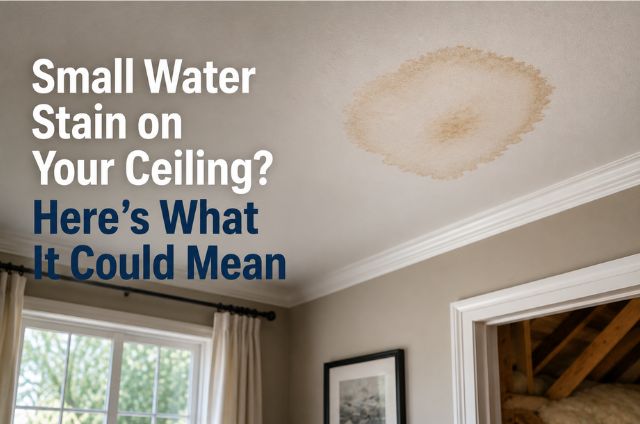
You walk into your bedroom and notice a discolored patch on the ceiling—nothing dramatic, just a faint coffee-colored ring the size of a softball. It wasn't there last week. You touch it. It feels slightly damp. Maybe you convince yourself it's nothing serious, just a quirk of an older home.
But here's the reality: even a small water stain on your ceiling is your home trying to tell you something. Water doesn't appear on ceilings for no reason. And in northern climates during winter, that innocent-looking stain is often the first visible sign of an ice dam quietly causing damage you can't yet see.
This guide will help you figure out what that stain means, what's causing it, and what you should do next—before a small problem becomes an expensive one.
What's in This Guide
Which Type of Homeowner Are You?
Your next step depends on your situation. Which one sounds like you?
The First-Timer
You just noticed a ceiling stain and have no idea what caused it. You need to understand what's happening before taking action.
Start here: Read the common causes section and the identification guide.
The Winter Stain
Your stain appeared during or after freezing weather. You've seen icicles hanging from your roof or noticed the stain is near an exterior wall.
You likely have an ice dam. Jump to the ice dam section and action steps.
The Repeat Offender
This isn't your first ceiling stain. You've had leaks before, or you've patched this same spot multiple times. You need to understand the root cause.
Time to dig deeper. Review what happens when stains are ignored and consider professional help.
Why Even Small Ceiling Stains Matter
A ceiling stain is never just cosmetic. It's physical evidence that water has penetrated your roof system, traveled through your attic, and soaked into your ceiling drywall or plaster.
The stain you see is almost always smaller than the actual water damage. Water spreads horizontally along rafters and joists before it drips through your ceiling. A softball-sized stain might represent several gallons of trapped water in your insulation and roof deck.
Pro Tip: If you can safely access your attic, go look at the underside of your roof deck directly above the stain. You'll often find a much larger wet area than the stain suggests—dark spots on the wood, compressed insulation, or visible mold growth.
Here's what's at stake when water enters your home:
- Mold growth: Wet insulation and drywall create ideal conditions for mold within 24-48 hours
- Compromised insulation: Wet insulation loses its R-value and may never fully dry
- Structural damage: Repeated water exposure rots roof decking and framing lumber
- Electrical hazards: Water near wiring or ceiling fixtures creates shock and fire risks
- Interior damage: Stains spread, paint peels, and ceilings eventually sag or collapse
The size of the stain doesn't determine the severity of the problem. A small stain today can become a collapsing ceiling next month if the water source isn't addressed.
Common Causes of Ceiling Water Stains
Not all ceiling stains come from the same source. Understanding the difference helps you take the right action.
🧊 Ice Dams (Winter)
When it happens: During or after freezing weather, especially after heavy snow
Where it appears: Near exterior walls, above the roofline, often in upper-floor bedrooms
What causes it: Heat escaping through your roof melts snow, which refreezes at cold eaves and forces water backward under shingles
🌧️ Roof Leaks (Any Season)
When it happens: During or after rain, especially heavy storms
Where it appears: Can occur anywhere, often near valleys, chimneys, or pipe boots
What causes it: Damaged shingles, failed flashing, or compromised roof penetrations allow rain to enter
💧 Condensation (Cold Weather)
When it happens: In cold weather, especially in bathrooms, kitchens, or poorly ventilated rooms
Where it appears: Diffuse staining, often with fuzzy edges; may feel consistently damp
What causes it: Warm, moist indoor air meets cold ceiling surfaces and condenses into water droplets
🚿 Plumbing Leaks (Any Time)
When it happens: Can be constant or intermittent, often worse when water is running
Where it appears: Directly below bathrooms, kitchens, or water heaters; stains may grow slowly
What causes it: Leaking pipes, loose fittings, or failed seals in fixtures above the ceiling
❄️ Attic Frost (Extreme Cold)
When it happens: After extended sub-zero temperatures followed by a warm-up
Where it appears: Multiple ceiling stains appearing suddenly when temperatures rise
What causes it: Humid air from your living space enters the attic, freezes on cold surfaces, then melts and drips when it warms
🪟 Dormer/Skylight Issues
When it happens: During rain or snow melt, often seasonal
Where it appears: Around skylights, dormers, or where walls meet the roofline
What causes it: Failed flashing, damaged seals, or ice dam backup at complex roof intersections
Important: In northern climates, ice dams are the most common cause of winter ceiling stains, especially when the stain appears near an exterior wall or after a heavy snow followed by freezing temperatures. Many homeowners mistake ice dam damage for a simple roof leak.
Ice Dams: The Winter Culprit Behind Most Ceiling Stains
If your ceiling stain appeared during winter—especially after snow and freezing weather—an ice dam is the most likely cause. Here's why this happens and why it's so common in northern states.
How Ice Dams Form and Force Water Into Your Home
Ice dams develop in a three-stage cycle:
Heat Escapes Your Roof
Warm air from your living space rises into the attic and heats the underside of your roof deck. This warmth radiates through the shingles and melts the bottom layer of snow on your roof.
Meltwater Runs Down
The melted snow flows down your roof as liquid water. When it reaches the cold eaves—where there's no warm attic space below—it refreezes into ice. This ice builds up into a dam.
Water Backs Up Under Shingles
More meltwater continues flowing down but gets trapped behind the ice dam. It pools, backs up under your shingles, and seeps through the roof deck into your attic—eventually appearing as ceiling stains.
Why Your Ceiling Stain Appears Where It Does
Ice dam stains typically show up in predictable locations:
- Near exterior walls: The first 3-6 feet of your roof—directly above the cold eave—is where ice dams form
- Upper-floor bedrooms: Water entering at the eave often travels horizontally before dripping through the ceiling
- Along the roofline: You might see multiple stains in a line following the roof edge
- Around dormers or complex roof sections: These areas collect snow and are prone to ice buildup
Critical: Ice dams don't require a damaged roof. Your shingles can be in perfect condition, but ice dams force water backward under the shingle tabs—a direction roofing materials aren't designed to resist. This is why even newer roofs can develop ceiling stains from ice dams.
Why Ice Dams Keep Coming Back
Once an ice dam forms, it doesn't melt away just because temperatures drop again. The dam stays frozen all winter, and every subsequent warm day creates more meltwater that backs up behind the same dam. Your ceiling stain gets worse with each freeze-thaw cycle.
This is why homeowners often see a small stain one week that becomes a spreading mess by the next warm spell. The ice dam isn't growing—it's just trapping more and more meltwater every time the sun hits your roof.
Learn more about the full ice dam removal process in our complete service guide.
How to Identify What's Causing Your Ceiling Stain
The best way to determine the source of your stain is to look at when it appeared, where it's located, and what the weather was doing at the time.
🚩 Signs It's an Ice Dam
- Stain appeared during or after freezing weather
- Located near an exterior wall or above the roofline
- You've seen icicles hanging from your gutters or roof edge
- Stain gets worse after warm, sunny days following snow
- Multiple stains appearing in a line along the roof edge
- Your attic feels unusually warm when it's cold outside
✓ Signs It's NOT an Ice Dam
- Stain appears during summer or warm weather
- Gets worse immediately after heavy rain (roof leak)
- Located in the middle of the house, far from exterior walls
- Appears directly below a bathroom or kitchen (plumbing)
- Stain feels consistently damp with fuzzy edges (condensation)
- No icicles or visible ice on your roof
The Attic Inspection: See the Damage Firsthand
If you can safely access your attic, go look at the area directly above the ceiling stain. Bring a flashlight and look for these clues:
Dark Spots on Roof Decking
Water stains on the underside of your roof sheathing show exactly where water entered. Ice dam leaks typically appear along the eave area.
Wet or Compressed Insulation
Insulation soaked with water loses its fluffiness and turns dark. Wet insulation is a clear sign of ongoing water infiltration.
Ice Buildup on Rafters or Nails
During extreme cold, you might see frost or ice crystals coating your roof framing—this indicates serious attic ventilation and insulation issues.
Mold or Mildew Growth
Black, green, or white fuzzy growth on wood or insulation means water has been present long enough for mold to colonize.
Safety Warning: Only enter your attic if you can do so safely. If your attic is cramped, poorly lit, or you're not comfortable with the footing, don't risk it. A professional can inspect safely and document what they find.
When to Call a Professional for Diagnosis
Sometimes the cause isn't obvious. Call a professional if:
- The stain appeared during winter, but you see no visible ice or icicles
- You've had multiple stains in different areas with no clear pattern
- Your attic inspection reveals extensive water damage or mold
- The stain is growing rapidly or actively dripping
- You can't safely access your attic to investigate
Ice Dam USA offers emergency response throughout the northern United States. Find your local service area here.
What Happens If You Ignore a Ceiling Stain
It's tempting to wait and see if a small ceiling stain goes away on its own. Maybe it'll dry out. Maybe it was a one-time thing. Maybe it won't get worse.
Here's the reality: ceiling stains don't fix themselves. The stain you see is evidence of water that already entered your home. Even if the stain stops growing, the damage continues beneath the surface.
The Timeline of Neglect: What Gets Worse and When
Mold Begins Growing
Wet drywall, insulation, and wood provide ideal conditions for mold spores to germinate. Mold spreads quickly in dark, damp attics.
Insulation Loses Effectiveness
Wet insulation compresses and stops insulating. Your heating costs rise. The wet insulation may never fully dry, even after the leak stops.
Ceiling Damage Spreads
The stain expands. Paint peels. Drywall softens. What started as a coffee-stain-sized discoloration now covers several square feet.
Structural Wood Begins Rotting
Roof decking, rafters, and ceiling joists exposed to repeated moisture start to rot. Wood loses strength and structural integrity.
Ceiling Collapse Risk
Drywall saturated with water becomes heavy and weak. Ceilings can sag, crack, or collapse entirely, especially with older plaster ceilings.
The Hidden Cost: A $300 ice dam removal that you delay can turn into $8,000+ in repairs—new roof decking, insulation replacement, mold remediation, ceiling reconstruction, and repainting. The initial problem doesn't get cheaper by waiting.
Why Ice Dam Stains Get Worse Throughout Winter
Unlike a simple roof leak that might only affect you during storms, ice dam damage is cumulative and cyclical. Every time temperatures rise above freezing during the day and drop at night, the cycle repeats:
- Sun hits your roof → snow melts
- Meltwater flows down → hits the ice dam
- Water backs up under shingles → enters your attic
- New water adds to the existing damage → ceiling stain spreads
This is why a small December stain becomes a major February problem. The ice dam stays frozen all winter, trapping more water with each warm spell.
The only way to stop the cycle is to remove the ice dam. Learn what to do immediately when you discover a leak in our emergency response guide.
What to Do Right Now: Your Action Plan
You've identified a ceiling stain. You understand what might be causing it. Now here's exactly what to do, in order of priority.
Immediate Steps (Do This Today)
Contain Active Water
If water is actively dripping, place a bucket underneath. Move furniture, electronics, and valuables away from the affected area.
Document Everything
Take clear photos of the stain from multiple angles. Note the date it appeared and current weather conditions. This documentation helps with insurance claims and professional diagnosis.
Check Your Attic (If Safe)
Look at the area above the stain for visible water, wet insulation, or mold. Don't walk on wet insulation or unstable surfaces.
Look at Your Roof from Outside
Check for icicles, visible ice dams along the eaves, or uneven snow melt patterns. Do NOT climb on your roof—just observe from the ground.
If You Suspect an Ice Dam
Do not attempt to remove ice yourself. Homeowners who try to chip, hack, or shovel ice off their roofs often cause far more damage than the ice dam itself—broken shingles, damaged flashing, gouged gutters, or serious personal injury from falls.
Never Do This:
- Use a hammer, ice pick, or shovel on your roof
- Pour hot water on ice dams (it refreezes instantly and makes it worse)
- Use salt or chemicals (they damage shingles and plants below)
- Climb on an icy roof yourself
Professional ice dam removal uses low-pressure steam equipment that safely melts ice without damaging your roof. It's faster, safer, and prevents the thousands of dollars in shingle replacement that DIY methods often cause.
Ice Dam USA operates throughout the northern United States with emergency response teams. Learn about our professional steam removal process.
Temporary Relief Until Help Arrives
If you're waiting for professional service and water is actively entering your home, you can create temporary drainage channels in the ice dam using calcium chloride ice melt in a nylon stocking. This won't remove the dam, but it can reduce immediate water intrusion.
Emergency Tip: Fill a nylon stocking or old pantyhose with calcium chloride ice melt. Lay it vertically across the ice dam from the roof peak to the gutter. The melt creates a narrow channel that allows trapped water to drain. Replace every 24-48 hours until professional help arrives. This is a stopgap, not a solution.
Long-Term Prevention: Stop Ice Dams Before They Start
Once the immediate crisis is handled, focus on preventing future ice dams. The root cause is heat escaping through your roof. Address these areas:
- Attic insulation: Upgrade to at least R-49 in northern climates to reduce heat loss
- Air sealing: Seal all penetrations between living space and attic (recessed lights, plumbing stacks, chimneys)
- Attic ventilation: Ensure proper intake and exhaust vents to keep the roof deck cold
- Gutter maintenance: Clean gutters before winter so meltwater can drain freely
Ice Dam USA also provides gutter ice removal to prevent water backup. Learn about our gutter services here.
Common Questions About Ceiling Water Stains
Is a small water stain on the ceiling something to worry about?+
Yes, even a small water stain on your ceiling should be investigated. A stain indicates water penetration, which can lead to mold growth, insulation damage, and structural deterioration if left unaddressed.
In northern climates, ceiling stains that appear during or after freezing weather are often caused by ice dams forcing water under your shingles. The visible stain is usually just the beginning—water spreads horizontally in your attic before it drips through the ceiling, so the actual damage is typically larger than what you see.
How can you tell if a ceiling stain is from a roof leak or condensation?+
Roof leaks typically create isolated, irregular stains that worsen during snow melts or heavy rain. The ceiling may feel damp or soft to the touch, and the stain often has defined edges.
Condensation stains are more diffuse, often appearing in bathrooms or poorly ventilated areas, and tend to have fuzzy, indistinct edges. Ice dam stains specifically appear during freezing weather, often along exterior walls or above the roof eave line, and get progressively worse with each freeze-thaw cycle.
Why do ceiling water stains appear after snow or freezing weather?+
Ceiling stains during freezing weather usually indicate an ice dam. When heat escapes through your roof, it melts snow that refreezes at the cold eaves, creating a dam of ice.
Water from continued melting backs up behind this dam and is forced under your shingles—a direction roofing materials aren't designed to resist. The water then enters your attic through the roof deck, appearing as stains on ceilings and walls. This cycle repeats with every freeze-thaw event until the ice dam is physically removed.
Can a small ceiling stain turn into a bigger problem?+
Absolutely. Water stains rarely stay small. The visible stain is often just the tip of the problem—water spreads horizontally along rafters and insulation before it drips through your ceiling.
What starts as a softball-sized stain can hide gallons of trapped water in your attic, leading to mold, compromised insulation, and even structural damage to your roof deck and framing. If the water source isn't addressed, the damage compounds with each subsequent leak event, eventually resulting in ceiling collapse or major reconstruction costs.
What should I do immediately if I see a ceiling water stain?+
First, place a bucket under any active drips and move furniture and valuables away from the affected area. Take clear photos of the stain for documentation.
Check your attic if it's safe to do so—look for wet insulation, dark spots on the roof deck, or visible ice buildup along the eaves. Look at your roof from the ground for icicles or ice dams. If the stain appeared during freezing weather, you likely have an ice dam and should contact a professional removal service that uses steam equipment to prevent further roof damage. Do not attempt to chip or remove ice yourself.
Will my homeowner's insurance cover ceiling water damage from ice dams?+
Most homeowner's insurance policies cover sudden and accidental water damage from ice dams, including damage to ceilings, walls, insulation, and belongings. However, coverage varies significantly by policy.
Document everything with photos, save all receipts for professional services, and report the damage to your insurance company promptly. Some policies exclude ice dam damage if the homeowner failed to maintain the property or prevent known issues. Review your specific policy and contact your agent to understand your coverage limits and deductibles.
Can I just paint over a ceiling water stain once it dries?+
No. Painting over a water stain without addressing the source is cosmetic at best and dangerous at worst. The stain will bleed through most paint, and you'll still have water-damaged materials hidden behind the fresh coat.
Before repairing the ceiling, you must fix the source of the water, allow all materials to dry completely, and assess whether damaged drywall or insulation needs replacement. If mold has begun growing, it must be professionally remediated. Only after everything is dry and repaired should you prime with a stain-blocking primer and repaint.
Need Help with a Ceiling Water Stain?
If your ceiling stain appeared during freezing weather, you're likely dealing with an ice dam. The longer it stays on your roof, the more damage it causes—and the more expensive your repairs become.
Ice Dam USA provides professional steam removal throughout the northern United States. We answer the phone, arrive when we say we will, and remove ice dams without damaging your roof. No pressure, no pitch—just honest answers and expert service.
Contact UsEmergency Resources