
A continuous band of thick ice near a roof edge may restrict drainage.
The concern increases if meltwater is collecting above the frozen buildup.
|
|||
|
|
ICE DAM USA | WESTMINSTER, COLORADO
Professional ice dam removal for Westminster, Colorado, using true low-pressure steam to melt frozen roof ice and help restore water drainage.
Westminster extends from historic neighborhoods near the city's southern boundary to newer residential communities toward the north and west.
Homes, townhomes, apartment buildings, and commercial properties throughout this area can experience winter roof ice when melting snow refreezes near colder roof sections.
If the resulting ice blocks drainage, meltwater may collect behind the obstruction and enter vulnerable roof materials.
Ice Dam USA uses professional Arctic Steamers to melt roof ice through heat, without relying on aggressive chipping or high-pressure water blasting.
01 / WESTMINSTER'S DISTINCT HOUSING AREAS
Westminster occupies portions of both Jefferson County and Adams County, with residential neighborhoods built during different periods of the city's growth.
The older southern part of Westminster, including Historic Westminster, has a different building environment from modern residential developments near the city's northern and western boundaries.
Each property needs to be assessed according to its roof design, insulation conditions, snow accumulation, and access.
Older houses and renovated properties may have dormers, porches, additions, and roof assemblies altered over time.
Where insulation and air sealing differ between roof sections, winter snowmelt can vary across the building.
Many central Westminster residential areas contain ranch homes, split-level houses, attached garages, and traditional pitched roofing.
A cold lower roof may receive runoff from a warmer upper section, creating a potential refreezing location.
Modern single-family homes and multifamily buildings may have larger roof footprints, multiple valleys, and shared exterior access areas.
Ice dam removal may involve several separate roof sections or additional property management coordination.
It is not the age of a home or the county in which it sits. Ice dams develop when roof snow melts and then refreezes in a location that restricts drainage.
For more information, read our guide explaining how roof ice dams form .
02 / DIFFERENT BUILDINGS, DIFFERENT CONDITIONS
Westminster's development history gives the city two very different types of winter roof access challenges.
Historic Westminster contains established buildings and older residential streets. Downtown Westminster, near the former Westminster Mall site, is a major redevelopment area with newer residential, commercial, and mixed-use buildings.
Older houses may contain several generations of roofing construction, including added porches, upper-floor renovations, and roof intersections.
Before ice removal, the affected roofing materials and safe working locations should be considered.
Modern apartment buildings, mixed-use properties, and commercial development can introduce shared roof areas and occupied entrances.
A property manager may need to coordinate roof access, tenant communications, and work areas below the affected roof.
Redevelopment and residential growth near the station area include a different mix of housing and site access requirements from detached suburban homes.
Permission and building access may need to be arranged before professional roof work.
Retail and office properties can require special attention to occupied sidewalks, parking areas, delivery access, and employee entrances beneath the roofline.
03 / FRONT RANGE WEATHER AND ROOF EXPOSURE
Colorado's Front Range can experience bright sunshine following a winter storm.
Sunlight may warm an exposed roof slope while nearby shaded roof sections remain cold enough for water to refreeze.
The resulting water can travel to a cold eave, valley, or lower roof and begin forming a frozen obstruction.
Heat moving from conditioned living spaces into an attic can also contribute to melting beneath the snow cover.
The combination of snowmelt, water movement, and refreezing determines whether a roof ice dam forms.
These conditions may contribute to ice formation, but they do not automatically mean drainage has become blocked.
04 / WESTERN WESTMINSTER
Standley Lake Regional Park occupies a large area along Westminster's western side.
The surrounding residential landscape includes established homes, neighborhoods with open-space views, and properties with different levels of sunlight and wind exposure.
Proximity to the lake does not itself cause a roof ice dam. The important factors remain the building's roof temperature, snowmelt, and drainage.
Trees, roof projections, and neighboring structures may shade portions of a roof after other areas have begun melting.
Wind may redistribute snow and create uneven accumulation near roof intersections.
Conditions still depend on the specific roof and winter storm.
Upper-story roof slopes may discharge meltwater toward colder lower sections, including areas above a garage or entryway.
Homes around Standley Lake, Countryside, and other western Westminster neighborhoods should be evaluated individually rather than being treated as identical winter roof environments.
05 / RECOGNIZING THE PROBLEM
Roof ice symptoms can look similar while representing different underlying conditions.
Use this guide to identify what you are seeing before requesting professional service.
A continuous band of thick ice near a roof edge may restrict drainage.
The concern increases if meltwater is collecting above the frozen buildup.
Intersecting roof slopes can concentrate water into a narrow drainage path.
A localized frozen obstruction may affect runoff from more than one roof section.
Moisture appearing during a snowmelt period may indicate water entering through vulnerable roofing.
Other roof defects can produce similar symptoms, so the source should be evaluated.
Heavy hanging ice can present a falling-ice hazard for residents, visitors, or employees below.
Keep people away from the affected area.
Icicles alone do not prove an ice dam is blocking drainage.
They do show that water has melted and frozen.
Ice returning to the same location may indicate recurring heat loss, roof geometry, or refreezing conditions.
The long-term cause may need separate investigation.
Do not climb onto a snow-covered roof or use sharp tools, open flames, or high-pressure spray to break roof ice.
When heavy ice obstructs drainage or water is entering the building, call 855-468-4233 to discuss the problem.
06 / PROFESSIONAL REMOVAL EQUIPMENT
The goal of professional ice dam removal is to melt the frozen obstruction without unnecessarily forcing ice away from the roof beneath it.
Ice Dam USA uses specialized Arctic Steamers. The equipment delivers low-pressure steam that transfers heat into accumulated ice.
This differs from using a hot-water pressure washer, which delivers heated liquid water through a pressurized spray.
Low-pressure steam can reduce risks associated with aggressive removal, but no roof work is completely risk-free.
Existing roof condition, access, ice thickness, weather, and technician technique must be considered.
Learn about our professional steam ice dam removal services .
07 / REAL ICE DAM USA PROJECT PHOTOGRAPHY
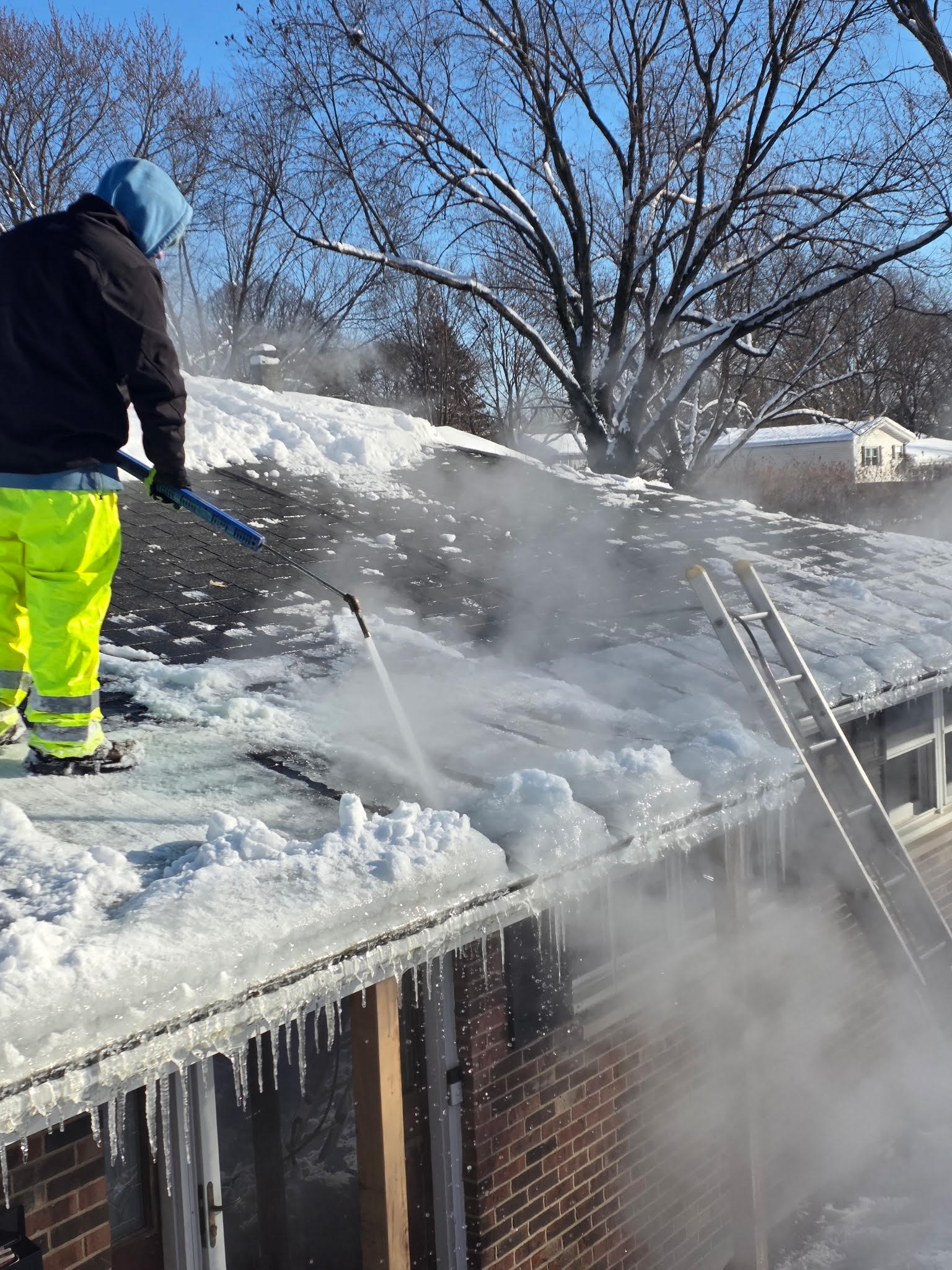
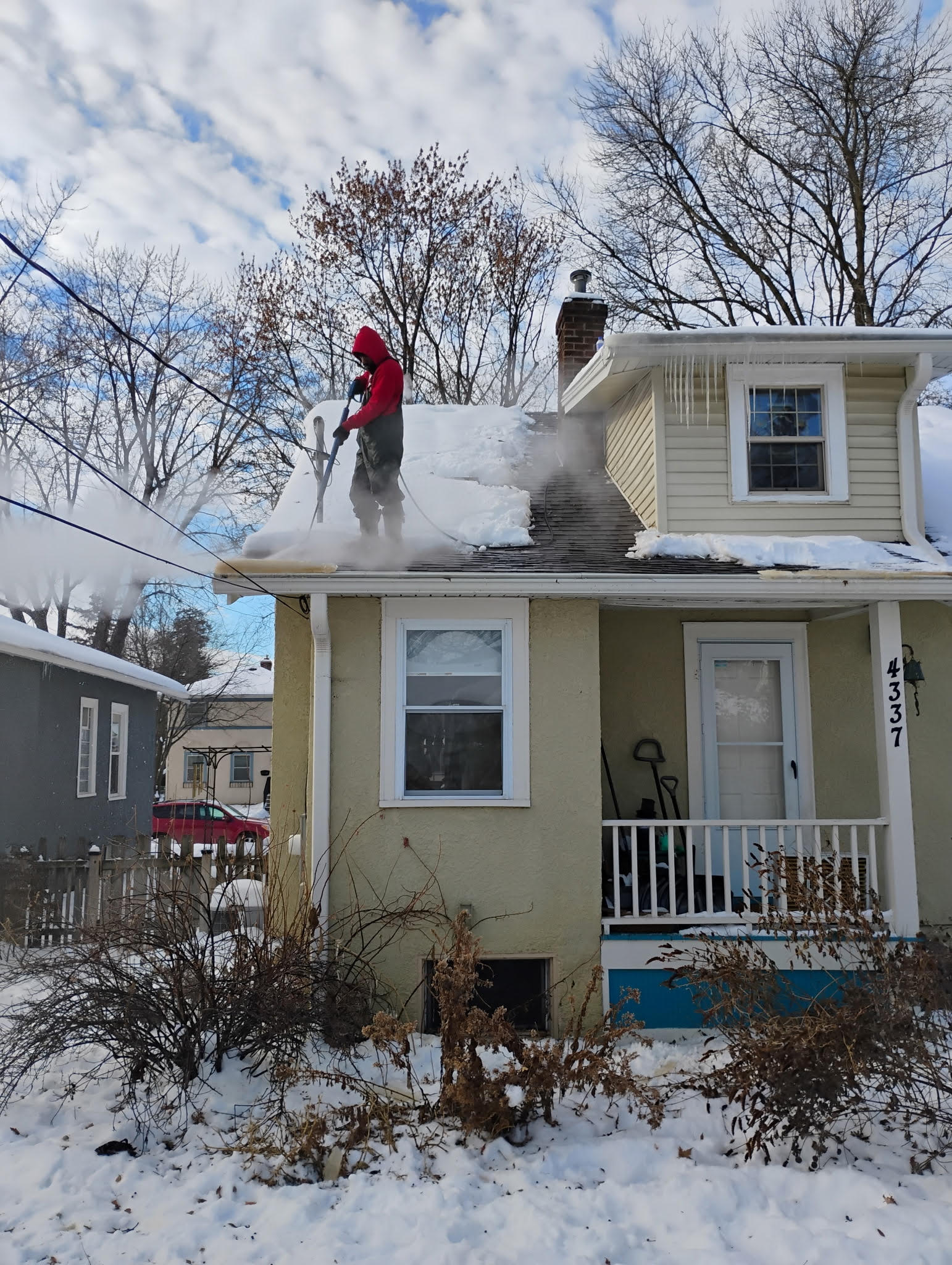
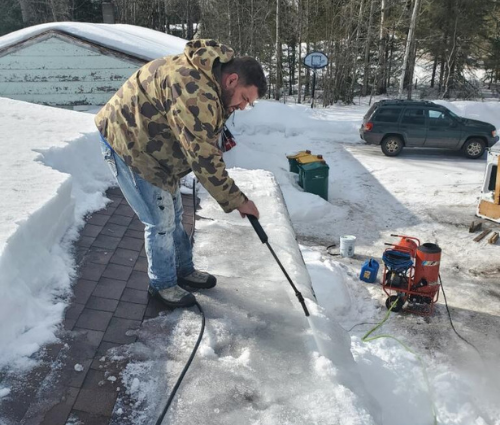
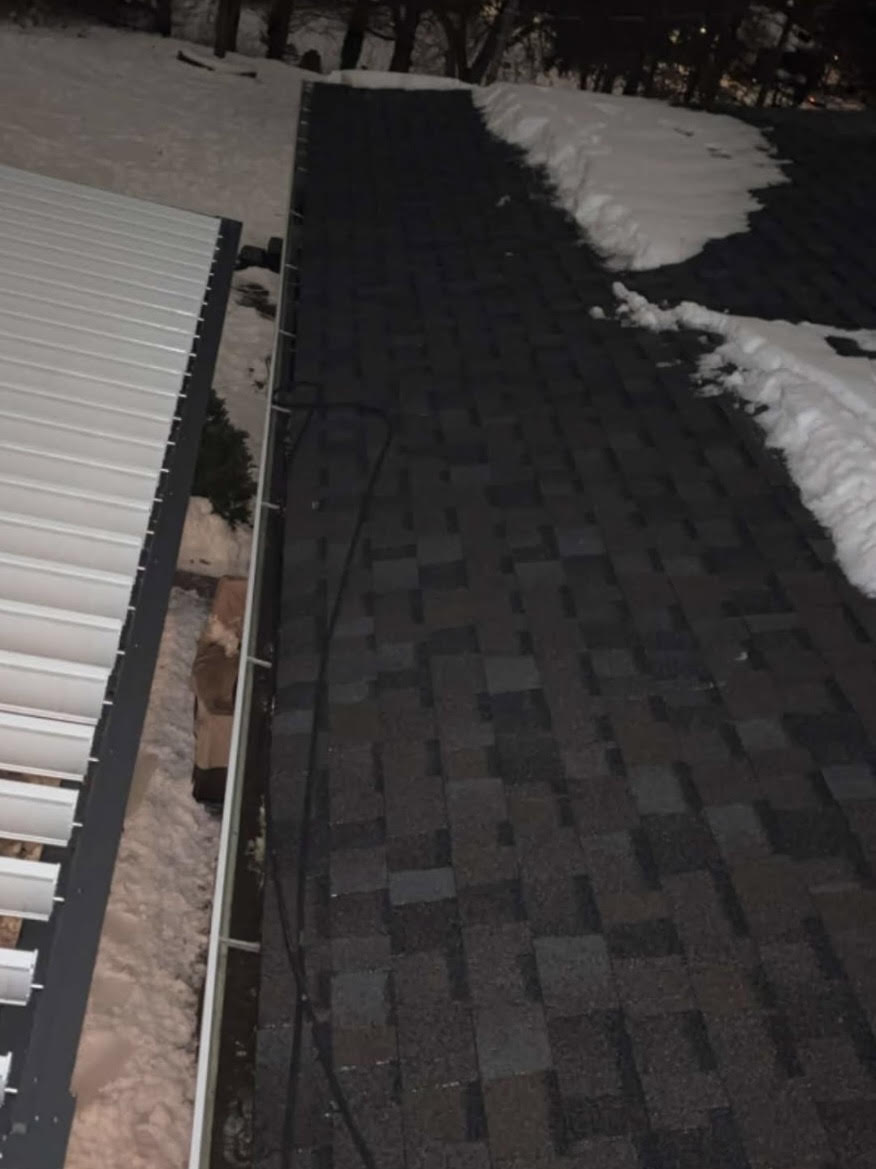
These Ice Dam USA project photographs show technicians using steam, heavy winter roof ice, and roof sections after removal work.
View additional Ice Dam USA project photographs and learn more about our work.
08 / MULTIFAMILY AND COMMERCIAL PROPERTY PLANNING
Professional roof ice removal is not always as simple as accessing one roof edge.
Multifamily properties and occupied commercial buildings may require additional coordination before technicians can begin work.
Shared roofing may cover multiple residential units with one connected drainage system.
Property managers may need to determine who can authorize the work and how the affected area can be reached.
Ice forming above resident entrances, walkways, or parking areas creates additional concerns.
Access planning may include tenant communications, equipment placement, and temporarily restricting the work zone.
Business operations and customer access may affect how an ice removal project is coordinated.
The affected roofing system must also be appropriate for the proposed work.
Detached homes can still have challenging access near decks, fences, additions, and lower-level walkout areas.
Share these details when requesting an appointment.
Explore our residential ice dam removal options and commercial ice dam removal services .
09 / WINTER WATER INTRUSION
An ice dam may hold meltwater against vulnerable roofing materials.
Water can then enter a roof assembly, move through insulation, and become visible on an interior ceiling or wall.
The visible water stain may be some distance from the actual entry point.
Melting the frozen obstruction may help reopen a drainage path and reduce additional water backup.
However, water already inside roofing materials may continue moving after the exterior ice is removed.
Existing roof defects or damaged interior materials may require separate professional repairs.
Ice Dam USA accepts emergency service inquiries 24 hours a day.
Actual dispatch depends on crew availability, travel, weather, and safe roof access.
10 / WESTMINSTER ICE DAM REMOVAL COST
The price of professional steam removal depends on the work required, the service category, and the conditions at the property.
A short accessible roof edge may require a different amount of work than multiple frozen roof valleys on a taller building.
Ice Dam USA maintains current hourly rates, service minimums, and billing terms on our ice dam removal pricing page .
Our team can discuss published pricing and the service category that may apply to your building.
Please provide the Westminster address, building height, ice locations, and information about any active water intrusion.
11 / AFTER THE CURRENT ICE IS REMOVED
Professional steam removal addresses existing ice. Long-term prevention involves understanding why that ice formed.
If a roof develops heavy ice in the same location over multiple winters, a building-envelope or roof evaluation may be useful.
Warm air escaping from the living space can heat the roof deck and melt snow from underneath.
Missing insulation, air leakage, or unsuitable ventilation conditions may contribute to uneven roof temperatures.
Roof valleys, shaded transitions, and areas below upper roof slopes can influence where water freezes.
After the immediate ice problem is resolved, a qualified roofing or building-envelope professional can assess recurring conditions.
Learn more in our ice dam prevention resource .
12 / REQUESTING PROFESSIONAL SERVICE
Tell us the building location, type of property, visible ice buildup, and whether water is entering indoors.
The team considers roof height, pitch, equipment access, weather, travel, current pricing, and crew availability.
When the job is scheduled and conditions allow, technicians use low-pressure steam to address the frozen obstruction.
Have the full street address, number of stories, ice location, and any active leak details ready. Ground-level photos may help the team understand the affected roof.
For townhomes and commercial buildings, also identify the person authorized to approve the work.
13 / WESTMINSTER METRO COVERAGE
Ice Dam USA welcomes professional roof ice removal inquiries from Westminster residential and commercial properties.
We coordinate traveling crews according to current availability, property location, winter weather, and roof access.
This is a regional service-area page, not a claim that Ice Dam USA operates a permanent office in Westminster.
From the older southern neighborhoods to the northern residential areas and communities near Standley Lake, contact our team to confirm whether service can be scheduled for your property.
Explore additional Colorado ice dam removal service information or call 855-468-4233 .
14 / FREQUENTLY ASKED QUESTIONS
Ice Dam USA welcomes professional roof ice removal inquiries from Westminster homeowners and property managers.
Actual service availability depends on crew scheduling, travel, weather, and safe roof access.
Yes. Sunshine may melt snow on an exposed roof slope while a shaded roof edge remains cold enough to refreeze the runoff.
Some older homes have additions, porches, or insulation differences that may affect winter roof temperatures.
However, age alone does not determine ice dam risk.
Yes. Newer buildings can have roof transitions and cold drainage areas where melting snow may refreeze.
Shared roofs may also require coordination with building management.
No. Living near the lake does not itself cause a roof ice dam.
The cause is meltwater refreezing in a way that obstructs roof drainage.
Yes. Water from an upper roof can flow onto a colder lower roof area and freeze again.
The actual risk depends on the roof's drainage and temperature conditions.
No. Icicles can appear without a major drainage blockage.
A thick ice ridge holding back meltwater is a more important warning sign.
Ice Dam USA uses specialized low-pressure steam equipment to melt roof ice using heat rather than aggressive physical force.
An Arctic Steamer uses high-temperature, low-pressure steam. A hot-water pressure washer delivers heated liquid water through a pressurized spray nozzle.
Excessive spray pressure can damage vulnerable roofing.
No roof ice removal method is risk-free.
Professional steam reduces reliance on aggressive force, but existing roof condition and technician judgment remain important.
Ice Dam USA welcomes residential and commercial property inquiries, including multifamily buildings.
Building authorization, safe access, and roof conditions must be considered.
Yes. Ice may trap melting water and allow it to enter through vulnerable roofing materials.
Other roofing defects can also cause leaks and may require investigation.
Not necessarily. Removing the obstruction may help restore drainage, but water already inside the roof may continue moving.
Cost depends on the service category, ice accumulation, building height, access, and travel.
See our current ice dam removal pricing for published rates and appointment minimums.
Yes. Ice Dam USA accepts emergency inquiries 24 hours a day.
Actual crew dispatch depends on availability, weather, travel, and site conditions.
Yes. New snowfall and repeated melting and refreezing can cause ice to form again.
Long-term prevention may involve air sealing, insulation, and roof evaluation.
Call 855-468-4233 or use our professional ice dam removal contact form .
Provide your address, roof height, ice location, and details about any interior leaking.
15 / ICE DAM USA EDUCATIONAL RESOURCES
Explore these Ice Dam USA resources to learn more about roof ice, professional removal equipment, emergency service, and prevention.
ICE DAM USA | WESTMINSTER, COLORADO
Heavy roof ice and blocked drainage can become serious winter concerns for residential and commercial property owners.
Ice Dam USA uses professional Arctic Steamers to melt existing ice with true low-pressure steam.
Contact our team to discuss your Westminster property, current service rates, and scheduling availability.
855-468-4233 | ICE DAM USA
Service scheduling depends on property location, weather, safe roof access, travel, and technician availability.
