
ICE DAM USA / DENVER, COLORADO
Denver CO Ice Dam Removal
Professional ice dam removal in Denver, Colorado, using true low-pressure steam to clear frozen roof obstructions and help restore winter roof drainage.
Denver's winter sunshine can melt snow on one part of a roof while shaded eaves, valleys, and roof transitions remain cold enough for water to refreeze.
When that frozen buildup blocks drainage, meltwater may collect against shingles, flashing, or other vulnerable roof details and contribute to water entering a home.
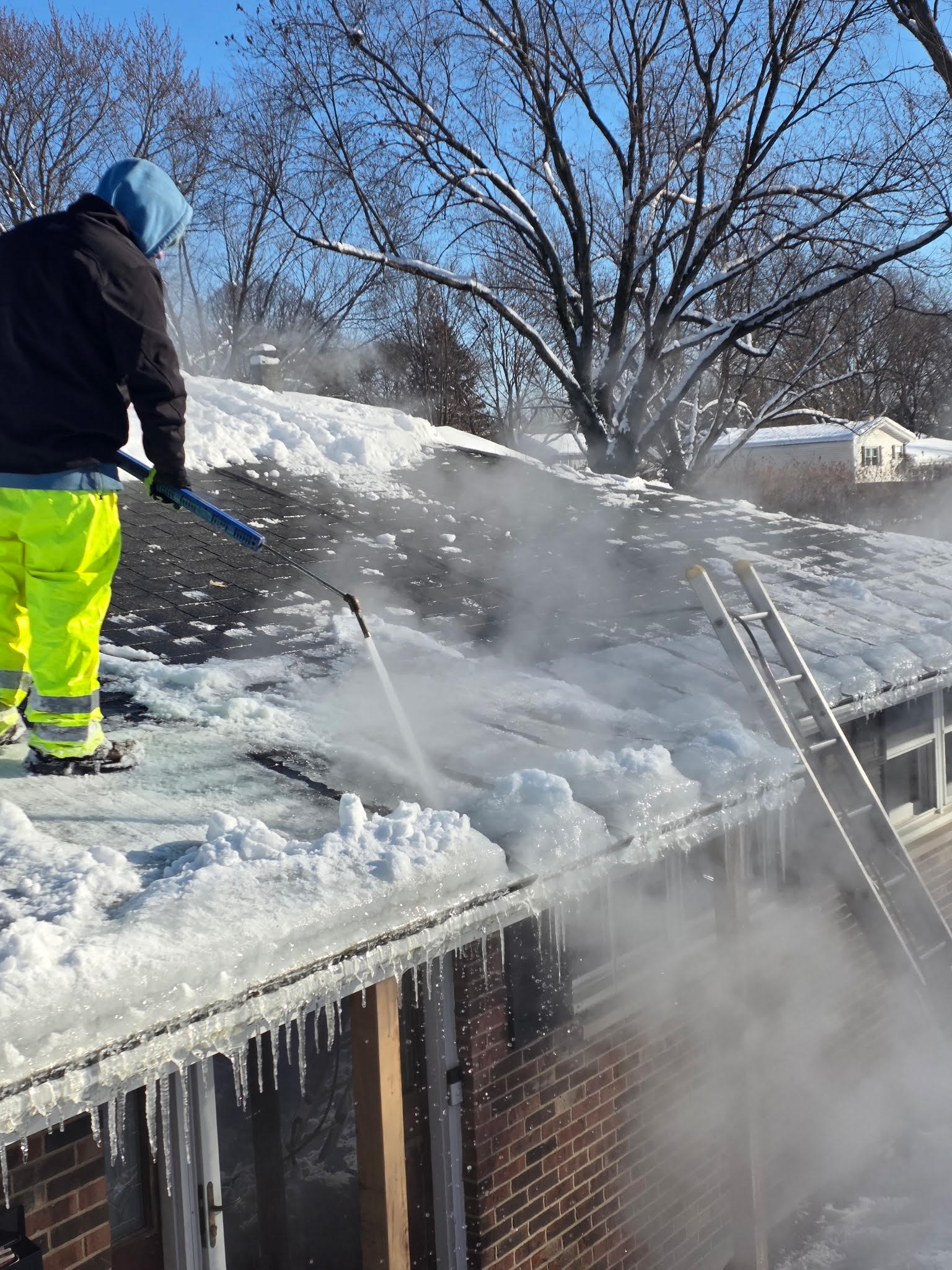
Ice Dam USA uses professional Arctic Steamers to melt roof ice without depending on aggressive chipping or high-pressure water blasting.
We welcome inquiries from Denver homeowners, property managers, and commercial building owners. Crew scheduling depends on current availability and property conditions.
01 / DENVER WINTER ROOF CONDITIONS
Why Denver's Sunny Winters Can Still Produce Serious Ice Dams
A roof doesn't have to remain buried under snow for weeks to develop a drainage-blocking ice dam.
Along Colorado's Front Range, a snowstorm may be followed by bright sunshine and rising daytime temperatures. Exposed roof sections can begin shedding snowmelt while other areas remain shaded or frozen.
If the meltwater reaches a cold roof edge and refreezes repeatedly, ice can build into a ridge that interferes with normal drainage.
Heat escaping through attic air leaks can add another source of roof snowmelt, including during below-freezing weather.
Sunlit Roof Slopes
Direct afternoon sunshine may warm part of a roof while nearby shaded areas stay colder. A temperature difference can affect where water refreezes.
Freezing Overnight Temperatures
Water produced during a warmer period can freeze again as temperatures drop. Repeated cycles may gradually enlarge a roof ice obstruction.
Roof Heat Loss
Warm indoor air entering an attic or roof assembly may heat roofing beneath the snow. This can create meltwater even when outdoor air is cold.
Denver-Specific Roof Ice Insight
A south- or west-facing roof slope may begin melting earlier than a north-facing or heavily shaded area. The exact outcome depends on roof geometry, building heat loss, snow coverage, and weather.
That is why the location of the ice obstruction matters more than simply counting icicles.
For a deeper explanation, visit our guide to how roof ice dams form .
02 / HISTORIC AND MODERN DENVER BUILDINGS
Different Denver Neighborhoods Bring Different Roof Challenges
Denver includes historic houses, brick bungalows, Denver Squares, newer custom homes, townhomes, condominiums, and commercial buildings.
Each type of property can have different roofing materials, roof intersections, insulation, and access limitations.
An older house in Park Hill or Capitol Hill may have porch roof connections, dormers, and additions. A newer multi-story property may have several roof elevations and an attached garage.
Park Hill and Established Neighborhoods
Many established Denver neighborhoods contain older homes with distinctive rooflines, covered porches, mature trees, and renovations completed over many decades.
A porch or later addition may create a colder lower roof section where runoff from the main roof can refreeze.
Washington Park and Central Denver
Homes around Washington Park and adjacent central neighborhoods include original construction, renovated houses, and larger replacement homes.
Dormers, upper-story additions, and attached structures can change where meltwater travels.
Highlands, Berkeley, and Sunnyside
Established homes and newer urban infill buildings can sit close together, making winter access and protection of adjacent walkways important.
The team must consider the affected roof as well as the space below it.
Central Park and Modern Developments
Newer homes, townhomes, and managed residential buildings may have multi-level roofing, shared exterior spaces, and attached garages.
Ice removal may require coordination with an association or property manager.
None of these architectural styles automatically causes ice dams. The concern is where snow melts, where water flows, and where the runoff becomes trapped.
03 / ROOF ICE SYMPTOM GUIDE
What Are You Seeing on Your Denver Roof?
Different winter roof symptoms can point to different problems. Use the sections below to understand what may be happening before requesting service.
Thick ice is forming along the lower roof edge
A solid ridge near the eave may be restricting drainage. If snow above the ridge continues melting, water may collect behind it and reach vulnerable roofing.
Professional evaluation is especially important when the buildup is extensive or water is entering the building.
Ice is concentrated below a dormer or in a valley
Roof valleys concentrate runoff from adjoining slopes. Dormers and additions can also create shaded transitions where meltwater refreezes.
The obstruction may affect a relatively small roof area while holding back water from a larger area above it.
Large icicles are hanging from the roof
Icicles show that water has melted and frozen, but they do not automatically prove that an ice dam is obstructing drainage.
Keep people clear of falling ice. The roof may need evaluation if thick frozen buildup is present above the icicles.
Water stains appeared during or after a thaw
A roof ice dam can contribute to water entering beneath vulnerable shingles or flashing. The visible stain may appear far from the original entry point.
An interior leak can have other causes as well. The affected roof should be evaluated rather than assuming ice is responsible.
The same roof section develops ice every winter
Recurring ice can indicate ongoing heat loss, uneven insulation, roof geometry, or repeated snowmelt and refreezing conditions.
Removing current ice may be necessary, but long-term building improvements may also be worth investigating.
04 / UNDERSTANDING THE ICE DAM CYCLE
How a Denver Snowstorm Can Turn Into a Roof Ice Dam
Snow Covers the Roof
A winter storm leaves snow on shingles, around dormers, and inside roof valleys.
Snow Begins Melting
Sunlight, indoor heat loss, or changing temperatures produce water beneath part of the snowpack.
Runoff Refreezes
Water travels to a colder eave, shaded transition, or lower roof and begins forming ice.
Drainage Is Blocked
The growing ice ridge restricts additional runoff, allowing water to collect behind it.
Why the Blockage Matters
Normal roof drainage carries meltwater away from the building. An ice dam interferes with that movement.
When water accumulates behind a frozen ridge, it can reach roofing seams, flashing, or other vulnerable details.
This may contribute to wet insulation, ceiling stains, damaged interior finishes, or water appearing inside the property.
Learn more in the Ice Dam USA Learning Center .
05 / PROFESSIONAL ARCTIC STEAMERS
Why True Steam Is Better for Ice Dam Removal
The equipment used to remove frozen roof ice matters because the ice may be bonded to shingles, flashing, and other roofing materials.
Ice Dam USA uses professional Arctic Steamers to direct low-pressure steam into the frozen buildup.
Steam uses heat as the primary means of melting ice. This helps technicians work through obstructions without depending on aggressive physical force.
ICE DAM USA'S METHOD
Professional Arctic Steamer
- Uses high-temperature, low-pressure steam.
- Melts ice primarily through heat.
- Supports focused removal of frozen buildup.
- Reduces reliance on impact tools.
- Can be used around complex roof details.
- Requires experienced, trained operation.
DIFFERENT EQUIPMENT
Hot-Water Pressure Washer
- Delivers heated water through a pressurized nozzle.
- Can place unnecessary force on shingles.
- May disturb granules or flashing if misused.
- Can force water into vulnerable roofing details.
- Is not Ice Dam USA's ice dam removal method.
Our Goal: Melt the Ice Without Aggressive Force
Low-pressure steam can reduce risks associated with forceful ice removal, but no roof work is completely risk-free.
Existing roof damage, ice thickness, slope, weather, technician technique, and safe access must be considered.
Review our professional steam ice dam removal process for more information.
06 / URGENT WINTER WATER INTRUSION
Water Leaking Into Your Denver Home?
If a roof ice dam is trapping meltwater, the moisture may find its way beneath vulnerable roofing details and into the building.
Water can travel through framing and insulation before becoming visible. The stain on your ceiling may not be directly below the entry point.
What to Do Safely
- Stay clear of sagging or bulging ceilings.
- Avoid wet electrical fixtures and wiring.
- Move belongings when it is safe.
- Photograph visible damage from safe areas.
- Keep people away from falling roof ice.
- Do not climb onto an icy roof or ladder.
For additional guidance, visit our emergency ice dam removal service page .
What Professional Removal May Accomplish
Melting a frozen obstruction can reopen drainage and reduce additional water backup against the roof.
Water already inside a roof assembly may continue moving after the exterior ice has been removed.
Roof defects, soaked insulation, or interior water damage may require separate professional evaluation or repair.
Emergency inquiries are accepted 24 hours a day.
Actual crew dispatch depends on availability, weather, travel, and roof conditions.
07 / REAL ICE DAM USA PROJECTS
See Our Roof Ice Removal Work
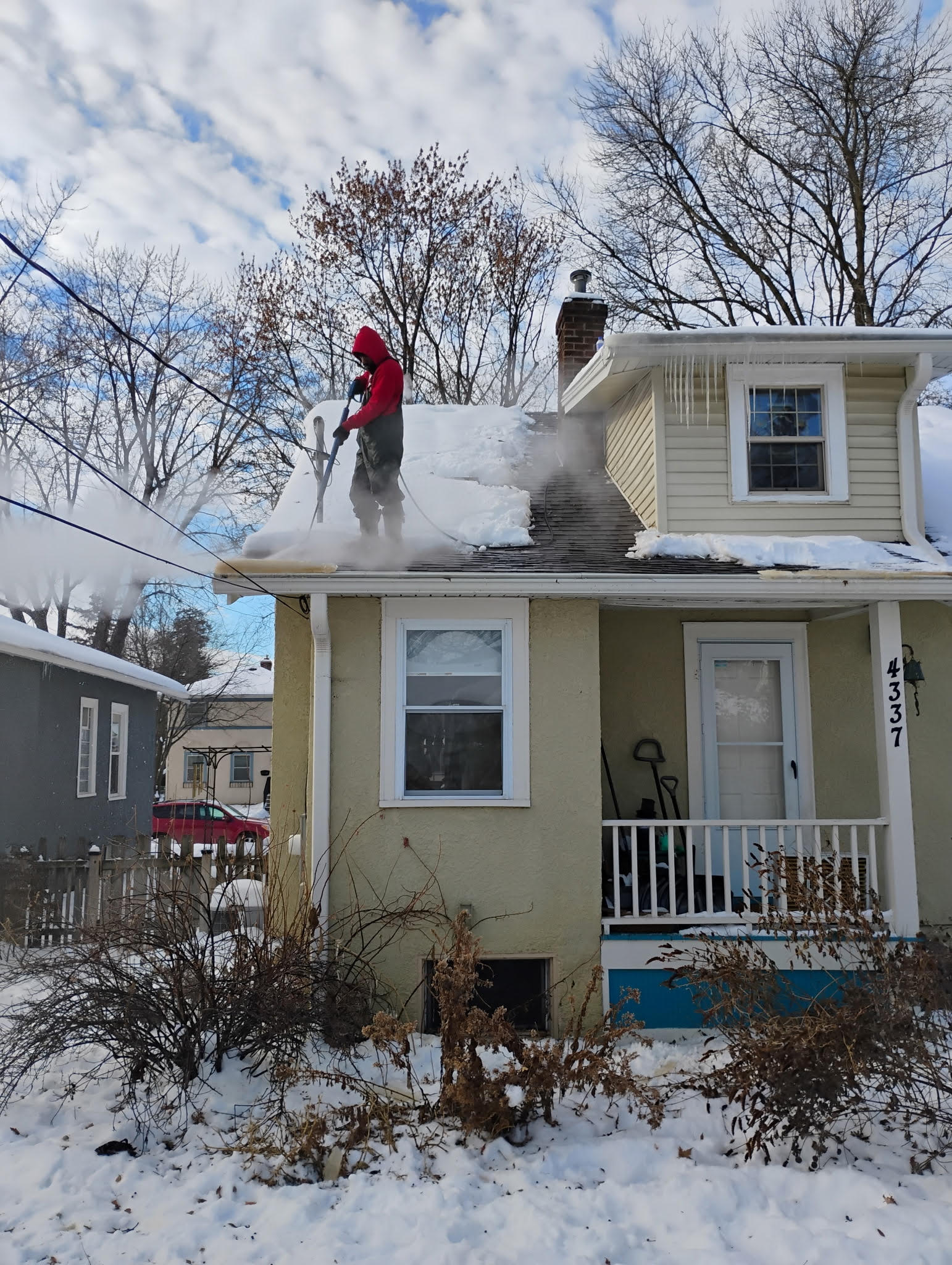
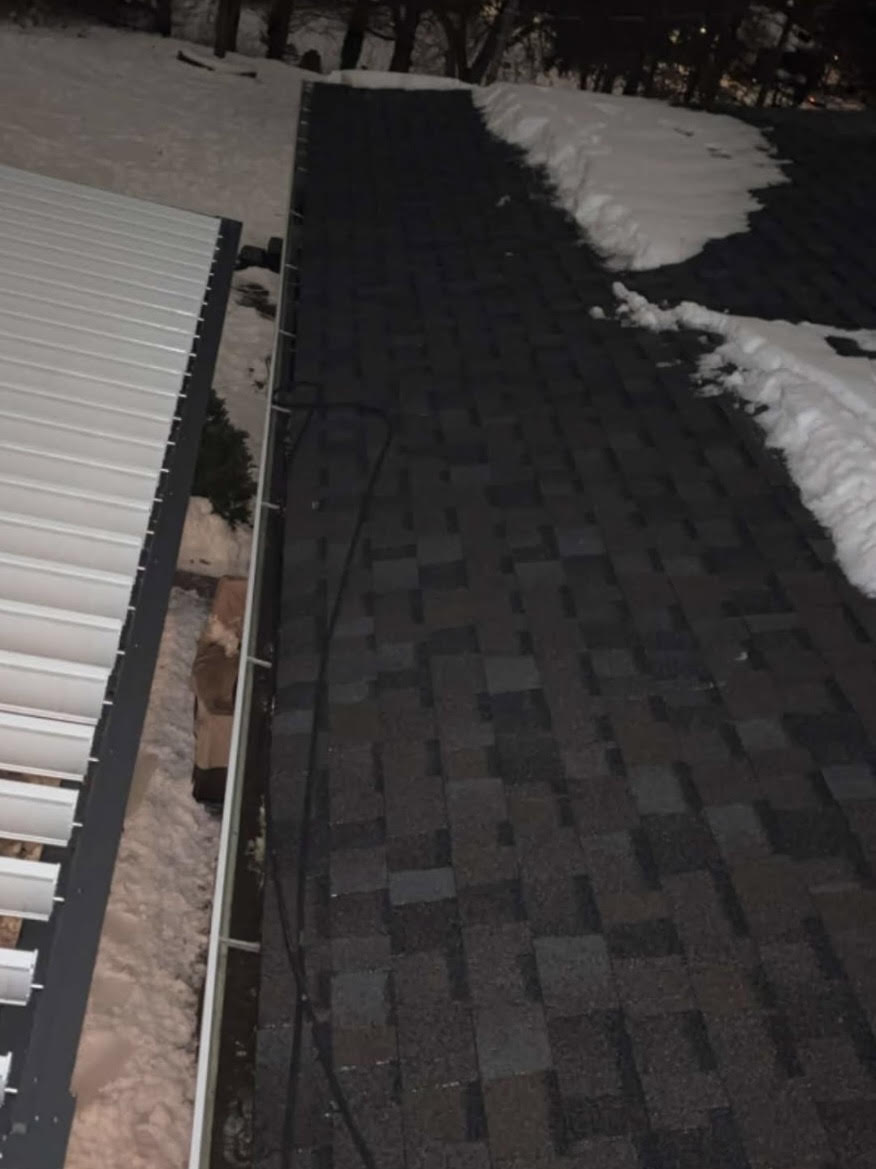
Ice Dam USA has decades of experience handling frozen roof obstructions using professional steam equipment.
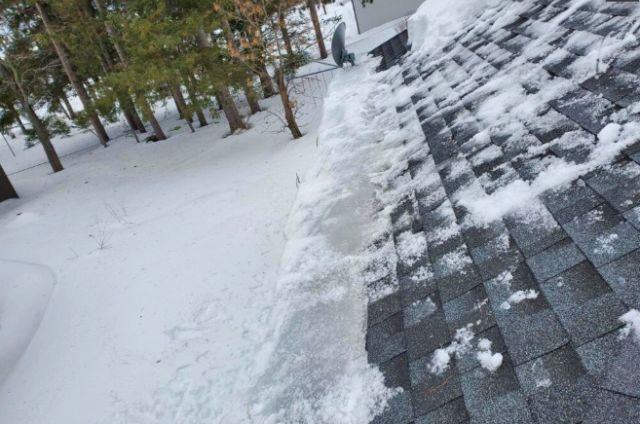
These project photographs show actual removal work and winter roof conditions.
Explore additional real projects in our ice dam removal photo gallery .
08 / DENVER RESIDENTIAL AND COMMERCIAL ROOFS
Ice Dam Removal for Denver Homes, Townhomes, and Businesses
A single-family roof, connected townhome building, and commercial property can all experience winter ice problems, but their access and drainage conditions differ.
Single-Family Homes
Ice dams may form along eaves, above porches, below dormers, or where an attached garage meets a higher roof.
Explore our residential ice dam removal services .
Townhomes and Condominiums
Connected roofing can carry meltwater across more than one residential unit.
Coordinating with associations, building owners, or property managers may be necessary before removal begins.
Commercial Properties
Retail properties, offices, and managed buildings may require additional consideration of entrances, walkways, parking, and building access.
See our commercial ice dam removal services .
A Flat or Low-Slope Roof Needs Its Own Evaluation
Not every winter roof leak is caused by a traditional ice dam at a pitched roof edge.
Commercial roof drainage, membranes, penetrations, and existing roofing defects may require a different inspection or repair approach.
09 / REQUESTING PROFESSIONAL SERVICE
What Happens When You Contact Ice Dam USA in Denver?
Describe the Problem
Tell our team where the property is located, where ice is forming, and whether water is entering the building.
Discuss Access and Scheduling
We review roof height, pitch, affected areas, winter access, weather, travel, and current crew availability.
Professional Steam Removal
When work is scheduled and conditions are safe, technicians use steam to melt targeted ice and help reopen drainage.
Denver Service-Request Checklist
Check the details you have ready. This checklist stays on your device; it does not send information or book an appointment.
10 / DENVER ICE DAM REMOVAL COST
What Affects Ice Dam Removal Pricing in Denver?
Professional ice dam removal costs depend on the actual conditions of the property and the applicable service category.
A one-story house with one accessible frozen roof edge may require different work than a tall building with multiple roof elevations and substantial ice.
Factors That Affect the Job
- Ice thickness and affected roof length.
- Roof height and slope.
- Number of frozen roof sections.
- Roof valleys, dormers, and transitions.
- Technician and equipment accessibility.
- Winter weather and travel conditions.
- Regular or priority scheduling.
Current hourly rates and appointment minimums are maintained on our ice dam removal pricing page .
Get Current Pricing Before Booking
Tell Ice Dam USA about your property and the areas affected by roof ice.
Our team can explain current rates, service minimums, scheduling, and relevant project considerations.
For urgent situations, mention whether water is actively entering the building.
11 / LONG-TERM ROOF PERFORMANCE
How to Reduce Recurring Ice Dams on Denver Homes
Removing existing roof ice addresses the immediate obstruction. It does not automatically correct the conditions that caused it.
If ice returns to the same roof area during multiple winters, building-envelope or roof-design conditions may need attention.
Attic Air Sealing
Warm air escaping from living spaces can heat roofing beneath snow. Sealing unintended air pathways may help reduce heat loss.
Insulation and Ventilation
A qualified professional can evaluate whether insulation coverage and attic ventilation are appropriate for the roof design.
Roof Transitions and Drainage
Dormers, lower roofs, porches, valleys, and flashing details may need special attention where snowmelt repeatedly collects or refreezes.
Denver's Solar Exposure Also Matters
Even a properly designed roof may experience differential snowmelt when one part is exposed to sunlight and another remains shaded.
That makes a property-specific assessment more useful than a one-size-fits-all ice dam prevention recommendation.
Read our ice dam prevention guide for additional information.
12 / DENVER METROPOLITAN SERVICE AREA
Denver Ice Dam Removal and Surrounding Metro Communities
Ice Dam USA welcomes professional ice dam removal inquiries from Denver and nearby Front Range metropolitan communities.
Denver-area appointments are coordinated according to technician coverage, travel, weather, and site conditions.
This page describes a service area and does not represent a permanent Ice Dam USA office in Denver.
Denver Neighborhoods
- Capitol Hill
- Park Hill
- Washington Park
- Cherry Creek
- Highlands
- West Highlands
- Berkeley
- Sunnyside
- Central Park
- University Park
- Hilltop
- All areas in between
Surrounding Denver Metro
- Aurora
- Lakewood
- Arvada
- Westminster
- Thornton
- Centennial
- Littleton
- Broomfield
- Parker
- All areas in between
For additional Front Range service information, visit our Colorado ice dam removal service hub .
If your address is outside Denver proper, call 855-468-4233 to confirm whether service can be arranged.
13 / WHY CHOOSE ICE DAM USA
Experience and Equipment Matter When Roof Ice Is Heavy
Ice Dam USA is a family-owned company with more than 30 years of experience in professional ice dam removal.
Our company uses specialized Arctic Steamers rather than treating hot-water pressure washing as equivalent to professional steam.
We work with residential and commercial property owners and evaluate roof access, frozen buildup, and existing conditions before removal.
What We Focus On
- Professional low-pressure steam equipment.
- Fully insured service operations.
- Careful evaluation of roof conditions.
- Residential and commercial properties.
- Clear pricing and scheduling discussions.
- Safe, practical service planning.
Questions Worth Asking Any Ice Dam Removal Company
What equipment do you use?
True low-pressure steam and hot-water pressure washing are not identical.
How do you protect the roof?
Ask how technicians evaluate existing shingles, flashing, ice thickness, and access.
What is included in the price?
Discuss hourly rates, minimums, travel, and scheduling priority.
What happens if the leak continues?
Removing ice can restore drainage, but existing roof damage may need additional repairs.
14 / DENVER ICE DAM REMOVAL FAQ
Frequently Asked Questions About Ice Dam Removal in Denver
Does Ice Dam USA provide ice dam removal in Denver, Colorado?
Ice Dam USA welcomes professional roof ice removal inquiries from Denver homeowners and commercial property owners. Service scheduling depends on current crew availability, travel, weather, and safe roof access.
Can ice dams form during Denver's sunny winter weather?
Yes. Direct sunlight can melt snow on exposed roof sections while shaded areas remain cold enough for the water to refreeze.
Building heat loss may also contribute to uneven roof melting.
Why does ice keep forming on the north side of my house?
North-facing roof sections may receive less direct winter sunlight and can remain colder than exposed roof slopes.
If meltwater reaches those colder areas, it may refreeze. Roof geometry and heat loss also matter.
Can historic Denver homes have ice dam problems?
Yes. Older homes may have dormers, porches, additions, or insulation differences that influence snowmelt and drainage.
A building's age alone does not determine whether ice dams form.
Can newer Denver homes develop ice dams too?
Yes. Newer homes may still have roof valleys, multiple elevations, or conditions that produce melting and refreezing in specific areas.
What is the difference between true steam and a pressure washer?
Professional low-pressure steam relies primarily on heat to melt ice. Hot-water pressure washers deliver heated water using spray pressure.
Excessive pressure may damage vulnerable roofing materials.
Does Ice Dam USA use Arctic Steamers?
Yes. Ice Dam USA uses professional Arctic Steamers for low-pressure steam roof ice removal.
Will steam removal damage my shingles?
Low-pressure steam reduces reliance on aggressive chipping and forceful water spraying.
However, no removal method can guarantee zero risk. Existing roof condition, weather, access, and technician technique are important.
Do large icicles mean I have an ice dam?
Not always. Icicles can appear without a significant drainage obstruction.
A thick ridge that traps meltwater behind it is a more important warning sign.
Can an ice dam cause water to leak into my ceiling?
Yes. Water collecting behind a roof ice dam can enter vulnerable roofing materials and travel into ceilings or walls.
Other roof defects can also cause leaks.
Will removing the ice immediately stop an interior leak?
Not necessarily. Removing the frozen obstruction can help restore drainage, but moisture already inside the roof may continue moving.
Separate roofing or interior repairs may still be necessary.
Can you work on Denver townhome and apartment buildings?
Ice Dam USA welcomes residential and commercial service inquiries, including multi-unit properties.
Shared roofs may require appropriate authorization and coordination with management.
How much does ice dam removal cost in Denver?
Pricing depends on roof height, ice thickness, affected areas, access, travel, and the applicable service category.
See our current ice dam removal pricing for published rates and appointment minimums.
How quickly can emergency ice dam removal be scheduled?
Ice Dam USA accepts emergency inquiries 24 hours a day.
Scheduling depends on current crew availability, weather, roof access, and travel conditions.
Call 855-468-4233 for current information.
Can an ice dam return after it has been removed?
Yes. Future snowfall, melting, and refreezing can create another obstruction.
Long-term improvements may involve attic air sealing, insulation, ventilation, or roofing details.
How do I request ice dam removal in the Denver metro?
Call 855-468-4233 or use our contact form to request service .
Provide your address, roof height, visible ice locations, and information about any active leaks.
15 / HELPFUL ICE DAM USA RESOURCES
Learn More About Professional Ice Dam Removal
These resources provide additional information about removal methods, pricing, urgent roof leaks, and long-term prevention.
ICE DAM USA / DENVER, COLORADO
Need Professional Ice Dam Removal in Denver?
If a frozen roof obstruction is preventing drainage or contributing to a winter roof leak, contact Ice Dam USA about professional low-pressure steam removal.
We welcome inquiries from Denver homeowners, townhome associations, property managers, and commercial building owners.
Call to discuss your roof conditions, current service rates, and scheduling availability in the Denver metro area.
855-468-4233 | ICE DAM USA
Scheduling is subject to travel conditions, weather, safe access, and technician availability.
