
Connected Roof Sections
Porches, additions and garage roofs may create transitions where meltwater collects and refreezes.
|
|||
|
|
Ice forming along the edge of your roof can become much more than a winter maintenance problem.
When snowmelt becomes trapped behind a ridge of ice, water may work its way beneath roofing materials and damage your home or business.
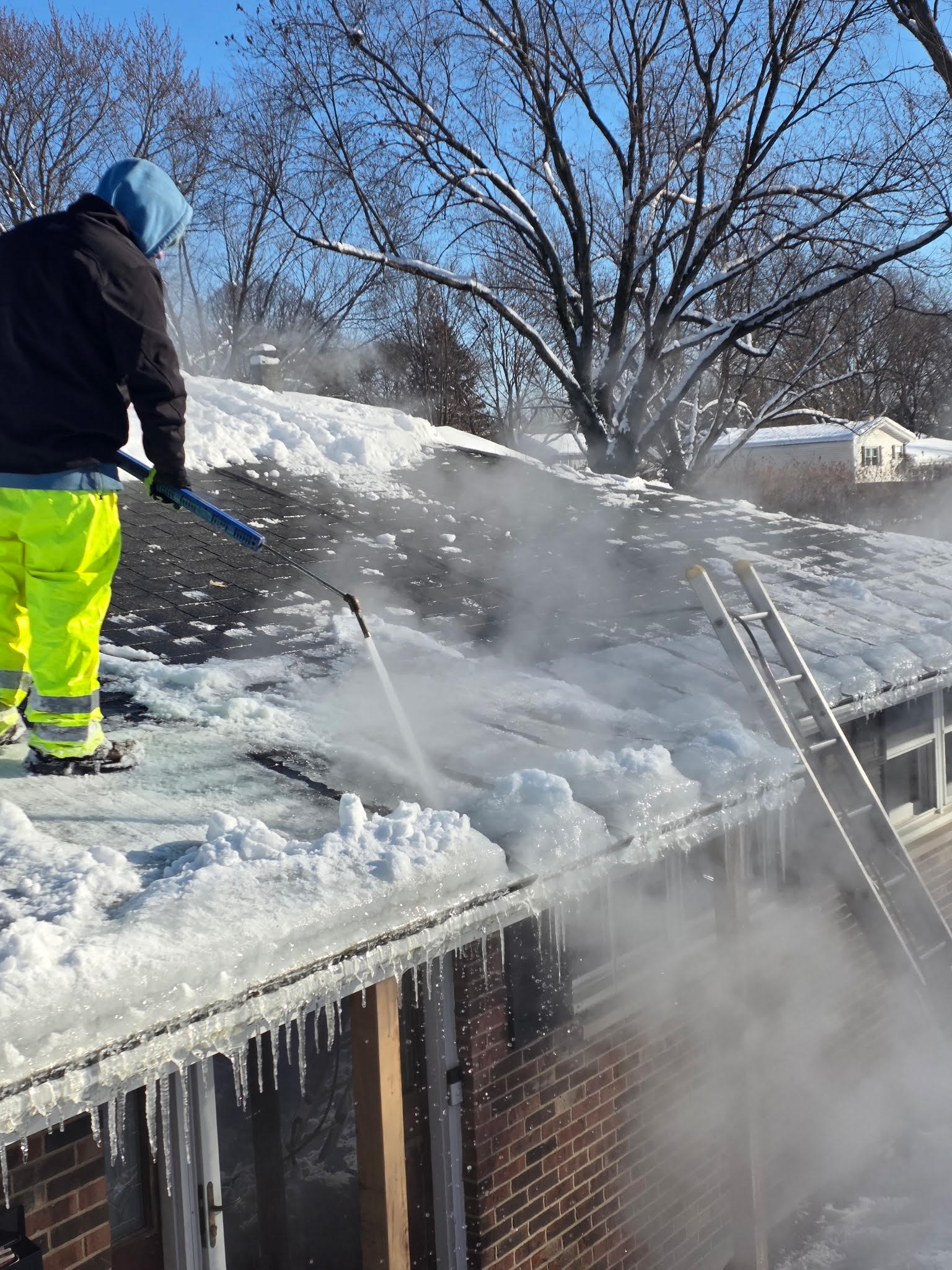
Ice Dam USA provides professional ice dam removal for York Center, Wisconsin, using Arctic Steamers and true low-pressure steam.
Our equipment uses heat to melt roof ice without relying on aggressive chopping or high-pressure water blasting.
York Center is an unincorporated community in the Town of York, in northeastern Dane County, Wisconsin.
The surrounding area is predominantly rural, with farmland, dispersed homes and agricultural properties.
Nearby communities include Marshall, Waterloo and Columbus. Although the larger Madison area is to the southwest, York Center has its own rural landscape and building conditions.
The Town of York is known for productive agricultural land and glacial drumlins, the elongated hills left by the region's glacial history.
Those surroundings can influence wind exposure and how snow collects around different properties. But ice dams themselves form when melting roof snow refreezes near colder edges.
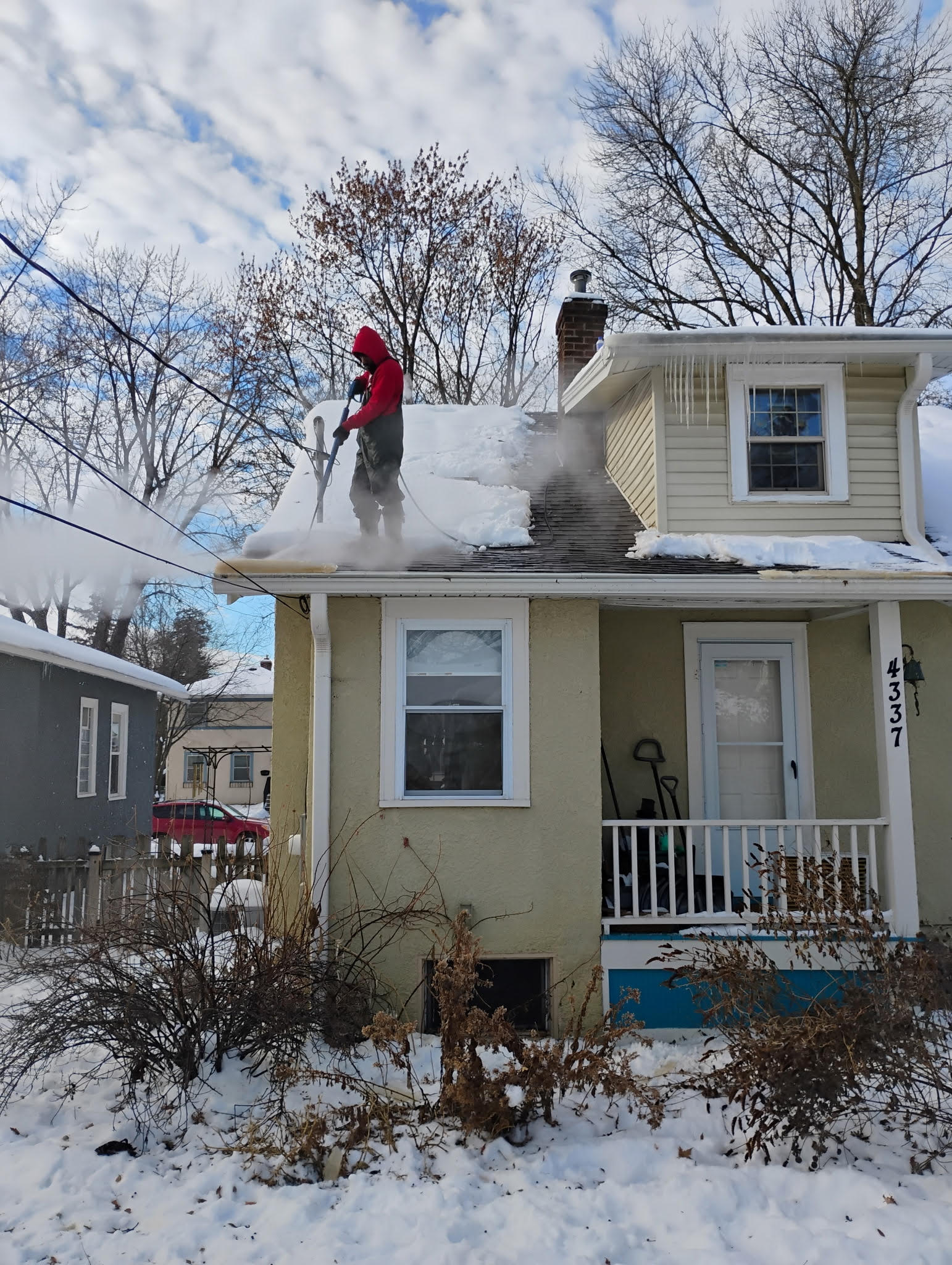
Real Ice Dam USA project photography. Not identified as a York Center property.
A rural home with an attached garage and several roof slopes may experience different snowmelt patterns than a simple one-story building nearby.
Actual roof temperatures, snow cover, building design and heat escaping from conditioned spaces can influence where ice forms.
Porches, additions and garage roofs may create transitions where meltwater collects and refreezes.
Open rural locations may experience drifting snow, while sheltered roof areas retain deeper accumulation.
Warm air entering an attic can heat portions of the roof deck and contribute to uneven snowmelt.
Ice dams commonly develop when a roof experiences different temperatures across its surface.
Snow collects on roof slopes, valleys and sheltered areas.
Building heat or weather causes part of the snowpack to melt.
Water reaches a colder roof edge and begins forming ice.
Additional ice forms, interfering with normal meltwater runoff.
Learn more about the causes in the Ice Dam USA Learning Center .
When ice is bonded to shingles, flashing and roof transitions, aggressive removal methods can create additional problems.
Ice Dam USA uses Arctic Steamers to melt existing roof ice with true low-pressure steam.
Specialized steam equipment relies on heat to melt ice at low pressure.
Hot-water pressure washers deliver heated liquid water through a pressurized nozzle.
Proper technique, roof condition, ice thickness and safe access still matter. No roof ice removal method is completely risk-free.
A continuous ridge may prevent melting snow from draining normally.
Water spots or dripping during a thaw may indicate moisture entering the roof.
Intersecting roof slopes may collect meltwater that refreezes in place.
Icicles may accompany ice dams but do not always indicate a blockage.
Moisture appearing near roof transitions may require investigation.
Repeated water problems may involve ice dams or separate roof defects.
An ice dam may trap water behind a frozen ridge and allow moisture to enter vulnerable roofing materials.
Water can travel along framing or insulation before becoming visible on a ceiling or wall.
Move belongings away from affected areas if it is safe. Photograph any visible damage.
Avoid wet electrical fixtures, sagging ceilings and locations beneath unstable ice.
Do not climb an icy roof or attempt to hammer or pry away roof ice.
Professional removal may restore drainage but cannot guarantee that every existing leak will stop immediately.
These photographs show actual Ice Dam USA work. They illustrate equipment and roof ice conditions, not necessarily jobs in York Center.
Ice Dam USA professional steam removal.
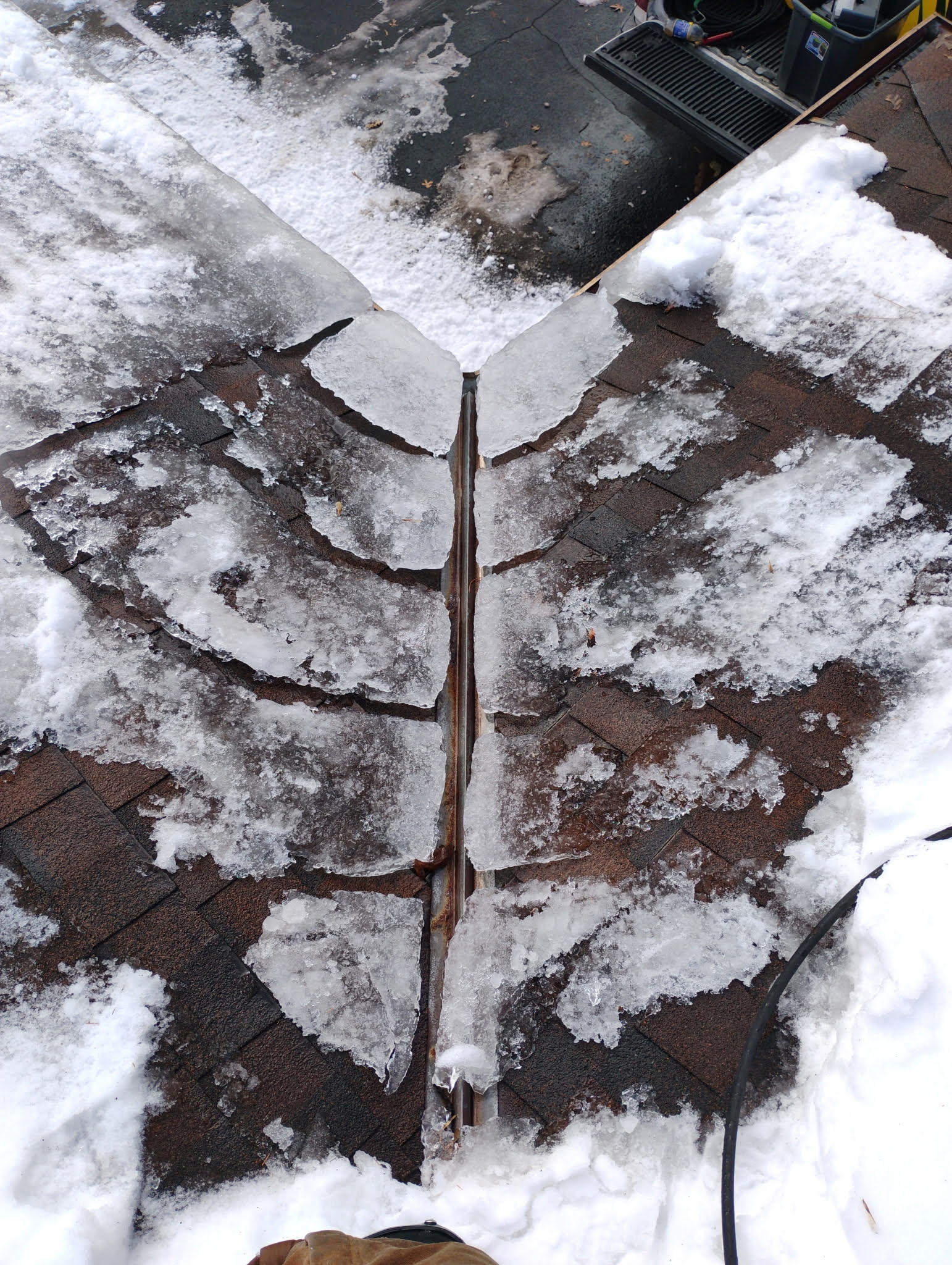
Ice accumulation at a residential roof intersection.
For a property in the Town of York, the roof itself is only part of the service assessment.
Snowbanks, driveway conditions, building height and areas where technicians can safely work may all influence job requirements.
Taller or steeper roof sections can require more complex access planning.
Several frozen roof sections may require more work than one localized obstruction.
Snow-covered approaches, uneven ground and obstacles may affect equipment access.
Removal pricing depends on the amount of ice, roof height and pitch, access, project complexity and scheduling requirements.
Ice Dam USA publishes standard and expedited service rates as well as minimum appointment requirements on our dedicated pricing page.
Steam removal addresses the existing buildup, but it does not automatically correct the conditions that caused the ice dam.
Reducing warm-air leakage may help prevent unwanted roof heating.
Appropriate insulation helps limit heat transfer toward the roof deck.
Ventilation, intersecting rooflines, flashing and snow distribution may require professional review.
York Center is located in the northeastern corner of Dane County within the rural Town of York.
Nearby communities include Marshall, Waterloo and Columbus.
Ice Dam USA welcomes inquiries from this area through our regional technician network. Availability depends on weather, scheduling, travel and property access.
The map below is centered on the York Center community in the Town of York, Dane County.
Geographic reference only. This map does not indicate an Ice Dam USA office or permanently stationed technician.
Ice Dam USA welcomes ice dam removal inquiries from York Center and the surrounding northeastern Dane County area. Contact us to discuss availability.
York Center is an unincorporated community in the Town of York, Dane County, Wisconsin.
We use Arctic Steamers and true low-pressure steam to melt roof ice.
Low-pressure steam uses heat to melt accumulated ice. Improper high-pressure water application can damage roofing materials.
Yes. Any building can develop an ice dam when roof snow melts and refreezes near a colder section.
Wind can redistribute snow and create deeper buildup in sheltered roof areas. Ice dams still require melting and refreezing.
Yes. Heat escaping from a building may cause roof snow to melt even while outdoor temperatures remain below freezing.
Yes. Trapped snowmelt may enter vulnerable roof areas and damage interior finishes.
Not necessarily. Removing ice may restore drainage, but water already inside the building or separate roof defects may cause continued leaking.
No. Icicles can occur without a substantial ridge that blocks roof drainage.
Yes. Roof intersections may concentrate snow and meltwater, leading to localized ice buildup.
Chipping, hammering and prying roof ice can damage shingles and flashing. Icy roofs also create serious fall hazards.
No roof ice removal method is completely risk-free. Roof condition, operator technique and safe access are important.
Pricing depends on roof height, amount of ice, access and scheduling. See our current pricing guide .
Yes. Removal addresses existing ice but does not necessarily eliminate underlying roof or attic conditions.
Our technicians use Arctic Steamers and true low-pressure steam to address accumulated roof ice.
Contact our team about your York Center property and available ice dam removal options.
