
Attic Air Leakage
Warm indoor air can escape through attic penetrations, warming the roof deck and melting snow unevenly.
|
|||
|
|
Ice building up along your roof? Water appearing inside your home during a winter thaw? Heavy ice can block snowmelt from draining and allow water to collect behind it.
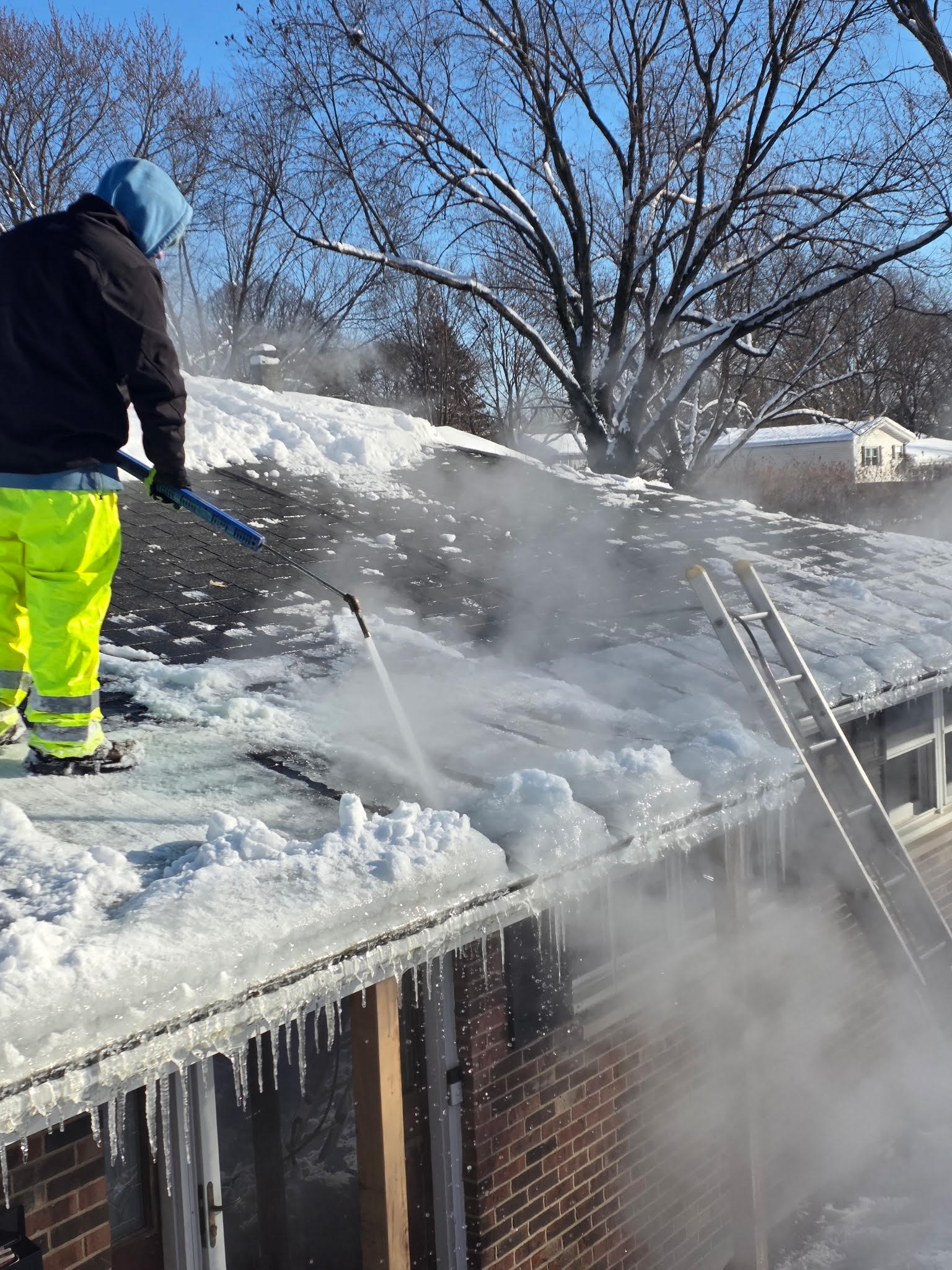
Ice Dam USA provides professional ice dam removal in Richwood, Dodge County, Wisconsin, using Arctic Steamers and true low-pressure steam.
Our method uses heat to melt accumulated roof ice instead of aggressive chopping or high-pressure water blasting.
Richwood is an unincorporated community in the Town of Shields in Dodge County, Wisconsin. It is situated in the rural area near Watertown.
This page specifically covers Richwood in Dodge County, not the separate Town of Richwood in Richland County farther west.
The area surrounding Richwood includes agricultural land, rural homes and buildings with varied roof designs.
Winter snow, heat escaping from buildings, and repeated freezing can create roof ice dams on these properties.
When meltwater refreezes near a colder roof edge, the accumulating ice may obstruct normal drainage. Additional snowmelt can then collect behind the ridge.
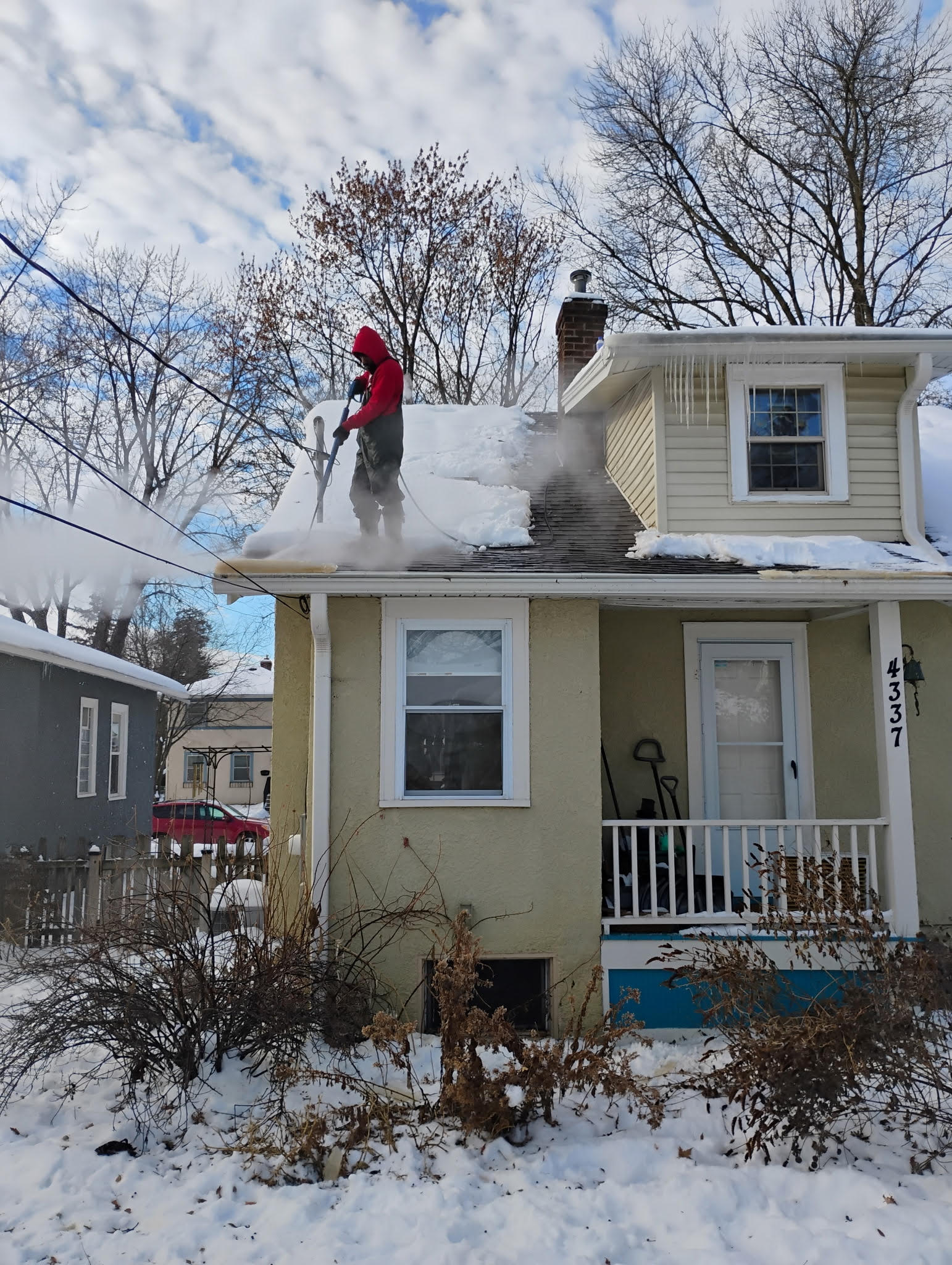
Actual Ice Dam USA project photography. Not identified as a Richwood property.
Properties in the Richwood area may experience similar winter storms but very different roof ice conditions. Roof design, heat loss and snow distribution all influence ice formation.
Warm indoor air can escape through attic penetrations, warming the roof deck and melting snow unevenly.
Roof transitions between older and newer sections may concentrate meltwater on colder surfaces.
Exposed properties can have uneven snow cover, with deeper deposits in sheltered roof valleys.
An ice dam is a ridge of ice that prevents melted snow from flowing normally off part of the roof.
Snow accumulates on roof slopes and sheltered areas.
Building heat or weather warms part of the roof.
Meltwater reaches a colder area near the roof edge.
More ice accumulates and can trap additional water.
Explore our Ice Dam Learning Center for more information about why roof ice forms.
Ice Dam USA uses professional Arctic Steamers to remove existing roof ice through low-pressure steam.
Not all equipment marketed for ice removal uses the same operating method.
True steam equipment uses heat to melt ice rather than relying on aggressive water pressure.
Pressure washers deliver heated liquid water through a pressurized nozzle.
Low-pressure steam is a roof-conscious method when used appropriately. However, roof condition, ice thickness, safe access and operator technique remain important. No method guarantees zero damage.
Heavy ice near the eaves may block snowmelt drainage.
Discoloration or dripping during a thaw may indicate water entering the roof.
Intersecting roof sections can concentrate snow and refrozen meltwater.
Icicles can accompany ice dams but do not always indicate one.
Water appearing near roof and wall transitions may warrant investigation.
Repeated water intrusion may involve ice dams or other roofing defects.
When roof ice traps meltwater, moisture may enter vulnerable roofing materials and move through insulation or framing.
The visible ceiling stain may not be directly below the roof entry point.
Move belongings away from the leak when safe and photograph visible damage. Avoid wet electrical fixtures and sagging ceilings.
Never climb an icy roof to hammer, chop or pry away accumulated ice.
Steam removal can help reopen blocked drainage paths, but existing water or separate roof defects may require additional work.
These photographs illustrate actual Ice Dam USA work. They are not represented as Richwood projects.
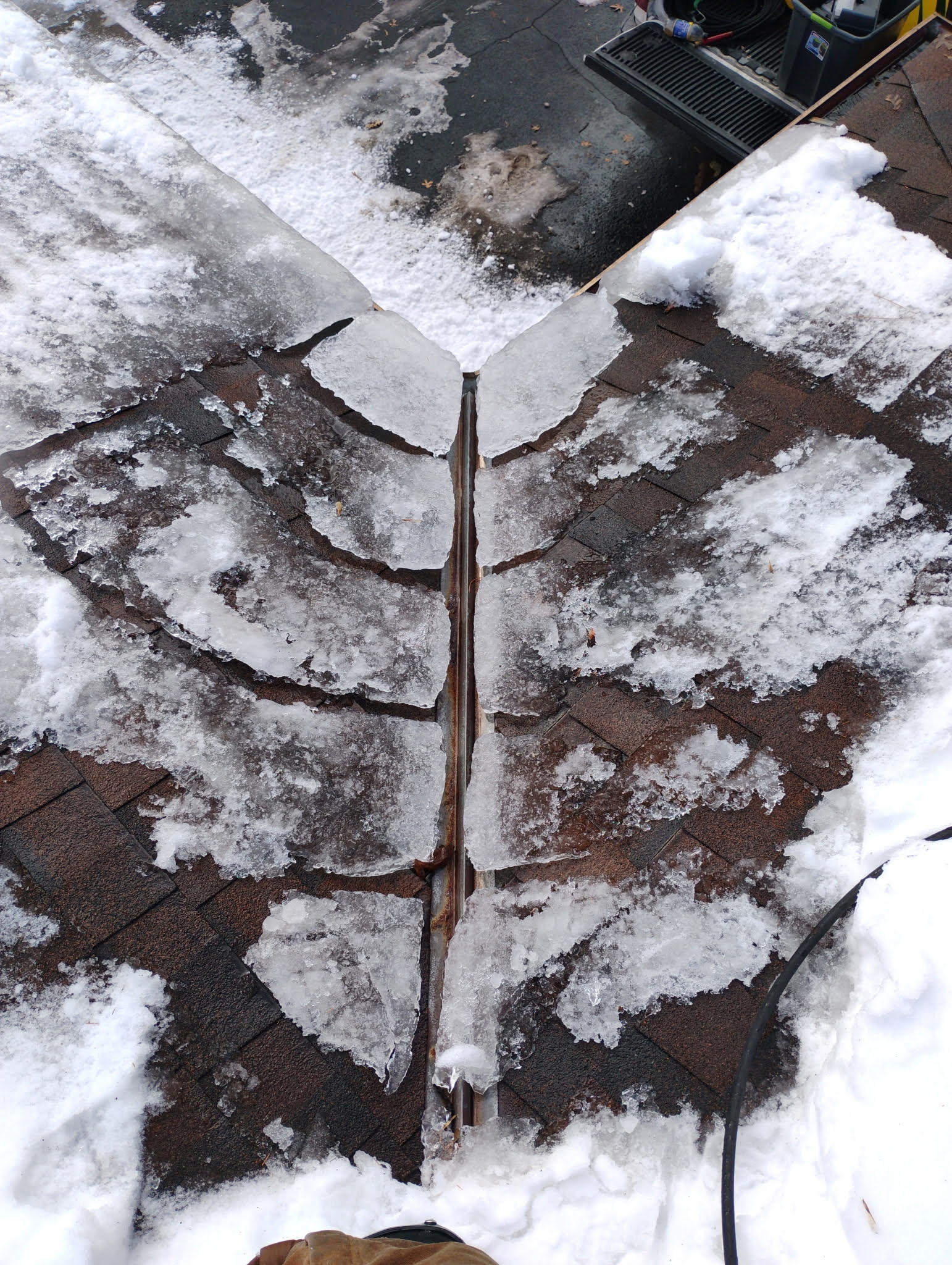
Roof valley ice conditions photographed during a project.
Professional steam ice removal in progress.
Ice dam removal on a one-story residence can involve different requirements from a steep two-story home with several roof intersections.
Building height, roof slope and roof configuration affect how work is planned.
Multiple roof valleys or ice ridges may require a broader scope of work.
Snowbanks, ground conditions and obstacles around the building may affect access.
The amount of accumulated ice, roof height, access, job duration, scheduling and roof complexity can affect the final price.
Ice Dam USA maintains its current standard, complex and expedited service rates on its pricing page rather than publishing changing hourly prices on each local page.
Professional steam removal addresses accumulated ice. Long-term prevention may require reducing the conditions that cause roof snow to melt unevenly.
Reducing warm-air leakage can help limit unintended roof deck heating.
Appropriate, consistent insulation helps control heat transfer.
Roof valleys, attic ventilation and drainage details may need investigation.
Richwood is in the Town of Shields, Dodge County, near Watertown and the greater Juneau area.
Ice Dam USA welcomes inquiries from residential and commercial customers through its regional technician network. Scheduling depends on crew availability, weather and site conditions.
Juneau and surrounding Dodge County communities may also be relevant to your property location. Contact the team to confirm availability.
This map is centered on the Richwood community in Dodge County, not the Town of Richwood in Richland County.
Geographic reference only. This does not indicate a physical Ice Dam USA office or permanently stationed technician.
Ice Dam USA welcomes ice dam removal inquiries from Richwood and nearby Dodge County areas. Contact our team to confirm service availability.
This page concerns Richwood in the Town of Shields, Dodge County, near Watertown. It does not describe the Town of Richwood in Richland County.
Our technicians use Arctic Steamers for low-pressure steam ice dam removal.
True low-pressure steam uses heat to melt ice. Improper high-pressure water application can damage roofing materials.
Yes. Any building can develop ice dams when melting snow refreezes and obstructs roof drainage.
Yes. Intersecting roof slopes can collect snow and concentrate meltwater in colder areas.
Not necessarily. Removing ice may reopen drainage, but existing moisture or other roof defects may require further work.
No roof work is completely risk-free. Roof condition, operator technique, ice thickness and safe access matter.
Chipping or hammering ice can damage roofing. Working on icy roofs also creates fall hazards.
Pricing depends on ice accumulation, roof height, access, duration and scheduling. See our current pricing guide .
This page describes a service area rather than a permanent local office. Work is coordinated through the regional technician network.
Yes. Steam removal addresses existing ice. Attic air leaks, insulation and roof conditions may still need improvement.
We use professional Arctic Steamers and true low-pressure steam to help remove accumulated roof ice.
Contact our team about your Richwood property, roof conditions and available service options.
