
Attic Air Leakage
Warm indoor air escaping through attic openings or gaps may raise the temperature of the roof deck and melt snow.
|
|||
|
|
When winter snow starts melting but the edges of your roof remain frozen, water can become trapped behind a growing ridge of ice.
Ice Dam USA provides professional ice dam removal in Portland, Wisconsin, using Arctic Steamers and true low-pressure steam.
Our technicians use heat to melt accumulated roof ice instead of relying on aggressive chopping or high-pressure water blasting.
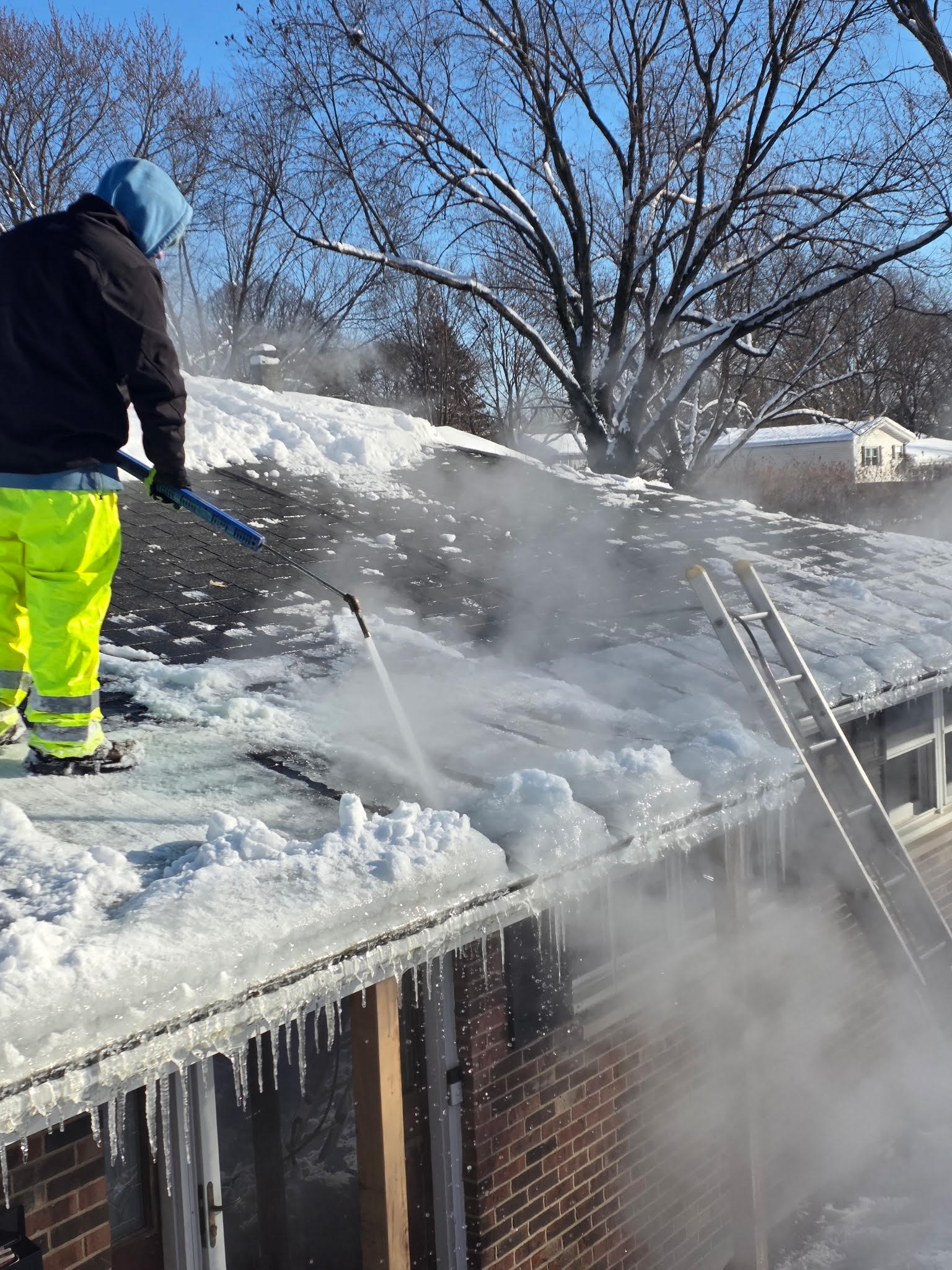
Portland is an unincorporated community located across portions of Dodge and Jefferson counties in south-central Wisconsin.
The community includes portions of the Town of Portland and the Town of Waterloo. This page focuses specifically on Portland near Waterloo, not the separate Portland community in Monroe County.
The surrounding region includes rural residences, agricultural properties and established homes with varying roof designs.
These buildings can experience uneven snow accumulation, changing roof temperatures and winter melting followed by refreezing.
Ice dams form when meltwater reaches a colder roof section and freezes. As more ice accumulates, water may become trapped behind the ridge and enter vulnerable roofing.
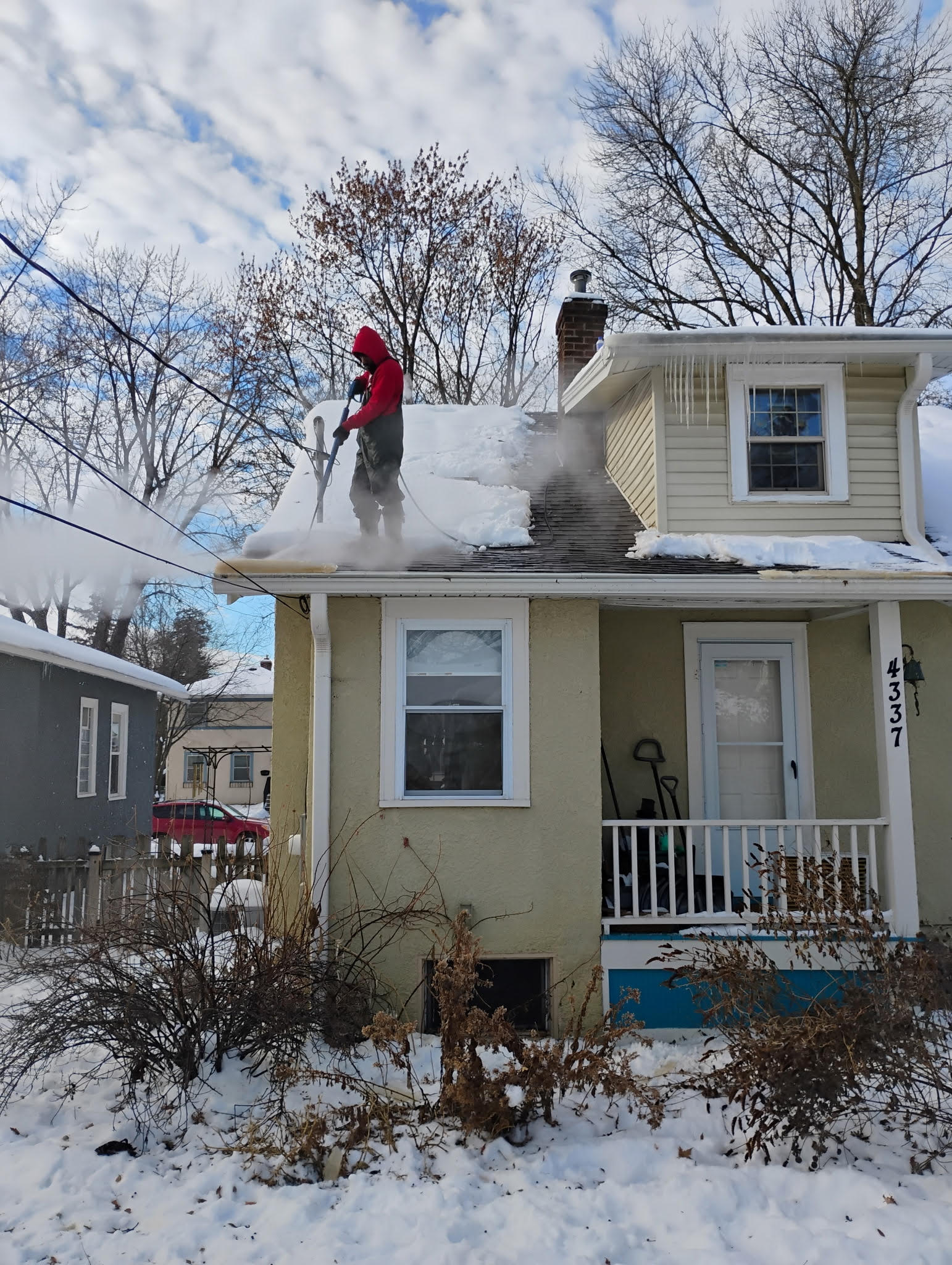
Actual Ice Dam USA project photography. Not represented as a Portland job.
Snowfall alone doesn't determine whether an ice dam develops. The temperature of the roof, snow distribution and roof design all influence where melting and refreezing occur.
Warm indoor air escaping through attic openings or gaps may raise the temperature of the roof deck and melt snow.
Older houses and rural properties may have additions, dormers or multiple roof sections. These intersections can direct meltwater toward colder areas.
Wind-driven snow can collect unevenly, while sunlight and shaded roof sections can experience different rates of melting and refreezing.
A professional assessment should focus on the actual ice obstruction, roof materials and site conditions rather than assuming every property has the same problem.
An ice dam is a ridge of ice that obstructs the normal movement of meltwater off a roof.
Snow covers roof slopes, valleys and overhangs.
Building heat or weather warms part of the roof.
Meltwater reaches a colder roof section.
Repeated freezing creates a barrier to drainage.
Learn more in the Ice Dam USA Learning Center .
Removing thick ice from shingles, flashing and vulnerable roofing requires specialized equipment and appropriate technique.
Ice Dam USA uses Arctic Steamers, which produce true low-pressure steam to melt ice rather than relying on forceful water jets.
Professional steam equipment uses heat to melt accumulated ice at low pressure.
Pressure washers deliver heated liquid water through a pressurized nozzle.
Even steam removal requires careful operation. Roof condition, technician technique, weather and access affect the work. No method guarantees zero risk of roof damage.
A thick ridge along the eaves may prevent meltwater from draining normally.
New moisture or staining during winter may indicate water entering the roof.
Intersecting roof slopes can collect snow and concentrate refrozen water.
Large icicles may accompany ice dams but do not alone confirm an obstruction.
Moisture near wall and roof transitions may indicate a winter drainage problem.
Repeated leaking during thaws warrants examination of ice dams and other roof defects.
An ice ridge may prevent snowmelt from draining and allow water to accumulate behind it.
That moisture can enter vulnerable roofing and travel along insulation, framing or interior surfaces.
The place where a ceiling stain appears may not be directly below the roof entry point.
Move valuables away from the affected area where safe and document any visible damage.
Stay away from wet electrical fixtures and unstable ceilings. Avoid climbing icy roofs or striking roof ice with tools.
Professional ice removal may restore drainage, but existing moisture and separate roof defects can still require repairs.
These project photographs illustrate actual Ice Dam USA roof ice conditions and steam removal work. They are not identified as Portland projects.
Ice Dam USA professional roof ice removal.
Actual steam removal project photography.
Portland-area properties may include rural residences, farmhouses and buildings surrounded by open land.
The conditions around a building affect how professional ice dam removal work is planned.
Snow-covered driveways, sloping ground and limited access near a building can affect equipment planning.
Roof pitch, height and connected sections influence the safest practical removal approach.
Multiple ice ridges or difficult roof valleys may require a broader removal scope than a single obstruction.
The amount of ice, roof height, accessibility, work complexity and scheduling requirements can affect the cost.
Ice Dam USA offers standard and expedited or complex service rates, with a minimum appointment charge.
Current rates and billing requirements are published on our dedicated pricing page.
Professional steam removal addresses existing ice. Preventing future ice dams may require improvements to the building.
Reducing warm-air leakage can help limit unintended warming of the roof deck.
Consistent insulation can reduce heat transfer toward the roof.
Ventilation, roof valleys, flashing and building geometry may warrant professional review.
Ice Dam USA welcomes ice dam removal inquiries from Portland and nearby Wisconsin communities.
Our regional technician network travels within service areas according to scheduling, weather and worksite conditions.
This map identifies Portland near Waterloo at the Dodge and Jefferson County boundary.
Geographic reference only. The map does not indicate an Ice Dam USA office or permanently stationed technician.
Ice Dam USA welcomes ice dam removal inquiries from Portland in the Dodge and Jefferson County area. Contact our team to discuss service availability.
This page covers Portland near Waterloo at the Dodge and Jefferson County boundary, not Portland in Monroe County.
Our company uses Arctic Steamers to remove roof ice through true low-pressure steam.
Low-pressure steam melts ice using heat rather than forceful water pressure. Improper pressure washing can damage roofing.
Yes. Any building with suitable snow, roof temperature and refreezing conditions may develop an ice dam.
Yes. Heat escaping from a building can warm a portion of the roof enough to melt snow even when the air remains below freezing.
Yes. Intersecting roof slopes may collect snow and direct meltwater into areas where it can refreeze.
Removing ice can restore drainage, but existing moisture and other roof defects may cause leaking to continue.
No. Icicles can form without a significant ice ridge that blocks roof drainage.
No removal method is completely risk-free. Roof condition, technician technique and site safety all matter.
Chopping and prying roof ice can damage shingles and flashing. Icy roofs also create serious fall hazards.
Pricing depends on roof height, access, ice buildup, job requirements and scheduling. See our current pricing information .
This page describes a service region rather than a physical office. Ice Dam USA coordinates work through regional technicians.
Yes. Professional removal addresses existing ice but does not automatically correct the conditions causing it.
Ice Dam USA uses Arctic Steamers and professional low-pressure steam to remove accumulated roof ice.
If you are dealing with roof ice buildup or a winter leak in Portland, contact our team to discuss available removal options.
