
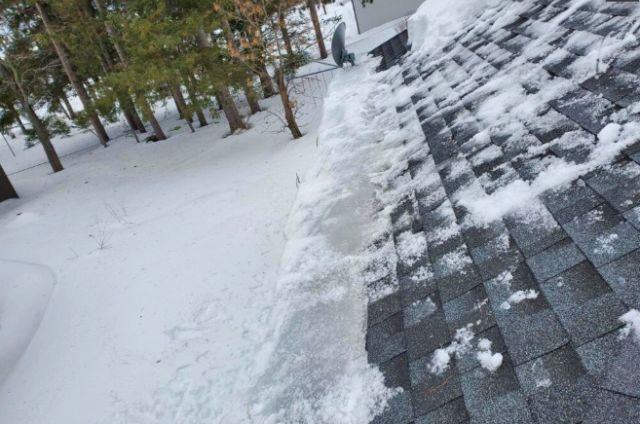
Ice Dam Removal in Burlington, ND.
Roof ice doesn't care how expensive your home is. When a frozen ridge blocks drainage, the equipment and experience used to remove it matter.
Ice Dam USA specializes in professional low-pressure steam ice dam removal for residential and commercial properties in Burlington.
One winter. Many different roof conditions.
Burlington sits near the meeting of the Des Lacs and Souris rivers, northwest of Minot. Its river-valley setting and surrounding open landscape can expose buildings to different patterns of wind and snow accumulation.
A roof sheltered by nearby buildings or trees may hold snow differently from a roof exposed to open winter winds. Valleys and changes in roof height can also collect drifts.
Ice dams form when snow melts on a warmer part of the roof and refreezes at a colder edge. A growing ridge can prevent additional meltwater from draining.
This makes every Burlington roof worth assessing on its own merits rather than assuming every building responds to winter the same way.
For a more detailed explanation of how insulation, snow and temperature work together, explore our ice dam prevention resource .
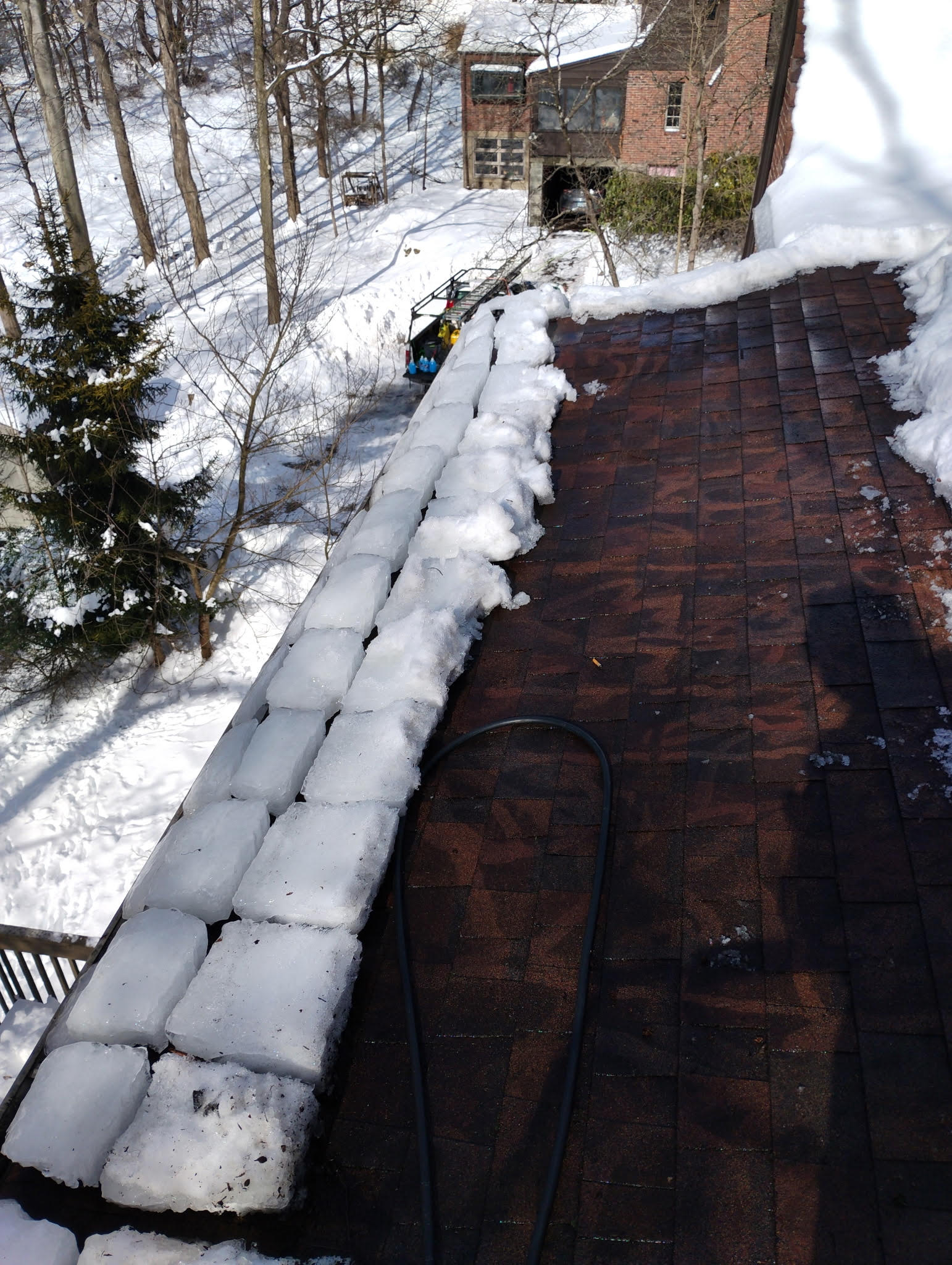
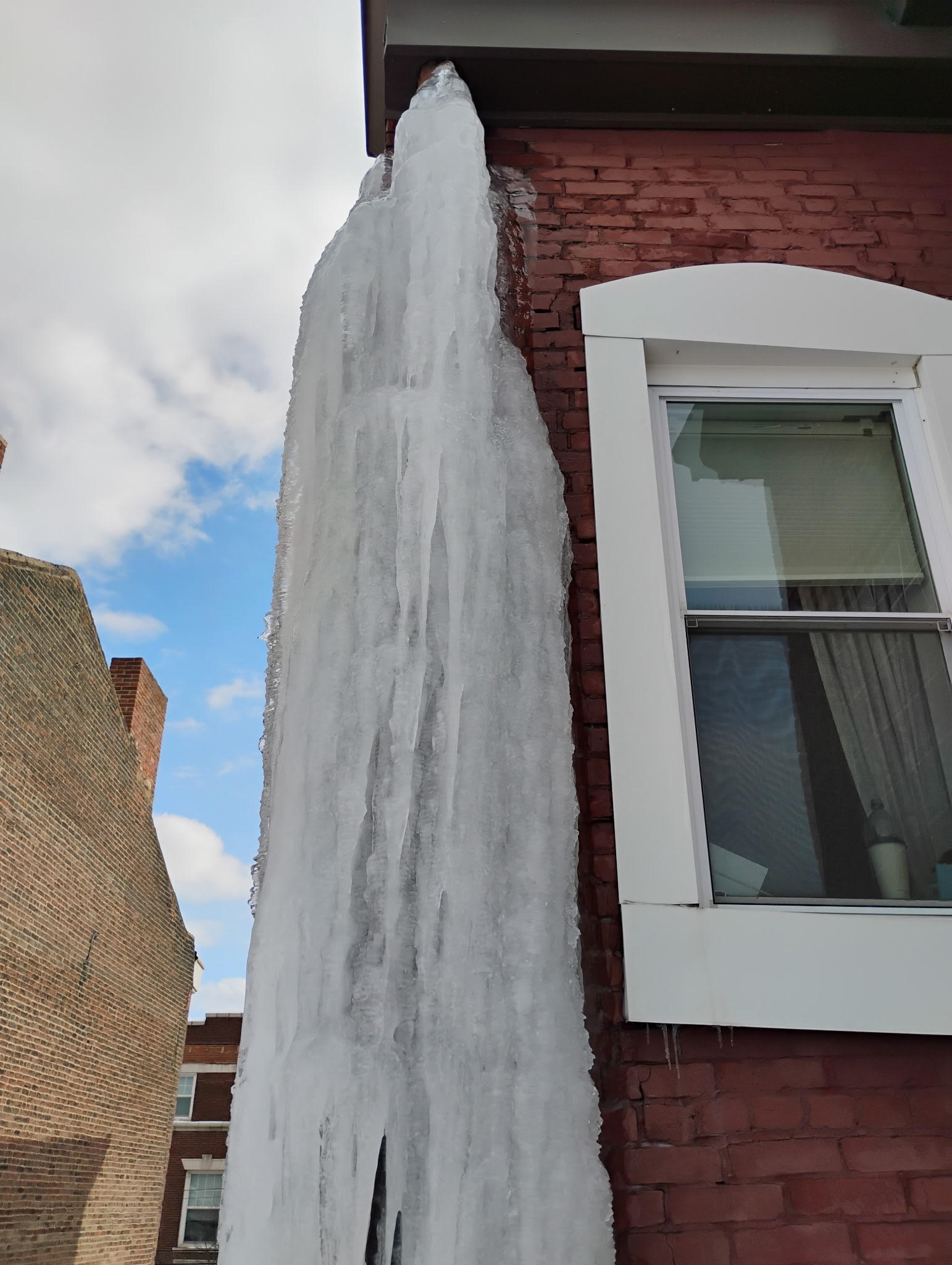
The ice is the result. Heat and water movement start the problem.
An ice dam is more than a collection of icicles. It's a frozen obstruction that prevents water from moving naturally down the roof.
Snow accumulates.
Snow settles across the roof. Roof shape, wind and shelter affect where deeper snow collects.
Heat produces meltwater.
Warm roofing, heat from inside the building, or changing outdoor conditions allow some snow to melt.
Water meets colder roofing.
Water travels downhill, reaches colder roof sections, and begins to refreeze along the eaves.
Drainage becomes restricted.
The ice ridge grows. Water can collect behind it and reach vulnerable roofing or flashing details.
Simplified educational roof illustration. Not to scale.
Below freezing doesn't always mean the snow stays frozen.
Snow lying over a warmer portion of roof can melt from beneath, even if outside air remains below freezing.
This water can refreeze as it reaches a colder roof edge or overhang. The process may repeat until a substantial obstruction forms.
Roof ice dams can occur with or without gutters. For related information, see our gutter ice removal guide .
Not a pressure washer with a different name.
Ice Dam USA uses custom low-pressure steam equipment designed for the specific demands of roof ice removal.
Our equipment creates high-temperature steam and delivers it through hoses to the affected roof areas. The heat melts established ice instead of depending on high-pressure water to blast it apart.
This distinction matters when working near shingles, flashing, gutters and other roof components. Ice can bond tightly to those surfaces.
A hot-water pressure washer relies on a forceful water stream. Our true-steam approach prioritizes heat with substantially lower operating pressure.
Controlled steam removal can reduce risks associated with aggressive chopping or pressure washing, although every roof project still requires professional care.
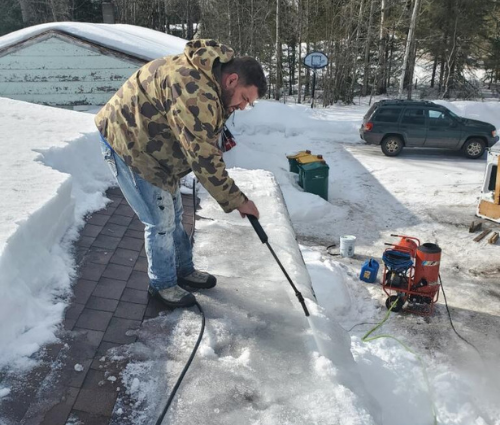
- Custom low-pressure steamers Built for melting roof ice, rather than blasting roofing with high pressure.
- Heat delivered through hoses Technicians direct steam toward the affected ice while accounting for roof access and layout.
- Work around complex roof details Roof valleys, eaves, flashing and gutters require appropriate planning and technique.
- Property-specific setup Building height, access and hose distance can influence the work.
- Water and electrical access Our published equipment FAQ identifies a water supply and a standard 110V outlet as needs to discuss before service.
- Documenting the job Ice Dam USA describes taking before, during and after photographs of removal work.
Learn more about equipment requirements, roof safety and the removal process in our frequently asked questions .
Steam versus high-pressure water. The difference matters.
True low-pressure steam
Primarily uses heat to melt ice.
- Designed for controlled ice melting
- Less reliance on mechanical impact
- Used by trained Ice Dam USA technicians
- Work scope depends on the roof and conditions
High-pressure washing
Uses forceful water pressure to dislodge or cut through buildup.
- Greater risk of striking vulnerable roofing
- Force may affect shingles and flashing
- Not Ice Dam USA's chosen ice dam removal method
- Should not be attempted as a homeowner shortcut
Does steam guarantee no roof damage?
No method can eliminate every risk. Professional low-pressure steam is intended to reduce unnecessary force against roofing materials, but existing roof condition, ice thickness and technician judgment still matter.
What your roof may be telling you.
An ice dam may be developing before water appears indoors. Watch for visible changes from a safe ground location.
- Thick ice ridges along roof eaves
- Heavy icicles near gutters or entrances
- Ice collecting around roof valleys
- Patchy or uneven snowmelt
- New stains near exterior walls
- Recurring winter ceiling leaks
Never climb onto an icy roof.
Snow-covered roofing, frozen ladders and falling ice can create serious hazards. Avoid axes, hammers, open flames and pressure washing. If the ice requires removal, contact a qualified professional.
For additional answers about identifying ice dams and safe removal, visit our ice dam FAQ page .
Water coming through the ceiling?
The immediate priority is protecting people from electrical hazards, falling materials and unsafe roof conditions.
Move valuables only where safe. Avoid wet electrical fixtures, sagging ceilings and areas beneath unstable hanging ice.
An ice dam may be contributing to the problem, but defective flashing and other roof issues can produce similar symptoms.
Professional ice removal may improve drainage. It cannot guarantee that water already inside the building will stop moving immediately.
Learn how emergency requests are handled on our emergency ice dam removal page .
A little information helps us assess the situation.
Property details: Your Burlington address, building height and roof configuration.
Ice conditions: Where buildup is visible, its approximate extent, and any access limitations.
Leak details: Whether water is entering the building and the affected interior areas.
If you can safely photograph the roof from the ground, those images may help explain the issue.
Never climb a roof just to obtain photos.
Every roof is different.
Ice dam removal cost is determined by the requirements of the actual work.
- Roof height, slope and accessibility
- Ice thickness and affected areas
- Number of roof valleys and transitions
- Equipment and hose positioning
- Travel and job duration
- Standard or expedited scheduling
- Weather and worksite safety
For consistency, all current rates, service minimums, booking policies and payment information remain on our central pricing page.
Removal deals with today's obstruction. Prevention looks deeper.
If the same section of your Burlington roof develops ice every winter, consider investigating how heat moves through the attic and roof.
Warm-air leaks, insulation gaps, ventilation arrangements and roof geometry may contribute to recurring ice dams.
Qualified building professionals can assess insulation, air sealing and other conditions that need improvement.
No single prevention method is guaranteed to stop every future ice dam.
Areas worth evaluating
- Attic air leakage
- Insulation continuity
- Ventilation configuration
- Roof valleys and transitions
- Roofing and flashing condition
Learn more about heat transfer and insulation on our attic insulation education page .
A clear process from first call to completed work.
Describe your property.
Share the Burlington address, roof height, visible ice and any active leaks.
Review the project.
Discuss pricing policies, equipment requirements, property access, travel and available scheduling.
Coordinate the crew.
If scheduled, technicians review site conditions and complete the agreed removal work when safe.
Winter weather can affect scheduling.
Temperatures around or below 10°F, strong winds, hazardous roof conditions or winter travel problems may require postponement. When Ice Dam USA delays work for safety, customers retain their scheduling position and booking credit under company policy.
Questions worth understanding before the next snowfall.
Our educational pages explain the equipment, roof conditions, pricing and prevention topics that homeowners most often ask about.
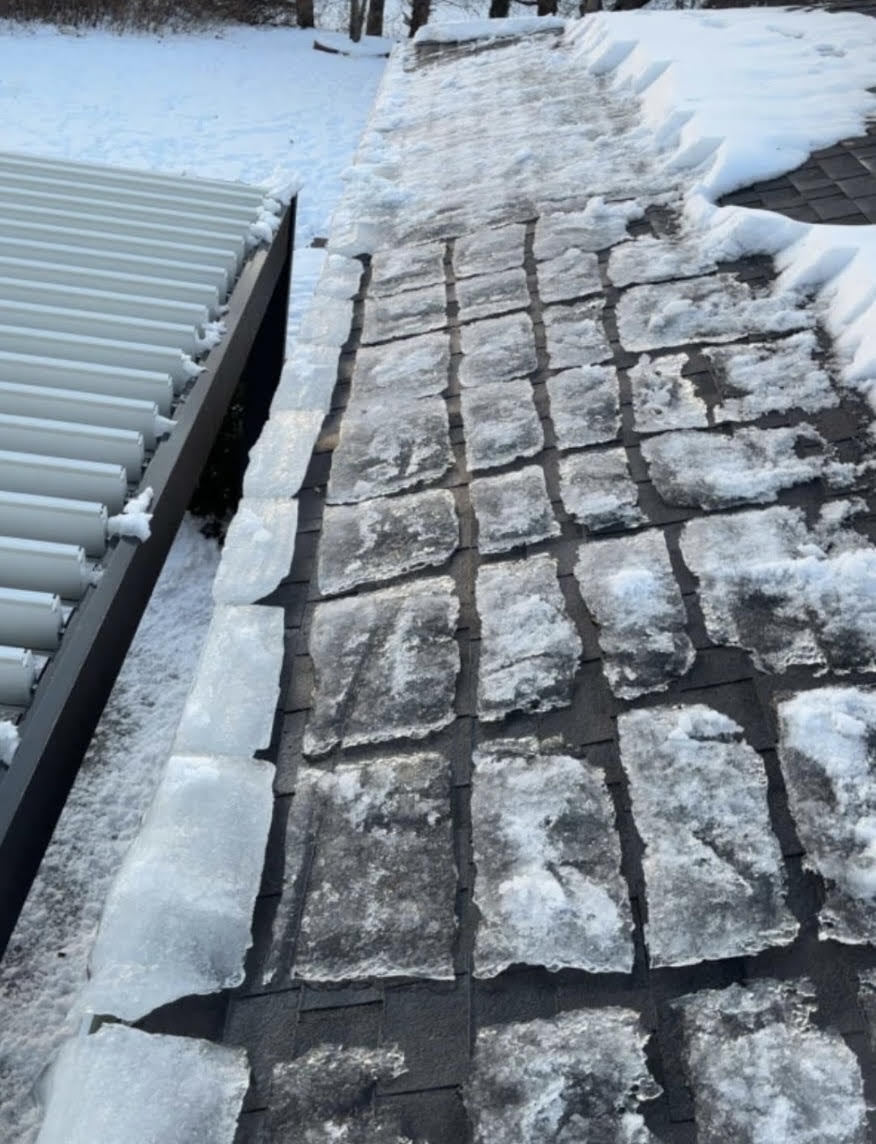
The work speaks louder than stock photography.
Ice Dam USA's gallery includes actual winter roof conditions, ice accumulation, gutters and completed removal work.
We believe customers should understand what equipment will be used and what kind of work a roof may require.
Gallery images come from different service locations and are not presented as Burlington-specific completed projects.
Specialized service. Coordinated where it's needed.
Ice Dam USA operates traveling crews serving communities across the northern United States.
We welcome Burlington residential and commercial inquiries subject to availability, travel and weather.
For other North Dakota properties, use the existing statewide location directory or the relevant dedicated city page.
Burlington remains this page's only city-specific keyword target. These links are for navigation.
Geographic map only. Not a permanent Ice Dam USA office.
Burlington ice dam removal FAQs.
Does Ice Dam USA provide service in Burlington, ND?
Ice Dam USA accepts inquiries for professional ice dam removal in Burlington. Scheduling depends on weather, location, roof access and crew availability.
What equipment does Ice Dam USA use?
Ice Dam USA uses custom low-pressure steam equipment designed for melting roof ice. The company does not rely on high-pressure hot-water washing as its ice dam removal method.
Why is true steam different from a pressure washer?
Steam uses heat to melt ice with substantially less reliance on water pressure. Pressure washing uses force to remove material and can damage vulnerable roofing.
Does the equipment require water or electricity?
Ice Dam USA's published FAQ identifies a water supply and a standard 110V electrical outlet as service requirements. Discuss access and property details when booking.
Will low-pressure steam damage my roof?
The steam method is intended to reduce the force applied to shingles and roof components. However, no roof ice removal work is completely risk-free, especially on already damaged materials.
Can Burlington roofs develop ice dams below freezing?
Yes. Heat passing through the roof can melt snow even when outdoor air remains below freezing. That water may refreeze at colder eaves.
Can wind-driven snow contribute to ice dams?
Wind can create deeper snow deposits around sheltered roof sections. Ice dams may develop when melting and refreezing occur in those areas.
Do large icicles prove an ice dam exists?
No. Icicles indicate refrozen water, but an ice dam specifically involves an obstruction to drainage on the roof.
How much does ice dam removal cost in Burlington?
Price depends on the work scope, roof height, ice thickness, access, travel and scheduling. See our current pricing page .
Can I request emergency ice dam removal?
Yes. Emergency inquiries are accepted, but dispatch and arrival depend on crews, weather and location. See our emergency service information .
Will removing an ice dam stop an active leak immediately?
Not necessarily. Removing ice may improve drainage, but water already inside roofing materials may continue moving. Existing defects may require separate repairs.
Can ice dams return after professional removal?
Yes. Ice may form again during future snowmelt and refreezing conditions. Repeated problems may justify evaluation of attic air leakage, insulation and roofing details.
