
Ice Dam USA • Highland Park, Illinois
Highland Park Ice Dam Removal
Professional Low-Pressure Steam Ice Dam Removal in Highland Park, IL
Water dripping through your ceiling? Thick ice accumulating along your roofline? Ice Dam USA helps Highland Park homeowners protect their properties with professional low-pressure steam ice dam removal. We answer your questions, explain your options and use specialized equipment to remove damaging ice while minimizing the risk to your roof.
Trusted Ice Dam Removal Specialists Serving Highland Park, Illinois
From the historic homes of Ravinia and Braeside to the distinctive properties along Sheridan Road overlooking Lake Michigan, Highland Park is home to some of Chicago's North Shore's most recognizable residential architecture. Protecting these homes means preparing for northern Illinois winters, when snow accumulation, freezing temperatures and sudden warmups can create challenging conditions for roofs.
At Ice Dam USA, we've spent more than three decades helping homeowners address damaging roof ice. As a family-owned company that began in Minnesota, we understand the challenges that come with owning a home in a cold-weather climate. We also know how unsettling it can be to discover water entering your home when there's still snow on the roof.
Is your roof damaged? Can the ice be removed without harming your shingles? How much will removal cost? Will removing the ice stop the leak?
These are reasonable questions, and you deserve straightforward answers. That's why we discuss pricing upfront, use specialized low-pressure steam equipment and answer our phones around the clock.
Our goal is to help you protect your Highland Park home without creating additional problems in the process.
We Answer. We Protect. We Deliver.Concerned About Ice Buildup on Your Highland Park Roof?
You don't need to know exactly what's happening on your roof before calling us. Tell us what you're experiencing, and we'll help you understand your options.
What's happening at your home?
Water is leaking through my ceiling or walls.
An ice dam may be preventing melting snow from draining off your roof, allowing water to back up beneath the shingles. If water is actively entering your home, we recommend addressing the problem promptly rather than waiting for the next warm spell.
Get Emergency Ice Dam HelpThere's a thick ridge of ice along my roof.
Ice accumulating along your eaves or in roof valleys may indicate an ice dam. Even if you haven't noticed water inside your home, moisture may be working its way beneath your roofing materials.
Request Ice Dam RemovalLarge icicles are hanging from my roof.
Icicles alone don't necessarily mean you have an ice dam. However, thick roof ice, uneven snow melting and unusually large icicles may warrant further attention.
Talk to an Ice Dam SpecialistMy home gets ice dams every winter.
Recurring ice dams may indicate underlying problems with attic insulation, air leakage or uneven roof temperatures. Professional removal addresses the existing ice while identifying potential contributing factors can help guide long-term prevention.
Get Help With Recurring Ice DamsI've never experienced an ice dam before. Why now?
Changing snowfall patterns, wind direction, home renovations and fluctuating winter temperatures can create ice dams on properties that have never experienced them before. An ice dam doesn't automatically mean your roof needs replacing.
Get Answers About Your RoofSee Why Homeowners Trust Ice Dam USA
When you're hiring someone to work on your roof, experience and equipment matter. So does knowing that the company will answer your questions, communicate honestly and treat your property with care.
We've built our family-owned business around those principles. See what our customers have to say about their experiences with Ice Dam USA and why homeowners trust us with their properties during challenging winter conditions.
Why Highland Park Homes Are Susceptible to Ice Dams
Highland Park's location along Lake Michigan, combined with its diverse residential architecture, creates several conditions that can contribute to ice dam formation. The city's housing ranges from historic properties constructed in the nineteenth century to contemporary homes and multifamily developments. Homes with very different architectural styles can experience ice dams for different reasons.
Understanding how your home's design interacts with North Shore winter weather can help explain why ice develops in particular areas of your roof and why the problem sometimes returns year after year.
Historic Homes and Complex Rooflines Across Highland Park
Highland Park has a rich architectural history that includes Victorian homes, Tudor and Colonial Revival residences, Prairie School architecture and modern designs. The city's historic preservation records document this architectural diversity extending back to the 1870s.
Throughout established residential areas near Ravinia, Braeside and Sheridan Road, homeowners may encounter roof designs featuring steep gables, dormers, multiple valleys and finished upper levels. These architectural details add character but can also influence where snow accumulates and how heat escapes through the roof.
Finished attic spaces, for example, may have limited room for insulation between the living area and the roof. Air leakage around chimneys, recessed lighting and other openings can allow indoor heat to reach the underside of the roof.
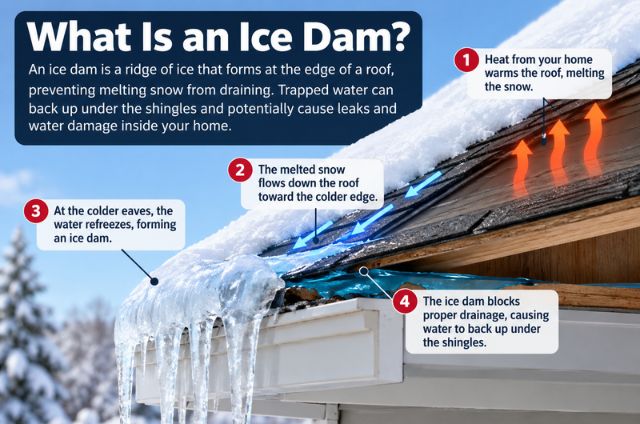
How roof ice forms
- Indoor heat reaches the roofThrough attic air leaks and thin insulation
- Snow meltsHeat melts accumulated snow from underneath
- Water refreezesMeltwater travels to colder sections of the roof
- Ice traps more meltwaterTrapped water can work its way beneath roofing materials
When that heat melts accumulated snow, water travels toward colder sections of the roof and refreezes. As ice builds up, additional meltwater may become trapped behind it, eventually working its way beneath roofing materials. Contemporary homes throughout Highland Park aren't immune to these problems. Large roof surfaces, intersecting rooflines and uneven insulation can create similar conditions regardless of the property's age.
A home's architectural style may influence where ice accumulates, but how effectively the home controls heat loss is often more important than when it was built.
Highland Park Winter Weather and Lake Michigan's Influence
Living along Chicago's North Shore means experiencing winter weather influenced in part by Lake Michigan. According to the Illinois State Climatologist, the lake moderates regional temperatures and can enhance winter snowfall when winds arrive from the north or northeast.
Climate records from the nearby Chicago Botanic Garden weather station provide a useful picture of winter conditions around Highland Park. Based on the 1991–2020 climate normals, the station records approximately the figures in the table.
Notice how average daytime temperatures rise to or above freezing while nighttime temperatures remain below freezing throughout much of the winter. Although monthly averages don't indicate how frequently individual freeze-thaw cycles occur, they illustrate the seasonal temperature conditions that can allow snow to melt and subsequently refreeze.
| Month | Average snowfall | Average high | Average low |
|---|---|---|---|
| December | 5.9 inches | 38°F | 22°F |
| January | 11.3 inches | 32°F | 16°F |
| February | 7.7 inches | 36°F | 19°F |
| March | 5.6 inches | 46°F | 28°F |
| Annual snowfall | 33.6 inches |
Source: NOAA climate normals for the nearby Chicago Botanic Garden weather station.
When successive snowstorms leave snow sitting on Highland Park roofs, a stretch of warmer weather can introduce additional meltwater. Colder temperatures then allow that water to refreeze along eaves, roof valleys and other drainage areas.
Homeowners near Lake Michigan may experience different snowfall conditions from properties farther inland near Ridge Road or the Skokie Valley corridor. Wind exposure, surrounding trees and roof orientation can also influence how snow accumulates on individual properties.
Ice dams don't require an outdoor thaw, either. Heat escaping from inside your home can melt snow beneath the snowpack even when outdoor temperatures remain below freezing.
If you've noticed that snow disappears from certain sections of your roof while other areas remain covered, learn more about what causes ice dams to form.
Professional Steam Ice Dam Removal in Highland Park, IL
Your roof represents a significant investment in your home. Hiring someone to remove an ice dam shouldn't mean risking damage to the shingles, flashing or architectural features you're trying to protect.
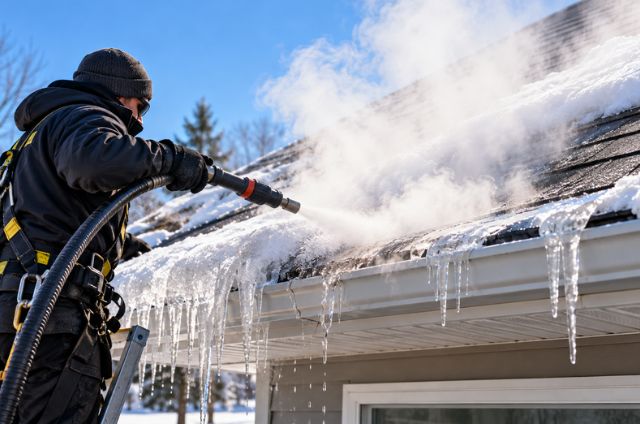
At Ice Dam USA, we use specialized low-pressure steam equipment designed specifically for professional ice dam removal. Instead of relying on physical force to break apart accumulated ice, our equipment uses heat to melt it, helping restore drainage without the aggressive force associated with other removal methods.
This approach is especially important for Highland Park properties with complex roof designs, steep slopes, multiple dormers or delicate architectural features. Removing ice around these areas requires appropriate equipment, careful attention and an understanding of how the roof is constructed.
Our objective is to address the ice obstructing drainage while minimizing the risk of additional damage to your property.
What Makes Professional Steam Removal Different?
Not every company advertising ice dam removal uses true steam equipment. Heated pressure washers, mechanical tools and chemical products work differently, and each carries its own considerations.
Before hiring an ice dam removal company in Highland Park, it's worth understanding which equipment will be used on your roof.
| Removal method | Considerations for your Highland Park home |
|---|---|
| Professional low-pressure steam | Melts accumulated ice with minimal mechanical force. |
| High-pressure washing | Can damage roofing materials and force water beneath shingles. |
| Hammers and chisels | Can puncture shingles, damage flashing and create additional repair expenses. |
| Chemical deicers | Some products may damage roofing materials, corrode metals or harm surrounding vegetation. |
| Waiting for warmer weather | May allow continued water intrusion while drainage remains obstructed. |
At Ice Dam USA, we believe homeowners should know exactly what's being used on their roofs before work begins. We're happy to explain our equipment, our removal process and why we choose specialized steam over more aggressive methods.
Request Professional Steam Ice Dam RemovalEmergency Ice Dam Removal in Highland Park
Discovering water coming through your ceiling during a North Shore winter can be particularly confusing, especially when your roof has performed perfectly well during heavy summer storms.
An ice dam can prevent melting snow from draining normally. As water accumulates behind the ice, it may work its way beneath shingles, around flashing and into your attic or living areas. Left unaddressed, this moisture may affect insulation, drywall, ceilings, walls and other building materials.
Our phones are open 24 hours a day, seven days a week. We'll discuss what's happening at your Highland Park property, explain your options and check current emergency service availability.
If you have an active winter roof leak
Take these precautions while arranging professional assistance:
- Move furniture, electronics and personal belongings away from the affected area.
- Contain dripping water where it's safe to do so.
- Stay away from sagging ceilings and areas where water is near electrical fixtures.
- Photograph visible damage and ice accumulation from a safe location.
- Contact an ice dam removal specialist and notify your insurance provider as appropriate.
Avoid climbing onto a snow-covered roof or attempting to break apart the ice yourself. Icy ladders, slippery roofing materials and falling ice can create significant safety hazards.
Not sure if you need a roofing contractor or an ice dam specialist? Read our resource on why roofs sometimes leak only during winter.
How Much Does Ice Dam Removal Cost in Highland Park?
Unexpected home repairs can be stressful enough without wondering what you're going to pay. Ice Dam USA offers two hourly service rates based on roof height, complexity, travel requirements and scheduling priority. Every appointment has a three-hour minimum.
You don't need to wait for an on-site estimate appointment before discussing pricing.
We charge by the hour because every roof and every ice dam is different. Removing a small accumulation of ice above a single-story home in western Highland Park may require considerably less time than addressing extensive ice buildup around multiple roof valleys and dormers on a multistory residence near Sheridan Road.
Roof accessibility is another consideration. Properties situated on sloping or wooded lots, including those near Highland Park's ravines, may present different access challenges from homes situated on level ground.
The total cost of your Highland Park ice dam removal service depends on:
- The thickness and extent of the accumulated ice.
- Roof height, pitch and accessibility.
- The number of affected roof sections and valleys.
- Complexity of the roof design.
- Weather and working conditions.
- Time required to remove the ice.
When you contact Ice Dam USA, we'll discuss your property, explain applicable hourly pricing and may request photographs to better understand the work involved.
Does Illinois Homeowners Insurance Cover Ice Dam Removal?
Homeowners insurance coverage varies depending on the policy and circumstances surrounding the damage. Some policies may cover resulting interior water damage caused by an ice dam without covering the cost of removing the ice itself.
If water has entered your Highland Park home, we recommend contacting your insurance provider to discuss your coverage, deductible and documentation requirements. Photographs of the ice accumulation and visible interior damage may be helpful when reporting the situation.
Our goal is to help you address the immediate problem without adding unnecessary uncertainty to an already stressful situation.
Learn More About Ice Dam Removal PricingGetting Professional Ice Dam Removal in Highland Park Is Simple
When water is entering your home or ice continues accumulating along your roofline, you shouldn't have to spend hours trying to find someone who answers the phone. We've built our service process around straightforward communication and getting homeowners the information they need.
Tell Us What's Happening
Call our team or submit a service request. Let us know where ice is accumulating, if water has entered your home and if you've experienced similar problems during previous winters. We may request photographs taken from a safe location.
Get Answers and Pricing Information
We'll discuss your Highland Park property's needs, explain our low-pressure steam removal process, provide applicable hourly pricing and check current service availability.
Arrange Professional Steam Removal
We'll work with you to arrange service based on your location, the urgency of your situation, weather conditions and crew availability. Our team uses specialized steam equipment to melt accumulated ice and help restore drainage.
Understand What Comes Next
Removing the ice addresses the immediate obstruction, but it doesn't necessarily correct the underlying conditions that allowed it to form. Existing water damage, roof deterioration or attic heat loss may require additional attention.
We want you to understand what professional removal can accomplish and what additional steps may help protect your property in the future.
Request Ice Dam RemovalServing Highland Park Neighborhoods and Chicago's North Shore
Located in Lake County, approximately 23 miles north of downtown Chicago, Highland Park stretches along the shores of Lake Michigan. The city's eastern areas feature wooded ravines and lakefront properties, while residential neighborhoods extend west toward Deerfield.
This geographic and architectural diversity means ice dam removal isn't a one-size-fits-all service. A historic Tudor residence near Ravinia may have entirely different roof configurations from a ranch-style home near Ridge Road or a contemporary property overlooking the lakeshore.
Ice Dam USA provides professional steam ice dam removal throughout Highland Park, including the following communities and residential areas.
Highland Park Areas We Serve
Ravinia District
Home to Highland Park's historic Ravinia District and the well-known Ravinia Festival, this southern part of the city includes established residential streets surrounding Roger Williams Avenue, Green Bay Road and Sheridan Road. Older properties with finished upper levels or complex rooflines may benefit from carefully planned ice dam removal.
Braeside
Located toward Highland Park's southern boundary near Lake Cook Road and the Braeside Metra station, this area includes established residential properties with varying roof designs. Snow accumulation and escaping household heat can contribute to ice buildup along colder roof edges.
East Highland Park and Lake Michigan Properties
Properties near Sheridan Road, Rosewood Beach, Ravine Drive and Highland Park's eastern ravines may feature wooded surroundings, sloping lots and distinctive architectural designs. Roof accessibility, snow distribution and building configuration are important considerations when arranging professional removal.
Downtown Highland Park
From established residential properties near Central Avenue and St. Johns Avenue to newer townhomes and condominiums, properties surrounding downtown Highland Park can experience ice accumulation on roof edges, valleys and other colder roof sections.
West Highland Park
We also serve properties near Ridge Road, Deerfield Road, Park Avenue West and the residential areas surrounding Sunset Valley Golf Club and Heller Nature Center. Regardless of a home's size or architectural style, substantial winter roof ice deserves careful attention.
Northern Highland Park and the Fort Sheridan Area
Our Highland Park service coverage includes the northern portions of the city near Old Elm Road, Half Day Road and the Fort Sheridan area. Properties here can experience similar roof snow accumulation and winter melting and refreezing conditions to those elsewhere along the North Shore.
Nearby Ice Dam Removal Service Areas
Our service coverage extends beyond Highland Park into surrounding Lake County and North Shore communities. Contact us for current availability in:
Deerfield, Highwood, Lake Forest, Lake Bluff, Bannockburn, Glencoe, Northbrook, Winnetka, Wilmette and surrounding areas.
Explore All Illinois Ice Dam Removal LocationsProtecting Your Highland Park Home From Future Ice Dams
If you've invested in maintaining or restoring one of Highland Park's older homes, recurring ice dams may be an especially frustrating problem. You want to protect the property's architectural character and roofing materials without repeatedly dealing with winter water damage.
Professional steam ice dam removal addresses the existing ice, but reducing the likelihood of future ice dams often begins inside the home.
When heat escapes through gaps between living areas and the attic, it can warm portions of the roof enough to melt accumulated snow. Improving attic air sealing, evaluating insulation and addressing appropriate ventilation can help maintain more consistent roof temperatures.
For Highland Park properties with finished attic spaces, cathedral ceilings or multiple roof valleys, identifying the source of heat loss may require a qualified building performance professional who understands the home's construction.
Spring and summer provide an opportunity to investigate recurring ice dam problems before the next North Shore winter arrives. Seasonal roofing maintenance and safe snow management can also help protect your property, although even a well-maintained roof can develop ice dams under the right conditions.
We believe homeowners should understand why ice dams are developing, not simply pay to have them removed every winter.
Related Ice Dam USA Services
Keep Reading
- Why Some Homes Get Ice Dams and Others Don'tWondering why your roof develops ice dams while your neighbor's roof doesn't? Learn how insulation, heat loss and roof configuration influence ice dam formation.
- Attic Insulation and Ice Dam RiskUnderstand the connection between escaping indoor heat, attic insulation and recurring winter roof ice.
- How to Prepare Your Roof for WinterDiscover practical ways to prepare your Highland Park property before the next northern Illinois snow season.
- Do I Need a Roofer or an Ice Dam Removal Company?Learn how to distinguish between potential roofing problems and ice dam-related water intrusion so you know which professional to call.
Frequently Asked Questions About Highland Park Ice Dam Removal
Does living near Lake Michigan increase my Highland Park home's ice dam risk?
Lake Michigan influences local temperatures and can enhance snowfall under certain wind conditions. However, proximity to the lake alone doesn't determine ice dam risk. Roof design, snow accumulation, attic heat loss and uneven roof temperatures are also important contributing factors.
Are Highland Park's historic homes more susceptible to ice dams?
Some historic homes may have insulation limitations, finished attic spaces or air leakage that allows heat to reach the roof. Complex architectural features can also influence where snow accumulates. However, modern homes can develop ice dams under similar conditions, so age alone isn't a reliable indicator of risk.
When is ice dam season in Highland Park, Illinois?
The greatest seasonal concern generally falls between December and March, when northern Illinois experiences regular snowfall and freezing temperatures. Ice dams can also develop earlier or later in the season whenever snow accumulation and roof temperatures allow melting and refreezing.
Can professional steam removal be used on older Highland Park roofs?
Specialized low-pressure steam is designed to melt ice without relying on aggressive mechanical force. It can be an appropriate option for older roofs, although the condition of the roofing materials, roof design and accessibility must be considered.
How quickly can you provide emergency ice dam removal in Highland Park?
Our phones are open 24/7. Actual service availability depends on weather conditions, customer demand, your property's location and current crew schedules. Contact us as soon as you notice active water intrusion or significant ice buildup so we can discuss your options.
Why is ice accumulating in my roof valleys instead of along the entire roofline?
Roof valleys collect water and can accumulate snow differently from other roof sections. Uneven heat loss, shading and roof orientation may also influence where melting and refreezing occur. This can result in concentrated ice buildup even when other areas of your roof appear unaffected.
Will removing an ice dam stop my Highland Park roof from leaking?
If an ice dam is obstructing drainage and causing water to back up beneath roofing materials, professional removal can address that obstruction. However, existing roof damage, trapped moisture or separate sources of water intrusion may require additional evaluation or repairs.
Protect Your Highland Park Home With Professional Ice Dam Removal
Your home is more than a roof over your head. It's an investment you've worked hard to maintain, and it deserves to be treated with care.
At Ice Dam USA, we believe in answering your questions, providing straightforward pricing and using the right equipment to protect your property. From historic homes in Ravinia and Braeside to newer residences throughout Highland Park, we're here to help when winter ice becomes a concern.
If you're experiencing heavy roof ice, growing icicles or water entering your home, give us a call. We'll help you understand your options and determine your next step.
Family Owned. Experienced Professionals. Available 24/7.
We Answer. We Protect. We Deliver.
