ICE DAM USA | BOULDER, COLORADO
Boulder CO Ice Dam Removal
Professional roof ice dam removal in Boulder, Colorado, using true low-pressure steam to melt frozen roof obstructions and help restore drainage.
Boulder sits along the foothills of the Flatirons, with a distinctive combination of historic neighborhoods, mid-century residential construction, modern homes, university-area housing, and commercial properties.
Snowfall, winter sunshine, and differences in roof temperature can create situations where melting snow refreezes at colder roof sections.
When that ice interrupts drainage, water can collect behind the obstruction and reach vulnerable shingles, flashing, or other roofing materials.
Ice Dam USA uses professional Arctic Steamers to melt roof ice with low-pressure steam instead of aggressive chopping or high-pressure water blasting.
Contact our team about your Boulder property, current regional service availability, and professional removal options.
01 / BOULDER HISTORIC ARCHITECTURE
Professional Roof Ice Removal for Mapleton Hill, Chautauqua, and Historic Boulder
Boulder's historic residential districts are one of the clearest ways its roofing environment differs from newer Front Range suburban communities.
The city has locally designated historic districts that include Mapleton Hill, Chautauqua, University Place, and West Pearl. These areas have buildings with distinct architectural histories and roof designs.
Some older properties contain covered porches, dormers, hipped or gabled roofs, and additions completed at different times.
The location where an upper roof meets a lower porch or addition can affect where snowmelt flows. If runoff freezes at the colder transition, a localized ice dam can develop.
Mapleton Hill
The Mapleton Hill Historic District contains older residential properties with a range of historic roof forms and details.
A professional assessment should account for existing roofing conditions, flashing, roof intersections, and working access.
Chautauqua
The Chautauqua area includes historic buildings near the base of the Flatirons.
Covered porches and architecturally distinctive roof sections may require additional attention when ice bonds to roofing materials.
University Place and West Pearl
Older buildings and renovated residential structures can have roof details that differ from those of modern subdivisions.
The actual roof condition, not its historic designation alone, determines the removal approach.
A Distinction for Historic Property Owners
Boulder has historic-preservation review requirements for certain exterior alterations to designated properties, including re-roofing.
Emergency ice dam removal is not the same as a roof replacement. If additional exterior repairs or alterations become necessary, property owners should check the city's applicable rules.
Our work focuses on professional removal of existing roof ice, not replacing historic roofing.
02 / TABLE MESA AND MARTIN ACRES
Winter Ice Dam Concerns for South Boulder's Mid-Century Homes
South Boulder includes postwar residential neighborhoods such as Table Mesa, Martin Acres, and Highland Park.
These areas represent a different period of residential construction from the city's historic districts. Homes may feature ranch-style layouts, broad roof edges, attached garages, and renovations made over time.
Ice dams can occur where the roof above heated rooms becomes warm enough to melt snow, while overhangs beyond the building's insulated walls remain colder.
Table Mesa
The neighborhood includes postwar residential construction adapted to the area's hilly terrain.
Roof shape and site elevation can influence technician access, especially around rear yards, decks, or lower-level entries.
Martin Acres
Established homes may have attic insulation upgrades, replacement roofs, or later additions.
Uneven heating between different roof sections can contribute to where snow melts and refreezes.
Highland Park
Roof geometry, overhangs, and the relationship between heated rooms and attic spaces affect winter roof temperatures.
Not every ice formation requires removal; the important question is whether drainage is blocked.
Renovated Residential Properties
An addition can create a new lower roof beneath the original house.
Water from the upper slope may reach the colder addition and freeze, particularly at roof transitions.
Learn about our residential low-pressure steam ice dam removal service for detached homes and other residential properties.
03 / FOOTHILLS-SIDE PROPERTIES
Why Roof Height and Property Access Matter Near Boulder's Foothills
Western Boulder borders the foothills, and some residential properties have different ground elevations on opposite sides of a house.
A roof that appears relatively accessible from the front may be substantially higher above a rear walkout level, patio, or sloping yard.
Before scheduling professional roof ice removal, these access differences are important to understand.
Site Conditions to Mention
- Walkout basements or sloping lots
- Roof sections above steep landscaping
- Elevated decks or terraces
- Limited areas for equipment placement
- Snow-covered paths around the building
- Ice above shared sidewalks or entrances
Roof height, pitch, weather, and existing conditions may affect whether work can be performed safely.
Near the Flatirons Does Not Automatically Mean an Ice Dam
A foothills location does not by itself cause a damaging ice dam.
The problem develops when meltwater refreezes and blocks a roof's drainage.
Local sun exposure, roof orientation, heat loss, and snow accumulation can influence the process.
For more information, visit our guide explaining how roof ice dams form .
04 / OTHER BOULDER BUILDING TYPES
Ice Dam Removal for North Boulder, East Boulder, and University-Area Properties
Outside the historic foothills neighborhoods and South Boulder, the city also includes established residential streets, newer townhomes, apartment communities, and commercial buildings.
The main challenge varies from building to building. Some properties have relatively simple rooflines. Others have connected roofing or large occupied areas below the eaves.
North Boulder
Homes in areas such as Dakota Ridge and near North Broadway may have varied roof elevations and access conditions.
Ice removal planning should focus on the affected drainage path rather than the neighborhood alone.
East Boulder
Residential and commercial properties may have different roofing systems.
A flat or low-slope commercial roof leak does not always involve a traditional pitched-roof ice dam.
University Hill and Student Housing
Rental houses, multifamily buildings, and shared properties can require additional coordination with owners or property managers.
Worksites must account for occupied entrances, walkways, and nearby building activity.
For managed properties, review our commercial and multifamily ice dam removal information .
05 / BOULDER WINTER ROOF CONDITIONS
How Winter Snow, Strong Sunshine, and Shaded Eaves Can Produce Ice Dams
The amount of snow visible on a roof is only part of the ice dam equation.
After a winter storm, sunlight may warm one portion of the roofing while nearby shaded areas remain cold.
Heat escaping from the interior can also warm the roof deck underneath a snowpack.
When snow melts, the resulting water follows the roof's drainage path. If it reaches a colder eave, valley, or lower roof section and freezes, an ice obstruction may form.
Snow Covers the Roof
Snow accumulates across roof slopes and intersections.
Meltwater Develops
Sunlight, changing temperatures, or building heat loss produce runoff.
Runoff Reaches Cold Roofing
Water moves toward a colder edge or shaded transition.
Ice Blocks the Flow
Repeated refreezing may form an obstruction that traps more water.
Why an Ice Dam Can Cause Interior Water Damage
Water held behind an ice ridge may enter through vulnerable roofing materials.
It can travel through attic spaces or building framing before becoming visible inside a room.
The first ceiling stain may be some distance from the original roof entry point.
06 / IDENTIFYING ROOF ICE PROBLEMS
When Should Boulder Property Owners Worry About Roof Ice?
Large icicles, heavy snow, and localized ice buildup may look concerning, but they do not always mean a roof ice dam is blocking drainage.
The warning signs below may indicate that professional evaluation is appropriate.
A Thick Ice Ridge at the Eave
A solid frozen ridge may trap additional meltwater on the roof instead of allowing it to drain.
Ice Inside a Roof Valley
A blocked valley can affect runoff from adjoining roof slopes.
New Ceiling Stains
Water appearing indoors during snowmelt may indicate roof water intrusion. Other causes are possible.
Ice Above a Porch or Entrance
Frozen buildup may create falling-ice hazards for people beneath the roofline.
Recurring Ice in the Same Place
Repeated buildup may point to ongoing roof heat loss or drainage conditions.
Water Near an Addition
Lower roofs may receive runoff from upper roof sections and refreeze at the connection.
A Safety Reminder
Never climb onto an icy roof or attempt to break bonded roof ice using axes, hammers, chisels, or open flames.
For an active leak or a blocked roof drainage area, call 855-468-4233 to discuss professional ice dam removal.
07 / PROFESSIONAL ROOF ICE REMOVAL
Why True Steam Is Better for Ice Dam Removal
Roof ice can be firmly attached to shingles, flashing, and other roofing materials. Removing it by force can cause additional damage.
Ice Dam USA uses professional Arctic Steamers to deliver low-pressure steam directly to frozen obstructions.
Steam transfers heat into the ice so technicians can work through the buildup without relying on aggressive chipping.
Professional Arctic Steamers
- Melt roof ice primarily through heat
- Use low-pressure steam
- Support controlled, targeted removal
- Reduce reliance on impact tools
- Allow careful work near roof details
- Require trained professional operation
Chipping and High-Pressure Water
- Can place excessive force on shingles
- May disturb existing roof flashing
- Can damage vulnerable roofing materials
- May force water into roof openings
- Can increase falling-ice hazards
- Are not Ice Dam USA's removal methods
Roof Protection Requires More Than the Right Equipment
Low-pressure steam can reduce risks associated with forceful removal, but no roof work is entirely risk-free.
Existing roof condition, ice thickness, weather, access, and technician technique remain important.
Learn more about our professional low-pressure steam ice dam removal method .
08 / REAL ICE DAM USA PROJECTS
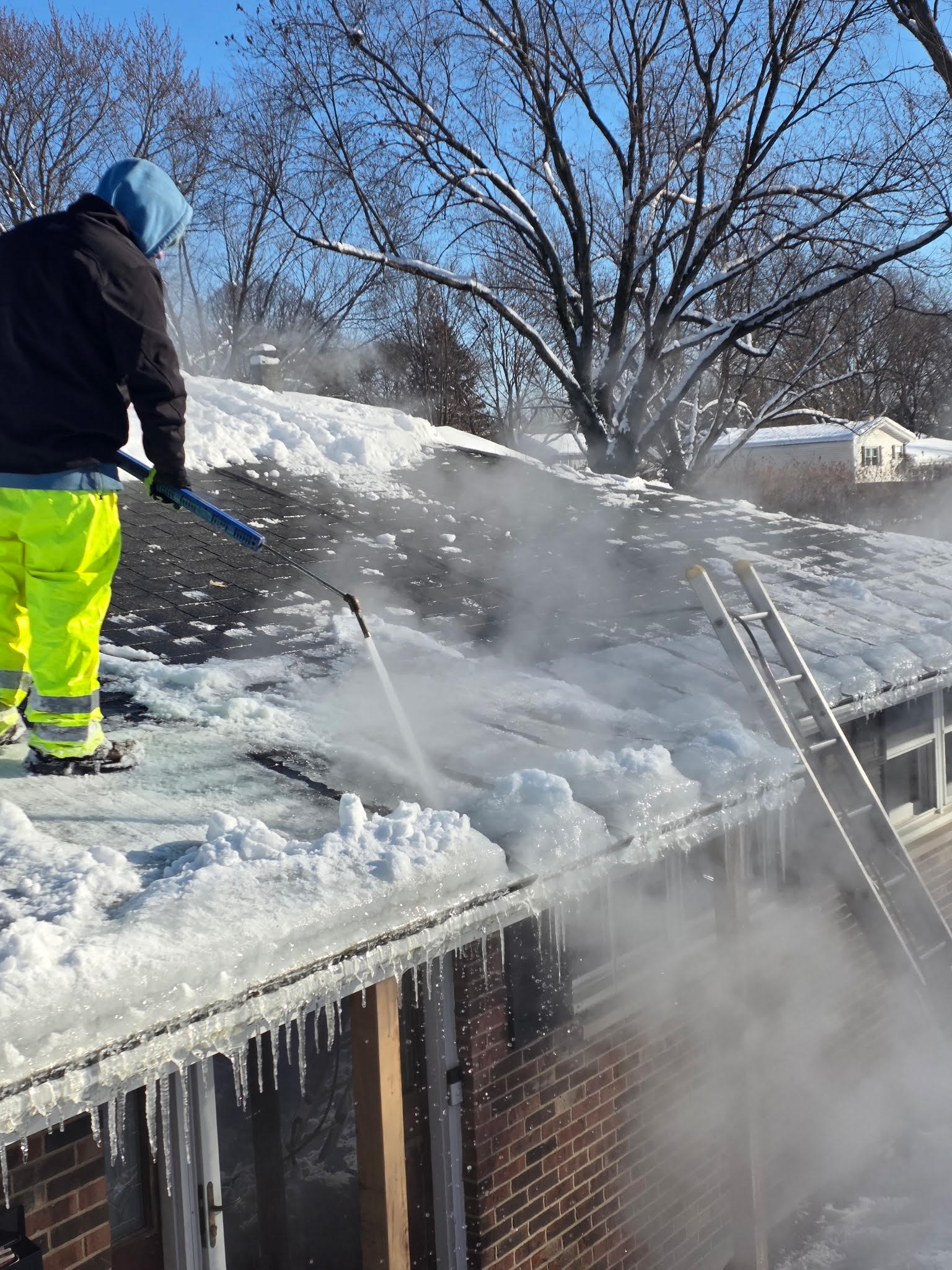
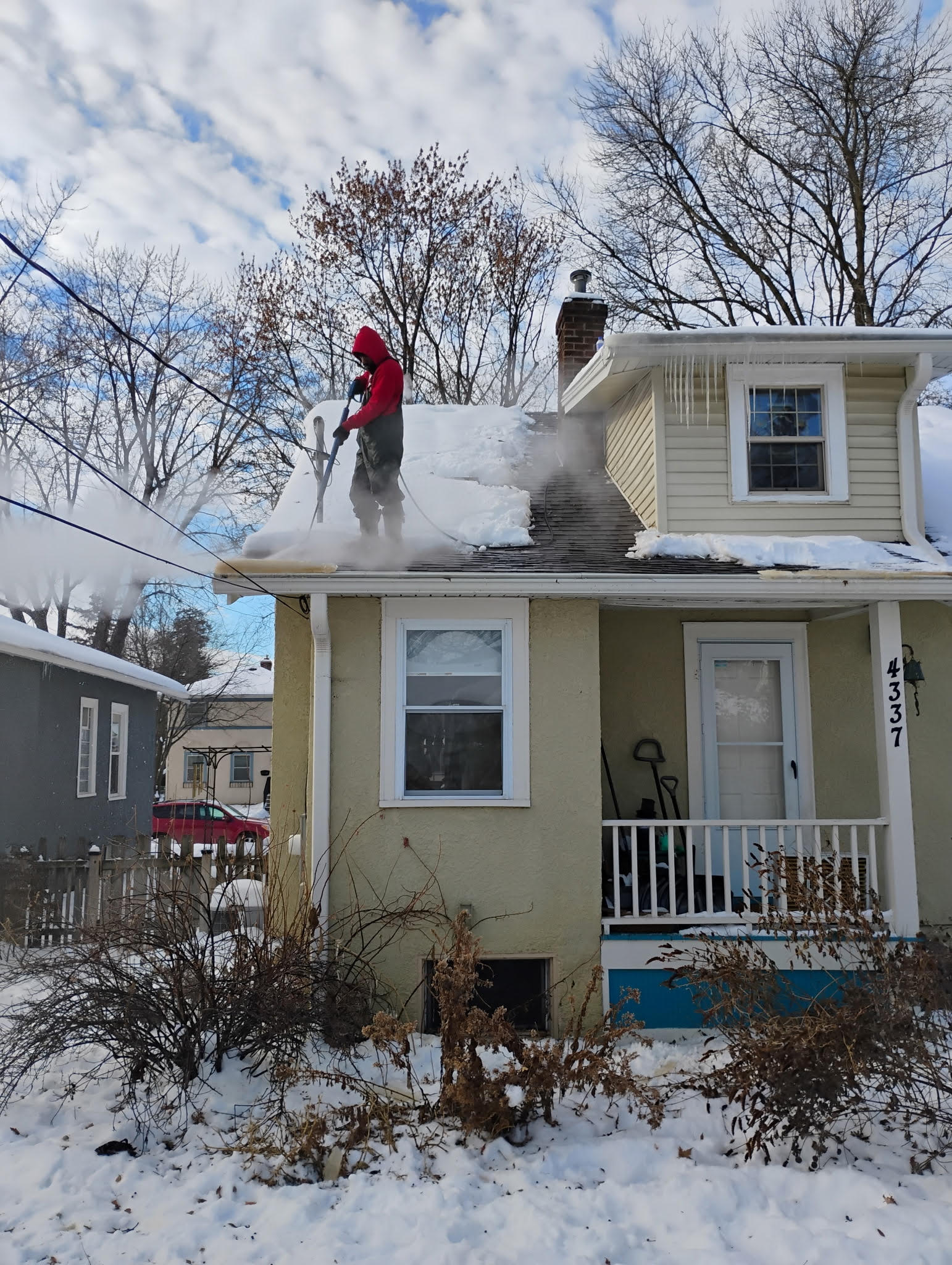
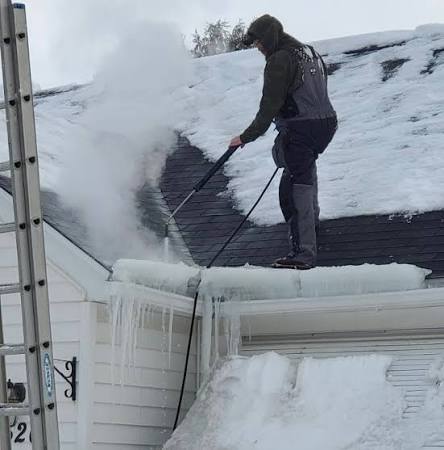
Professional Steam Ice Dam Removal Photographs
The following Ice Dam USA project photographs show technicians working with professional steam equipment and residential roofing during winter ice removal.
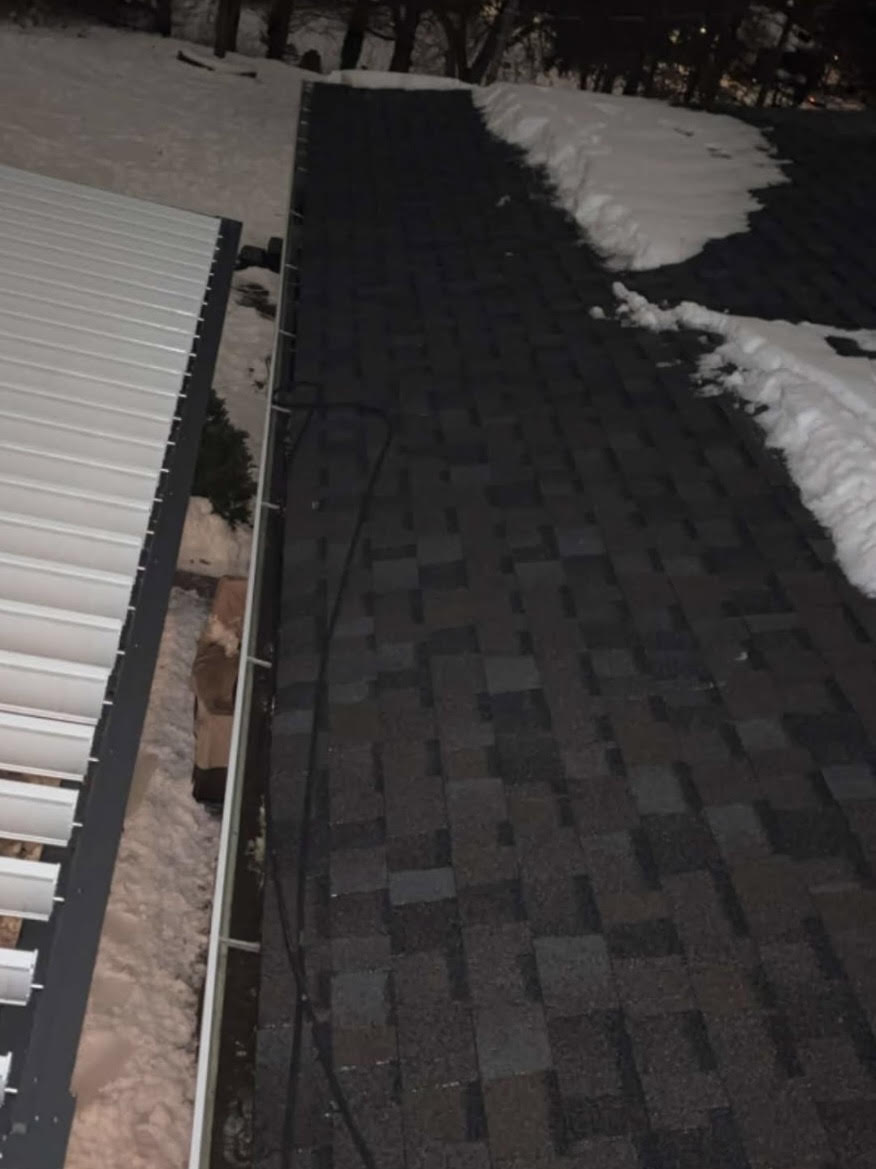
See additional real Ice Dam USA steam removal project photographs .
09 / WINTER WATER INTRUSION
Water Leaking Into Your Boulder Home During Snowmelt?
If roof ice blocks normal drainage, water may collect behind the frozen obstruction and reach vulnerable roofing materials.
Moisture can travel inside the roof assembly before appearing in ceilings or walls.
An ice dam is one possible cause of winter roof leaks. Other roofing defects may create similar symptoms.
What to Do Safely
- Keep clear of sagging ceilings
- Avoid wet electrical fixtures and wiring
- Move belongings when safe
- Take photographs of visible damage
- Stay away from falling roof ice
- Do not climb an icy roof or ladder
What Steam Removal Can Accomplish
Professional removal can help reopen blocked drainage and reduce additional water backup.
It does not necessarily stop interior dripping immediately because water already inside the roof may continue to move.
Existing roof defects and damaged interior materials may need separate repairs.
Urgent Service Availability
Ice Dam USA accepts emergency service inquiries 24 hours a day.
Crew scheduling depends on location, weather, travel, and safe roof access.
10 / RESIDENTIAL, UNIVERSITY AND COMMERCIAL PROPERTIES
Ice Dam Removal for Boulder Homes, Apartments, and Businesses
Boulder has a substantial mix of detached houses, student rentals, apartment buildings, office properties, retail businesses, and other managed facilities.
The worksite around a multi-unit or commercial building may require coordination beyond the roof itself.
Single-Family Homes
Our team reviews roof-edge ice, valleys, dormers, garage connections, and residential access conditions.
Explore residential steam ice dam removal .
Rental Houses and Apartments
Building owners or property managers may need to arrange roof access and tenant communications.
Work below occupied entrances or walkways requires appropriate safety planning.
Downtown and Commercial Properties
Roof type, building height, pedestrian traffic, and equipment access can influence the removal plan.
Learn about commercial roof ice dam removal .
Important for Low-Slope and Specialized Roofs
Not every frozen commercial roof area is a traditional ice dam. Membrane roofing, internal drainage, and flashing defects may require a different evaluation.
A qualified roofing professional may need to determine the actual leak source before removal or repair work proceeds.
11 / REQUESTING PROFESSIONAL SERVICE
How Ice Dam USA Coordinates Roof Ice Removal in Boulder
Tell Us About the Roof
Provide the property address, building type, affected roof areas, and any active leak.
Discuss Access and Conditions
Our team considers ice thickness, roof pitch, height, safe working access, weather, and travel.
Coordinate Steam Removal
When scheduled and conditions allow safe work, technicians use low-pressure steam to address the frozen obstruction.
Information That Helps Before You Call
- Complete Boulder street address and ZIP code
- Type of building and approximate roof height
- Location and extent of the visible roof ice
- Whether water is entering the property
- Sloping ground, decks, gates, or access limitations
- Any property manager or owner authorization requirements
- Photographs taken safely from ground level
You can call or send your details using our professional ice dam removal contact page .
12 / CURRENT SERVICE PRICING
Boulder Ice Dam Removal Pricing
Ice Dam USA keeps its current service pricing, billing details, and appointment terms on one central page.
For up-to-date pricing information, visit the official guide below.
Get the Latest Pricing Information
Our central pricing page is the source for current service rates and policies.
13 / AFTER THE ICE HAS BEEN REMOVED
What Causes Repeated Roof Ice in the Same Boulder Location?
Removing the existing ice dam does not automatically correct the conditions that created it.
If ice repeatedly develops in the same place, a separate building assessment may be helpful.
Warm Air Escaping Into the Attic
Heat from living spaces can warm the roof deck and melt snow from underneath.
Insulation and Air-Sealing Differences
Older construction and later additions may have different attic conditions, creating uneven roof temperatures.
Roof Geometry and Shade
Porches, valleys, dormers, and cold overhangs may repeatedly receive water that refreezes.
For additional guidance, read about preventing recurring roof ice dams and explore the Ice Dam USA Learning Center .
14 / BOULDER COUNTY, COLORADO
Boulder Colorado Ice Dam Removal Service Areas
Ice Dam USA welcomes professional roof ice removal inquiries from Boulder residential and commercial property owners.
Service is coordinated based on the property address, current crew availability, weather, travel, and safe access.
This page describes a service area, not a permanent Ice Dam USA office located in Boulder.
Boulder Neighborhoods and Districts
- Mapleton Hill
- Chautauqua
- University Place
- University Hill
- West Pearl
- Downtown Boulder
- Table Mesa
- Martin Acres
- Highland Park
- North Boulder
- East Boulder
- All areas in between
Local Roads and Reference Areas
- Pearl Street
- Broadway
- Baseline Road
- Table Mesa Drive
- South Boulder Road
- Canyon Boulevard
- Arapahoe Avenue
- 28th Street
- North Broadway corridor
- Chautauqua Park area
- University of Colorado Boulder vicinity
- All areas in between
Whether you are near Mapleton Hill, in South Boulder, or managing property near the university, our team can discuss roof conditions and service availability.
For nearby communities outside the city, provide the complete address so travel coverage can be checked.
Explore the Colorado ice dam removal service-area hub or call 855-468-4233.
15 / CONNECTED COLORADO SERVICE PAGES
Explore Ice Dam Removal in Boulder and Other Colorado Metro Cities
Boulder is part of the northern Front Range service region. Our Broomfield page provides additional information for properties along the US-36 corridor.
Explore Broomfield professional ice dam removal for that neighboring market, or read about Denver steam ice dam removal for the larger metropolitan area.
Appointments throughout the Front Range depend on weather, travel, safe roof access, and crew availability.
16 / BOULDER ROOF ICE QUESTIONS
Boulder CO Ice Dam Removal FAQs
Does Ice Dam USA accept ice dam removal requests in Boulder?
Ice Dam USA welcomes professional roof ice removal inquiries from Boulder homeowners, property managers, and commercial building owners.
Contact us to discuss availability for your address.
Can historic homes in Mapleton Hill develop ice dams?
Yes. Older buildings can develop ice dams when melting roof snow refreezes and blocks drainage.
Existing roof details and condition should be considered before removal work.
Does a historic designation prevent professional ice removal?
Historic designation does not automatically mean an existing ice dam cannot be addressed.
However, a separate roof repair or exterior alteration may be subject to Boulder historic preservation rules.
Can homes near Chautauqua develop serious roof ice?
Yes. Any roof with melting snow, cold drainage areas, and refreezing runoff can develop an ice obstruction.
Location near the foothills alone does not establish whether a damaging ice dam exists.
Why can ice develop on a Table Mesa or Martin Acres home?
A cold roof overhang, uneven attic heat loss, or a lower roof transition may allow meltwater to refreeze.
Does sunshine after a Boulder snowstorm increase ice dam risk?
Sunshine can melt snow on exposed roofing while shaded sections remain colder.
If runoff refreezes and blocks drainage, an ice dam may form.
Are long icicles always evidence of a roof ice dam?
No. Icicles may form without a substantial drainage blockage.
Heavy hanging ice can still create a hazard below.
Can ice become trapped around a porch roof or dormer?
Yes. These roof features can create transitions where runoff from a warmer roof reaches colder roofing.
Why use Arctic Steamers for roof ice removal?
Arctic Steamers apply low-pressure steam to melt ice primarily through heat.
This reduces reliance on aggressive chipping or high water pressure.
Is professional steam removal risk-free?
No roof ice removal method is entirely risk-free.
Existing roofing condition, ice thickness, weather, and technician technique matter.
Do you handle Boulder rental houses and apartment buildings?
Ice Dam USA welcomes inquiries involving residential and multifamily properties.
Shared roofs may require property owner or manager authorization.
Can ice dams cause ceiling stains and interior leaks?
Yes. Water trapped behind roof ice may enter vulnerable roofing and travel through the building.
Other roof defects can also cause winter leaks.
Will removing the ice immediately stop water dripping indoors?
Not necessarily. Removing the obstruction may help restore drainage, but water already inside roofing materials may continue moving.
How much does ice dam removal cost in Boulder?
For all current service pricing and appointment terms, visit our official ice dam removal pricing page .
Does Ice Dam USA accept emergency calls?
Yes. Emergency inquiries are accepted 24 hours a day.
Actual dispatch depends on crew availability, travel, weather, and safe access.
Can roof ice return after steam removal?
Yes. Future snow, melting, and refreezing may produce another ice obstruction.
Recurring problems may require separate roof or building-envelope evaluation.
What information should I provide when calling?
Provide the address, type of building, roof height, location of ice, and whether water is entering.
Photos taken safely from the ground may also help.
How do I request professional ice dam removal in Boulder?
Call 855-468-4233 or use the Ice Dam USA professional service request page .
17 / ADDITIONAL ICE DAM USA RESOURCES
Helpful Roof Ice Removal Information for Boulder Property Owners
Explore our professional service pages and educational resources for information about winter roof ice, steam equipment, water leaks, and long-term prevention.
ICE DAM USA | BOULDER, COLORADO
Need Professional Ice Dam Removal in Boulder?
When frozen roof ice blocks drainage or contributes to winter water intrusion, contact Ice Dam USA about professional low-pressure steam removal.
Our team uses specialized Arctic Steamers to address frozen roof obstructions.
From historic Mapleton Hill to South Boulder and North Boulder, we welcome inquiries about current regional service availability.
855-468-4233 | ICE DAM USA
Service depends on property location, weather, travel, safe roof access, and crew availability.
